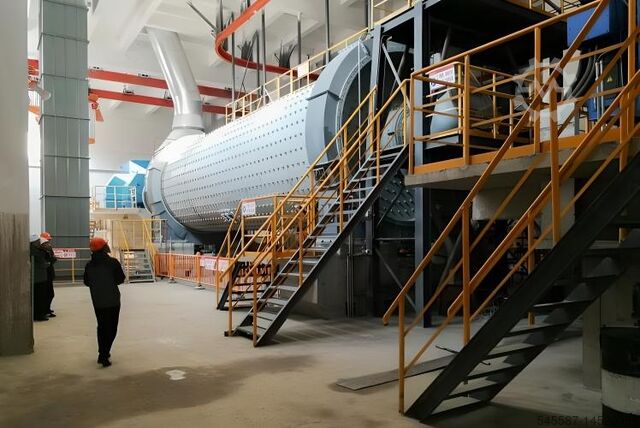
Used Lehmann Three-Roll Mill for sale (22,074)
Sort results
- Lowest price Highest price
- Newest listings Oldest listings
- Shortest distance Farthest distance
- Newest year of manufacture Oldest year of manufacture
- Latest update Oldest update
- Manufacturer A to Z Manufacturer Z to A
- Relevance
- Lowest price
- Price
- Highest price
- Price
- Newest listings
- Release date
- Oldest listings
- Release date
- Shortest distance
- Distance
- Farthest distance
- Distance
- Newest year of manufacture
- Year of construction
- Oldest year of manufacture
- Year of construction
- Latest update
- Update
- Oldest update
- Update
- Manufacturer A to Z
- Manufacturer
- Manufacturer Z to A
- Manufacturer
- designation from A to Z
- Description
- designation from Z to A
- Description
- Model from A to Z
- Model
- Model from Z to A
- Model
- Lowest reference
- Ref.No.
- Highest reference
- Ref.No.
- Shortest runtime
- Runtime
- Longest duration
- Runtime
- Relevance
- Relevance
Listing
Sprockhövel
6,983 km
Three rolls angle roll W=720 cm³
FaccinRCMI 280
Call
Condition: new, functionality: fully functional, Year of construction: 2026, RCMI 280
Three-roll profile bending machine
Technical characteristics:
Section modulus 720 cm³
Main shaft diameter 280 mm
Side shaft diameter 280 mm
Outside diameter of the bending rolls 720 mm
Adjustable rolling speed 0-4 m/min
Installed power 44 kW (60 hp)
Weight 34,000 kg
Standard equipment:
Hydraulic adjustment of the side rolls
3 rolls powered (3 hydraulic motors + 3 planetary reduction gears)
Independent lateral profile guide rollers, adjustable in 6 directions, fully hydraulic
Automatic scope rotation speed compensation
Complete universal rolls set for standard profiles and beams (12 pieces)
Tool kit for machine equipment
Tedpsiivhdofx Amkoa
Low-voltage control on mobile operator panel
Safety device according to regulations
Technical documentation and CE certificates
Digital displays for the rolls position of the side rolls
Listing
Miastko
6,359 km
Rolling mill
VOLLMERVMW 40 U
Call
Condition: excellent (used), Vollmer rolling mill
Model: VWM 40U
A rolling mill for gang saws
In good condition.
Todpfxomxi Swe Amkoa
Listing
Rovereto
6,700 km
Cold Rolling Mill
FROEHLING300
Call
Condition: excellent (used), Year of construction: 2004, year of last overhaul: 2004, 4-Hi CRM Rolling Mill Head – Froehling
Froehling is a renowned brand known for its reliability and robustness in the rolling mill industry.
4-Hi rolling mill head with bending and tension control.
The following are its features:
Manufacturer: FROEHLING (Germany) – Refurbished in 2004
Material processed: Aluminum alloys – brass – copper – low-carbon steel
Strip width: 282mm (300mm)
Strip thickness: 0.15 – 2mm
Coil dimensions: ID 400mm – OD 1500mm
Maximum rolling speed: 400m/min
Work rolls: Diameter 130mm – Face 340mm
Back-up rolls: Diameter 390mm – Face 335mm
Complete with: Uncoiler and coiler
Many sets of spare work rolls and back-up rolls
Sold EXWORKS, disassembled and loaded onto a truck.
Tedpfx Amog Ryqkekja
Ready for any inspection by a prospective buyer.
For any questions, please do not hesitate to contact us.
IF YOU ARE INTERESTED, PLEASE SUBMIT YOUR OFFER; WE ARE SURE WE CAN REACH AN AGREEMENT.

Get information now
+44 20 806 810 84
+44 20 806 810 84
List now
*per listing / month
Listing
Germany
6,760 km
Rolling Mill
OmccaHSI.L H3 2050.8.6
Call
Year of construction: 1998, condition: ready for operation (used), A hydraulic 3-roll plate rolling machine Omcca is available. Working length: 2050mm, max. plate thickness rolling/pre-bending: 8mm/6mm, roll diameter: 200mm. Machine dimensions X/Y/Z: approx. 3200mm/900mm/1500mm, weight: approx. 3300kg. On-site inspection is possible.
Todpfxjycwrzs Amksa
Listing
Germany
6,760 km
Rolling Mill
FastiASI/M 2,15x130
Call
Condition: ready for operation (used), A two-roll plate rolling machine Fasti is available. Roll diameter: 130mm, working width: 2150mm, max. sheet thickness: 3.5mm. Machine dimensions X/Y/Z: approx. 2900mm/650mm/1100mm, weight: approx. 1200kg. Documentation available. An on-site inspection is possible.
Tedpjx U Dwvjfx Amkea
Listing
Nagyigmánd
6,177 km
Roller Mill
OcrimRoller Mill LKK 1000
Call
Condition: excellent (used), Year of construction: 1982, functionality: fully functional, Due to the comprehensive technological modernization of our corn milling plant, originally built in the 1980s, our milling equipment has become available for sale.
Over the decades, the machinery operated reliably and stably in our facility, supported by continuous maintenance and professional operation. Throughout these years, our company earned long-term trust from its partners, largely thanks to the consistently high product quality ensured by this technology.
The plant primarily specialized in the production of corn grits as its main product, alongside feed flour, food-grade flour, corn germ, and other by-products.
The offered equipment:
Tjdpeylhhfofx Amkoa
- has been continuously maintained
- can be inspected while in operation
- is sold together with the existing spare parts inventory
All available spare parts are included in the sale, representing a significant advantage for the future owner in terms of operational security and maintenance planning.
The listed price refers to one unit. We have a total of 4 units.
There is also the possibility to purchase all advertised equipment as a complete package, for which a customized and preferential price can be offered. This is an ideal opportunity for companies considering the establishment of a complete corn mill, capacity expansion, or technological development.
The earliest planned removal date of the equipment is February 2027.
Listing
Wiefelstede
6,930 km
Roller end mill disc cutter 99.6 kg
unbekanntAufnahme 32 mm 125Wx12x32 HSS
Call
Condition: good (used), End mill, roller cutter, milling cutter, disc cutter, slot cutter
-Cylinder end mill: Disc cutter 99.6 kg net, carbide-tipped
Todoy D Ndyjpfx Amkea
-Type: various versions
-Price/Fee: complete
-Transport dimensions: 790/600/H210 mm
-Weight: 99.6 kg
Listing
Naprawa
6,077 km
3-roller feed unit for Olympia 9/26 milling machine
Olympia9/26
Call
Condition: used, Technical specifications:
Number of rollers: 3
Number of speeds: 4
Todpozikpfjfx Amkja
Motor power: 0.75 kW
Feed speeds: 3-23 m/min
Roller size: 120x50 mm
Power supply: 380 V
Listing
Löhne
6,883 km
Grain processing roller mill
BühlerBSWA 608B5C
Call
Condition: used, Year of construction: 1995, functionality: unexamined, machine/vehicle number: 2031306, type of input current: three-phase, overall weight: 9,200 kg, Roller mill from Bühler, previously used in cornflakes production. Pre-installed are a metal detector and a vibratory channel. Control cabinet is included. Weight of the roller mill approx. 9,200 kg.
Tsdexgq Rkjpfx Amkja
Listing
Belarus
5,654 km
Roller mill, Crushers, Wet pan mill
Haendle, Rieter, Breitenbach
Call
Condition: refurbished (used), functionality: fully functional, - Bedeschi RS toothed crusher;
- Haendle WMZ toothed crusher 412 A;
- GHH 2366 WH 75/60 impact crusher;
Tsdpfoyl Tmmex Amkoa
- Alfa paper shredders; Sawdust grinder, Wood chipper
- Haendle HM2080 wet pan mill;
- Haendle HM2080a wet pan mill
- Breitenbach fine roller mill type PWF 812 800*1200, gap from 0.6 mm, roller shell thickness 95 and 105 mm, drive 90 kW, drive pulley ⌀650, motor pulley ⌀224, productivity at a gap of 0.6-0.8 mm: 40-50 t/h;
- Haendle fine roller mill type Alpha WFZH8100b. Commissioned in 1996. Not in operation since 2012. Gap adjustable from 0.6 mm. New roller shells installed. Bearings replaced with the participation of Haendle specialists;
- Kema roller mill 1000x800, gap 1-3 mm;
- Rieter fine roller mill type GSA 1000x800, gap 1-1.5 mm;
- Rieter-Werke Haendle roller mill type HW 80х80-HM, gap 0.6 mm;
- Haendle mechanical roller mill type WFZ 880A, gap 0.8 mm, 42 t/h
Listing
Dortmund
6,965 km
Three-jaw scroll chuck
RÖHM500
Call
Condition: good (used), 3-Jaw Spiral Chuck
Manufacturer: RÖHM
Diameter 500 mm
Spindle mount DIN 55027 size 11
Chuck inner bore 200 mm
Chuck height 145 mm
Weight 182 kg
Tjdpfopmtgnox Amkoa
Accessories / Special Features:
• Hard turning and drilling jaws
• 1 chuck key
Siegfried Volz Machine Tools
Rüschebrinkstr. 151-153
DE - 44143 Dortmund - Wambel
Listing
Korschenbroich
7,032 km
Roller milling cutter grinding machine
KlingelnbergSNC 30
Call
Condition: excellent (used), Year of construction: 1988, functionality: fully functional, Technical Data
Grinding/Workpiece Diameter: up to approx. 300 mm (partially up to 350 mm)
Grinding Length/Stroke: approx. 550 mm (slide travel)
Module range (for hobbing cutter resharpening): min. module approx. 0.5 to max. module approx. 25
Number of flutes: typically 1–99 pieces (depending on tool set)
Grinding wheel diameter: approx. 150–300 mm
Grinding wheel speed: up to about 2,700 rpm
Centre distance (workpiece spindle): typical range 400–800 mm
Swivel/Pitch range: e.g. grinding wheel head swivel 0–15°
Machine weight and space requirement: approx. 4.2–4.9 t weight; space approx. 3 × 2.6 × 2.3 m
Electrical data: operating voltage e.g. 380 V three-phase, control 24 V, auxiliary voltage 220 V
Tedpfextiunox Amkea
Listing
Voerde (Niederrhein)
7,022 km
Grinding roller bowl mill
Pfeiffer / BabcockMahlwalze Walzenschüsselmühle Pfeiffer
Call
Condition: used, Grinding rollers for Pfeiffer / Babcock bowl mill
Used, refurbished, and new available from stock
Heavy-duty grinding rollers from a bowl mill available for sale
Tjdsy Ittyspfx Amkoa
Viewing possible by appointment.
Listing
Eisingen
6,879 km
Slow-running tooth roller mill
Moditec / DigicolorGoliath Plus 1
Call
Condition: used, functionality: fully functional, Slow-running plastic granulator – only 25 rpm, preventing thermal damage.
Gear roller mill Goliath Plus 1
Milling chamber size (feed chute): 228 x 172 mm
Power requirement only 1.5 kW
Weight 230 kg (built like a tank)
Dust-reduced, consistent granulate quality.
Easy cleaning in 2–3 minutes!
Very quiet operation.
Low energy consumption.
Rotatable cutter elements for double the cutter unit service life
Tjdpfsy Azp Eox Amkja
Paddle level indicator in the discharge hopper: No "grinding in its own juice" possible, as the mill shuts down in advance.
Listing
Aprilia
6,569 km
Semiautomatic three-roller calender
Fasti1042-18-0,8
Call
Condition: good (used), Year of construction: 1995, Fasti 3-roll calender
Main features:
Length 1860
Tjdjf Slq Sspfx Amkja
Maximum sheet thickness: 0.75 mm
Upper roller diameter: 40 mm
Several jigs for LED ceiling lights
Listing
Germany
6,760 km
Three Roller Bending Machine
Franz KramerRHM III 130/2000
Call
Year of construction: 1987, condition: ready for operation (used), A three-roll plate bending machine Kramer is available. Working width: 2000mm, max. plate thickness: 3mm, power: 3kW. An on-site inspection is possible.
Tjdsyttv Repfx Amkja
Listing
Radom
6,026 km
Double Side Roll Laminator
GMP Surelam-Pro 500D Roll LaminatorDouble Side Roll Laminator
Call
Condition: good (used), GMP Surelam-Pro 500D Roll Laminator
Production-ready,
This high-quality machine is manufactured in Korea.
Todpfjzlgb Aox Amkja
Description:
The GMP SURELAM laminator is a professional roll laminator with a working width of 500 mm. This laminator is ideal for a small printing company, advertising agency, or office.
This device allows us to laminate a variety of materials thanks to independent heating control of the upper and lower rollers. Electronic lamination process control and two operating modes: manual and automatic, make working with this machine easy and enjoyable, and ensures laminations are always of the highest quality.
The laminator offers single- or double-sided lamination options. Includes laminating pouch
Technical specifications:
– Maximum laminating width: 500 mm
– Pouch thickness: 25-500 microns
– Lamination speed: 700 mm/min
– Pressure adjustment: manual
– Temperature control: digital
– Power supply: 230 V
– Power: 3000 W
Listing
Maastricht
7,091 km
Screening machine Hein Lehmann 10/50-1
Hein LehmannScreening machine 10/50-1
Call
Condition: ready for operation (used), * Brand: Hein Lehmann
* Type: flip/flop
* On stock: 1 piece
* 1x Surface: 5000 x 1000mm - 1 Decks
* Driving: 7,5 kW E-Motor
Tsdpoyxpbzofx Amksa
* Incl.: construction
Listing
Zheng Zhou Shi
3,684 km
Ball mill for powder and mining plant
Mingyuan Ball Mill For Fine PowderPowder grinding mill for coal, silica
Call
Condition: new, functionality: fully functional, power: 55 kW (74.78 HP), Year of construction: 2026, Ball Mill for Powder and Mining Plant: Structure, Function, and Technical Details
A ball mill is a key grinding machine widely used in mining, metallurgy, cement, chemical, and powder-making industries. It is designed to grind various ores and other materials into fine powder through impact and attrition between steel balls and the material inside a rotating cylindrical shell. In mining plants, ball mills are essential for ore beneficiation, preparing materials for flotation, magnetic separation, or leaching processes. In powder production, they ensure uniform particle size and high surface area for further processing.
Working Principle
The ball mill operates on a simple yet effective principle: as the cylindrical shell rotates around its horizontal axis, the grinding media (steel or ceramic balls) are lifted along the inner wall by centrifugal force and friction. When they reach a certain height, they fall freely, striking and grinding the material below. This repeated motion causes both impact and abrasion, reducing the material to the desired fineness. The grinding process can be performed in dry or wet conditions depending on the application.
Structural Composition
A standard ball mill consists of several main components:
Feeding part: Equipped with a feeder or screw conveyor to ensure uniform material input.
Discharging part: Can be grate type or overflow type, depending on the discharge method.
Rotating part: The cylindrical shell made of steel plates, lined with wear-resistant liners.
Transmission system: Includes motor, reducer, small transmission gear, and electrical control.
Grinding media: Steel balls or ceramic balls of different diameters for efficient grinding.
The internal liner design and ball size distribution are optimized to achieve maximum grinding efficiency and minimal energy consumption.
Tjdpfx Amjq Nf U Eokja
Technical Details
Typical Specifications:
Feeding size: ≤25 mm
Discharge size: 0.074–0.4 mm
Capacity: 0.65–615 t/h (depending on model and material hardness)
Cylinder speed: 18–38 r/min
Power: 18.5–4500 kW
Liner material: High manganese steel, rubber, or alloy steel
Grinding media load: 30–45% of cylinder volume
Operating Modes:
Dry grinding: Suitable for materials that must remain moisture-free, such as cement clinker, limestone, and quartz.
Wet grinding: Common in ore beneficiation, where water or slurry improves grinding efficiency and particle uniformity.
Application in Mining Plants
In mining operations, ball mills are used after crushing to further reduce ore size and liberate valuable minerals. They are integrated into grinding circuits with classifiers, hydrocyclones, and flotation systems. The ground material is classified by size, and oversized particles are returned to the mill for regrinding. This closed-circuit system ensures consistent product fineness and efficient energy use.
Common Applications:
Gold, copper, iron, and zinc ore grinding
Cement clinker and slag processing
Silicate and ceramic powder production
Coal and mineral powder preparation
Conclusion
A ball mill is an indispensable piece of equipment in both powder production and mining beneficiation plants. Its ability to grind materials into fine, uniform particles makes it vital for downstream processes such as flotation, sintering, and chemical reactions.
Listing
Zheng Zhou Shi
3,684 km
Crushing equipment
Mingyuan Dry and Wet Ball MillCustomerizable Model for ball mill plant
Call
Condition: new, functionality: fully functional, Year of construction: 2026, Dry and Wet Ball Mill: Structure, Operation, and Technical Details
A ball mill is a fundamental grinding device used in mineral processing, cement manufacturing, chemical production, and other industrial applications. It works by rotating a cylindrical shell filled with grinding media—usually steel balls—causing impact and friction that reduce materials to fine powder. Based on the grinding environment, ball mills are classified into dry and wet types, each suited for specific materials and process requirements.
Working Principle
Both dry and wet ball mills operate on the same mechanical principle. The rotating cylinder, driven by a motor through a gear system, lifts the grinding media and material along the inner wall. As the rotation continues, the balls fall under gravity, striking and grinding the material. The difference lies in the presence or absence of a liquid medium during grinding.
Dry Ball Mill
A dry ball mill is used when the material must remain moisture-free or when water could affect product quality. It is commonly applied in cement clinker, limestone, quartz, and refractory material grinding. The discharge can be either grate type or overflow type, depending on the desired fineness.
Technical Features:
Feeding size: ≤25 mm
Discharge size: 0.075–0.4 mm
Capacity: 0.65–90 t/h
Liner material: High manganese steel or wear-resistant alloy
Drive system: Gear-driven or direct-coupled motor
Dust control: Equipped with air exhaust and dust collector
Advantages:
Suitable for materials sensitive to moisture
No drying process required after grinding
Lower corrosion risk and simpler maintenance
Easier material classification and separation
Limitations:
Dry grinding produces more dust and heat, requiring efficient ventilation and dust collection systems.
Wet Ball Mill
A wet ball mill operates with water or another liquid medium added to the material. The slurry formed during grinding improves efficiency by reducing friction and preventing excessive heat buildup. It is widely used in ore beneficiation, ceramics, and chemical industries.
Technical Features:
Todpjq Nx Alofx Amkoa
Feeding size: ≤25 mm
Discharge size: 0.074–0.2 mm
Capacity: 0.65–615 t/h
Liner material: Rubber or high-chromium steel
Discharge method: Overflow or grate type
Auxiliary equipment: Classifier, pump, and thickener for slurry circulation
Advantages:
Higher grinding efficiency and finer particle size
Reduced dust and noise levels
Continuous operation suitable for beneficiation circuits
Better control of particle uniformity
Limitations:
Requires drying if the final product must be in powder form and involves more complex slurry handling.
The selection between dry and wet grinding depends on the material characteristics, downstream process, and environmental conditions. Dry mills are preferred for materials that must stay moisture-free, while wet mills are ideal for fine grinding and slurry-based processes.
Conclusion
Dry and wet ball mills share the same mechanical structure but differ in their grinding environment and application scope. The dry type offers simplicity and low maintenance for moisture-sensitive materials, while the wet type provides higher efficiency and finer output for mineral and chemical processing. Understanding their technical parameters and operational differences ensures optimal equipment selection, improved productivity, and reliable performance in industrial grinding operations.
Listing
Zheng Zhou Shi
3,684 km
Crushing equipment
Hammer crusher /Hammer milllimestone, coal gangue,concrete crusher
Call
Condition: new, power: 55 kW (74.78 HP), Year of construction: 2026, A hammer crusher is a machine that uses high-speed rotating hammers to crush and break materials into smaller pieces. It is commonly used in various industries, including mining, cement, construction, metallurgy, and chemical processing. The basic principle of a hammer crusher involves a central rotor with hammers or blades that rotate and impact the material being crushed against a hard surface.
Here are the key features and components of a typical hammer crusher:
1. Rotor:
- The rotor is a central component of the hammer crusher. It usually consists of a shaft with multiple discs or hammers attached.
- The rotor's rotation causes the hammers to swing outward, impacting the material.
2. Hammers:
- Hammers are the striking or crushing elements attached to the rotor. They can be fixed or pivotally attached.
Tedsq I Nxdepfx Amkoa
- The material is crushed as the hammers impact it, generating kinetic energy.
3. Casing or Housing:
- The casing or housing encloses the rotor and hammers, providing structural support and safety.
- It also serves to contain the crushed material and direct it to the desired discharge point.
4. Grate Bars or Screens:
- Positioned at the bottom of the crusher casing, grate bars or screens control the size of the crushed material by allowing smaller particles to pass through while keeping larger ones inside for further crushing.
5. Impact Plate:
- Located near the bottom of the crusher, the impact plate absorbs the impact energy generated by the hammers and prevents excessive wear on the casing.
6. Drive System:
- The hammer crusher is powered by a motor connected to the rotor through a drive belt or coupling.
- The motor provides the necessary power to rotate the rotor, enabling the hammers to crush the material.
7. Adjustable Discharge:
- Some hammer crushers feature an adjustable discharge, allowing users to control the size of the crushed material by adjusting the gap between the impact plate and the hammers.
8. Applications:
- Hammer crushers are used for crushing a variety of materials, including coal, limestone, gypsum, aggregates, and various minerals.
- They are commonly employed in the mining industry for primary and secondary crushing of ore.
- In the cement industry, hammer crushers are used to crush limestone and other materials before they are mixed into the raw meal.
9. Maintenance and Safety:
- Regular maintenance is essential to ensure the efficient operation of a hammer crusher. This includes checking and replacing worn hammers, inspecting the rotor, and lubricating moving parts.
- Safety features, such as access doors and safety guards, are typically incorporated to prevent accidents during operation and maintenance.
Technical Specifications (Typical MINGYUAN Series)
Model Category,Max Feed Size,Capacity (t/h),Motor Power (kW),Rotor Speed (rpm)
Small (PC-400), ≤100mm, 5 – 10, 11, "1,000"
Medium (PC-800),≤200mm, 20 – 50, 55, 750 – 900
Heavy (PC-1200),≤350mm, 80 – 110, 132 – 160, 600 – 750
Heavy Hammer,"≤1,200mm", "500 – 1,000+ ","400 – 1,000" ,Variable
Trust Seal
Dealers certified through Machineseeker

Listing
Zheng Zhou Shi
3,684 km
Mill / grinding mill
Batch Ball Mill, Silica grinding millQuartz ball mill, silica powder grinding
Call
Year of construction: 2026, condition: new, ceramic ball mill ,Batch ball mill ,also called ceramic ball mill ,it is used for fine grinding of feldspar,quartz,clay,ore and so on.The ceramic ball mill is mainly used for material mixing, grinding,uniform product fineness,and saving power.It can be dry or wet.The machine can use different liner types according to production needs to meet different needs.The fineness of the grinding operation is controlled by the grinding time
Tjdovzx Aujpfx Amksa
ceramic ball mill Working principle
when ball mill working,steel balls inside drum will rotate with the drum to some height,and then steel balls fall down with materials to reach the point of grinding.
Working Principle of Ceramic ball mill
ceramic ball mill ,Intermittent ball mill grinding operation is finished in the cylinder body. When the cylinder rotates, materials ascend to a certain height and then fall along a certain path due to the balls' gravity. Two forces are generated on the balls inside. One is the force on balls through tangent direction; the other is a opposite force in the contrast to the diameter of balls, as a result of the force generated when the balls slide down. These two forces will constitute a couple for the steel balls. The balls are squeezed between the cylinder and the adjacent steel balls, so the couple can make unequal-sized friction force. The balls will orbit along with the cylinder axis and then fall down, which can produce a strong impact force on the ores in the cylinder body and, as a result, the ores will be crushed. In conclusion, the ores in the cylinder body are mainly crushed by composite effect of peeling force, impact force and extrusion force.
Ceramic ball mill also named Intermittent ball mill which adopts the wet intermittent operation, is used for fine grinding and mixing the material such as feldspar, quartz, clay ceramic raw materials. The discharging and the mud size can through through 1000 sieve pore. This machine is high milling machinery, materials should be Broken in the fineness of the state into the grinding mill to get the highest efficiency and economic benefits.
The cement mill is key equipment for the grinding process of the cement clinker after the crushing process of it. It is mainly used in the cement silicate product industry. After long term design and manufacture of the cement mill, our company now has series of cement mill with various specifications to meet with different requirement from our customers.
Features of Cement Mill
Our company adopts suitable transmission methods according to different specifications. We have brim drive and center drive as transmission form. The cylinder adopts new type step lining to increase the grinding area. And it is easily repairable and changeable. The new designed separate-chambered structure adopts flexible lifting blade and fixed lifting blade and it is easily fixed and repaired.
Technical Details
We have different models and options for different requirements, please contact us for more info.
Listing
Zheng Zhou Shi
3,684 km
Glass grinding machine
Henan Mingyuan Ceramic /Silica Ball MillBatch ball mill for glass ceramic making
Call
Condition: new, Year of construction: 2026, power: 7.5 kW (10.20 HP), Batch ball mills find applications in various industries where the processing of materials in discrete batches is required. The versatility of batch ball mills makes them suitable for a range of applications. Here are some common batch ball mill applications:
1. Ceramics Industry:
- *Glaze Preparation:* Batch ball mills are extensively used in the ceramics industry for preparing glazes. Raw materials such as feldspar, quartz, and clay are ground with ceramic balls to achieve the desired particle size for glaze formulation.
2. Chemical Industry:
- *Material Grinding:* Batch ball mills are used for grinding and blending various chemical materials. This includes the production of pigments, dyes, and other specialty chemicals where precise particle size control is crucial.
3. Pharmaceuticals:
- *Drug Formulation:* In pharmaceutical manufacturing, batch ball mills are used for grinding and blending powders to create drug formulations. The controlled environment provided by these mills is essential for maintaining the integrity of pharmaceutical compounds.
4. Food Industry:
- *Ingredient Mixing:* Batch ball mills may find application in the food industry for mixing and grinding ingredients. This can include the production of food additives, flavorings, and other powdered or granular products.
5. Mining and Minerals Processing:
- *Ore Grinding:* Batch ball mills are used in mining and minerals processing for grinding minerals and ores. The controlled grinding helps in obtaining the desired particle size for subsequent processes, such as mineral separation or extraction.
Todpfx Amoq I N H Noksa
6. Paints and Coatings:
- *Pigment Dispersion:* In the paints and coatings industry, batch ball mills are employed for dispersing pigments into paint formulations. Achieving a uniform particle size is crucial for the quality and appearance of the final coating.
7. Building Materials:
- *Raw Material Grinding:* Batch ball mills are used in the preparation of raw materials for the production of building materials, such as cement and concrete. Grinding of materials like limestone and clay helps in obtaining the desired fineness for subsequent processes.
8. Electronic Materials:
- *Ceramic Powder Processing:* In the electronics industry, batch ball mills can be employed for processing ceramic powders used in the production of electronic components and insulating materials.
9. Research and Development:
- *Material Testing:* Batch ball mills are often used in research and development laboratories for testing and optimizing material formulations. They provide a controlled environment for small-scale processing and experimentation.
10. Customized Applications:
- *Specialized Processes:* Batch ball mills can be adapted for various specialized processes in different industries where precise grinding and mixing are required. Custom modifications can be made based on specific application requirements.
When using a batch ball mill, it's important to consider factors such as the type of material being processed, desired particle size, and the specific requirements of the end product. Additionally, following the manufacturer's guidelines and maintaining proper operating conditions are essential for efficient and effective milling processes.
Technical details
We have different options for different requirements, please contact our team for more info.
Listing
Zheng Zhou Shi
3,684 km
Cement mill,clinker grinding plant
Clinker grinding mill / cement ball millcement grinding with air classifier
Call
Year of construction: 2026, condition: new, functionality: fully functional, A cement clinker grinding mill is a specialized equipment used to grind the hard nodular clinker into fine powder, which is cement. Most cement is currently ground in ball mills and also vertical roller mills, which are more effective than ball mills.
Here are key features and information about cement clinker grinding mills:
1. Raw Materials:
- The main raw material for making cement is clinker, which is produced by sintering limestone and clay. Other materials such as gypsum, fly ash, or slag may also be added during the grinding process to achieve specific properties.
2. Grinding Process:
- The clinker and other additives are finely ground in the grinding mill to produce cement. The grinding process is a crucial step in cement production and contributes significantly to the final quality of the product.
3. Types of Mills:
- Ball Mills: Traditional ball mills are commonly used for grinding clinker. They operate by rotating a cylinder with steel grinding balls, causing the balls to fall back into the cylinder and onto the material to be ground.
- Vertical Roller Mills (VRM): VRM technology has become increasingly popular for clinker grinding. These mills use a rotating table with rollers to crush and grind the clinker, providing energy efficiency and a smaller footprint compared to ball mills.
4. Gypsum Addition:
- Gypsum is often added during the grinding process to control the setting time of the cement. It prevents flash setting of the clinker and facilitates the formation of a workable and pumpable cement paste.
5. Quality Control:
- Quality control measures, such as monitoring the fineness of the cement, chemical composition, and other properties, are implemented during the grinding process to ensure the final product meets the required specifications and standards.
6. Clinker Cooling:
- Before grinding, the clinker is produced by heating the raw materials in a kiln. The clinker is then cooled before entering the grinding mill to prevent excessive heat build-up during grinding.
7. Dust Collection and Environmental Considerations:
- Dust collectors and air pollution control systems are often employed to capture and control the dust generated during the grinding process, addressing environmental and safety concerns.
8. Packaging and Storage:
- After grinding, the cement is typically stored in silos before being packaged in bags or dispatched in bulk for distribution to construction sites or for sale in the market.
Cement clinker grinding mills play a crucial role in the cement production process, and advancements in technology continue to improve the efficiency and environmental sustainability of the grinding process.
Technical details
Tedeq Nfbhjpfx Amkea
We have different options for different requirements, please contact our team for more info.
Listing
Zheng Zhou Shi
3,684 km
Powder grinding mill
ball mill for mining &fine powder makingsilica/Barite/limestone powder plant
Call
Condition: new, Year of construction: 2026, power: 300 kW (407.89 HP), Ball Mill for Mining & Fine Powder Making:
A ball mill is a fundamental grinding device widely used in mining, metallurgy, cement, and chemical industries. It is designed to grind ores and other materials into fine powder through impact and attrition between steel balls and the material inside a rotating cylindrical shell. In mining plants, ball mills are essential for ore beneficiation, while in powder-making industries, they ensure uniform particle size and high surface area for further processing.
Working Principle
The ball mill operates on the principle of impact and friction. As the cylindrical shell rotates around its horizontal axis, the grinding media—usually steel or ceramic balls—are lifted along the inner wall by centrifugal force and friction. When they reach a certain height, they fall freely, striking and grinding the material below. This repeated motion breaks down the material into fine particles. The process can be carried out in dry or wet conditions depending on the application.
Structural Composition
A standard ball mill consists of several main components:
Feeding part: Ensures uniform material input through a feeder or screw conveyor.
Discharging part: Can be grate type or overflow type, depending on the discharge method.
Rotating part: The cylindrical shell made of steel plates, lined with wear-resistant liners.
Transmission system: Includes motor, reducer, small transmission gear, and electrical control.
Grinding media: Steel or ceramic balls of various diameters for efficient grinding.
The internal liner design and ball size distribution are optimized to achieve maximum grinding efficiency and minimal energy consumption.
Technical Details/Typical Specifications:
Feeding size: ≤25 mm
Tjdeq Ngafopfx Amksa
Discharge size: 0.074–0.4 mm
Capacity: 0.65–615 t/h (depending on model and material hardness)
Cylinder speed: 18–38 r/min
Power: 18.5–4500 kW
Liner material: High manganese steel, rubber, or alloy steel
Grinding media load: 30–45% of cylinder volume
Operating Modes:
Dry grinding: Used for materials that must remain moisture-free, such as cement clinker, limestone, and quartz.
Wet grinding: Common in ore beneficiation, where water or slurry improves grinding efficiency and particle uniformity.
Application in Mining and Powder Production
In mining operations, ball mills are used after crushing to further reduce ore size and liberate valuable minerals. They are integrated into grinding circuits with classifiers, hydrocyclones, and flotation systems. The ground material is classified by size, and oversized particles are returned to the mill for regrinding. This closed-circuit system ensures consistent product fineness and efficient energy use.
In fine powder production, ball mills are used to produce materials such as silicate, ceramic powder, refractory materials, and chemical raw materials. The uniform particle size achieved by ball milling enhances product quality and performance in downstream applications.
Conclusion
A ball mill is an indispensable piece of equipment for both mining and fine powder making. Its ability to grind materials into fine, uniform particles makes it vital for ore beneficiation and industrial powder production. With flexible configurations, high efficiency, and reliable operation, modern ball mills provide a cost-effective and energy-efficient solution for large-scale grinding, ensuring consistent quality and productivity across diverse applications.
We make it easier for you to find: "lehmann three-roll mill"
You will receive new offers immediately and free of charge via e-mail
You can easily terminate the search request at any time
This may be of interest to you

Get information now
+44 20 806 810 84
+44 20 806 810 84
List now
*per listing / month