Used Percussion Mill Mfl R-Ci 100-100 for sale (84,372)
Sort results
- Lowest price Highest price
- Newest listings Oldest listings
- Shortest distance Farthest distance
- Newest year of manufacture Oldest year of manufacture
- Latest update Oldest update
- Manufacturer A to Z Manufacturer Z to A
- Relevance
- Lowest price
- Price
- Highest price
- Price
- Newest listings
- Release date
- Oldest listings
- Release date
- Shortest distance
- Distance
- Farthest distance
- Distance
- Newest year of manufacture
- Year of construction
- Oldest year of manufacture
- Year of construction
- Latest update
- Update
- Oldest update
- Update
- Manufacturer A to Z
- Manufacturer
- Manufacturer Z to A
- Manufacturer
- designation from A to Z
- Description
- designation from Z to A
- Description
- Model from A to Z
- Model
- Model from Z to A
- Model
- Lowest reference
- Ref.No.
- Highest reference
- Ref.No.
- Shortest runtime
- Runtime
- Longest duration
- Runtime
- Relevance
- Relevance
Listing
Rödermark
6,869 km
Mot. welding rotary and tilting table
KISTLERR 100
Call
Year of construction: 2006, condition: good (used), machine/vehicle number: 1610, Offer 22163
Technical data:
Pjdpfx Aenqzp Ujggspw
- Load capacity 100 kg
- face plate diameter 400 mm
- face plate infinitely variable inclinable
- table height at horizontal position approx. 470 mm
- rotary movement electr. infinitely variable 0 - 2,5 m/min
- welding current transmission 400 A
- drive 400 V
- right - left rotation
- Foot switch with foot roller controller for speed regulation
- ground cable
- space requirement approx. W 700 x H 700 x D 600 mm
- Weight approx. 100 kg
Listing
Rödermark
6,869 km
Mot. welding rotary and tilting table
KISTLERR 100
Call
Year of construction: 2006, condition: good (used), machine/vehicle number: 1608, Offer 17231
Technical data:
- Load capacity 100 kg
- face plate diameter 400 mm
- face plate infinitely variable inclinable
Podenqzmcjpfx Aggepw
- table height at horizontal position approx. 470 mm
- Rotation electrically infinitely variable 0 - 2.5 m/min
- welding current transmission 400 A
- drive 400 V
- right - left rotation
- Foot switch with foot roller controller for speed regulation +
- right - left rotation
- ground cable
- Space requirement approx. W 700 x H 700 x D 600 mm
- weight approx. 100 kg
- mounted on trolley approx. W 700 x H 150 x D 700 mm
Listing
Rödermark
6,869 km
Mot. welding rotary and tilting table
KISTLERR 100
Call
Year of construction: 2006, condition: good (used), machine/vehicle number: 1607, Offer 22161
Technical data:
- Load capacity 100 kg
- face plate diameter 400 mm
- face plate infinitely variable inclinable
- table height at horizontal position approx. 470 mm
- rotary movement electr. infinitely variable 0 - 2,5 m/min
- welding current transmission 400 A
- drive 400 V
- right - left rotation
- Foot switch with foot roller controller for speed regulation
- ground cable
- space requirement approx. W 700 x H 700 x D 600 mm
Podponqzmnofx Aggopw
- Weight approx. 100 kg
Listing
Sierakowska Huta
6,304 km
Wood Chipper Shredder
MILLER typ CI 650 – 75kW
Call
Condition: excellent (used), CATALOG NUMBER 7613
Technical specifications:
- Feed opening width: 650mm
- Feed opening height: 300mm
- Shaft width: 660mm
- Knife length: 660mm
- Number of knives: 2 pcs
- Screen dimensions: 90x100mm
- 2 lower toothed feed rollers
- Lower roller motor: 3kW
- 2 upper toothed feed rollers
- Upper roller motor: 3kW
- Belt feeder
- Feeder belt length: 2700mm
- Feeder belt width: 630mm
- Main motor: 75kW
- Autoreverse
- Reverse gear
- Overall dimensions (L/W/H): 5350x1300x1300mm
Ppedpfx Ajzadr Nsggow
- Weight: 4200kg
FEATURES
– Made in Italy
– Autoreverse (adjustable)
– Reverse gear
– Used chipper, in very good condition
Net price: 149,900 PLN
Net price: 35,690 EUR (based on 4.2 PLN/EUR)
(Prices may change with significant fluctuations)
Listing
Wymysłów
6,232 km
Yale CPVF 10-8 NE chain hoist, 1000 kg, year 2019, radio remote control
Wciągnik łańcuchowy Yale CPVF 10-8 NE 1000 kg 2019 sterowanie radioweWciągnik łańcuchowy Yale CPVF 10-8 NE 1000 kg 2019 sterowanie radiowe
Call
Condition: excellent (used), For sale: Electric chain hoist from the renowned manufacturer Yale, model CPVF 10-8 NE.
The device is in very good technical condition and is equipped with a Magnetek radio remote control system (transmitter + receiver).
Technical data:
• Model: CPVF 10-8 NE
• Lifting capacity: 1000 kg
• Year of manufacture: 2019
• Power supply: 400V / 3-phase
• Lifting speed: 2 / 8 m/min
Psdpfx Aeyrh I Esggopw
• Control: radio remote control
• Condition: very good, normal signs of use
Listing
Wymysłów
6,232 km
Karl Süss HR 100 Analyse – Test Station
Karl Süss HR 100 Analyse – Stacja do testowaniaKarl Süss HR 100 Analyse – Stacja do testowania
Call
Condition: excellent (used), For sale is a Karl Süss HR 100 Analyse – a high-end, manual measurement and testing station designed for the analysis and contacting of semiconductor wafers and microelectronic components. The device is used in laboratories, research and development departments, and during scientific research.
Ppsdpezl H Aysfx Aggjw
The station is equipped with a precise measurement table with fine adjustment, a sample holder with a vacuum function, and a mechanical lifting mechanism. It also has connections for compressed air and vacuum, which ensures stable mounting of the components being tested during measurements.
Technical data:
Manufacturer: Karl Süss
Model: HR 100 Analyse
Device type: manual testing station (Wafer Probe Station)
Application: analysis and testing of semiconductor wafers and microelectronic components
Vacuum function for sample mounting
Precise measurement table
Connections for compressed air and vacuum
Condition: used, as shown in the pictures.
Listing
Siedlce
5,967 km
11 BAR 1000L Pressure Container
CORMAKZbiornik ciśnieniowy 11 BAR 1000 L
Call
Condition: new, Year of construction: 2026, functionality: fully functional, The pressure container is used in the pneumatic control system of various devices and is used to suppress the pulsation of compressed air in the system, securing the optimal mode of compressor work, partial removal of moisture and oil from compressed air, creating its reserve.
Characteristics of the 1000l pressure tank
Pjdjv Axzmjpfx Aggspw
A compressed air pressure tank is a cylindrical pressure device consisting of two ellipsoidal bottoms, a jacket with nozzles and valves. Its main function is to dampen pulsations in the compressed air system, which contributes to the optimal operation of the compressor and helps to eliminate moisture and oil from the compressed air. High-quality pressure tanks are particularly suitable for difficult working conditions.
Our pressure tank with a capacity of 1000 liters and a pressure of 11 bar is a solid and capacious device, ideal for storing compressed air and other gases under high pressure. It is designed to withstand high pressure and guarantee safe storage of gas.
This tank is used in various industries, such as industry, construction, automotive or home workshops. It can be easily connected to an air compressor or other devices generating compressed air, providing a reliable source of gas in production processes and utility applications.
With a capacity of 1000 liters, this tank allows for longer periods of operation without the need for frequent refilling. The pressure of 11 bar means that the tank is able to store gas at high pressure, which is extremely useful in applications requiring higher power.
Our 11 bar 1000 L pressure tank is solidly made of high-quality materials, which guarantees its durability and safety. It also has appropriate valves and safeguards that prevent leaks and maintain a safe pressure level.
What's more, our tank is supplied with complete documentation, passports, certificates and approvals, including information on the materials used in the production process. It has also passed the inspection by the Notified Body of the Office of Technical Inspection. It is marked with a nameplate with the CE symbol and the number of the Notified Body UDT.
To sum up, the pressure tank with a capacity of 1000 liters and a pressure of 11 bar is a reliable device that allows the storage of compressed air or other gases at high pressure. Its versatile use makes it a permanent source of gas for various industrial or utility applications.
Our offer includes a wide selection of pressure tanks of various capacities, which makes it easy to adapt the model to the specific needs of the installation in a given plant. Our tanks are made of durable steel with increased pressure resistance and covered with a properly prepared paint on both the inside and outside. Models are available for both vertical and horizontal installation, which allows for flexible adjustment to a specific situation. Our tanks are also used in pneumatic control systems for various devices.
Technical data:
Weight (kg) 230.00
Connections 8
Connection size 1/2", 2"
Size 222.7 x 85 cm
Tank capacity (l) 1000
Working pressure (bar) 11
Wall thickness (mm) 5
Diameter (mm) Ø 850
Height (mm) 2250
Manufacturer: Cormak
Listing
Remscheid
6,986 km
Component
B&RBR 5AP820.1505-00 Automation Panel 800 + 5AC800.EXT1-00 + 5AC800.EXT3-03
Call
Condition: ready for operation (used), B&R 5AP820.1505-00 Automation Panel 800 with 5AC800.EXT1-00 keyboard + 5AC800.EXT3-03 keyboard extension, used, in good condition, 100% functional, scope of delivery as shown in the photos.
Ppodpfx Ajx Equ Nsggow
Listing
Zheng Zhou Shi
3,684 km
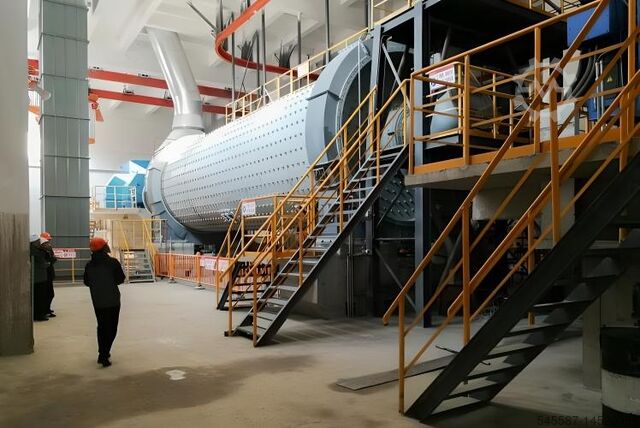
Ball mill for powder and mining plant
Mingyuan Ball Mill For Fine PowderPowder grinding mill for coal, silica
Call
Condition: new, functionality: fully functional, power: 55 kW (74.78 HP), Year of construction: 2026, Ball Mill for Powder and Mining Plant: Structure, Function, and Technical Details
A ball mill is a key grinding machine widely used in mining, metallurgy, cement, chemical, and powder-making industries. It is designed to grind various ores and other materials into fine powder through impact and attrition between steel balls and the material inside a rotating cylindrical shell. In mining plants, ball mills are essential for ore beneficiation, preparing materials for flotation, magnetic separation, or leaching processes. In powder production, they ensure uniform particle size and high surface area for further processing.
Working Principle
The ball mill operates on a simple yet effective principle: as the cylindrical shell rotates around its horizontal axis, the grinding media (steel or ceramic balls) are lifted along the inner wall by centrifugal force and friction. When they reach a certain height, they fall freely, striking and grinding the material below. This repeated motion causes both impact and abrasion, reducing the material to the desired fineness. The grinding process can be performed in dry or wet conditions depending on the application.
Structural Composition
A standard ball mill consists of several main components:
Feeding part: Equipped with a feeder or screw conveyor to ensure uniform material input.
Discharging part: Can be grate type or overflow type, depending on the discharge method.
Rotating part: The cylindrical shell made of steel plates, lined with wear-resistant liners.
Transmission system: Includes motor, reducer, small transmission gear, and electrical control.
Grinding media: Steel balls or ceramic balls of different diameters for efficient grinding.
The internal liner design and ball size distribution are optimized to achieve maximum grinding efficiency and minimal energy consumption.
Technical Details
Typical Specifications:
Feeding size: ≤25 mm
Discharge size: 0.074–0.4 mm
Capacity: 0.65–615 t/h (depending on model and material hardness)
Cylinder speed: 18–38 r/min
Power: 18.5–4500 kW
Liner material: High manganese steel, rubber, or alloy steel
Grinding media load: 30–45% of cylinder volume
Operating Modes:
Dry grinding: Suitable for materials that must remain moisture-free, such as cement clinker, limestone, and quartz.
Wet grinding: Common in ore beneficiation, where water or slurry improves grinding efficiency and particle uniformity.
Application in Mining Plants
In mining operations, ball mills are used after crushing to further reduce ore size and liberate valuable minerals. They are integrated into grinding circuits with classifiers, hydrocyclones, and flotation systems. The ground material is classified by size, and oversized particles are returned to the mill for regrinding. This closed-circuit system ensures consistent product fineness and efficient energy use.
Common Applications:
Ppsdpfx Agjq Nf U Eegsw
Gold, copper, iron, and zinc ore grinding
Cement clinker and slag processing
Silicate and ceramic powder production
Coal and mineral powder preparation
Conclusion
A ball mill is an indispensable piece of equipment in both powder production and mining beneficiation plants. Its ability to grind materials into fine, uniform particles makes it vital for downstream processes such as flotation, sintering, and chemical reactions.
Listing
Zheng Zhou Shi
3,684 km
Crushing equipment
Mingyuan Dry and Wet Ball MillCustomerizable Model for ball mill plant
Call
Condition: new, functionality: fully functional, Year of construction: 2026, Dry and Wet Ball Mill: Structure, Operation, and Technical Details
Ppedpfx Agsq Nx Alegsw
A ball mill is a fundamental grinding device used in mineral processing, cement manufacturing, chemical production, and other industrial applications. It works by rotating a cylindrical shell filled with grinding media—usually steel balls—causing impact and friction that reduce materials to fine powder. Based on the grinding environment, ball mills are classified into dry and wet types, each suited for specific materials and process requirements.
Working Principle
Both dry and wet ball mills operate on the same mechanical principle. The rotating cylinder, driven by a motor through a gear system, lifts the grinding media and material along the inner wall. As the rotation continues, the balls fall under gravity, striking and grinding the material. The difference lies in the presence or absence of a liquid medium during grinding.
Dry Ball Mill
A dry ball mill is used when the material must remain moisture-free or when water could affect product quality. It is commonly applied in cement clinker, limestone, quartz, and refractory material grinding. The discharge can be either grate type or overflow type, depending on the desired fineness.
Technical Features:
Feeding size: ≤25 mm
Discharge size: 0.075–0.4 mm
Capacity: 0.65–90 t/h
Liner material: High manganese steel or wear-resistant alloy
Drive system: Gear-driven or direct-coupled motor
Dust control: Equipped with air exhaust and dust collector
Advantages:
Suitable for materials sensitive to moisture
No drying process required after grinding
Lower corrosion risk and simpler maintenance
Easier material classification and separation
Limitations:
Dry grinding produces more dust and heat, requiring efficient ventilation and dust collection systems.
Wet Ball Mill
A wet ball mill operates with water or another liquid medium added to the material. The slurry formed during grinding improves efficiency by reducing friction and preventing excessive heat buildup. It is widely used in ore beneficiation, ceramics, and chemical industries.
Technical Features:
Feeding size: ≤25 mm
Discharge size: 0.074–0.2 mm
Capacity: 0.65–615 t/h
Liner material: Rubber or high-chromium steel
Discharge method: Overflow or grate type
Auxiliary equipment: Classifier, pump, and thickener for slurry circulation
Advantages:
Higher grinding efficiency and finer particle size
Reduced dust and noise levels
Continuous operation suitable for beneficiation circuits
Better control of particle uniformity
Limitations:
Requires drying if the final product must be in powder form and involves more complex slurry handling.
The selection between dry and wet grinding depends on the material characteristics, downstream process, and environmental conditions. Dry mills are preferred for materials that must stay moisture-free, while wet mills are ideal for fine grinding and slurry-based processes.
Conclusion
Dry and wet ball mills share the same mechanical structure but differ in their grinding environment and application scope. The dry type offers simplicity and low maintenance for moisture-sensitive materials, while the wet type provides higher efficiency and finer output for mineral and chemical processing. Understanding their technical parameters and operational differences ensures optimal equipment selection, improved productivity, and reliable performance in industrial grinding operations.
Listing
Mala Vranjska
6,015 km
Spiral mixer
Spiral dough mixer for 100 kg flourDiosna 5.500EUR
Call
Condition: like new (used), Generally overhauled
Price: 5.500EUR
Spiral dough mixer
Capacity: 100 kg of flour
160/180 kg of dough
Psdpfx Aox N Ed Teggopw
Diosna
Container volume: 260 liters
Electrical power: 380V / 50Hz / 3N/PE
Two timers
Two speeds
Rewind option
Half cover with safety switch
Wheels with brakes
Listing
Zheng Zhou Shi
3,684 km
Crushing equipment
Hammer crusher /Hammer milllimestone, coal gangue,concrete crusher
Call
Condition: new, power: 55 kW (74.78 HP), Year of construction: 2026, A hammer crusher is a machine that uses high-speed rotating hammers to crush and break materials into smaller pieces. It is commonly used in various industries, including mining, cement, construction, metallurgy, and chemical processing. The basic principle of a hammer crusher involves a central rotor with hammers or blades that rotate and impact the material being crushed against a hard surface.
Here are the key features and components of a typical hammer crusher:
1. Rotor:
- The rotor is a central component of the hammer crusher. It usually consists of a shaft with multiple discs or hammers attached.
- The rotor's rotation causes the hammers to swing outward, impacting the material.
2. Hammers:
- Hammers are the striking or crushing elements attached to the rotor. They can be fixed or pivotally attached.
- The material is crushed as the hammers impact it, generating kinetic energy.
3. Casing or Housing:
- The casing or housing encloses the rotor and hammers, providing structural support and safety.
- It also serves to contain the crushed material and direct it to the desired discharge point.
4. Grate Bars or Screens:
- Positioned at the bottom of the crusher casing, grate bars or screens control the size of the crushed material by allowing smaller particles to pass through while keeping larger ones inside for further crushing.
5. Impact Plate:
- Located near the bottom of the crusher, the impact plate absorbs the impact energy generated by the hammers and prevents excessive wear on the casing.
6. Drive System:
- The hammer crusher is powered by a motor connected to the rotor through a drive belt or coupling.
- The motor provides the necessary power to rotate the rotor, enabling the hammers to crush the material.
7. Adjustable Discharge:
- Some hammer crushers feature an adjustable discharge, allowing users to control the size of the crushed material by adjusting the gap between the impact plate and the hammers.
8. Applications:
- Hammer crushers are used for crushing a variety of materials, including coal, limestone, gypsum, aggregates, and various minerals.
- They are commonly employed in the mining industry for primary and secondary crushing of ore.
- In the cement industry, hammer crushers are used to crush limestone and other materials before they are mixed into the raw meal.
9. Maintenance and Safety:
- Regular maintenance is essential to ensure the efficient operation of a hammer crusher. This includes checking and replacing worn hammers, inspecting the rotor, and lubricating moving parts.
- Safety features, such as access doors and safety guards, are typically incorporated to prevent accidents during operation and maintenance.
Technical Specifications (Typical MINGYUAN Series)
Model Category,Max Feed Size,Capacity (t/h),Motor Power (kW),Rotor Speed (rpm)
Small (PC-400), ≤100mm, 5 – 10, 11, "1,000"
Medium (PC-800),≤200mm, 20 – 50, 55, 750 – 900
Heavy (PC-1200),≤350mm, 80 – 110, 132 – 160, 600 – 750
Pedeq I Nxdepfx Aggopw
Heavy Hammer,"≤1,200mm", "500 – 1,000+ ","400 – 1,000" ,Variable
Listing
Zheng Zhou Shi
3,684 km
Mill / grinding mill
Batch Ball Mill, Silica grinding millQuartz ball mill, silica powder grinding
Call
Year of construction: 2026, condition: new, ceramic ball mill ,Batch ball mill ,also called ceramic ball mill ,it is used for fine grinding of feldspar,quartz,clay,ore and so on.The ceramic ball mill is mainly used for material mixing, grinding,uniform product fineness,and saving power.It can be dry or wet.The machine can use different liner types according to production needs to meet different needs.The fineness of the grinding operation is controlled by the grinding time
ceramic ball mill Working principle
when ball mill working,steel balls inside drum will rotate with the drum to some height,and then steel balls fall down with materials to reach the point of grinding.
Working Principle of Ceramic ball mill
Ppedpfxovzx Aue Aggow
ceramic ball mill ,Intermittent ball mill grinding operation is finished in the cylinder body. When the cylinder rotates, materials ascend to a certain height and then fall along a certain path due to the balls' gravity. Two forces are generated on the balls inside. One is the force on balls through tangent direction; the other is a opposite force in the contrast to the diameter of balls, as a result of the force generated when the balls slide down. These two forces will constitute a couple for the steel balls. The balls are squeezed between the cylinder and the adjacent steel balls, so the couple can make unequal-sized friction force. The balls will orbit along with the cylinder axis and then fall down, which can produce a strong impact force on the ores in the cylinder body and, as a result, the ores will be crushed. In conclusion, the ores in the cylinder body are mainly crushed by composite effect of peeling force, impact force and extrusion force.
Ceramic ball mill also named Intermittent ball mill which adopts the wet intermittent operation, is used for fine grinding and mixing the material such as feldspar, quartz, clay ceramic raw materials. The discharging and the mud size can through through 1000 sieve pore. This machine is high milling machinery, materials should be Broken in the fineness of the state into the grinding mill to get the highest efficiency and economic benefits.
The cement mill is key equipment for the grinding process of the cement clinker after the crushing process of it. It is mainly used in the cement silicate product industry. After long term design and manufacture of the cement mill, our company now has series of cement mill with various specifications to meet with different requirement from our customers.
Features of Cement Mill
Our company adopts suitable transmission methods according to different specifications. We have brim drive and center drive as transmission form. The cylinder adopts new type step lining to increase the grinding area. And it is easily repairable and changeable. The new designed separate-chambered structure adopts flexible lifting blade and fixed lifting blade and it is easily fixed and repaired.
Technical Details
We have different models and options for different requirements, please contact us for more info.
Listing
Zheng Zhou Shi
3,684 km
Glass grinding machine
Henan Mingyuan Ceramic /Silica Ball MillBatch ball mill for glass ceramic making
Call
Condition: new, Year of construction: 2026, power: 7.5 kW (10.20 HP), Batch ball mills find applications in various industries where the processing of materials in discrete batches is required. The versatility of batch ball mills makes them suitable for a range of applications. Here are some common batch ball mill applications:
1. Ceramics Industry:
- *Glaze Preparation:* Batch ball mills are extensively used in the ceramics industry for preparing glazes. Raw materials such as feldspar, quartz, and clay are ground with ceramic balls to achieve the desired particle size for glaze formulation.
2. Chemical Industry:
- *Material Grinding:* Batch ball mills are used for grinding and blending various chemical materials. This includes the production of pigments, dyes, and other specialty chemicals where precise particle size control is crucial.
3. Pharmaceuticals:
- *Drug Formulation:* In pharmaceutical manufacturing, batch ball mills are used for grinding and blending powders to create drug formulations. The controlled environment provided by these mills is essential for maintaining the integrity of pharmaceutical compounds.
Ppodpfx Asq I N H Noggsw
4. Food Industry:
- *Ingredient Mixing:* Batch ball mills may find application in the food industry for mixing and grinding ingredients. This can include the production of food additives, flavorings, and other powdered or granular products.
5. Mining and Minerals Processing:
- *Ore Grinding:* Batch ball mills are used in mining and minerals processing for grinding minerals and ores. The controlled grinding helps in obtaining the desired particle size for subsequent processes, such as mineral separation or extraction.
6. Paints and Coatings:
- *Pigment Dispersion:* In the paints and coatings industry, batch ball mills are employed for dispersing pigments into paint formulations. Achieving a uniform particle size is crucial for the quality and appearance of the final coating.
7. Building Materials:
- *Raw Material Grinding:* Batch ball mills are used in the preparation of raw materials for the production of building materials, such as cement and concrete. Grinding of materials like limestone and clay helps in obtaining the desired fineness for subsequent processes.
8. Electronic Materials:
- *Ceramic Powder Processing:* In the electronics industry, batch ball mills can be employed for processing ceramic powders used in the production of electronic components and insulating materials.
9. Research and Development:
- *Material Testing:* Batch ball mills are often used in research and development laboratories for testing and optimizing material formulations. They provide a controlled environment for small-scale processing and experimentation.
10. Customized Applications:
- *Specialized Processes:* Batch ball mills can be adapted for various specialized processes in different industries where precise grinding and mixing are required. Custom modifications can be made based on specific application requirements.
When using a batch ball mill, it's important to consider factors such as the type of material being processed, desired particle size, and the specific requirements of the end product. Additionally, following the manufacturer's guidelines and maintaining proper operating conditions are essential for efficient and effective milling processes.
Technical details
We have different options for different requirements, please contact our team for more info.
Listing
Zheng Zhou Shi
3,684 km
Cement mill,clinker grinding plant
Clinker grinding mill / cement ball millcement grinding with air classifier
Call
Year of construction: 2026, condition: new, functionality: fully functional, A cement clinker grinding mill is a specialized equipment used to grind the hard nodular clinker into fine powder, which is cement. Most cement is currently ground in ball mills and also vertical roller mills, which are more effective than ball mills.
Here are key features and information about cement clinker grinding mills:
1. Raw Materials:
- The main raw material for making cement is clinker, which is produced by sintering limestone and clay. Other materials such as gypsum, fly ash, or slag may also be added during the grinding process to achieve specific properties.
2. Grinding Process:
- The clinker and other additives are finely ground in the grinding mill to produce cement. The grinding process is a crucial step in cement production and contributes significantly to the final quality of the product.
3. Types of Mills:
- Ball Mills: Traditional ball mills are commonly used for grinding clinker. They operate by rotating a cylinder with steel grinding balls, causing the balls to fall back into the cylinder and onto the material to be ground.
- Vertical Roller Mills (VRM): VRM technology has become increasingly popular for clinker grinding. These mills use a rotating table with rollers to crush and grind the clinker, providing energy efficiency and a smaller footprint compared to ball mills.
4. Gypsum Addition:
- Gypsum is often added during the grinding process to control the setting time of the cement. It prevents flash setting of the clinker and facilitates the formation of a workable and pumpable cement paste.
5. Quality Control:
- Quality control measures, such as monitoring the fineness of the cement, chemical composition, and other properties, are implemented during the grinding process to ensure the final product meets the required specifications and standards.
6. Clinker Cooling:
- Before grinding, the clinker is produced by heating the raw materials in a kiln. The clinker is then cooled before entering the grinding mill to prevent excessive heat build-up during grinding.
7. Dust Collection and Environmental Considerations:
- Dust collectors and air pollution control systems are often employed to capture and control the dust generated during the grinding process, addressing environmental and safety concerns.
Podpfxjq Nfbhs Aggopw
8. Packaging and Storage:
- After grinding, the cement is typically stored in silos before being packaged in bags or dispatched in bulk for distribution to construction sites or for sale in the market.
Cement clinker grinding mills play a crucial role in the cement production process, and advancements in technology continue to improve the efficiency and environmental sustainability of the grinding process.
Technical details
We have different options for different requirements, please contact our team for more info.
Listing
Zheng Zhou Shi
3,684 km
Powder grinding mill
ball mill for mining &fine powder makingsilica/Barite/limestone powder plant
Call
Condition: new, Year of construction: 2026, power: 300 kW (407.89 HP), Ball Mill for Mining & Fine Powder Making:
A ball mill is a fundamental grinding device widely used in mining, metallurgy, cement, and chemical industries. It is designed to grind ores and other materials into fine powder through impact and attrition between steel balls and the material inside a rotating cylindrical shell. In mining plants, ball mills are essential for ore beneficiation, while in powder-making industries, they ensure uniform particle size and high surface area for further processing.
Working Principle
The ball mill operates on the principle of impact and friction. As the cylindrical shell rotates around its horizontal axis, the grinding media—usually steel or ceramic balls—are lifted along the inner wall by centrifugal force and friction. When they reach a certain height, they fall freely, striking and grinding the material below. This repeated motion breaks down the material into fine particles. The process can be carried out in dry or wet conditions depending on the application.
Structural Composition
A standard ball mill consists of several main components:
Feeding part: Ensures uniform material input through a feeder or screw conveyor.
Discharging part: Can be grate type or overflow type, depending on the discharge method.
Rotating part: The cylindrical shell made of steel plates, lined with wear-resistant liners.
Transmission system: Includes motor, reducer, small transmission gear, and electrical control.
Grinding media: Steel or ceramic balls of various diameters for efficient grinding.
The internal liner design and ball size distribution are optimized to achieve maximum grinding efficiency and minimal energy consumption.
Technical Details/Typical Specifications:
Feeding size: ≤25 mm
Discharge size: 0.074–0.4 mm
Capacity: 0.65–615 t/h (depending on model and material hardness)
Cylinder speed: 18–38 r/min
Power: 18.5–4500 kW
Liner material: High manganese steel, rubber, or alloy steel
Grinding media load: 30–45% of cylinder volume
Ppodpfxsq Ngafj Aggsw
Operating Modes:
Dry grinding: Used for materials that must remain moisture-free, such as cement clinker, limestone, and quartz.
Wet grinding: Common in ore beneficiation, where water or slurry improves grinding efficiency and particle uniformity.
Application in Mining and Powder Production
In mining operations, ball mills are used after crushing to further reduce ore size and liberate valuable minerals. They are integrated into grinding circuits with classifiers, hydrocyclones, and flotation systems. The ground material is classified by size, and oversized particles are returned to the mill for regrinding. This closed-circuit system ensures consistent product fineness and efficient energy use.
In fine powder production, ball mills are used to produce materials such as silicate, ceramic powder, refractory materials, and chemical raw materials. The uniform particle size achieved by ball milling enhances product quality and performance in downstream applications.
Conclusion
A ball mill is an indispensable piece of equipment for both mining and fine powder making. Its ability to grind materials into fine, uniform particles makes it vital for ore beneficiation and industrial powder production. With flexible configurations, high efficiency, and reliable operation, modern ball mills provide a cost-effective and energy-efficient solution for large-scale grinding, ensuring consistent quality and productivity across diverse applications.
Listing
Zheng Zhou Shi
3,684 km
Fine Powder Grinding Plant
Cement mill & Ultrafine Grinding MillFine Powder Grinding Plant
Call
Condition: new, functionality: fully functional, Year of construction: 2026, Cement Mill & Ultrafine Grinding Mill
🏗️ Introduction to Cement Mill & Ultrafine Grinding Mill
In the world of construction and materials processing, achieving the right particle size is essential. Introducing the Cement Mill and Ultrafine Grinding Mill—two pivotal machines designed to deliver superior grinding performance for cement production and ultrafine materials. Let’s dive into their features and applications! 💼
🔥 What is a Cement Mill?
A Cement Mill is a crucial piece of equipment in cement production. It grinds clinker, gypsum, and other additives to produce fine cement powder. This machine ensures the optimal particle size for high-quality cement, essential for building robust structures. 🚀
🔧 What is an Ultrafine Grinding Mill?
An Ultrafine Grinding Mill is designed to produce extremely fine powders from various raw materials, such as minerals, chemicals, and industrial waste. It operates at high efficiency, delivering ultra-fine materials for advanced applications like coatings, plastics, and ceramics. 🌟
Ppedpjq Nyydjfx Aggsw
💼 Key Benefits of Using Cement Mill & Ultrafine Grinding Mill
1. High Efficiency: Both mills are engineered for maximum efficiency, ensuring rapid processing times and reduced energy consumption. 🌿💡
2. Superior Grinding Performance: Achieve consistent, high-quality output with precise control over particle size. 🏭
3. Versatility: Suitable for a wide range of materials, making them essential for various industrial applications. 🌳
4. Durability and Reliability: Built with robust materials, these mills offer long-lasting performance in demanding industrial environments. 💪
📈 Applications in Industry
Cement Mill Applications:
1. Cement Production: Essential for producing high-quality cement for construction projects.
2. Infrastructure Development: Used in creating concrete for roads, bridges, and buildings.
Ultrafine Grinding Mill Applications:
1. Mineral Processing: Producing ultra-fine powders for advanced material applications.
2. Chemical Manufacturing: Used in creating fine chemicals for various industrial processes.
3. Environmental Applications: Grinding industrial waste for recycling and reuse. ♻️
🌟 Conclusion
Whether you’re in construction, materials processing, or advanced manufacturing, the Cement Mill and Ultrafine Grinding Mill are indispensable tools. Their efficiency, versatility, and superior performance make them a valuable addition to any production line. Contact us today to learn more about these innovative machines and how they can revolutionize your operations! 📞
Listing
Zheng Zhou Shi
3,684 km
Powder grinding machine
Fine powder grinding mill, clinker millSuperfine ball mill for micro powder
Call
Condition: new, Year of construction: 2026, A superfine ball mill is a type of milling machine that is used to grind materials into very fine particles. This type of ball mill has some distinctive features that make it especially suitable for processing even the hardest materials with low contamination and minimal wear. It is commonly used in various industries, including pharmaceuticals, minerals, pigments, and chemicals, for producing micro powder or nanoparticles.
Here are some key features and considerations for a superfine ball mill for micro powder:
Ppedpfxoq Nf Uwo Aggew
1. High Grinding Efficiency: Superfine ball mills are designed to achieve high grinding efficiency by utilizing grinding media with a relatively small size, leading to a large surface area for grinding.
2. Precision Control: These mills often come with advanced control systems to regulate parameters like rotation speed, temperature, and grinding time, allowing precise control over the particle size distribution.
3. Specialized Design: The mill is typically designed with features to minimize contamination, such as using materials resistant to wear and corrosion. Some mills also have cooling systems to prevent overheating during the milling process.
4. Variety of Materials: Superfine ball mills can handle a wide range of materials, including both brittle and fibrous substances. They are often used for milling hard materials that require fine grinding, such as ceramics, minerals, or pigments.
5. Size Reduction to Micro or Nano Level: The primary goal of a superfine ball mill is to reduce particle size to the micro or even nano level. This is achieved by the intense grinding action that occurs within the mill.
6. Classifier System: Some superfine ball mills incorporate a classifier system to control the particle size distribution more precisely. This allows for the separation of fine particles from coarser ones during the milling process.
7. Batch or Continuous Operation: Depending on the specific design, these mills can operate in either batch or continuous mode, offering flexibility based on the production requirements.
8. Safety Measures: Safety features may be included, such as monitoring and control systems to prevent overloading, overheating, or other potential issues during operation.
When selecting a superfine ball mill for micro powder production, it's important to consider the specific requirements of your application, the characteristics of the materials you're working with, and the desired final particle size distribution. Always follow the manufacturer's guidelines for operation, maintenance, and safety to ensure optimal performance and longevity of the equipment.
Listing
Borken
7,009 km
Material testing machine
Zwick/Roell (100 kN)BTC-FR100SW.A4K u. Hochtemperaturofen
Call
Condition: used, Zwick/Roell Materials Testing Machine BTC-FR100SW.A4K with
MAYTEC High-Temperature Furnace HTO-09/2 1200°C-SG
and Load Cell TC-LC100KN.G02 (100 kN)
The testXpert III 1.6 software serves as control and evaluation software for ZwickRoell materials testing machines. It enables standardized test procedures, logs measurement data, and supports traceability, among other features.
Windows 11 Compatibility: ZwickRoell’s testing software (especially testXpert III) supports current Windows platforms, allowing use with Windows 11.
Product Description:
For sale is a high-quality materials testing system, consisting of:
- Zwick/Roell Materials Testing Machine BTC-FR100SW.A4K
- MAYTEC High-Temperature Furnace HTO-09/2 1200°C-SG
- Load Cell TC-LC100KN.G02 (100 kN)
The system comes from laboratory usage and was employed for mechanical materials testing at ambient and high temperatures. All devices are used, well-maintained, and fully functional.
Technical Highlights – Zwick/Roell Testing Machine
Type: BTC-FR100SW.A4K
Maximum test force: 100 kN
AC drive 4 kW, widened stand design (W)
Ppsdpfx Agjzizlqjgsw
Supply: 400 V / 50–60 Hz / 3Ph+N+PE, power consumption 9 A
Working area: Height 1,765 mm, Width 1,030 mm
Crosshead speed: 0.0005 – 1000 mm/min
Positioning accuracy: < 2 µm
Noise level: ≤ 70 dB(A)
Test force range: 0.4–100% (Class 1) / 2–100% (Class 0.5) according to ISO 7500/1
Power requirement: 5.0 kVA
Load frame height: approx. 2.32 m
Machine weight: approx. 1,820 kg
Load Cell: TC-LC100KN.G02 (IP67, GTM, 100 kN, 20 kg)
Technical Highlights – MAYTEC High-Temperature Furnace
Maximum temperature: 1200 °C
2 separately controllable heating zones
Power: 0.66 kW / 22 A per zone
Supply: 30 V / 50 Hz per zone
Ideal for high-temperature testing in combination with the Zwick testing machine
Load Cell TC-LC100KN.G02
Nominal force: 100 kN
Protection rating: IP67
Precise force measurement to ISO 7500/1
Weight: 20 kg, GTM design
Important Note:
"The table shown in the photos is not included in the sale."
Condition: used
Scope of delivery: (see pictures)
Zwick/Roell Materials Testing Machine BTC-FR100SW.A4K
MAYTEC High-Temperature Furnace HTO-09/2 1200°C-SG
Load Cell TC-LC100KN.G02 (100 kN)
Connection cables and mounting accessories (if available)
(Specifications and technical data may be subject to change and errors.)
Further questions can be answered by phone.
Listing
Radom
6,026 km
Corner Trimmer, Cutter
Tranklein EK-D 100 Double sideCorner Trimmer, Cutter
Call
Condition: good (used), Tranklein EK-D 100 Double Corner Trimmer
Made in Germany by Karl Tranklein.
Very good condition. This is a professional, production-grade corner rounding tool.
Sturdy cast iron construction ensures precise operation.
Two trimming heads.
Interchangeable knives.
Adjustable margins.
Includes one set of knives with an 8mm radius.
Stack height: 100mm
Weight: 140kg
Cycles per minute: 50 cycles
Power supply: 400V
Ppsdpfx Aszdaxtoggew
Listing
Radom
6,026 km
Corner Cutter
Karl Tranklein EK-100Corner Cutter
Call
Condition: good (used), Karl Tranklein EK-100 Corner Rounder
Made in Germany.
Very good condition. This is a professional, production-grade corner rounding machine.
Sturdy cast iron construction and strong pressure ensure precise operation.
Replaceable blades.
Psdpfszdar Tex Aggopw
Adjustable margins.
One set of blades with a 12 mm radius is included.
Stack height: 100 mm
Weight: 130 kg
Cycles per minute: 50 cycles/min
Power supply: 400 V
Waste is directed outside the machine to the chutes.
This is the model currently in production.
Trust Seal
Dealers certified through Machineseeker

Listing
Wiefelstede
6,930 km
DC geared motor 57V 200 rpm
Nord B&R1SI50F F 8LVA23.R0030D100-0
Call
Condition: good (used), Year of construction: 2021, DC motor, servo motor, geared motor, electric motor, DC geared motor, DC shunt-wound geared motor
-Manufacturer of gearbox: Nord., type 1SI50F F i =15
-Speed: 200 rpm
-Engine manufacturer: B&R Type 8LVA23.R0030D100-0
-Voltage: 57 V
-Shaft: Ø 20 x 25 mm
-Dimensions: 275/140/H175 mm
-Weight: 7.2 kg
Ppedpfx Ajyh Uhujggsw
Listing
Wiefelstede
6,930 km
Inverter module
B&RACOPOS micro 100S 80VD1 00PS.C02X-01
Call
Condition: good (used), Servo drive, power supply module, control unit, converter, controller, servo module, axis amplifier, DC converter, inverter
-Manufacturer: B&R, ACOPOS micro 100S Servo inverter module
-Type: 80VD1 00PS.C02X-01
-Dimensions: 200/65/H105 mm
Podpfeyhmx Ijx Aggopw
-Weight: 0.9 kg.
Listing
Wiefelstede
6,930 km
DC geared motor 57V 200 rpm
Nord B&R1SI50F F 8LVA23.R0030D100-0
Call
Condition: good (used), Year of construction: 2021, DC motor, servo motor, geared motor, electric motor, DC geared motor, DC shunt-wound geared motor
Psdeyh Ai Tspfx Aggepw
-Manufacturer of gearbox: Nord., type 1SI50F F i =15
-Speed: 200 rpm
-Engine manufacturer: B&R Type 8LVA23.R0030D100-0
-Voltage: 57 V
-Shaft: Ø 25 x 50 mm
-Dimensions: 275/200/H170 mm
-Weight: 7.5 kg
Listing
Wiefelstede
6,930 km
Servo Drive
B&R80PS080X3.10-01
Call
Condition: good (used), Year of construction: 2015, Servo drive, power supply module, control unit, converter, controller, servo module, axis amplifier, DC converter, inverter
-Manufacturer: B&R, power supply module
-Type: 80PS080X3.10-01
-Dimensions: 295/250/H70 mm
-Weight: 3.5 kg.
Psdpfjyhmf Uox Aggepw
We make it easier for you to find: "percussion mill mfl r-ci 100-100"
You will receive new offers immediately and free of charge via e-mail
You can easily terminate the search request at any time
This may be of interest to you