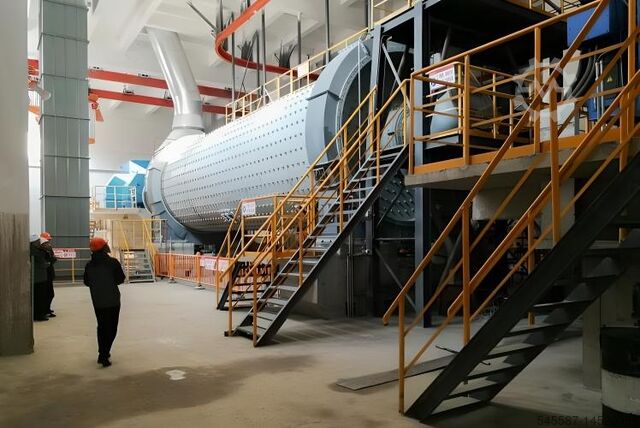
Used Metesa Ng-700L for sale (8,514)
Sort results
- Lowest price Highest price
- Newest listings Oldest listings
- Shortest distance Farthest distance
- Newest year of manufacture Oldest year of manufacture
- Latest update Oldest update
- Manufacturer A to Z Manufacturer Z to A
- Relevance
- Lowest price
- Price
- Highest price
- Price
- Newest listings
- Release date
- Oldest listings
- Release date
- Shortest distance
- Distance
- Farthest distance
- Distance
- Newest year of manufacture
- Year of construction
- Oldest year of manufacture
- Year of construction
- Latest update
- Update
- Oldest update
- Update
- Manufacturer A to Z
- Manufacturer
- Manufacturer Z to A
- Manufacturer
- designation from A to Z
- Description
- designation from Z to A
- Description
- Model from A to Z
- Model
- Model from Z to A
- Model
- Lowest reference
- Ref.No.
- Highest reference
- Ref.No.
- Shortest runtime
- Runtime
- Longest duration
- Runtime
- Relevance
- Relevance
Listing
Dnipro
4,979 km
Manual folding machine
LLC Evolutionermanual folding machine MB-3150
Call
Condition: new, Year of construction: 2025, Manual bending machine MB-3150
The principal difference that makes our manual bending machine much more functional than other company’s bending machines it’s the removable upper bar. So it lets you the opportunity to replace the slim upper bar to a bar with another configuration (segmented bar or bar for producing of the corrugated sheets). It’s help you to save money for buying additional machines and save the working place.
Iodpfjv T Uvzjx Ac Netg
Our manual bending machine has strong rigid construction so it lets you to bend metal sheets without any unwanted deformations.
You can purchase manual bending machine MB-3150 mm in a standard set (manual bending machine, roller shear, back table, alidade, angle limiter, side handles). Or you can get additional equipment for the manual bending machine MB-3150 mm: pedals, segmented bar, bar for producing of the corrugated board, absorber, front limiters)
There are fourth types of the manual bending machines MB we make:
Manual bending machine 1400x1.2mm
Manual bending machine 2150x1mm
Manual bending machine 2650x0.8mm
Manual bending machine 3150x0.7mm
This manual bending machine bends metal sheets with maximum thickness 0.7mm
Our enterprise has started to produce this kind of the manual bending machines since 2003 so we have great experience in doing our job and can propose the great solution to your business.
To get information about the price of this bending machine and the way it could be delivered to your location just contact us. We will give you all the information you need.
Specifications
Maximum material width (mm) 3150
Maximum material thickness (mm) 0.7
Listing
Vilnius
5,861 km
Reefer semitrailer
KRONESDR Cool Liner FP 45 ThermoKing SLXi 300
Call
Condition: used, functionality: fully functional, maximum load weight: 27,000 kg, overall weight: 8,806 kg, axle configuration: 3 axles, first registration: 06/2023, total length: 13,400 mm, total width: 2,460 mm, suspension: air, color: white, Year of construction: 2023, Equipment: cooling unit, full service history, power assisted steering, Technical specifications
Itsdpfxoy Shkbs Ac Nsg
FP 45 SMART.
Cooling unit Thermo King SLX i 300-50, Diesel/Electric,. including installation and connection of th
Container type double rear doors, 3 piece aluminium hinges on each door half; quick replacement doo
Tool box, PVC, left side behind the axles, dimensions approx. 650x490x450 mm.
Fuel tank plastic, for approximately 240 ltr., tank opening on both sides, cover with cylinder lock.
Tyres - 6 x 385/65 R22.5.
Internal length: 13311mm. Internal width: approx. 2490mm. Internal height: 2650mm. Total height (unl
Pallet box for 36 Euro-pallets.
Chassis MB 7350 NOVA GREY SDGL. Axles including hub RAL 9005 JET BLACK.
Ventilation flap, at the front wall, at top of left side. Ventilation flap, at rear, left side at to
spare wheel 385/65 R22.5.
Listing
Shanghai
4,389 km
Horizontal 5-axis pallet machining center - Flipping
TOPNC ähnlich BAVIUSHorizontal 5 Achs Paletten BAZ- Flipping
Call
Condition: as good as new (ex-display), Year of construction: 2026, operating hours: 10 h, functionality: fully functional, High-end 5-axis flipping machine for aluminum structural components available at short notice. 90–95% completed, available for on-site demonstration under power. Delivery approx. 3 months.
For sale is a state-of-the-art horizontal 5-axis flipping machine (HM2040AL-AC), specifically designed for machining large-format, thin-walled aluminum structural components in the aerospace sector.
The machine is approximately 90–95% completed, installed at the factory, and can be inspected under real machining conditions. 👉 This machine platform has already been installed more than 80 times.
Highlights
- Available at short notice (delivery time approx. 3 months)
- High-end configuration (Fischer / Siemens / Heidenhain)
- Full 5-axis machining in a single setup
- Integrated flipping system (90° rotation)
- Ideal for aerospace aluminum structures
- Very attractive price-performance ratio
- Includes 2 pallets sized 2000 x 4000 mm, setup station, and rotary table
Technical Data
- Travel: 4300 / 2200 / 650 mm
- Table size: 4000 × 2000 mm
- Max. load: 4000 kg
- Rapid traverse: 50 m/min
- Feed rate: 30 m/min
- Positioning accuracy: up to 0.008 mm
- Repeatability: up to 0.004 mm
Spindle
- Fischer (Switzerland)
- 30,000 rpm
- 125 kW
- 66 Nm
- HSK-A63
- ICS 70 bar
Features
- 5-axis torque motor swiveling head (zero-backlash)
- Siemens SINUMERIK 840D sl
- 60-position tool magazine
- Closed-loop measuring system (Heidenhain)
- Automatic flipping system
- High-pressure cooling
- Chip conveyor & central lubrication
Options
- Renishaw laser tool measurement
- Workpiece probe
- Ultrasonic thickness measurement (≤10 µm)
- Vacuum clamping system
- Spindle thermal compensation
- R-TEST calibration system
Including setup station and pallets!
Iodpey H Ncbefx Ac Nstg
German service, spare parts warehouse, etc.

Get information now
+44 20 806 810 84
+44 20 806 810 84
List now
*per listing / month
Listing
Zheng Zhou Shi
3,684 km
Crushing equipment
Hammer crusher /Hammer milllimestone, coal gangue,concrete crusher
Call
Condition: new, power: 55 kW (74.78 HP), Year of construction: 2026, A hammer crusher is a machine that uses high-speed rotating hammers to crush and break materials into smaller pieces. It is commonly used in various industries, including mining, cement, construction, metallurgy, and chemical processing. The basic principle of a hammer crusher involves a central rotor with hammers or blades that rotate and impact the material being crushed against a hard surface.
Here are the key features and components of a typical hammer crusher:
1. Rotor:
- The rotor is a central component of the hammer crusher. It usually consists of a shaft with multiple discs or hammers attached.
- The rotor's rotation causes the hammers to swing outward, impacting the material.
2. Hammers:
- Hammers are the striking or crushing elements attached to the rotor. They can be fixed or pivotally attached.
- The material is crushed as the hammers impact it, generating kinetic energy.
3. Casing or Housing:
- The casing or housing encloses the rotor and hammers, providing structural support and safety.
- It also serves to contain the crushed material and direct it to the desired discharge point.
4. Grate Bars or Screens:
- Positioned at the bottom of the crusher casing, grate bars or screens control the size of the crushed material by allowing smaller particles to pass through while keeping larger ones inside for further crushing.
Isdoq I Nxdjpfx Ac Nstg
5. Impact Plate:
- Located near the bottom of the crusher, the impact plate absorbs the impact energy generated by the hammers and prevents excessive wear on the casing.
6. Drive System:
- The hammer crusher is powered by a motor connected to the rotor through a drive belt or coupling.
- The motor provides the necessary power to rotate the rotor, enabling the hammers to crush the material.
7. Adjustable Discharge:
- Some hammer crushers feature an adjustable discharge, allowing users to control the size of the crushed material by adjusting the gap between the impact plate and the hammers.
8. Applications:
- Hammer crushers are used for crushing a variety of materials, including coal, limestone, gypsum, aggregates, and various minerals.
- They are commonly employed in the mining industry for primary and secondary crushing of ore.
- In the cement industry, hammer crushers are used to crush limestone and other materials before they are mixed into the raw meal.
9. Maintenance and Safety:
- Regular maintenance is essential to ensure the efficient operation of a hammer crusher. This includes checking and replacing worn hammers, inspecting the rotor, and lubricating moving parts.
- Safety features, such as access doors and safety guards, are typically incorporated to prevent accidents during operation and maintenance.
Technical Specifications (Typical MINGYUAN Series)
Model Category,Max Feed Size,Capacity (t/h),Motor Power (kW),Rotor Speed (rpm)
Small (PC-400), ≤100mm, 5 – 10, 11, "1,000"
Medium (PC-800),≤200mm, 20 – 50, 55, 750 – 900
Heavy (PC-1200),≤350mm, 80 – 110, 132 – 160, 600 – 750
Heavy Hammer,"≤1,200mm", "500 – 1,000+ ","400 – 1,000" ,Variable
Listing
Zheng Zhou Shi
3,684 km
Crushing equipment
Spring & Hydraulic cone crusherSpring & Compound&Hydraulic cone crusher
Call
Condition: new, functionality: fully functional, fuel type: electric, Year of construction: 2026, Spring & Hydraulic Cone Crusher: Design, Operation, and Technical Insights
Cone crushers are vital in mining, metallurgy, and aggregate production, designed for secondary and tertiary crushing of hard and medium-hard materials. Among the most common types are the spring cone crusher and the hydraulic cone crusher, each offering distinct advantages in structure, performance, and control.
Spring Cone Crusher
The spring cone crusher is a traditional design that uses mechanical spring systems for overload protection. When uncrushable material enters the crushing chamber, the spring mechanism allows the bowl liner to move downward, preventing damage to the crusher. Once the foreign object passes, the springs restore the original position, ensuring continuous operation.
Structural Composition:
Main frame and base assembly
Eccentric shaft and transmission system
Fixed and moving cones (mantle and concave)
Spring and adjustment mechanism
Working Principle:
Material is fed into the crushing chamber and compressed between the mantle and concave. The laminated crushing principle ensures that particles are crushed by both impact and pressure, producing uniform and well-shaped aggregates.
Technical Highlights:
Feed size: ≤300 mm
Discharge size: 3–60 mm
Capacity: 30–700 t/h
Motor power: 75–400 kW
Advantages: Simple structure, low maintenance cost, stable performance, and reliable overload protection.
Applications:
Widely used in crushing granite, basalt, iron ore, copper ore, and limestone. It is suitable for medium-scale operations where cost efficiency and durability are priorities.
Hydraulic Cone Crusher
Isdpfx Aetxhybec Nstg
The hydraulic cone crusher is an advanced evolution of the spring design, integrating hydraulic systems for improved automation, safety, and precision. It replaces the mechanical spring system with hydraulic cylinders that control the discharge opening and provide overload protection.
Structural Composition:
Main frame and eccentric assembly
Hydraulic cylinders and control system
Crushing chamber with optimized liner design
Automatic lubrication and hydraulic adjustment units
Working Principle:
The hydraulic system adjusts the discharge opening and releases pressure automatically when uncrushable material enters. This prevents mechanical damage and allows the crusher to resume operation quickly. The combination of high-speed eccentric motion and optimized chamber geometry enhances crushing efficiency and product quality.
Technical Highlights:
Feed size: ≤320 mm
Discharge size: 3–50 mm
Capacity: 45–1200 t/h
Motor power: 90–630 kW
Advantages: Automatic cavity cleaning, precise control, high crushing ratio, and superior particle shape.
Applications:
Ideal for large-scale mining, aggregate production, and high-demand crushing lines requiring consistent output and minimal downtime.
Comparative Overview
Both crushers operate on the same compression principle but differ in control and automation. The spring cone crusher offers simplicity and cost-effectiveness, making it suitable for stable working conditions. The hydraulic cone crusher provides advanced control, faster adjustment, and higher efficiency, ideal for modern, large-capacity plants.
Listing
Zheng Zhou Shi
3,684 km
Mill / grinding mill
Batch Ball Mill, Silica grinding millQuartz ball mill, silica powder grinding
Call
Year of construction: 2026, condition: new, ceramic ball mill ,Batch ball mill ,also called ceramic ball mill ,it is used for fine grinding of feldspar,quartz,clay,ore and so on.The ceramic ball mill is mainly used for material mixing, grinding,uniform product fineness,and saving power.It can be dry or wet.The machine can use different liner types according to production needs to meet different needs.The fineness of the grinding operation is controlled by the grinding time
ceramic ball mill Working principle
when ball mill working,steel balls inside drum will rotate with the drum to some height,and then steel balls fall down with materials to reach the point of grinding.
Working Principle of Ceramic ball mill
ceramic ball mill ,Intermittent ball mill grinding operation is finished in the cylinder body. When the cylinder rotates, materials ascend to a certain height and then fall along a certain path due to the balls' gravity. Two forces are generated on the balls inside. One is the force on balls through tangent direction; the other is a opposite force in the contrast to the diameter of balls, as a result of the force generated when the balls slide down. These two forces will constitute a couple for the steel balls. The balls are squeezed between the cylinder and the adjacent steel balls, so the couple can make unequal-sized friction force. The balls will orbit along with the cylinder axis and then fall down, which can produce a strong impact force on the ores in the cylinder body and, as a result, the ores will be crushed. In conclusion, the ores in the cylinder body are mainly crushed by composite effect of peeling force, impact force and extrusion force.
Ceramic ball mill also named Intermittent ball mill which adopts the wet intermittent operation, is used for fine grinding and mixing the material such as feldspar, quartz, clay ceramic raw materials. The discharging and the mud size can through through 1000 sieve pore. This machine is high milling machinery, materials should be Broken in the fineness of the state into the grinding mill to get the highest efficiency and economic benefits.
The cement mill is key equipment for the grinding process of the cement clinker after the crushing process of it. It is mainly used in the cement silicate product industry. After long term design and manufacture of the cement mill, our company now has series of cement mill with various specifications to meet with different requirement from our customers.
Features of Cement Mill
Our company adopts suitable transmission methods according to different specifications. We have brim drive and center drive as transmission form. The cylinder adopts new type step lining to increase the grinding area. And it is easily repairable and changeable. The new designed separate-chambered structure adopts flexible lifting blade and fixed lifting blade and it is easily fixed and repaired.
Technical Details
We have different models and options for different requirements, please contact us for more info.
Itodpfxjvzx Auo Ac Neg
Listing
Zheng Zhou Shi
3,684 km
Crushing equipment
Mingyuan Stone & rock impact crusherImpact crusher for sand gravel crushing
Call
Condition: new, functionality: fully functional, power: 75 kW (101.97 HP), Year of construction: 2025, Impact Crusher: Structure, Operation, and Technical Specifications
An impact crusher is a high-efficiency crushing machine widely used in mining, cement, construction, and recycling industries. It is designed to crush materials by utilizing the energy of impact rather than pressure, making it ideal for medium-hard and soft materials such as limestone, gypsum, coal, and concrete aggregates. Its ability to produce uniform, cubic-shaped particles makes it a preferred choice for aggregate production and fine crushing applications.
Working Principle
The impact crusher operates on a simple yet powerful principle: material is fed into the crushing chamber and struck by high-speed rotating blow bars mounted on a rotor. The kinetic energy from the rotor transfers to the material, causing it to break upon collision with the impact plates (also known as breaker plates). The crushed material rebounds within the chamber for secondary impacts until it reaches the desired size and exits through the discharge opening.
The process involves:
Primary Impact: Material is hit by blow bars and thrown against the impact plates.
Secondary Impact: Rebounded fragments collide again with the rotor or other particles, achieving finer crushing and better shape.
Structural Composition
An impact crusher consists of several key components that ensure efficient operation and durability:
Rotor Assembly: The core component, equipped with blow bars that deliver high-speed impact energy.
Impact Plates (Aprons): Adjustable plates that control the crushing gap and final product size.
Feed Inlet and Discharge Outlet: Designed for smooth material flow and uniform discharge.
Frame and Housing: Heavy-duty welded structure providing stability and vibration resistance.
Adjusting Device: Hydraulic or mechanical system for controlling the gap between rotor and impact plates.
Safety Mechanism: Hydraulic opening system for easy maintenance and overload protection.
Technical Highlights
Feed size: ≤500 mm
Discharge size: 0–60 mm (adjustable)
Capacity: 30–800 t/h
Motor power: 45–560 kW
Rotor speed: 500–1500 rpm
Performance Features:
High Crushing Efficiency: The high-speed rotor and optimized chamber design ensure strong impact force and high reduction ratio.
Excellent Particle Shape: Produces cubic, uniform aggregates suitable for concrete and asphalt production.
Adjustable Output Size: Hydraulic or mechanical adjustment allows precise control of product size.
Easy Maintenance: Replaceable blow bars and liners with quick access doors simplify servicing.
Versatile Applications: Suitable for primary, secondary, and tertiary crushing in various industries.
Types of Impact Crushers
Horizontal Shaft Impact (HSI) Crusher:
Uses a horizontal rotor to deliver impact energy. Ideal for soft to medium-hard materials and widely used in aggregate and recycling applications.
Iedpev E Ddlofx Ac Netg
Conclusion
The impact crusher combines high-speed impact energy with a robust structural design to deliver efficient, reliable, and versatile crushing performance. Its ability to produce well-shaped aggregates, adjustable output sizes, and low maintenance requirements make it indispensable in modern crushing systems. Whether in mining, construction, or recycling, the impact crusher remains a key machine for achieving high productivity and superior material quality.
Listing
Zheng Zhou Shi
3,684 km
Construction/Building debris Recycling
Construction & Demolition RecyclingConstruction Waste Recycling Equipment
Call
Condition: new, functionality: fully functional, power: 260 kW (353.50 HP), fuel type: electric, color: dark red, overall weight: 42,000 kg, operation weight: 42,000 kg, chain condition: 100 %, axle configuration: 3 axles, Year of construction: 2026, The construction industry is moving away from the "build-demolish-dump" cycle and toward Urban Mining. At the heart of this shift is the Mobile Stone Crusher, a powerhouse designed to turn piles of jagged concrete and brick into high-quality recycled aggregate right on the job site.
---
## 1. The Engineering Logic: From Waste to Wealth
In a traditional setup, demolition waste is hauled to a landfill—a process that is expensive, carbon-heavy, and wasteful. A mobile crusher flips the script. It brings the factory to the waste. By processing materials on-site, contractors save on transport costs and produce "Road Base" or "Sub-base" materials immediately.
### Key Components of a Mobile C&D Plant:
* Vibrating Feeder: Uses a "Grizzly" bar system to pre-screen fines (dirt/sand) so the crusher only works on the big stuff.
* Crushing Unit: Usually a Jaw Crusher (for primary compression) or an Impact Crusher (for better grain shape and higher reduction ratios).
* Magnetic Separator: This is the "secret sauce" for C&D waste. It pulls out rebar and scrap metal that would otherwise contaminate the recycled aggregate.
* Discharge Conveyor: Transports the finished product to a stockpile.
Itjdoq I Nviopfx Ac Nsg
---
## 2. Technical Specifications & Performance
When evaluating these machines, "Throughput" ($TPH$ or Tons Per Hour) is the metric that matters. For C&D recycling, the machine must handle unpredictable feed sizes and varied material hardness.
### Typical Technical Specifications Table
| Feature | Specification Range | Why it matters |
| --- | --- | --- |
| Throughput | 100 – 500 $t/h$ | Determines project timeline efficiency. |
| Max Feed Size | 500mm – 1,100mm | Dictates if you need a hydraulic breaker first. |
| Power Source | Diesel-Electric or Hydraulic | Dual power (Electric) is better for urban noise/emissions. |
| Crusher Type | Jaw or Impact | Impactors provide a more "cubic" final product. |
| Mobility | Crawler Tracks | Essential for moving over uneven rubble piles. |
---
## 3. The "C&D" Specialization
Recycling construction waste isn't just about "breaking rocks." It’s about cleaning material. Modern mobile units are equipped with:
1. Over-belt Magnets: Specifically designed to lift heavy steel reinforcement bars (rebar) out of the crushed concrete flow.
2. Dust Suppression: High-pressure misting systems to keep neighbors happy and workers healthy in tight urban environments.
3. Active Pre-screening: Removing sticky soil or asphalt fines before they enter the crushing chamber to prevent "plugging."
> The Insight: Using a mobile crusher can reduce project carbon footprints by up to 40% simply by eliminating the "truck-in, truck-out" logistics of aggregate management.
---
## 4. Maintenance and Longevity
Because C&D waste is highly abrasive (and often contains "surprises" like wood or plastic), maintenance is non-negotiable.
* Jaw Plates: Must be flipped or replaced regularly to maintain the "Closed Side Setting" (CSS), which determines the size of your output.
* Blow Bars: In impact crushers, these are the high-wear items that take the brunt of the force.
---
Would you like me to compare the cost-effectiveness of Jaw vs. Impact crushers for a specific type of demolition project, or perhaps look into the environmental regulations regarding on-site crushing?
Listing
Zheng Zhou Shi
3,684 km
Filtration system / mining separator
Ore beneficiation plant for gold copperOre dressing plant for zinc lead nickel
Call
Condition: new, Year of construction: 2026, functionality: fully functional, power: 400 kW (543.85 HP), Ore Beneficiation Plant for Nickel, Copper, Zinc, Graphite, Gold, Silver, Chrome, Quartz/Silica
In today’s competitive mining and metallurgical industry, maximizing ore value is critical. Our state-of-the-art Ore Beneficiation Plant offers a complete solution designed to increase the content and quality of raw ore, transforming it into a marketable product ready for further processing or direct sale. Engineered for a wide range of minerals—including nickel, copper, zinc, graphite, gold, silver, chrome, and quartz/silica—our ore beneficiation plant delivers exceptional performance, efficiency, and reliability.
Introduction
Mining operations around the world face the challenge of processing ores that are often low in grade and require extensive refinement to be economically viable. Beneficiation—the process of increasing the concentration of valuable minerals—plays a vital role in reducing operational costs, enhancing recovery, and ultimately, ensuring profitability. Our ore beneficiation plant, also known as an ore processing plant or mine dressing plant, integrates advanced technology and robust engineering to deliver an efficient crushing, grinding, classifying, and separation process.
Designed to handle a wide variety of ores, our plant is the ideal solution for mining companies looking to optimize their extraction and processing operations. Whether you’re processing nickel, copper, zinc, graphite, gold, silver, chrome, or quartz/silica, our plant provides the versatility and performance needed to meet today’s rigorous industrial standards.
## What Is an Ore Beneficiation Plant?
Isdpfxeq Nw Uqs Ac Netg
An ore beneficiation plant is a facility where raw ore is processed to improve its quality and increase the concentration of valuable minerals. The plant typically includes several stages of processing:
1. Crushing: The raw ore is reduced in size to allow for more efficient downstream processing.
2. Grinding: Further size reduction to liberate the valuable minerals from the waste material.
3. Classifying: Separation of the ore into different size fractions using screening and hydrocyclones.
4. Separation: Employing various physical processes such as magnetic separation, flotation, or gravity separation to concentrate the valuable minerals.
5. Dewatering: Removal of excess water to prepare the concentrate for further processing or shipping.
This integrated process not only boosts the metal content but also minimizes waste, thereby improving overall cost efficiency and environmental sustainability.
Listing
Zheng Zhou Shi
3,684 km
Glass grinding machine
Henan Mingyuan Ceramic /Silica Ball MillBatch ball mill for glass ceramic making
Call
Condition: new, Year of construction: 2026, power: 7.5 kW (10.20 HP), Batch ball mills find applications in various industries where the processing of materials in discrete batches is required. The versatility of batch ball mills makes them suitable for a range of applications. Here are some common batch ball mill applications:
1. Ceramics Industry:
- *Glaze Preparation:* Batch ball mills are extensively used in the ceramics industry for preparing glazes. Raw materials such as feldspar, quartz, and clay are ground with ceramic balls to achieve the desired particle size for glaze formulation.
2. Chemical Industry:
- *Material Grinding:* Batch ball mills are used for grinding and blending various chemical materials. This includes the production of pigments, dyes, and other specialty chemicals where precise particle size control is crucial.
3. Pharmaceuticals:
- *Drug Formulation:* In pharmaceutical manufacturing, batch ball mills are used for grinding and blending powders to create drug formulations. The controlled environment provided by these mills is essential for maintaining the integrity of pharmaceutical compounds.
4. Food Industry:
- *Ingredient Mixing:* Batch ball mills may find application in the food industry for mixing and grinding ingredients. This can include the production of food additives, flavorings, and other powdered or granular products.
5. Mining and Minerals Processing:
- *Ore Grinding:* Batch ball mills are used in mining and minerals processing for grinding minerals and ores. The controlled grinding helps in obtaining the desired particle size for subsequent processes, such as mineral separation or extraction.
6. Paints and Coatings:
- *Pigment Dispersion:* In the paints and coatings industry, batch ball mills are employed for dispersing pigments into paint formulations. Achieving a uniform particle size is crucial for the quality and appearance of the final coating.
7. Building Materials:
- *Raw Material Grinding:* Batch ball mills are used in the preparation of raw materials for the production of building materials, such as cement and concrete. Grinding of materials like limestone and clay helps in obtaining the desired fineness for subsequent processes.
8. Electronic Materials:
- *Ceramic Powder Processing:* In the electronics industry, batch ball mills can be employed for processing ceramic powders used in the production of electronic components and insulating materials.
9. Research and Development:
- *Material Testing:* Batch ball mills are often used in research and development laboratories for testing and optimizing material formulations. They provide a controlled environment for small-scale processing and experimentation.
Isdpfx Acoq I N H Ne Nstg
10. Customized Applications:
- *Specialized Processes:* Batch ball mills can be adapted for various specialized processes in different industries where precise grinding and mixing are required. Custom modifications can be made based on specific application requirements.
When using a batch ball mill, it's important to consider factors such as the type of material being processed, desired particle size, and the specific requirements of the end product. Additionally, following the manufacturer's guidelines and maintaining proper operating conditions are essential for efficient and effective milling processes.
Technical details
We have different options for different requirements, please contact our team for more info.
Listing
Zheng Zhou Shi
3,684 km
Cement mill,clinker grinding plant
Clinker grinding mill / cement ball millcement grinding with air classifier
Call
Year of construction: 2026, condition: new, functionality: fully functional, A cement clinker grinding mill is a specialized equipment used to grind the hard nodular clinker into fine powder, which is cement. Most cement is currently ground in ball mills and also vertical roller mills, which are more effective than ball mills.
Here are key features and information about cement clinker grinding mills:
1. Raw Materials:
Itsdpfx Aeq Nfbhec Njg
- The main raw material for making cement is clinker, which is produced by sintering limestone and clay. Other materials such as gypsum, fly ash, or slag may also be added during the grinding process to achieve specific properties.
2. Grinding Process:
- The clinker and other additives are finely ground in the grinding mill to produce cement. The grinding process is a crucial step in cement production and contributes significantly to the final quality of the product.
3. Types of Mills:
- Ball Mills: Traditional ball mills are commonly used for grinding clinker. They operate by rotating a cylinder with steel grinding balls, causing the balls to fall back into the cylinder and onto the material to be ground.
- Vertical Roller Mills (VRM): VRM technology has become increasingly popular for clinker grinding. These mills use a rotating table with rollers to crush and grind the clinker, providing energy efficiency and a smaller footprint compared to ball mills.
4. Gypsum Addition:
- Gypsum is often added during the grinding process to control the setting time of the cement. It prevents flash setting of the clinker and facilitates the formation of a workable and pumpable cement paste.
5. Quality Control:
- Quality control measures, such as monitoring the fineness of the cement, chemical composition, and other properties, are implemented during the grinding process to ensure the final product meets the required specifications and standards.
6. Clinker Cooling:
- Before grinding, the clinker is produced by heating the raw materials in a kiln. The clinker is then cooled before entering the grinding mill to prevent excessive heat build-up during grinding.
7. Dust Collection and Environmental Considerations:
- Dust collectors and air pollution control systems are often employed to capture and control the dust generated during the grinding process, addressing environmental and safety concerns.
8. Packaging and Storage:
- After grinding, the cement is typically stored in silos before being packaged in bags or dispatched in bulk for distribution to construction sites or for sale in the market.
Cement clinker grinding mills play a crucial role in the cement production process, and advancements in technology continue to improve the efficiency and environmental sustainability of the grinding process.
Technical details
We have different options for different requirements, please contact our team for more info.
Listing
Zheng Zhou Shi
3,684 km
Drying system
Single & Triple pass rotary dryerFor wood, sawdust,coal,fertilizer drying
Call
Condition: new, Year of construction: 2026, functionality: fully functional, power: 11 kW (14.96 HP), A triple pass rotary drum dryer is a type of industrial dryer that is used to reduce or remove moisture from a material. It gets its name from the three rotating drums through which the material passes, each with a different purpose in the drying process. This type of dryer is commonly used in the production of various bulk solids, including minerals, agricultural products, and biomass.
Here are the key features and components of a triple pass rotary drum dryer:
1. Triple Pass Design:
- The material being dried passes through three rotating drums or cylinders, hence the term "triple pass." Each drum serves a specific purpose in the drying process.
2. Material Flow:
- The material enters the dryer and first passes through the innermost drum. After the initial drying phase, it moves to the middle drum and then to the outer drum, undergoing additional drying in each pass.
3. Heat Source:
- Heat is typically provided by a combustion system, such as a burner or furnace, located at one end of the drum dryer. The hot gases generated by the combustion process flow through the rotating drums, transferring heat to the material.
4. Air Flow:
- The dryer is designed to optimize air flow through the drums, ensuring efficient drying. In a triple pass design, the material and hot gases move counter-currently through the three drums, enhancing heat transfer and drying efficiency.
Itedjq Nfuzjpfx Ac Njg
5. Lifting Flights or Lifters:
- Lifters are internal components inside the drums designed to lift and cascade the material as it rotates. This movement promotes good heat transfer and uniform drying.
6. Retention Time:
- The triple pass configuration allows for an extended retention time of the material in the drying system. This longer exposure to heat enhances the drying efficiency, making the triple pass rotary drum dryer suitable for materials with high moisture content.
7. Cooling Section:
- After the material completes the three passes and reaches the end of the drum dryer, a cooling section may be included to reduce the temperature of the dried material before it is discharged.
8. Applications:
- Triple pass rotary drum dryers are used in various industries, including agriculture (drying crops like grains), minerals (drying ores or concentrates), and biomass (drying wood chips or other organic materials).
9. Efficiency and Energy Consumption:
- Triple pass rotary drum dryers are known for their high efficiency due to the extended drying time and effective heat transfer. However, they may have higher energy consumption compared to single or double pass dryers.
When selecting a triple pass rotary drum dryer, it's essential to consider factors such as the type of material to be dried, required moisture reduction, and overall processing requirements. Proper design and operation are crucial to achieving optimal drying performance.
Technical details
We have different options for different requirements, please contact our team for more info.
Listing
Zheng Zhou Shi
3,684 km
Grinding mill
Abrasive Aluminium Oxide Grinding PlantMicrosilica powder Grinding Mill
Call
Condition: new, functionality: fully functional, Year of construction: 2026, Microsilica, also known as silica fume or condensed silica fume, is a byproduct of producing silicon metal or ferrosilicon alloys. Microsilica powder grinding mills are used to process microsilica powder for various applications, including the production of high-performance concrete, refractory materials, and other specialty products. Grinding mills play a crucial role in reducing microsilica particles to the desired fineness. Here are some key aspects related to microsilica powder grinding mills:
1. Mill Types:
- Ball Mill: A traditional ball mill is commonly used for grinding microsilica. It relies on the impact and attrition forces to reduce particle size. It is effective for both wet and dry grinding.
- Vertical Roller Mill (VRM): VRM technology is known for its energy efficiency and the ability to grind materials into a narrow particle size distribution. It is suitable for grinding microsilica.
2. Grinding Process:
- The grinding process involves feeding microsilica particles into the grinding mill. The grinding media (balls or rollers) inside the mill crush and grind the microsilica particles into a fine powder.
3. Particle Size Distribution:
- Controlling the particle size distribution is crucial for achieving the desired properties in the final product. The grinding mill should be equipped with mechanisms to control and monitor particle size distribution.
4. Mill Design and Components:
- The design of the grinding mill, including the type of grinding media, liners, and the grinding chamber, influences the efficiency and performance of the milling process for microsilica.
5. Air Classification (Optional):
- In some cases, air classification systems are integrated into the grinding process to separate fine particles from coarser ones, ensuring a more uniform product.
6. Control Systems:
Itodsq Nxp Sjpfx Ac Njg
- Advanced grinding mills often come with automated control systems to regulate various parameters such as feed rate, mill speed, and product fineness.
7. Material Handling:
- Efficient material handling systems are essential to transport microsilica to and from the grinding mill. This may involve pneumatic or mechanical conveying systems.
8. Cooling Systems:
- Grinding processes generate heat, and efficient cooling systems are often integrated to maintain the temperature within a controlled range.
9. Dust Collection:
- Microsilica powder grinding can produce airborne dust. Dust collection systems are necessary to maintain a clean and safe working environment.
10. Quality Assurance:
- Grinding mills for microsilica should be equipped with quality assurance features, such as in-line particle size analysis, to ensure consistency in the final product.
When selecting a microsilica powder grinding mill, factors such as production capacity, energy efficiency, and the required particle size distribution should be considered. Additionally, mills should be chosen based on the specific characteristics of the microsilica being processed and the intended application of the final product.
Listing
Zheng Zhou Shi
3,684 km
Roll forming line
Rod ball mill / Rod Grinding MillFor Sand and mining beneficiation plant
Call
Condition: new, Year of construction: 2026, We have various kinds of ball grinding mill such as batch ball mill, rod mill, cement ball mill, mining ball mill, welcome to contact our team for further details according to your specific requirements.
Isdpfxsq I Nw Ij Ac Notg
Listing
Zheng Zhou Shi
3,684 km
Fine Powder Grinding Plant
Cement mill & Ultrafine Grinding MillFine Powder Grinding Plant
Call
Condition: new, functionality: fully functional, Year of construction: 2026, Cement Mill & Ultrafine Grinding Mill
🏗️ Introduction to Cement Mill & Ultrafine Grinding Mill
In the world of construction and materials processing, achieving the right particle size is essential. Introducing the Cement Mill and Ultrafine Grinding Mill—two pivotal machines designed to deliver superior grinding performance for cement production and ultrafine materials. Let’s dive into their features and applications! 💼
Isdpeq Nyydefx Ac Notg
🔥 What is a Cement Mill?
A Cement Mill is a crucial piece of equipment in cement production. It grinds clinker, gypsum, and other additives to produce fine cement powder. This machine ensures the optimal particle size for high-quality cement, essential for building robust structures. 🚀
🔧 What is an Ultrafine Grinding Mill?
An Ultrafine Grinding Mill is designed to produce extremely fine powders from various raw materials, such as minerals, chemicals, and industrial waste. It operates at high efficiency, delivering ultra-fine materials for advanced applications like coatings, plastics, and ceramics. 🌟
💼 Key Benefits of Using Cement Mill & Ultrafine Grinding Mill
1. High Efficiency: Both mills are engineered for maximum efficiency, ensuring rapid processing times and reduced energy consumption. 🌿💡
2. Superior Grinding Performance: Achieve consistent, high-quality output with precise control over particle size. 🏭
3. Versatility: Suitable for a wide range of materials, making them essential for various industrial applications. 🌳
4. Durability and Reliability: Built with robust materials, these mills offer long-lasting performance in demanding industrial environments. 💪
📈 Applications in Industry
Cement Mill Applications:
1. Cement Production: Essential for producing high-quality cement for construction projects.
2. Infrastructure Development: Used in creating concrete for roads, bridges, and buildings.
Ultrafine Grinding Mill Applications:
1. Mineral Processing: Producing ultra-fine powders for advanced material applications.
2. Chemical Manufacturing: Used in creating fine chemicals for various industrial processes.
3. Environmental Applications: Grinding industrial waste for recycling and reuse. ♻️
🌟 Conclusion
Whether you’re in construction, materials processing, or advanced manufacturing, the Cement Mill and Ultrafine Grinding Mill are indispensable tools. Their efficiency, versatility, and superior performance make them a valuable addition to any production line. Contact us today to learn more about these innovative machines and how they can revolutionize your operations! 📞
Listing
Zheng Zhou Shi
3,684 km
Powder equipment for sand & micro powder
Mingyuan Powder production equipment1.83X11m Micro Powder Ball Grinding Mill
Call
Condition: new, Year of construction: 2026, functionality: fully functional, Ball Mill with Air Classifier: The Ultimate Powder Processing Equipment
In the world of industrial powder production, precision, efficiency, and flexibility are paramount. Whether producing ultra-fine powders for high-tech applications or coarser materials for everyday products, the combination of a Ball Mill with Air Classifier offers unparalleled performance. This dynamic duo provides a comprehensive solution for industries ranging from chemicals and ceramics to paints, plastics, and pharmaceuticals.
This article introduces the ball mill with an air classifier, explores its applications, and highlights the key advantages of this essential powder equipment.
General Introduction to Ball Mill with Air Classifier
ball mill with air classifier is an advanced grinding and classification system designed for efficient, high-quality powder production. The system consists of two main components:
1. Ball Mill: A cylindrical grinding device filled with grinding media (such as steel balls) that operates by rotating around its axis. The raw material is reduced to smaller particle sizes through impact and friction within the mill.
2. Air Classifier: A sophisticated device that separates particles based on size using airflow. Fine particles are carried away, while coarser particles are returned to the ball mill for further grinding.
Itsdpevlwkxefx Ac Nog
The combination of these two components creates a closed-loop system that ensures consistent particle size distribution, high efficiency, and minimal waste.
Applications of Ball Mill with Air Classifier
The ball mill with air classifier is a versatile solution used in a wide range of industries to process various materials. Key applications include:
1. Mineral Processing
The system is widely used in the production of minerals such as calcium carbonate, quartz, feldspar, and talc. These finely ground minerals are essential for industries like ceramics, paints, plastics, and rubber.
2. Cement and Construction Materials
Cement and other construction materials require precise particle size control for optimal performance. The ball mill with air classifier ensures uniformity and enhances the quality of construction materials.
3. Chemicals and Pharmaceuticals
Fine powders play a critical role in the chemical and pharmaceutical industries. From active pharmaceutical ingredients (APIs) to industrial chemicals, this system delivers the consistent quality required for these applications.
4. Paints, Coatings, and Pigments
The production of paints and coatings demands ultra-fine powders to achieve smooth finishes and vibrant colors. The ball mill with air classifier produces high-quality powders for superior results.
#### 5. Food and Agriculture
Food-grade powders such as additives, preservatives, and agricultural products like fertilizers can be efficiently processed using this system, meeting stringent regulatory requirements.
Industries That Benefit from Ball Mill with Air Classifier
Several industries rely on the capabilities of this system to produce fine powders with specific characteristics:
- Ceramics: Produces high-purity powders for tiles, insulators, and advanced ceramics.
- Rubber and Plastics: Creates fillers and additives for improved durability and performance.
- Pharmaceuticals: Ensures consistent particle size for APIs and excipients.
-Construction: Delivers materials for concrete, plaster, and other applications.
Listing
İstanbul
5,206 km
Book binding machine
Mau FungAuto Book Casing In&Head And Tail Bandin
Condition: like new (used), Year of construction: 2025, Maufung MF-Smart390A Auto Book Casing In & Joint Forming Line
Model: MF-Smart390A
Power Supply: 380V, 50HZ
Mainframe Power: 9kW
Block Thickness: 2–60mm
Block Size (Max): 390×297mm
Block Size (Min): 100×100mm
Mechanical Speed: 600 pcs/hour
Machine Dimensions (L×W×H): 4950×2650×2000mm
Ijdpfoy Sv Inox Ac Notg
Machine Weight: 2000kg
Maufung Head and Tail Banding Machine Model: MF-HBM420
Model: MF-HBM420
Power Supply: 220V, 1 Phase, 50HZ
Mainframe Power: 1.5kW
Air Compressor: 6Bar
Machine Speed: 11 pcs/minute
Book Block Thickness: 10–60mm
Book Block Size (Max): 350×420mm
Book Block Size (Min): 100×100mm
Machine Dimensions (L×W×H): 700×850×1550mm
Machine Weight: 270kg
If you have any questions or need more information, feel free to send us a message or give us a call.
Listing
Zheng Zhou Shi
3,684 km
Construction debris/waste recycling line
jaw cone crusher plant 30-300 tphConstruction & Demolition Recycling Line
Call
Condition: new, Year of construction: 2026, functionality: fully functional, power: 75 kW (101.97 HP), Jaw crusher for stone & ore crushing in quarry and mining fields
Model: PE600X900
Max input size: 500mm
Capacity: 80-135 t/h
Motor: 75KW
Weight: 15T
Itedpfx Aeq H Shcec Nsg
Besides this models, we also have the other models like PE900X1200, PE500X750, PE250X400, PE400X600, etc, and we also have impact crusher, cone crusher, hammer crusher, vsi crusher, more important we can also provide complete stone crushing screening plant with capacity 30-1000 t/h, welcome to contact us for more details if you want a different model or the other type of crushing machine.
You can leave us a message if you need a different model or a different type of crusher.
Listing
Vilnius
5,861 km
Reefer semitrailer
SCHMITZ CARGOBULLSKO FP 60 ThermoKing SLXi 300
Call
Condition: used, functionality: fully functional, maximum load weight: 27,000 kg, overall weight: 8,809 kg, axle configuration: 3 axles, first registration: 10/2019, total length: 13,400 mm, total width: 2,460 mm, suspension: air, color: white, Year of construction: 2019, Equipment: cooling unit, full service history, power assisted steering, Technical specifications
Cooling unit - THERMO KING SLXi 300, diesel and electrical
Iedpfxoy Rx Dpo Ac Njtg
Axles producer - SCB
Full air suspension
Insulated double rear doors with 4 steel lockrods
FP insulated sidewall, 60 mm
Plastic toolbox with cover holder
Fuel tank, 245 l
Electronic brake system EBS
Anti-lock braking system ABS
ROTOS SCB (disc brakes)
Thermometer
Insulated ventilation flap in the left hand rear door
Contact switch for rear door
Aluminium barley seed floor
Basket type spare wheel carrier for 2 wheels
(6+1) tyres - 385/65R22.5 (11.75x22.5)
Loading capacity 33 euro paletts
Length/width/heigth - 1340cm/246cm/265cm
Gross vehicle weight - 39 000 kg
Approximate own weight - 8 410 kg
3 axles
Pallet rack for 36 Euro pallets
Listing
Sierakowska Huta
6,305 km
Multispindle Drill
Maggi EngineeringBoring System 21
Call
Condition: new, CATALOG NUMBER: M0261
TECHNICAL DATA
Number of spindles: 21
Distance between first and last drill: 640 mm
Distance between spindle centers: 32 mm
Max. workpiece size: 50 x 915 x 3000 mm
Max. drilling depth: 65 mm
Number of pneumatic clamps: 2
Working table height: 860 mm
Max. clamp height above table: 70 mm
Working pressure: 6-7 bar
Air consumption: 10 l/cycle
Motor power: 1.5 kW
Noise level: 76.1 dB
Spindle speed: 2800 rpm
Dimensions (L/W/H): 1030/1030/1285 mm
Weight: 275 kg
PRODUCT FEATURES
Main machine features:
- Single-head boring machine, drilling range 0 - 90 °
- Pneumatically adjustable head inclination angle
- Cast iron fences
- Spindles adapted for quick-connect couplings
- Patented pneumatic workpiece clamps
- Cast iron work table
- Fast and precise adjustment
- Accurate drilling
- Made in Italy
Standard equipment:
- 2 aluminum rulers, 1.5 m each (right and left) with two stops
- 5 quick couplings
- Wooden box for secure transport of the machine
ADVANTAGES
- Drilling vertically, horizontally, or at an angle
- Multi-spindle
- Brand new machine
- CE certified
- Robust and professional
Net price: 13,800 PLN
Net price: 3,330 EUR
Itsdpfx Acsy Tkhfs Nog
Net price calculated at an exchange rate of 4.15 PLN/EUR
(prices may vary in case of significant exchange rate fluctuations)
- We ship machines to every part of the country
- Possibility to trade in another machine as part payment
The prices provided are net prices.
Net price applies to international transactions and EU customers with a valid EU VAT number.
Before placing an order for a new product, please confirm availability and current price.
Listing
Turkey
4,636 km
Autoplaten
WupaPS 5.2 Automatic die-cutting and creasing machine
Call
Condition: used, Year of construction: 1979, Format: 920??1300 mm
Equipment:
Maximum sheet size 920??1300 mm, minimum size 560??1300 mm
Itsdpfx Aoy Iu Rtoc Njg
opening width within frame 920??1310 mm, maximum die size 910??1300 mm
maximum die-cutting area 900??1300 mm, maximum gripping edge = 16 mm, minimum gripping edge = 8 mm
maximum card thickness 3 mm (also with micro-flute and flute zero), maximum compressed air pressure 500 t, maximum stroke rate 5500/h
infeed stack height 1100 mm, outfeed stack height 1100 mm, main motor power 18 kW, main motor power consumption 17 kW, speed 5500 strokes/h.
Machine dimensions (L x W x H): 6835 mm x 3580 mm x 2690 mm. Total weight of the machine including the insert approx. 30 t, weight of the machine without the insert approx. 29 t
Trust Seal
Dealers certified through Machineseeker

Listing
Vilnius
5,861 km
Reefer semitrailer
KRONESDR 2Deck FP60 SLXi 300 Lifting Axle
Call
Condition: used, functionality: fully functional, maximum load weight: 27,000 kg, overall weight: 8,806 kg, axle configuration: 3 axles, first registration: 06/2018, total length: 13,400 mm, total width: 2,460 mm, suspension: air, color: white, Year of construction: 2018, Equipment: cooling unit, full service history, power assisted steering, Technical specifications
Cooling unit - THERMO KING SLXi 300, diesel and electrical
Axles producer - SAF axles
Full air suspension
Insulated double rear doors with 4 steel lockrods
FP insulated sidewall, 60 mm
Tool box, PVC, left side behind the axles, dimensions
Iedpfx Aoy Rkpkjc Njtg
approx. 650x490x450 mm
Fuel tank plastic, for approximately 240 ltr., tank opening
on both sides, cover with cylinder lock
EBS-braking system, 2S/2M, 2 sensors on 1 axle
1 pair(s) of load lock rails, horizontally, inserted into side walls
Disc brakes 430 mm
incl. 2 temperature sensor
Ventilation flap, at the front wall, at top of left side, Ventilation flap, small, at rear, right si
Lift axle control for 1st axle
Low noise aluminium floor, suitable for PIEK floor, tested
according to CSC/EN 283, reinforced at re
Spare wheel holder as fixed basket for one spare wheel,
right side, behind axles, 2nd spare wheel ho
1 spare wheel
(6+1) tyres - 385/65R22.5
12 sets of double deck rails, type Airline, inserted into side walls, full length 1.600 mm from the
Loading capacity 33 / 66 euro paletts
Internal Length/width/heigth - 1331cm/246cm/265cm
Gross vehicle weight: 39.000 kg
Own weight - 8 813 kg
3 axles
Pallet box for 24 Euro-pallets
Listing
Vilnius
5,861 km
Reefer semitrailer
SCHMITZ CARGOBULLSKO DoubleDeck FP60 SLXi300 Lifting Axle
Call
Condition: used, functionality: fully functional, maximum load weight: 27,000 kg, overall weight: 8,927 kg, axle configuration: 3 axles, first registration: 09/2018, total length: 14,040 mm, total width: 2,600 mm, suspension: air, color: white, Year of construction: 2018, Equipment: cooling unit, full service history, power assisted steering, Technical specifications
Cooling unit - THERMO KING SLXi 300, diesel and electrical
Axles producer - Schmitz Rotos
Full air suspension
Insulated rear doors with 4 steel lockrods, TAPA - door Lock
FP insulated sidewall, 60 mm
Plastic toolbox with cover holder
Fuel tank, 245 l
Itsdpfey Rkpdox Ac Njg
Electronic brake system EBS
Anti-lock braking system ABS
ROTOS SCB (disc brakes)
Thermometer
Insulated ventilation flap in the left hand rear door
Contact switch for rear door
Aluminium barley seed floor
Basket type spare wheel carrier for 2 wheels
(6+1) tyres - 385/65R22.5 (11.75x22.5)
Variable height double deck with 22 ALU beams
Internal Length/width/heigth - 1341cm/246cm/265cm
Max weight - 42 000 kg
Own weight - 8 927 kg
3 axles
Pallet rack for 24 Euro pallets
Listing
Gnas
6,335 km
Heavy-duty Trailers
*SonstigeHUMBAUR Anhänger mit Rampe
Call
Condition: used, functionality: fully functional, Year of construction: 2014, load capacity: 3,000 kg, Heavy-duty trailer
Condition: Ready for use and fully functional
Iodey Tgb Ispfx Ac Nstg
Technical condition: good
Description: Tandem trailer – 2-axle HUMBAUR HS 35 37 18 HV trailer – payload 3000 kg – year of manufacture 2014 – with robust loading ramp (mechanical) – 12V lighting system – internal loading area length 3.70 m – internal width 1.80 m – in good condition
Listing
Gnas
6,335 km
Telehandler / Telescope Forklift
JLG2505H - 5,6m - 2,5 Ton.- mit Palettengabel
Call
Condition: used, functionality: fully functional, Year of construction: 2017, operating hours: 1,932 h, load capacity: 2,500 kg, lifting height: 5,600 mm, fuel type: diesel, mast type: telescopic, construction height: 1,900 mm, power: 55 kW (74.78 HP), empty load weight: 5,000 kg, total length: 3,700 mm, drive type: Diesel, construction width: 1,800 mm, Rigid telehandler
Itsdjy Tgbhjpfx Ac Neg
Mast type: Telescopic
Condition: Ready for operation and fully functional
Technical condition: Very good
Front tires type: Pneumatic
Front tires condition: 40 - 60%
Rear tires type: Pneumatic
Rear tires condition: 20 - 40%
Description: Telescopic handler JLG 2505 H - Year of manufacture 2017 - 1,932 operating hours (according to display) - 2.5 t lifting capacity - 5.6 m maximum lifting height - JOYSTICK CONTROL - mechanical QUICK-COUPLER - 4-wheel steering - 4-wheel drive - 3 steering modes - single-speed hydrostatic drive - 4-cylinder Deutz turbo diesel engine, 75 HP - 5 t operating weight - 1.8 m width - 3.70 m length - 1.9 m height - includes used pallet forks - CE declaration of conformity, spare parts manual, and operator’s manual included - good condition - original paint - very maneuverable and easy-to-use telehandler.
Price including pallet forks: €28,990 plus VAT.
Additional price for 1 almost new bucket: €1,500 plus VAT.
Quick-coupler, 3rd valve, 4th valve, rear work lights, front work lights, heating, full cab, CE certificate.
We make it easier for you to find: "metesa ng-700l"
You will receive new offers immediately and free of charge via e-mail
You can easily terminate the search request at any time
This may be of interest to you

Get information now
+44 20 806 810 84
+44 20 806 810 84
List now
*per listing / month