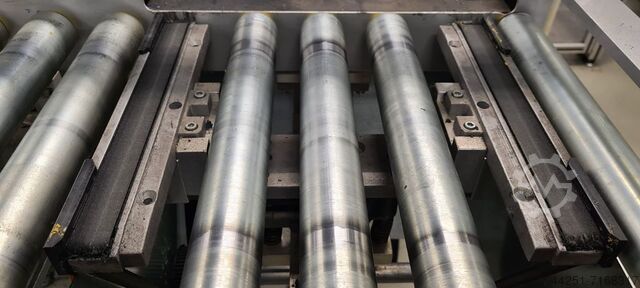
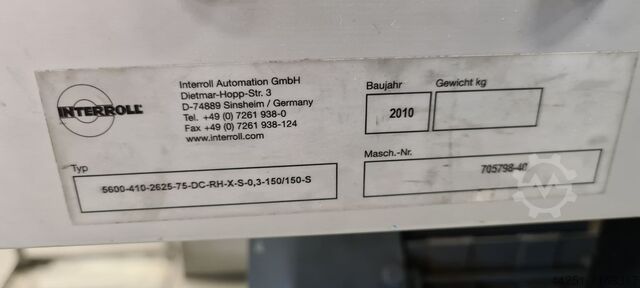
Used Unbekannt Ball Roller Table Transfer for sale (28,675)
Sort results
- Lowest price Highest price
- Newest listings Oldest listings
- Shortest distance Farthest distance
- Newest year of manufacture Oldest year of manufacture
- Latest update Oldest update
- Manufacturer A to Z Manufacturer Z to A
- Relevance
- Lowest price
- Price
- Highest price
- Price
- Newest listings
- Release date
- Oldest listings
- Release date
- Shortest distance
- Distance
- Farthest distance
- Distance
- Newest year of manufacture
- Year of construction
- Oldest year of manufacture
- Year of construction
- Latest update
- Update
- Oldest update
- Update
- Manufacturer A to Z
- Manufacturer
- Manufacturer Z to A
- Manufacturer
- designation from A to Z
- Description
- designation from Z to A
- Description
- Model from A to Z
- Model
- Model from Z to A
- Model
- Lowest reference
- Ref.No.
- Highest reference
- Ref.No.
- Shortest runtime
- Runtime
- Longest duration
- Runtime
- Relevance
- Relevance
Listing
Kanzach
6,813 km
Lifting table with roller conveyor
Minda
Call
Condition: used, Year of construction: 1999, Lift table load capacity 7000 kg
Bwodpfx Akjhlcvmjlen
without roller conveyor
Listing
Midsomer Norton
7,658 km
Meat processing machine
Kolbe BandsawK430 H Roller table
Call
Condition: excellent (used), Kolbe stainless steel bandsaw
Heavy duty roller table used for carcass's
Bedpfxexpfluo Akljwn
Model K430 H
Table size 1,050 mm front to back
Width 830 mm
Maximum cut height 480 mm
Safety interlocked doors
Braked motor 4 Kw
Listing
Zheng Zhou Shi
3,684 km
Crushing equipment
Double roller crusher /roller sand makerStationary&portable sand crushing plant
Call
Condition: new, functionality: fully functional, power: 30 kW (40.79 HP), Year of construction: 2025, A double roller crusher for sand making, also known as a roller sand making machine, is a processing machine that utilizes two rollers to crush and reshape coarse-grained materials such as rock, stone, and ore into finer particles. This type of equipment is commonly used in the production of construction aggregates, artificial sand, and other materials used in various industries.
Here are key features and aspects of a double roller crusher for sand making:
1. Double Roller Design:
- The crusher has two parallel, counter-rotating rollers that exert pressure on the material. The gap between the rollers can be adjusted to control the size of the crushed particles.
2. Crushing Mechanism:
- The material is fed between the two rollers, and as they rotate, the material is drawn into the crushing zone. The rollers compress and crush the material, reducing it to the desired size.
3. Material Feed and Discharge:
- The material is typically fed into the top of the crusher and is crushed between the rollers. The crushed material exits at the bottom of the machine.
4. Adjustable Gap Settings:
- The gap between the rollers is adjustable, allowing for control over the final size of the crushed material. This feature is essential for producing materials of different particle sizes.
5. Roller Surface Design:
- The surface of the rollers may be smooth or have corrugations to enhance the gripping and crushing action. The choice of roller surface design depends on the characteristics of the material being processed.
6. High Efficiency:
- Double roller crushers are known for their high efficiency in crushing and shaping materials. The dual roller design provides a more consistent and controlled process compared to single roller crushers.
7. Versatility:
- These crushers are versatile and can be used for various materials, including hard and soft rocks, ores, and other aggregates. They are particularly suitable for producing artificial sand.
8. Dust and Noise Control:
- Some double roller crushers are equipped with features to control dust emissions and reduce noise during operation, improving the working environment.
9. Application in Sand Making:
- Double roller crushers for sand making are commonly used to produce fine aggregates and artificial sand. They are employed in the production of high-quality sand for construction and other applications.
10. Maintenance and Safety:
- Regular maintenance is essential for optimal performance. Safety features, such as emergency stops and safety guards, are often incorporated to ensure safe operation.
11. Motor and Drive System:
- A powerful motor and a reliable drive system are essential components to drive the rotation of the rollers and ensure consistent and efficient crushing.
The specific design and features of double roller crushers for sand making can vary among different models and manufacturers. When selecting or using this type of equipment, it's important to refer to the manufacturer's guidelines and specifications for proper operation and maintenance.
Bwodjq Ngamepfx Aklon

Get information now
+44 20 806 810 84
+44 20 806 810 84
List now
*per listing / month
Listing
Wiefelstede
6,930 km
Transport trolley
unbekanntMöbelroller 910 x 425 mm
Call
Condition: good (used), Furniture dolly, furniture dolly with plastic wheels, furniture transport trolley, transport trolley, platform trolley, transport trolley, heavy-duty trolley, table trolley, assembly trolley
-MDF blockboard: 19 mm
-Swivel casters: 4
-Heavy-duty transport trolley
Bedpoc Uxwvjfx Aklown
-Load capacity: 200 kg
-Number: 1430 units available
-Price for orders of 10 pieces: 15 EUR net/piece
-Price for orders of 50 pieces: 13 EUR net/piece
-Price for orders of 100 pieces: 11 EUR net/piece
-Price: per piece
-Dimensions: 910/425/H145 mm
-Weight: 8.4 kg/piece
Listing
Tauberbischofsheim
6,809 km
Portable suction device UNBEKANNT
UNBEKANNT
Call
Condition: used, Dust suction hood 160 mm
Bodoyi Ht Uspfx Aklown
Motor output 1,5 kW
Dimensions (L/W/H) 1.220 x 650 x 3.270 mm
Listing
Tata
6,158 km
Scissor lift table drive rollerconveyor
Kraus H20-23 2000kg1600x1400 mm
Call
Condition: like new (used), Year of construction: 2017, Manufacturer: Kraus
Year of manufacture: 2017
board length: 1600
board width: 1400
Bedpfx Ajnr Hfyjklewn
Roller diameter: 100 mm, material: steel.
Axle distance between rollers: 120 mm
Load capacity: 2000 kg
Lifting height: 1700mm
Without hydraulic power supply unit!
Chain drive, with gear electric motor.
1.1kW, 400V, 50Hz
Listing
Włocławek
6,195 km
Roller conveyor line with turntable and tipper
MEGAautomatyczna linia rozładunku
Call
Condition: good (used), Year of construction: 2011, Automatic unloading line for box pallets. The line is manufactured by MEGA and consists of roller conveyors, a turntable, and a tipper. Suitable for all types of vegetable unloading from box pallets / bins.
Bsdpfxowyliks Aklswn
Listing
郑州市
3,684 km
Mud rock separator for mud/soil removing
MINGYUAN Crawler mobile roller screenerMYC1500x6000F4000 Soil stone separator
Call
Condition: new, functionality: fully functional, overall weight: 24,000 kg, chain condition: 100 %, Year of construction: 2026, machine/vehicle number: MYC1500x6000F4000, Crawler Mobile Mud Stone Separator – Model MYC1500×6000F400O
The MYC1500×6000F400O Crawler Mobile Mud Stone Separator is a high-performance soil and stone separation machine developed by Henan Mingyuan Heavy Industrial Equipment Co., Ltd. It is designed for efficient separation of clay, mud, and fine soil from mixed materials such as sand, gravel, and construction waste. With its crawler-type mobility, large-capacity drum screen, and intelligent control system, this model provides a flexible and reliable solution for material cleaning and classification in complex working environments.
Applications
Bsdpfx Asy Dz U Dekljwn
The MYC1500×6000F400O is widely used in:
Sand and gravel production: Removes clay and impurities from raw aggregates, improving product quality.
Construction waste recycling: Separates soil and debris for reuse of clean aggregates.
Mining and quarrying: Pre-screens and washes ores, removing sticky soil before crushing or beneficiation.
Infrastructure and road construction: Cleans and classifies soil and stone for foundation preparation.
Municipal and river dredging projects: Separates sediment, stones, and debris from dredged materials.
Its crawler chassis allows easy movement on muddy or uneven ground, making it ideal for on-site operations where fixed installations are not practical.
Main Features
1. Crawler Mobile Design
Equipped with a heavy-duty crawler chassis and hydraulic drive, the machine can move flexibly on various terrains. It eliminates the need for additional transport equipment, reducing setup time and improving efficiency.
2. High-Efficiency Drum Screening
The 1500 mm diameter and 6000 mm long rotary drum provide a large screening area and high throughput. The wear-resistant mesh panels ensure long service life and easy maintenance. The optimized screen aperture effectively separates mud and fine soil from larger aggregates.
3. Integrated Cleaning System
Internal spiral blades and high-pressure spray nozzles work together to wash and separate sticky materials. This dual-action cleaning ensures clean aggregates that meet construction and production standards.
4. Intelligent Control
The PLC control system allows adjustment of drum speed, water flow, and feed rate according to material conditions. Automatic overload protection and fault alarms enhance safety and reliability.
5. Energy-Saving and Eco-Friendly
The hydraulic-electric hybrid drive reduces fuel consumption and emissions. The water recycling system minimizes water usage, making it suitable for environmentally sensitive areas.
6. Easy Maintenance
Modular design and accessible components simplify inspection and servicing. Quick replacement of wear parts reduces downtime and maintenance costs.
7. Strong Adaptability
Capable of handling clay-rich soil, river sand, construction debris, and weathered rock. Adjustable screening parameters make it suitable for different particle sizes and moisture levels.
Technical Parameters Specification
Model:MYC1500×6000F400O
Screen Typ: roller screener
Roller screener width/:1500 mm
Roller Screener Length:6000 mm
Feeding Size≤ 600 mm
Capacity: 80–300 t/h (depending on material)
Power System
Diesel engine + hydraulic drive
Mobility:Crawler-type chassis
Control System
PLC intelligent control
Water System
High-pressure spray, adjustable flow
Discharge
Dual outlet for clean stone and mud
Weight :Approx. 22 tons
Dimensions (L×W×H):9,800 × 2,800 × 3,200 mm
Listing
Austria
6,310 km
Folding Machine
Unbekannt/UnknownEASYBEND AM 1025 K
Call
Condition: used, Year of construction: 2017, gebraucht
2017
8063
prompt, Zwischenverkauf v
China
Bsdpfoynnamex Aklewn
1330 €
1
1020 mm
1.5 mm
135 °
1348 mm
850 mm
1175 mm
285 kg
upper beam with sectioned rail
booster cylinder
user manual in GERMAN and ENGLISH
Listing
Zheng Zhou Shi
3,684 km
Ball mill for powder and mining plant
Mingyuan Ball Mill For Fine PowderPowder grinding mill for coal, silica
Call
Condition: new, functionality: fully functional, power: 55 kW (74.78 HP), Year of construction: 2026, Ball Mill for Powder and Mining Plant: Structure, Function, and Technical Details
A ball mill is a key grinding machine widely used in mining, metallurgy, cement, chemical, and powder-making industries. It is designed to grind various ores and other materials into fine powder through impact and attrition between steel balls and the material inside a rotating cylindrical shell. In mining plants, ball mills are essential for ore beneficiation, preparing materials for flotation, magnetic separation, or leaching processes. In powder production, they ensure uniform particle size and high surface area for further processing.
Working Principle
The ball mill operates on a simple yet effective principle: as the cylindrical shell rotates around its horizontal axis, the grinding media (steel or ceramic balls) are lifted along the inner wall by centrifugal force and friction. When they reach a certain height, they fall freely, striking and grinding the material below. This repeated motion causes both impact and abrasion, reducing the material to the desired fineness. The grinding process can be performed in dry or wet conditions depending on the application.
Structural Composition
A standard ball mill consists of several main components:
Feeding part: Equipped with a feeder or screw conveyor to ensure uniform material input.
Discharging part: Can be grate type or overflow type, depending on the discharge method.
Rotating part: The cylindrical shell made of steel plates, lined with wear-resistant liners.
Transmission system: Includes motor, reducer, small transmission gear, and electrical control.
Grinding media: Steel balls or ceramic balls of different diameters for efficient grinding.
The internal liner design and ball size distribution are optimized to achieve maximum grinding efficiency and minimal energy consumption.
Technical Details
Typical Specifications:
Feeding size: ≤25 mm
Discharge size: 0.074–0.4 mm
Capacity: 0.65–615 t/h (depending on model and material hardness)
Cylinder speed: 18–38 r/min
Power: 18.5–4500 kW
Liner material: High manganese steel, rubber, or alloy steel
Grinding media load: 30–45% of cylinder volume
Bsdpfxoq Nf U Eo Aklswn
Operating Modes:
Dry grinding: Suitable for materials that must remain moisture-free, such as cement clinker, limestone, and quartz.
Wet grinding: Common in ore beneficiation, where water or slurry improves grinding efficiency and particle uniformity.
Application in Mining Plants
In mining operations, ball mills are used after crushing to further reduce ore size and liberate valuable minerals. They are integrated into grinding circuits with classifiers, hydrocyclones, and flotation systems. The ground material is classified by size, and oversized particles are returned to the mill for regrinding. This closed-circuit system ensures consistent product fineness and efficient energy use.
Common Applications:
Gold, copper, iron, and zinc ore grinding
Cement clinker and slag processing
Silicate and ceramic powder production
Coal and mineral powder preparation
Conclusion
A ball mill is an indispensable piece of equipment in both powder production and mining beneficiation plants. Its ability to grind materials into fine, uniform particles makes it vital for downstream processes such as flotation, sintering, and chemical reactions.
Listing
Zheng Zhou Shi
3,684 km
Crushing equipment
Mingyuan Dry and Wet Ball MillCustomerizable Model for ball mill plant
Call
Condition: new, functionality: fully functional, Year of construction: 2026, Dry and Wet Ball Mill: Structure, Operation, and Technical Details
A ball mill is a fundamental grinding device used in mineral processing, cement manufacturing, chemical production, and other industrial applications. It works by rotating a cylindrical shell filled with grinding media—usually steel balls—causing impact and friction that reduce materials to fine powder. Based on the grinding environment, ball mills are classified into dry and wet types, each suited for specific materials and process requirements.
Working Principle
Both dry and wet ball mills operate on the same mechanical principle. The rotating cylinder, driven by a motor through a gear system, lifts the grinding media and material along the inner wall. As the rotation continues, the balls fall under gravity, striking and grinding the material. The difference lies in the presence or absence of a liquid medium during grinding.
Dry Ball Mill
A dry ball mill is used when the material must remain moisture-free or when water could affect product quality. It is commonly applied in cement clinker, limestone, quartz, and refractory material grinding. The discharge can be either grate type or overflow type, depending on the desired fineness.
Technical Features:
Feeding size: ≤25 mm
Discharge size: 0.075–0.4 mm
Capacity: 0.65–90 t/h
Liner material: High manganese steel or wear-resistant alloy
Drive system: Gear-driven or direct-coupled motor
Dust control: Equipped with air exhaust and dust collector
Advantages:
Suitable for materials sensitive to moisture
No drying process required after grinding
Lower corrosion risk and simpler maintenance
Easier material classification and separation
Limitations:
Dry grinding produces more dust and heat, requiring efficient ventilation and dust collection systems.
Wet Ball Mill
A wet ball mill operates with water or another liquid medium added to the material. The slurry formed during grinding improves efficiency by reducing friction and preventing excessive heat buildup. It is widely used in ore beneficiation, ceramics, and chemical industries.
Technical Features:
Feeding size: ≤25 mm
Discharge size: 0.074–0.2 mm
Capacity: 0.65–615 t/h
Bedpeq Nx Aljfx Akljwn
Liner material: Rubber or high-chromium steel
Discharge method: Overflow or grate type
Auxiliary equipment: Classifier, pump, and thickener for slurry circulation
Advantages:
Higher grinding efficiency and finer particle size
Reduced dust and noise levels
Continuous operation suitable for beneficiation circuits
Better control of particle uniformity
Limitations:
Requires drying if the final product must be in powder form and involves more complex slurry handling.
The selection between dry and wet grinding depends on the material characteristics, downstream process, and environmental conditions. Dry mills are preferred for materials that must stay moisture-free, while wet mills are ideal for fine grinding and slurry-based processes.
Conclusion
Dry and wet ball mills share the same mechanical structure but differ in their grinding environment and application scope. The dry type offers simplicity and low maintenance for moisture-sensitive materials, while the wet type provides higher efficiency and finer output for mineral and chemical processing. Understanding their technical parameters and operational differences ensures optimal equipment selection, improved productivity, and reliable performance in industrial grinding operations.
Listing
Zheng Zhou Shi
3,684 km
Mill / grinding mill
Batch Ball Mill, Silica grinding millQuartz ball mill, silica powder grinding
Call
Year of construction: 2026, condition: new, ceramic ball mill ,Batch ball mill ,also called ceramic ball mill ,it is used for fine grinding of feldspar,quartz,clay,ore and so on.The ceramic ball mill is mainly used for material mixing, grinding,uniform product fineness,and saving power.It can be dry or wet.The machine can use different liner types according to production needs to meet different needs.The fineness of the grinding operation is controlled by the grinding time
ceramic ball mill Working principle
when ball mill working,steel balls inside drum will rotate with the drum to some height,and then steel balls fall down with materials to reach the point of grinding.
Working Principle of Ceramic ball mill
ceramic ball mill ,Intermittent ball mill grinding operation is finished in the cylinder body. When the cylinder rotates, materials ascend to a certain height and then fall along a certain path due to the balls' gravity. Two forces are generated on the balls inside. One is the force on balls through tangent direction; the other is a opposite force in the contrast to the diameter of balls, as a result of the force generated when the balls slide down. These two forces will constitute a couple for the steel balls. The balls are squeezed between the cylinder and the adjacent steel balls, so the couple can make unequal-sized friction force. The balls will orbit along with the cylinder axis and then fall down, which can produce a strong impact force on the ores in the cylinder body and, as a result, the ores will be crushed. In conclusion, the ores in the cylinder body are mainly crushed by composite effect of peeling force, impact force and extrusion force.
Ceramic ball mill also named Intermittent ball mill which adopts the wet intermittent operation, is used for fine grinding and mixing the material such as feldspar, quartz, clay ceramic raw materials. The discharging and the mud size can through through 1000 sieve pore. This machine is high milling machinery, materials should be Broken in the fineness of the state into the grinding mill to get the highest efficiency and economic benefits.
The cement mill is key equipment for the grinding process of the cement clinker after the crushing process of it. It is mainly used in the cement silicate product industry. After long term design and manufacture of the cement mill, our company now has series of cement mill with various specifications to meet with different requirement from our customers.
Features of Cement Mill
Our company adopts suitable transmission methods according to different specifications. We have brim drive and center drive as transmission form. The cylinder adopts new type step lining to increase the grinding area. And it is easily repairable and changeable. The new designed separate-chambered structure adopts flexible lifting blade and fixed lifting blade and it is easily fixed and repaired.
Bwodpfx Ajvzx Auskljn
Technical Details
We have different models and options for different requirements, please contact us for more info.
Listing
Zheng Zhou Shi
3,684 km
Glass grinding machine
Henan Mingyuan Ceramic /Silica Ball MillBatch ball mill for glass ceramic making
Call
Condition: new, Year of construction: 2026, power: 7.5 kW (10.20 HP), Batch ball mills find applications in various industries where the processing of materials in discrete batches is required. The versatility of batch ball mills makes them suitable for a range of applications. Here are some common batch ball mill applications:
Bwedeq I N H Nepfx Aklen
1. Ceramics Industry:
- *Glaze Preparation:* Batch ball mills are extensively used in the ceramics industry for preparing glazes. Raw materials such as feldspar, quartz, and clay are ground with ceramic balls to achieve the desired particle size for glaze formulation.
2. Chemical Industry:
- *Material Grinding:* Batch ball mills are used for grinding and blending various chemical materials. This includes the production of pigments, dyes, and other specialty chemicals where precise particle size control is crucial.
3. Pharmaceuticals:
- *Drug Formulation:* In pharmaceutical manufacturing, batch ball mills are used for grinding and blending powders to create drug formulations. The controlled environment provided by these mills is essential for maintaining the integrity of pharmaceutical compounds.
4. Food Industry:
- *Ingredient Mixing:* Batch ball mills may find application in the food industry for mixing and grinding ingredients. This can include the production of food additives, flavorings, and other powdered or granular products.
5. Mining and Minerals Processing:
- *Ore Grinding:* Batch ball mills are used in mining and minerals processing for grinding minerals and ores. The controlled grinding helps in obtaining the desired particle size for subsequent processes, such as mineral separation or extraction.
6. Paints and Coatings:
- *Pigment Dispersion:* In the paints and coatings industry, batch ball mills are employed for dispersing pigments into paint formulations. Achieving a uniform particle size is crucial for the quality and appearance of the final coating.
7. Building Materials:
- *Raw Material Grinding:* Batch ball mills are used in the preparation of raw materials for the production of building materials, such as cement and concrete. Grinding of materials like limestone and clay helps in obtaining the desired fineness for subsequent processes.
8. Electronic Materials:
- *Ceramic Powder Processing:* In the electronics industry, batch ball mills can be employed for processing ceramic powders used in the production of electronic components and insulating materials.
9. Research and Development:
- *Material Testing:* Batch ball mills are often used in research and development laboratories for testing and optimizing material formulations. They provide a controlled environment for small-scale processing and experimentation.
10. Customized Applications:
- *Specialized Processes:* Batch ball mills can be adapted for various specialized processes in different industries where precise grinding and mixing are required. Custom modifications can be made based on specific application requirements.
When using a batch ball mill, it's important to consider factors such as the type of material being processed, desired particle size, and the specific requirements of the end product. Additionally, following the manufacturer's guidelines and maintaining proper operating conditions are essential for efficient and effective milling processes.
Technical details
We have different options for different requirements, please contact our team for more info.
Listing
Zheng Zhou Shi
3,684 km
Cement mill,clinker grinding plant
Clinker grinding mill / cement ball millcement grinding with air classifier
Call
Year of construction: 2026, condition: new, functionality: fully functional, A cement clinker grinding mill is a specialized equipment used to grind the hard nodular clinker into fine powder, which is cement. Most cement is currently ground in ball mills and also vertical roller mills, which are more effective than ball mills.
Here are key features and information about cement clinker grinding mills:
1. Raw Materials:
- The main raw material for making cement is clinker, which is produced by sintering limestone and clay. Other materials such as gypsum, fly ash, or slag may also be added during the grinding process to achieve specific properties.
2. Grinding Process:
- The clinker and other additives are finely ground in the grinding mill to produce cement. The grinding process is a crucial step in cement production and contributes significantly to the final quality of the product.
3. Types of Mills:
- Ball Mills: Traditional ball mills are commonly used for grinding clinker. They operate by rotating a cylinder with steel grinding balls, causing the balls to fall back into the cylinder and onto the material to be ground.
- Vertical Roller Mills (VRM): VRM technology has become increasingly popular for clinker grinding. These mills use a rotating table with rollers to crush and grind the clinker, providing energy efficiency and a smaller footprint compared to ball mills.
4. Gypsum Addition:
- Gypsum is often added during the grinding process to control the setting time of the cement. It prevents flash setting of the clinker and facilitates the formation of a workable and pumpable cement paste.
5. Quality Control:
Bsdpsq Nfbhsfx Aklewn
- Quality control measures, such as monitoring the fineness of the cement, chemical composition, and other properties, are implemented during the grinding process to ensure the final product meets the required specifications and standards.
6. Clinker Cooling:
- Before grinding, the clinker is produced by heating the raw materials in a kiln. The clinker is then cooled before entering the grinding mill to prevent excessive heat build-up during grinding.
7. Dust Collection and Environmental Considerations:
- Dust collectors and air pollution control systems are often employed to capture and control the dust generated during the grinding process, addressing environmental and safety concerns.
8. Packaging and Storage:
- After grinding, the cement is typically stored in silos before being packaged in bags or dispatched in bulk for distribution to construction sites or for sale in the market.
Cement clinker grinding mills play a crucial role in the cement production process, and advancements in technology continue to improve the efficiency and environmental sustainability of the grinding process.
Technical details
We have different options for different requirements, please contact our team for more info.
Listing
Zheng Zhou Shi
3,684 km
Powder grinding mill
ball mill for mining &fine powder makingsilica/Barite/limestone powder plant
Call
Condition: new, Year of construction: 2026, power: 300 kW (407.89 HP), Ball Mill for Mining & Fine Powder Making:
A ball mill is a fundamental grinding device widely used in mining, metallurgy, cement, and chemical industries. It is designed to grind ores and other materials into fine powder through impact and attrition between steel balls and the material inside a rotating cylindrical shell. In mining plants, ball mills are essential for ore beneficiation, while in powder-making industries, they ensure uniform particle size and high surface area for further processing.
Working Principle
The ball mill operates on the principle of impact and friction. As the cylindrical shell rotates around its horizontal axis, the grinding media—usually steel or ceramic balls—are lifted along the inner wall by centrifugal force and friction. When they reach a certain height, they fall freely, striking and grinding the material below. This repeated motion breaks down the material into fine particles. The process can be carried out in dry or wet conditions depending on the application.
Structural Composition
A standard ball mill consists of several main components:
Feeding part: Ensures uniform material input through a feeder or screw conveyor.
Discharging part: Can be grate type or overflow type, depending on the discharge method.
Rotating part: The cylindrical shell made of steel plates, lined with wear-resistant liners.
Transmission system: Includes motor, reducer, small transmission gear, and electrical control.
Grinding media: Steel or ceramic balls of various diameters for efficient grinding.
The internal liner design and ball size distribution are optimized to achieve maximum grinding efficiency and minimal energy consumption.
Technical Details/Typical Specifications:
Feeding size: ≤25 mm
Discharge size: 0.074–0.4 mm
Capacity: 0.65–615 t/h (depending on model and material hardness)
Cylinder speed: 18–38 r/min
Power: 18.5–4500 kW
Liner material: High manganese steel, rubber, or alloy steel
Grinding media load: 30–45% of cylinder volume
Bwjdpfx Aksq Ngafelen
Operating Modes:
Dry grinding: Used for materials that must remain moisture-free, such as cement clinker, limestone, and quartz.
Wet grinding: Common in ore beneficiation, where water or slurry improves grinding efficiency and particle uniformity.
Application in Mining and Powder Production
In mining operations, ball mills are used after crushing to further reduce ore size and liberate valuable minerals. They are integrated into grinding circuits with classifiers, hydrocyclones, and flotation systems. The ground material is classified by size, and oversized particles are returned to the mill for regrinding. This closed-circuit system ensures consistent product fineness and efficient energy use.
In fine powder production, ball mills are used to produce materials such as silicate, ceramic powder, refractory materials, and chemical raw materials. The uniform particle size achieved by ball milling enhances product quality and performance in downstream applications.
Conclusion
A ball mill is an indispensable piece of equipment for both mining and fine powder making. Its ability to grind materials into fine, uniform particles makes it vital for ore beneficiation and industrial powder production. With flexible configurations, high efficiency, and reliable operation, modern ball mills provide a cost-effective and energy-efficient solution for large-scale grinding, ensuring consistent quality and productivity across diverse applications.
Listing
Zheng Zhou Shi
3,684 km
Roll forming line
Rod ball mill / Rod Grinding MillFor Sand and mining beneficiation plant
Call
Condition: new, Year of construction: 2026, We have various kinds of ball grinding mill such as batch ball mill, rod mill, cement ball mill, mining ball mill, welcome to contact our team for further details according to your specific requirements.
Bjdpfsq I Nw Isx Akljwn
Listing
Zheng Zhou Shi
3,684 km
Ball Mill for Ore mining & sand grinding
batch ball mill & wet mining ball mill2400X4500 ball mill
Call
Condition: new, fuel type: electric, Year of construction: 2026, machine/vehicle number: 2700x4500, Equipment: low noise, Main Technical parameters of the ball mill
Drum diameter: 2400mm
Drum length: 4500mm
Motor power: 320KW
Max input size: 25mm
Capacity:35-60 t/h
Weight: 72Tons
Ball loading: 30Tons
Besides this model, we also have the other models like 2700x4500, 3200x4500, 1830x13000mm, and so on, and we can also offer customerization service, we can also provide complete grinding solution for various industries like cement, quartz, ore beneficiation plant, and so on, welcome to contact us for more info.
A ball mill is a common grinding machine used to grind and blend materials for use in mineral processing, including ore mining and the production of silica (silicon dioxide). When it comes to ore mining and silica grinding, the characteristics of the ore and the final product requirements will play a crucial role in selecting the appropriate ball mill.
Here are some considerations for using a ball mill in ore mining and silica grinding:
1. Ore Characteristics:
- Hardness: The hardness of the ore determines the type of ball mill that is most suitable. Harder ores may require a more robust and wear-resistant ball mill.
- Particle Size Distribution: The initial particle size of the ore affects the grinding process. Different ores may require different approaches to achieve the desired particle size.
2. Silica Grinding:
- Silica Content: If the primary goal is to grind silica, it's important to consider the initial silica content and the desired final particle size. Silica grinding often requires special attention to prevent excessive wear on the milling equipment.
3. Ball Mill Type:
- Overflow vs. Grate Discharge: The type of discharge from the ball mill can impact the final product and the grinding efficiency. Overflow mills are generally used for most grinding applications, while grate discharge mills are more suitable for certain types of ores.
Bwsdpfeq Igiiex Aklen
4. Mill Size and Capacity:
- Mill Diameter and Length: The size of the ball mill should be selected based on the amount of material to be ground and the desired throughput.
- Capacity: Ensure that the chosen ball mill has the capacity to handle the required volume of material efficiently.
5. Grinding Media:
- Material and Size: The choice of grinding media (balls or cylpebs) and their size depends on the hardness of the ore and the desired final particle size. Different grinding media materials can impact the purity of silica during grinding.
6. Liners and Lifting Aids:
- Liners: Consider the type of liners used in the ball mill to protect the shell and optimize the grinding process.
- Lifting Aids: Some mills use lifting aids to enhance the grinding action and promote better mixing of the material.
7. Control and Monitoring Systems:
- Automation: Utilize control systems to automate the milling process and ensure optimal performance.
- Monitoring: Regularly monitor the milling process to adjust parameters as needed for consistent and efficient operation.
8. Safety Measures:
- Safety Systems: Implement safety features to protect personnel and equipment during operation.
Always follow the manufacturer's recommendations and guidelines for operation and maintenance to ensure safe and efficient use of the ball mill in ore mining and silica grinding applications.
Listing
Germany
6,627 km
Wheel Stand
UNBEKANNT-
Call
Condition: used, Technical details:
voltage: 220 V / Hz
revolution per minute: nicht bekannt U/min
weight: 59 kg
dimensions L x W x H: ca. 0,38 x 0,44 x 1,2 m
Double sanding bench, mounted table unit
currently clamped sanding discs: right Ø 180 x 6mm and left Ø 120 x 25mm
with sanding supports, right and left, adjustable by 50mm
Grinding guard on both sides
Grinding block mounted on stand, foot mounting possible
Bwsdeu Ngx Dopfx Akljn
*
Listing
Wiefelstede
6,930 km
Collet sleeves, 6 pieces
unbekannt**verschiedene Durchmesser
Call
Condition: good (used), Collet sleeves, collet, tool holder, tool holder, milling chuck, milling tool, collet sleeves
Bwedpsb A Sbiefx Aklen
-Quantity: 3x collet chucks 6/34/46 mm diameter
-Quantity: 3x collet chucks 14/24/24 mm hexagon
-Outer diameter of recess: Ø 77 mm
-Cone: approx. Ø 93/75 mm
-Total length: 120 mm
-Weight: 12 kg
Listing
Wiefelstede
6,930 km
Container rotating device (2 pieces)
unbekanntRollenabstand 220 mm
Call
Condition: good (used), Container rotating device, welding rotating device, roller stand, rotators, pipe straightening system, roller stand rotating device
-Roller stand: Container rotator without drive, 2 pieces
-Roller spacing: 220 mm
-Rollers: Ø 185 x 117 mm
-Load capacity: kg
-Dimensions each: 1070/200/H240 mm
-Submission/Price: complete
-Transport dimensions: 1070/410/H240 mm
-Weight: 265 kg
Bwedpfx Aozbrqpjklon
Listing
Wiefelstede
6,930 km
Short-stroke heavy-duty cylinders
unbekanntHub 30 mm
Call
Condition: good (used), Short-stroke heavy-duty cylinders, high-pressure hydraulics, compact cylinders, light metal cylinders, high-pressure cylinders, universal cylinders, hydraulic cylinders, straightening cylinders, hydraulic rams, hydraulic pressure cylinders, lifting cylinders, pressure rams, hydraulic short-stroke cylinders, hydraulic flat cylinders
Bwodpfowxtx Dex Akljn
-Hydraulic cylinder short-stroke heavy-duty cylinder
-Stroke: 30 mm
-Piston rod: Ø 65 mm
-Dimensions: 165/100/H100 mm
-Weight: 4.1 kg
Trust Seal
Dealers certified through Machineseeker

Listing
Wiefelstede
6,930 km
Short-stroke heavy-duty cylinders
unbekanntHub 30 mm
Call
Condition: good (used), Short-stroke heavy-duty cylinders, high-pressure hydraulics, compact cylinders, light metal cylinders, high-pressure cylinders, universal cylinders, hydraulic cylinders, straightening cylinders, hydraulic rams, hydraulic pressure cylinders, lifting cylinders, pressure rams, hydraulic short-stroke cylinders, hydraulic flat cylinders
-Hydraulic cylinder short-stroke heavy-duty cylinder double-acting
-Stroke: 30 mm
-Piston rod: Ø 32 mm
-Dimensions: Ø 70 x 165 mm
-Weight: 3.6 kg
Bedpfxswuqhze Aklewn
Listing
Wiefelstede
6,930 km
Short-stroke heavy-duty cylinders
unbekanntHub 10 mm
Call
Condition: good (used), Short-stroke heavy-duty cylinders, high-pressure hydraulics, compact cylinders, light metal cylinders, high-pressure cylinders, universal cylinders, hydraulic cylinders, straightening cylinders, hydraulic rams, hydraulic pressure cylinders, lifting cylinders, pressure rams, hydraulic short-stroke cylinders, hydraulic flat cylinders
Bsdpfx Akswuqgkjlewn
-Hydraulic cylinders short-stroke heavy-duty cylinders
-Stroke: 10 mm
-Piston rod: Ø 70 mm
-Number: 3x cylinders available
-Price: per piece
-Dimensions: Ø 130 x 37 mm
-Weight: 3.6 kg/piece
Listing
Wiefelstede
6,930 km
Short-stroke heavy-duty cylinder
unbekanntHub 30 mm
Call
Condition: good (used), Short-stroke heavy-duty cylinders, high-pressure hydraulics, compact cylinders, light metal cylinders, high-pressure cylinders, universal cylinders, hydraulic cylinders, straightening cylinders, hydraulic rams, hydraulic pressure cylinders, lifting cylinders, pressure rams, hydraulic short-stroke cylinders, hydraulic flat cylinders
-Hydraulic cylinders short-stroke heavy-duty cylinders
-Stroke: 30 mm
Bwedpfewt Nv Uox Aklon
-Piston rod: Ø 57 mm
-Dimensions: 103/85/H105 mm
-Weight: 4,3 kg
Listing
Wiefelstede
6,930 km
Clamping plate with straightening press
unbekannt1010/3260/H860 mm
Call
Condition: good (used), Clamping plate, plate field, welding table, welding table, clamping plate, scribing and measuring plate, measuring table, straightening plate, short-stroke heavy-duty cylinder, hydraulic cylinder, support cylinder, hydraulic ram, pressure ram, hydraulic press, bending machine, straightening machine, profile straightening system, strip straightening machine, strip straightening device, shaft straightening system, combined bending machine-straightening press, profile bending machine, bending machine bending/straightening press
-Mounting plate: Mounting plate with straightening press
Bsdjzbhqxopfx Akljwn
-Length: 3260 mm
-Width: 1380 mm
-Piston diameter: Ø 63 mm
-Stroke: 200 mm
-Pressure force: t
-Overall dimensions: 3260/1380/H1940 mm
-Weight: 2820 kg
We make it easier for you to find: "unbekannt ball roller table transfer"
You will receive new offers immediately and free of charge via e-mail
You can easily terminate the search request at any time
This may be of interest to you

Get information now
+44 20 806 810 84
+44 20 806 810 84
List now
*per listing / month