Used Pasteurization Plant for sale (3,260)
Sort results
- Lowest price Highest price
- Newest listings Oldest listings
- Shortest distance Farthest distance
- Newest year of manufacture Oldest year of manufacture
- Latest update Oldest update
- Manufacturer A to Z Manufacturer Z to A
- Relevance
- Lowest price
- Price
- Highest price
- Price
- Newest listings
- Release date
- Oldest listings
- Release date
- Shortest distance
- Distance
- Farthest distance
- Distance
- Newest year of manufacture
- Year of construction
- Oldest year of manufacture
- Year of construction
- Latest update
- Update
- Oldest update
- Update
- Manufacturer A to Z
- Manufacturer
- Manufacturer Z to A
- Manufacturer
- designation from A to Z
- Description
- designation from Z to A
- Description
- Model from A to Z
- Model
- Model from Z to A
- Model
- Lowest reference
- Ref.No.
- Highest reference
- Ref.No.
- Shortest runtime
- Runtime
- Longest duration
- Runtime
- Relevance
- Relevance
Auction
Ends in
d
h
min
s
Auction ended
Nordrhein-Westfalen
6,908 km
Mobile shredding plant
DoppstadtInventhor 9
Condition: ready for operation (used), Year of construction: 2018, operating hours: 5,000 h, functionality: fully functional, machine/vehicle number: W09368333J2D38007, conveyor belt length: 8,500 mm, conveyor belt speed: 2,000 mm/s, conveyor belt width: 1,200 mm, roller length: 3,000 mm, number of rollers: 1, No minimum price – guaranteed sale to the highest bidder!
TECHNICAL DETAILS
Conveyor belt
Width: 1,200 mm
Length: 8,500 mm
Belt speed: 2.0 m/s
Discharge height: 5,050 mm
Hopper
Loading height: 3,307 mm
Roller
Number of rollers: 1
Dcjdpfezuyuuox Aptel
Roller length: 3,000 mm
Maximum roller speed: 32 rpm
Permissible total weight: 33,000 kg
MACHINE DETAILS
Dimensions & Weight
Working dimensions (L x W x H): 16,786 x 2,500 x 5,050 mm
Transport dimensions (L x W x H): 9,971 x 2,500 x 3,893 mm
Total weight: 32,000 kg
Drive
Engine type: Diesel engine
Manufacturer: MTU 6R 1300
Emission standard: Stage V
Rated power: 390 kW / 530 hp
Fuel tank capacity: 950 l
Operating hours: 5,000 h
EQUIPMENT
Overband magnet
Listing
Zheng Zhou Shi
3,684 km
Crushing equipment
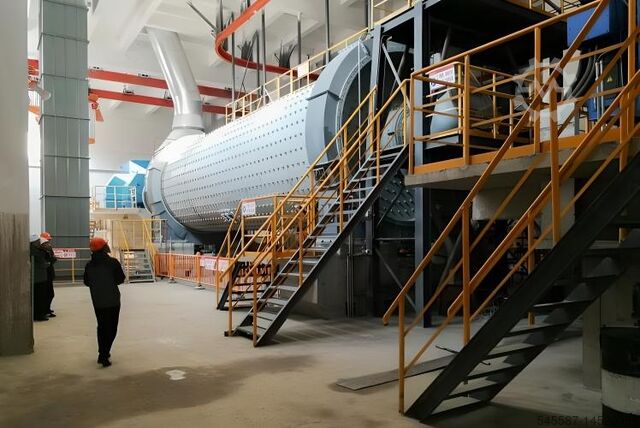
Mingyuan Dry and Wet Ball MillCustomerizable Model for ball mill plant
Call
Condition: new, functionality: fully functional, Year of construction: 2026, Dry and Wet Ball Mill: Structure, Operation, and Technical Details
A ball mill is a fundamental grinding device used in mineral processing, cement manufacturing, chemical production, and other industrial applications. It works by rotating a cylindrical shell filled with grinding media—usually steel balls—causing impact and friction that reduce materials to fine powder. Based on the grinding environment, ball mills are classified into dry and wet types, each suited for specific materials and process requirements.
Working Principle
Both dry and wet ball mills operate on the same mechanical principle. The rotating cylinder, driven by a motor through a gear system, lifts the grinding media and material along the inner wall. As the rotation continues, the balls fall under gravity, striking and grinding the material. The difference lies in the presence or absence of a liquid medium during grinding.
Dry Ball Mill
A dry ball mill is used when the material must remain moisture-free or when water could affect product quality. It is commonly applied in cement clinker, limestone, quartz, and refractory material grinding. The discharge can be either grate type or overflow type, depending on the desired fineness.
Technical Features:
Feeding size: ≤25 mm
Discharge size: 0.075–0.4 mm
Capacity: 0.65–90 t/h
Liner material: High manganese steel or wear-resistant alloy
Drive system: Gear-driven or direct-coupled motor
Dust control: Equipped with air exhaust and dust collector
Djdpfoq Nx Alsx Aptecl
Advantages:
Suitable for materials sensitive to moisture
No drying process required after grinding
Lower corrosion risk and simpler maintenance
Easier material classification and separation
Limitations:
Dry grinding produces more dust and heat, requiring efficient ventilation and dust collection systems.
Wet Ball Mill
A wet ball mill operates with water or another liquid medium added to the material. The slurry formed during grinding improves efficiency by reducing friction and preventing excessive heat buildup. It is widely used in ore beneficiation, ceramics, and chemical industries.
Technical Features:
Feeding size: ≤25 mm
Discharge size: 0.074–0.2 mm
Capacity: 0.65–615 t/h
Liner material: Rubber or high-chromium steel
Discharge method: Overflow or grate type
Auxiliary equipment: Classifier, pump, and thickener for slurry circulation
Advantages:
Higher grinding efficiency and finer particle size
Reduced dust and noise levels
Continuous operation suitable for beneficiation circuits
Better control of particle uniformity
Limitations:
Requires drying if the final product must be in powder form and involves more complex slurry handling.
The selection between dry and wet grinding depends on the material characteristics, downstream process, and environmental conditions. Dry mills are preferred for materials that must stay moisture-free, while wet mills are ideal for fine grinding and slurry-based processes.
Conclusion
Dry and wet ball mills share the same mechanical structure but differ in their grinding environment and application scope. The dry type offers simplicity and low maintenance for moisture-sensitive materials, while the wet type provides higher efficiency and finer output for mineral and chemical processing. Understanding their technical parameters and operational differences ensures optimal equipment selection, improved productivity, and reliable performance in industrial grinding operations.
Listing
Zheng Zhou Shi
3,684 km
Crushing equipment
Jaw crusher PE900X1200stone crusher plant 300-500 tph
Call
Condition: new, Year of construction: 2025, For crushing marble, sandstone, and quartzite, various types of crushers can be used depending on the properties of the raw materials and the desired final product specifications. Here are some common types of crushers that may be suitable for processing these materials:
Dedpeq Nx Nnefx Aptecl
1. Jaw Crusher:
- Jaw crushers are commonly used for primary crushing. They are robust machines that handle tough materials, making them suitable for breaking down hard and abrasive stones like marble and quartzite.
2. Impact Crusher:
- Impact crushers are versatile and suitable for both primary and secondary crushing. They work by impacting the material with hammers or blow bars, producing a high reduction ratio. Impact crushers can be effective for shaping the final product.
3. Cone Crusher:
- Cone crushers are often used for secondary or tertiary crushing. They are suitable for processing harder stones and can produce well-shaped and fine-grained aggregates.
4. Gyratory Crusher:
- Gyratory crushers are used for large-scale primary crushing. They have a conical-shaped head and are well-suited for handling abrasive materials. However, they are less commonly used than jaw or cone crushers.
5. Vertical Shaft Impact (VSI) Crusher:
- VSI crushers are suitable for shaping and producing artificial sand. They operate by throwing the material against a set of anvils or impellers to break it down into finer particles.
6. Hammer Crusher:
- Hammer crushers are used for crushing softer materials like sandstone. They operate by applying force to the material, causing it to break along natural fault lines.
7. Roll Crusher:
- Roll crushers are used for reducing the size of friable materials. They consist of two counter-rotating rolls that compress the material between them.
8. Crawler Mobile Crusher:
- Mobile crushers offer flexibility and mobility, allowing them to be used directly at the quarry or job site. Crawler mobile crushers can handle various types of stones, including marble, sandstone, and quartzite.
9. Screening Equipment:
- After the initial crushing stage, screening equipment such as vibrating screens may be used to separate different sizes of crushed material.
10. Dust Suppression Systems:
- Crushing operations can generate dust, and dust suppression systems are used to minimize environmental and health impacts.
When selecting a crusher for marble, sandstone, or quartzite, consider factors such as the hardness of the material, the desired final product specifications, and the production capacity required. Additionally, it's important to integrate the crushing process into an overall plant design that may include screening, conveying, and washing equipment depending on the specific needs of the application.

Get information now
+44 20 806 810 84
+44 20 806 810 84
List now
*per listing / month
Listing
Zheng Zhou Shi
3,684 km
Crushing equipment
Stone crusher /rock crushing equipmentFixed & Mobile stone crushing plant
Call
Condition: new, Year of construction: 2025, Introduction Of Jaw Crusher Plant
The capacity vary according customer request. And in order to meet the different demands of customers, the production line can equip with cone crusher, dust removal equipment and other equipment. It is suitable for the materials like hard limestone, granite,basalt, pebble, metallurgy slag and artificial sand making work. It is widely used in the industries of hydroelectric, building materials, highway, and urban construction. And according to different technological requirement, various types of equipment can be combined to meet the demands of different customers.
Product Advantages of Stone Crusher Machine Plant
1.High reliability, good stability
2.Convenient maintenance, easy operation
3.Low operation costs, wide application range
4.Laminating crushing makes good discharging grain shape
We also provide other stone crushing solutions like
1. Vibrating feeder + Jaw crusher + Fine jaw crusher + Vibrating screen
2. Vibrating feeder + Jaw crusher + Impact crusher + Vibrating screen
3. Vibrating feeder + Heavy hammer crusher + Vibrating screen
4. Sand Production Line
5. Gravel / Aggregate production line
A stone crushing plant for sand and aggregate production involves several stages and equipment. Here's an overview of the process and the main components involved:
Process Overview
1. Primary Crushing: Large stones from the quarry are fed into a primary crusher, typically a jaw crusher, which reduces them to smaller, manageable sizes.
2. Secondary Crushing: The output from the primary crusher is further reduced in size by a secondary crusher, usually a cone crusher or impact crusher.
3. Screening: The crushed material is separated into different size fractions using vibrating screens. Oversized material is returned to the crushers for further reduction.
4. Sand Making: For producing sand, the material might be passed through a sand making machine, like a vertical shaft impact crusher, to achieve the desired shape and size.
5. Washing: The final product is often washed to remove impurities and improve the quality of the aggregate.
6. Stockpiling: The finished product is stored in stockpiles before being transported to customers.
Main Components of stone crushing plant
1. Jaw Crusher: Used for primary crushing of large stones.
2. Cone Crusher or Impact Crusher: Used for secondary crushing to produce finer aggregates.
3. Vibrating Screen: Separates the crushed material into different size fractions.
Dcodpfxoq Nyy Es Aptjl
4. Sand Making Machine: Special equipment for producing sand.
5. Belt Conveyors: Transport materials between different stages of the process.
6. Vibrating Feeder: Feeds raw material into the crushers evenly and continuously.
7. Sand Washer: Cleans the sand by removing impurities.
8. Control System: Manages the entire process, ensuring efficient and safe operation.
Implementing a well-designed stone crushing plant can significantly increase production efficiency and produce high-quality sand and aggregate.
Listing
Zheng Zhou Shi
3,684 km
Sand washing plant for silica sand
Wheel bucket / Spiral sand washerSilica / M sand washing machine
Call
Condition: new, functionality: fully functional, power: 11 kW (14.96 HP), Year of construction: 2025, A spiral-type sand washer machine, also known as a spiral sand washing machine or screw sand washer, is a piece of equipment designed for washing, classifying, and dewatering sand and other granular materials. This type of sand washer typically features a spiral or screw-shaped structure for the purpose of lifting, conveying, and washing materials.
Dcsdpeq Nf S Rofx Aptjl
Here are key features and aspects of a spiral-type sand washer machine:
1. Spiral Structure: The core component of the machine is a spiral or screw-shaped structure, often enclosed within a tub or trough. This spiral impeller is responsible for lifting, conveying, and washing the sand as it rotates.
2. Tub or Trough Design: The spiral structure is usually housed within a tub or trough that holds the water and sand mixture. This design allows for efficient washing and separation of impurities from the sand.
3. Multiple Blades: The spiral impeller typically has multiple blades or flights that provide mechanical agitation to the sand, ensuring thorough cleaning.
4. Water Injection: Water is injected into the tub or trough to aid in the washing process. The combination of water and the rotating spiral helps to remove impurities from the sand.
5. Adjustable Weirs: Some spiral-type sand washers have adjustable weirs or gates that control the flow of water and the retention time of the sand in the machine, allowing for customization of the washing process.
6. Classification and Dewatering: Spiral sand washers often include features for classifying and dewatering the sand. This may involve the use of a separate compartment or mechanism for fine sand recovery and water drainage.
7. Variable Speed: The rotational speed of the spiral can often be adjusted to optimize the washing process for different types of materials and particle sizes.
8. Capacity: The capacity of a spiral-type sand washer is influenced by factors such as the size of the machine, the pitch of the spiral, and the efficiency of the washing process. Different models are available to suit various production requirements.
9. Materials Handling: Spiral sand washers are commonly used in applications such as aggregate processing, mining, concrete production, and other industries where the removal of impurities from sand is essential.
10. Ease of Maintenance: Many spiral-type sand washers are designed for easy maintenance, with accessible components and inspection points.
Spiral-type sand washer machines are efficient tools for cleaning and processing sand, ensuring that the final product meets quality standards for use in construction, concrete production, and other applications. The specific features and capabilities of these machines can vary between different models and manufacturers.
Listing
Zheng Zhou Shi
3,684 km
Crushing equipment
Double roller crusher /roller sand makerStationary&portable sand crushing plant
Call
Condition: new, functionality: fully functional, power: 30 kW (40.79 HP), Year of construction: 2025, A double roller crusher for sand making, also known as a roller sand making machine, is a processing machine that utilizes two rollers to crush and reshape coarse-grained materials such as rock, stone, and ore into finer particles. This type of equipment is commonly used in the production of construction aggregates, artificial sand, and other materials used in various industries.
Here are key features and aspects of a double roller crusher for sand making:
1. Double Roller Design:
- The crusher has two parallel, counter-rotating rollers that exert pressure on the material. The gap between the rollers can be adjusted to control the size of the crushed particles.
2. Crushing Mechanism:
- The material is fed between the two rollers, and as they rotate, the material is drawn into the crushing zone. The rollers compress and crush the material, reducing it to the desired size.
3. Material Feed and Discharge:
- The material is typically fed into the top of the crusher and is crushed between the rollers. The crushed material exits at the bottom of the machine.
4. Adjustable Gap Settings:
- The gap between the rollers is adjustable, allowing for control over the final size of the crushed material. This feature is essential for producing materials of different particle sizes.
5. Roller Surface Design:
- The surface of the rollers may be smooth or have corrugations to enhance the gripping and crushing action. The choice of roller surface design depends on the characteristics of the material being processed.
6. High Efficiency:
- Double roller crushers are known for their high efficiency in crushing and shaping materials. The dual roller design provides a more consistent and controlled process compared to single roller crushers.
7. Versatility:
- These crushers are versatile and can be used for various materials, including hard and soft rocks, ores, and other aggregates. They are particularly suitable for producing artificial sand.
8. Dust and Noise Control:
- Some double roller crushers are equipped with features to control dust emissions and reduce noise during operation, improving the working environment.
9. Application in Sand Making:
- Double roller crushers for sand making are commonly used to produce fine aggregates and artificial sand. They are employed in the production of high-quality sand for construction and other applications.
10. Maintenance and Safety:
- Regular maintenance is essential for optimal performance. Safety features, such as emergency stops and safety guards, are often incorporated to ensure safe operation.
11. Motor and Drive System:
- A powerful motor and a reliable drive system are essential components to drive the rotation of the rollers and ensure consistent and efficient crushing.
The specific design and features of double roller crushers for sand making can vary among different models and manufacturers. When selecting or using this type of equipment, it's important to refer to the manufacturer's guidelines and specifications for proper operation and maintenance.
Dodsq Ngamopfx Aptjcl
Listing
Zheng Zhou Shi
3,684 km
Powder grinding mill
ball mill for mining &fine powder makingsilica/Barite/limestone powder plant
Call
Condition: new, Year of construction: 2026, power: 300 kW (407.89 HP), Ball Mill for Mining & Fine Powder Making:
A ball mill is a fundamental grinding device widely used in mining, metallurgy, cement, and chemical industries. It is designed to grind ores and other materials into fine powder through impact and attrition between steel balls and the material inside a rotating cylindrical shell. In mining plants, ball mills are essential for ore beneficiation, while in powder-making industries, they ensure uniform particle size and high surface area for further processing.
Working Principle
The ball mill operates on the principle of impact and friction. As the cylindrical shell rotates around its horizontal axis, the grinding media—usually steel or ceramic balls—are lifted along the inner wall by centrifugal force and friction. When they reach a certain height, they fall freely, striking and grinding the material below. This repeated motion breaks down the material into fine particles. The process can be carried out in dry or wet conditions depending on the application.
Structural Composition
A standard ball mill consists of several main components:
Feeding part: Ensures uniform material input through a feeder or screw conveyor.
Discharging part: Can be grate type or overflow type, depending on the discharge method.
Rotating part: The cylindrical shell made of steel plates, lined with wear-resistant liners.
Transmission system: Includes motor, reducer, small transmission gear, and electrical control.
Grinding media: Steel or ceramic balls of various diameters for efficient grinding.
The internal liner design and ball size distribution are optimized to achieve maximum grinding efficiency and minimal energy consumption.
Technical Details/Typical Specifications:
Feeding size: ≤25 mm
Discharge size: 0.074–0.4 mm
Capacity: 0.65–615 t/h (depending on model and material hardness)
Cylinder speed: 18–38 r/min
Power: 18.5–4500 kW
Liner material: High manganese steel, rubber, or alloy steel
Grinding media load: 30–45% of cylinder volume
Dsdjq Ngafopfx Aptscl
Operating Modes:
Dry grinding: Used for materials that must remain moisture-free, such as cement clinker, limestone, and quartz.
Wet grinding: Common in ore beneficiation, where water or slurry improves grinding efficiency and particle uniformity.
Application in Mining and Powder Production
In mining operations, ball mills are used after crushing to further reduce ore size and liberate valuable minerals. They are integrated into grinding circuits with classifiers, hydrocyclones, and flotation systems. The ground material is classified by size, and oversized particles are returned to the mill for regrinding. This closed-circuit system ensures consistent product fineness and efficient energy use.
In fine powder production, ball mills are used to produce materials such as silicate, ceramic powder, refractory materials, and chemical raw materials. The uniform particle size achieved by ball milling enhances product quality and performance in downstream applications.
Conclusion
A ball mill is an indispensable piece of equipment for both mining and fine powder making. Its ability to grind materials into fine, uniform particles makes it vital for ore beneficiation and industrial powder production. With flexible configurations, high efficiency, and reliable operation, modern ball mills provide a cost-effective and energy-efficient solution for large-scale grinding, ensuring consistent quality and productivity across diverse applications.
Listing
Zheng Zhou Shi
3,684 km
Fine Powder Grinding Plant
Cement mill & Ultrafine Grinding MillFine Powder Grinding Plant
Call
Condition: new, functionality: fully functional, Year of construction: 2026, Cement Mill & Ultrafine Grinding Mill
🏗️ Introduction to Cement Mill & Ultrafine Grinding Mill
In the world of construction and materials processing, achieving the right particle size is essential. Introducing the Cement Mill and Ultrafine Grinding Mill—two pivotal machines designed to deliver superior grinding performance for cement production and ultrafine materials. Let’s dive into their features and applications! 💼
🔥 What is a Cement Mill?
A Cement Mill is a crucial piece of equipment in cement production. It grinds clinker, gypsum, and other additives to produce fine cement powder. This machine ensures the optimal particle size for high-quality cement, essential for building robust structures. 🚀
🔧 What is an Ultrafine Grinding Mill?
An Ultrafine Grinding Mill is designed to produce extremely fine powders from various raw materials, such as minerals, chemicals, and industrial waste. It operates at high efficiency, delivering ultra-fine materials for advanced applications like coatings, plastics, and ceramics. 🌟
💼 Key Benefits of Using Cement Mill & Ultrafine Grinding Mill
1. High Efficiency: Both mills are engineered for maximum efficiency, ensuring rapid processing times and reduced energy consumption. 🌿💡
2. Superior Grinding Performance: Achieve consistent, high-quality output with precise control over particle size. 🏭
3. Versatility: Suitable for a wide range of materials, making them essential for various industrial applications. 🌳
4. Durability and Reliability: Built with robust materials, these mills offer long-lasting performance in demanding industrial environments. 💪
📈 Applications in Industry
Cement Mill Applications:
1. Cement Production: Essential for producing high-quality cement for construction projects.
2. Infrastructure Development: Used in creating concrete for roads, bridges, and buildings.
Ultrafine Grinding Mill Applications:
1. Mineral Processing: Producing ultra-fine powders for advanced material applications.
2. Chemical Manufacturing: Used in creating fine chemicals for various industrial processes.
Dodpfxjq Nyydo Aptecl
3. Environmental Applications: Grinding industrial waste for recycling and reuse. ♻️
🌟 Conclusion
Whether you’re in construction, materials processing, or advanced manufacturing, the Cement Mill and Ultrafine Grinding Mill are indispensable tools. Their efficiency, versatility, and superior performance make them a valuable addition to any production line. Contact us today to learn more about these innovative machines and how they can revolutionize your operations! 📞
Listing
Zheng Zhou Shi
3,684 km
Crushing equipment
Henan Mingyuan HSI Impact crusherStone crushing plant for sand aggregate
Call
Condition: new, Year of construction: 2026, HSI Crusher and Impact Crusher: Efficient Solutions for Limestone and Talc Crushing
Introduction
An HSI crusher (Horizontal Shaft Impact crusher) is a highly efficient crushing machine widely used in mining, quarrying, and aggregate production. As a key component in a limestone crushing plant, it delivers precise shaping and high reduction ratios. Whether used as a limestone crusher or talc crusher, the HSI impact crusher ensures consistent particle size and superior performance across various materials.
Features of HSI Impact Crusher
High Crushing Efficiency
The impact mechanism uses high-speed rotors and blow bars to achieve fine and uniform crushing results.
Versatile Applications
Suitable for medium-hard to soft materials such as limestone, talc, gypsum, and coal.
Adjustable Output Size
Hydraulic or mechanical adjustment systems allow easy control of product size.
Durable Components
Wear-resistant blow bars and liners extend service life and reduce maintenance costs.
Easy Maintenance
Quick access doors and modular design simplify inspection and part replacement.
Energy Efficiency
Optimized rotor design and balanced operation minimize energy consumption.
Technical Specifications (Typical Range)
Model:1214 Max input size: 300 mm, Capacity: 100-140 t/h
Model:1315 Max input size: 350mm Capacity: 150-200 t/h
Specifications may vary depending on material hardness and feed size.
Applications
Limestone Crushing Plant: Primary or secondary crushing of limestone for cement, aggregates, and construction materials.
Talc Crusher: Fine crushing of soft minerals like talc and gypsum for powder production.
Aggregate Production: Produces cubical-shaped aggregates ideal for asphalt and concrete.
Recycling: Effective for crushing concrete, asphalt, and demolition waste.
Why Choose a Reliable Impact Crusher Manufacturer
Selecting a trusted impact crusher manufacturer ensures high-quality materials, advanced design, and reliable after-sales service. A professional supplier provides customized solutions for specific materials, such as limestone crusher or talc crusher, ensuring optimal performance and long-term durability.
Dsdpfjq Ny Saox Aptecl
Impact Crusher for Sale
Modern impact crushers for sale feature advanced automation, energy-saving systems, and improved wear resistance. They are ideal for operators seeking high productivity, low operating costs, and consistent output quality in both stationary and mobile crushing setups.
Conclusion
An HSI impact crusher is a versatile and efficient solution for crushing limestone, talc, and other medium-soft materials. With robust design, adjustable settings, and high throughput, it plays a vital role in any limestone crushing plant or mineral processing line. Choosing the right impact crusher manufacturer ensures reliable performance, reduced downtime, and long-term value.
Listing
Zheng Zhou Shi
3,684 km
Crushing equipment
Stone crushing production lineStone crushing screening plant
Call
Condition: new, functionality: fully functional, Year of construction: 2026, A stone crushing plant for sand and aggregate making is a facility where stones and rocks are crushed into smaller pieces or gravel. It typically includes several stages of crushing and screening to produce various sizes and grades of sand and aggregate materials, which are essential in construction, landscaping, and other applications. Here's an introduction to the components and processes involved in a typical stone crushing plant:
### Components of a Stone Crushing Plant
1. Primary Crusher:
- Purpose: The primary crusher, often a jaw crusher or gyratory crusher, initially breaks down large rocks into smaller pieces.
- Function: It handles raw materials from the quarry or mine and prepares them for further processing.
2. Secondary Crusher:
- Purpose: A secondary crusher, such as a cone crusher or impact crusher, further reduces the size of the crushed stones.
- Function: It refines the material after primary crushing, producing smaller and more uniform-sized aggregates.
3. Tertiary Crusher (Optional):
- Purpose: In some configurations, a tertiary crusher like a vertical shaft impactor (VSI) may be used for shaping and fine crushing.
- Function: It produces finely crushed materials for specific applications, such as concrete production or road base.
4. Screening Equipment:
- Purpose: Screening equipment like vibrating screens or trommel screens separates the crushed materials into different sizes.
- Function: It classifies the aggregates into various grades according to size, ensuring uniformity and meeting specifications.
5. Conveyor Systems:
Dsdpfx Aeq N U Dusptjcl
- Purpose: Conveyor belts transport materials between different stages of crushing and screening.
- Function: They ensure efficient material handling and continuous operation within the plant.
6. Washing Equipment (Optional):
- Purpose: Washing equipment, such as sand washers or scrubbers, may be used to remove impurities from sand and aggregate products.
- Function: It improves the quality of the final products by cleaning them and removing fines or contaminants.
### Processes Involved
- Primary Crushing: Large rocks are fed into the primary crusher and reduced to a manageable size.
- Secondary Crushing: The crushed materials from the primary crusher are further processed by secondary crushers to achieve the desired aggregate sizes.
- Screening: The crushed and sized materials are screened to separate them into different sizes and grades.
- Material Handling: Conveyor systems transport materials between different stages of the crushing and screening process.
Final Product Handling:Finished products, such as sand and various sizes of aggregates, are stored or loaded for transport to customers or construction sites.
Applications
- Construction: Used in the production of concrete, asphalt, and road base materials.
- Landscaping: Provides decorative and functional aggregates for gardens, pathways, and driveways.
infrastructure: Essential for building foundations, drainage systems, and structural fill.
As for the capacity we have 30 t/h, 30-50 t/h, 50-100 t/h, 100-150 t/h, 150-200 t/h, 200-300 t/h, 300-500 t/h, and both stationary crushing plant and mobile crushing plant are available for option.
Listing
Zheng Zhou Shi
3,684 km
Roll forming line
Rod ball mill / Rod Grinding MillFor Sand and mining beneficiation plant
Call
Condition: new, Year of construction: 2026, We have various kinds of ball grinding mill such as batch ball mill, rod mill, cement ball mill, mining ball mill, welcome to contact our team for further details according to your specific requirements.
Dcedpfx Ajq I Nw Ijptsl
Listing
Zheng Zhou Shi
3,684 km
Cement mill,clinker grinding plant
Clinker grinding mill / cement ball millcement grinding with air classifier
Call
Year of construction: 2026, condition: new, functionality: fully functional, A cement clinker grinding mill is a specialized equipment used to grind the hard nodular clinker into fine powder, which is cement. Most cement is currently ground in ball mills and also vertical roller mills, which are more effective than ball mills.
Here are key features and information about cement clinker grinding mills:
1. Raw Materials:
- The main raw material for making cement is clinker, which is produced by sintering limestone and clay. Other materials such as gypsum, fly ash, or slag may also be added during the grinding process to achieve specific properties.
2. Grinding Process:
- The clinker and other additives are finely ground in the grinding mill to produce cement. The grinding process is a crucial step in cement production and contributes significantly to the final quality of the product.
3. Types of Mills:
- Ball Mills: Traditional ball mills are commonly used for grinding clinker. They operate by rotating a cylinder with steel grinding balls, causing the balls to fall back into the cylinder and onto the material to be ground.
- Vertical Roller Mills (VRM): VRM technology has become increasingly popular for clinker grinding. These mills use a rotating table with rollers to crush and grind the clinker, providing energy efficiency and a smaller footprint compared to ball mills.
Dcjdpfx Apeq Nfbhotel
4. Gypsum Addition:
- Gypsum is often added during the grinding process to control the setting time of the cement. It prevents flash setting of the clinker and facilitates the formation of a workable and pumpable cement paste.
5. Quality Control:
- Quality control measures, such as monitoring the fineness of the cement, chemical composition, and other properties, are implemented during the grinding process to ensure the final product meets the required specifications and standards.
6. Clinker Cooling:
- Before grinding, the clinker is produced by heating the raw materials in a kiln. The clinker is then cooled before entering the grinding mill to prevent excessive heat build-up during grinding.
7. Dust Collection and Environmental Considerations:
- Dust collectors and air pollution control systems are often employed to capture and control the dust generated during the grinding process, addressing environmental and safety concerns.
8. Packaging and Storage:
- After grinding, the cement is typically stored in silos before being packaged in bags or dispatched in bulk for distribution to construction sites or for sale in the market.
Cement clinker grinding mills play a crucial role in the cement production process, and advancements in technology continue to improve the efficiency and environmental sustainability of the grinding process.
Technical details
We have different options for different requirements, please contact our team for more info.
Listing
Zheng Zhou Shi
3,684 km
Cralwer / Track Mounted Mobile Crusher
Crawler / Track Mounted Mobile Crusher200 t/h for sand gravel crushing plant
Call
Condition: new, functionality: fully functional, power: 450 kW (611.83 HP), Year of construction: 2025, ### Crawler Mobile Crusher / Track-Mounted Mobile Stone Crusher: Introduction and Application
Introduction:
Crawler mobile crushers, also known as track-mounted mobile crushers, are versatile and highly efficient machines designed for crushing various materials on-site. Unlike traditional fixed crushers, these mobile units are mounted on tracks, allowing them to navigate rough terrains and remote locations with ease.
These crushers integrate feeding, crushing, screening, and conveying processes into one system, providing flexibility and reducing the need for multiple pieces of equipment. Powered by diesel engines, they offer mobility, reduced setup time, and a compact design that simplifies transportation.
Key Features:
1. Mobility: Track-mounted design ensures ease of movement across different sites.
2. Versatility: Suitable for crushing various types of materials, including rocks, ores, and demolition waste.
3. Efficiency: High-performance crushing and screening capabilities.
4. Eco-friendly: Equipped with dust suppression and noise reduction systems.
5. Automation: Advanced control systems for smooth operation and minimal manual intervention.
Applications:
1. Quarrying and Mining: Ideal for crushing hard and abrasive stones such as granite, basalt, and limestone. They efficiently process raw materials for construction aggregates and mining operations.
Dedpfjq Nfvusx Aptscl
2. Construction and Demolition: Perfect for on-site crushing of demolition waste, including concrete, bricks, and asphalt. This reduces the volume of waste and allows for recycling of materials, contributing to sustainable construction practices.
3. Infrastructure Projects: Widely used in road construction, railway ballast production, and infrastructure development. Their mobility ensures they can operate close to the construction site, reducing material transportation costs.
4. Recycling: Effective in recycling operations, particularly for crushing and processing concrete and asphalt debris. This contributes to reducing landfill use and conserving natural resources.
5. Aggregate Production: Essential for producing high-quality aggregates used in construction projects. Their capability to produce different sizes of aggregates meets various industry standards and requirements.
Conclusion:
Crawler mobile crushers are indispensable in modern construction and mining operations. Their mobility, efficiency, and versatility make them a valuable asset for industries requiring on-site crushing and screening. By reducing setup time and transportation costs, they enhance operational efficiency and contribute to eco-friendly practices through material recycling.
Listing
Zheng Zhou Shi
3,684 km
Ball mill for powder and mining plant
Mingyuan Ball Mill For Fine PowderPowder grinding mill for coal, silica
Call
Condition: new, functionality: fully functional, power: 55 kW (74.78 HP), Year of construction: 2026, Ball Mill for Powder and Mining Plant: Structure, Function, and Technical Details
A ball mill is a key grinding machine widely used in mining, metallurgy, cement, chemical, and powder-making industries. It is designed to grind various ores and other materials into fine powder through impact and attrition between steel balls and the material inside a rotating cylindrical shell. In mining plants, ball mills are essential for ore beneficiation, preparing materials for flotation, magnetic separation, or leaching processes. In powder production, they ensure uniform particle size and high surface area for further processing.
Working Principle
The ball mill operates on a simple yet effective principle: as the cylindrical shell rotates around its horizontal axis, the grinding media (steel or ceramic balls) are lifted along the inner wall by centrifugal force and friction. When they reach a certain height, they fall freely, striking and grinding the material below. This repeated motion causes both impact and abrasion, reducing the material to the desired fineness. The grinding process can be performed in dry or wet conditions depending on the application.
Structural Composition
A standard ball mill consists of several main components:
Feeding part: Equipped with a feeder or screw conveyor to ensure uniform material input.
Discharging part: Can be grate type or overflow type, depending on the discharge method.
Rotating part: The cylindrical shell made of steel plates, lined with wear-resistant liners.
Transmission system: Includes motor, reducer, small transmission gear, and electrical control.
Grinding media: Steel balls or ceramic balls of different diameters for efficient grinding.
The internal liner design and ball size distribution are optimized to achieve maximum grinding efficiency and minimal energy consumption.
Technical Details
Typical Specifications:
Feeding size: ≤25 mm
Discharge size: 0.074–0.4 mm
Capacity: 0.65–615 t/h (depending on model and material hardness)
Cylinder speed: 18–38 r/min
Power: 18.5–4500 kW
Dcjdpsq Nf U Eefx Aptsl
Liner material: High manganese steel, rubber, or alloy steel
Grinding media load: 30–45% of cylinder volume
Operating Modes:
Dry grinding: Suitable for materials that must remain moisture-free, such as cement clinker, limestone, and quartz.
Wet grinding: Common in ore beneficiation, where water or slurry improves grinding efficiency and particle uniformity.
Application in Mining Plants
In mining operations, ball mills are used after crushing to further reduce ore size and liberate valuable minerals. They are integrated into grinding circuits with classifiers, hydrocyclones, and flotation systems. The ground material is classified by size, and oversized particles are returned to the mill for regrinding. This closed-circuit system ensures consistent product fineness and efficient energy use.
Common Applications:
Gold, copper, iron, and zinc ore grinding
Cement clinker and slag processing
Silicate and ceramic powder production
Coal and mineral powder preparation
Conclusion
A ball mill is an indispensable piece of equipment in both powder production and mining beneficiation plants. Its ability to grind materials into fine, uniform particles makes it vital for downstream processes such as flotation, sintering, and chemical reactions.
Listing
Fevziçakmak
4,842 km
Pro Cable Recycling Plant
Mizar Recycling Machinery |PRP L - Cable Recycling |Up to 1300kg/h
Call
Year of construction: 2026, condition: new, functionality: fully functional, power: 200 kW (271.92 HP), load capacity: 1,300 kg, MIZAR PRP Series - Copper Wire Granulator & Cable Recycling Plant
Turnkey Solution for Maximum Copper Recovery (99% Purity) The MIZAR PRP Series is a fully automatic cable recycling line designed to process complex, mixed, and contaminated cables into high-purity copper and plastic granules. Built for 24/7 industrial use, it ensures fast ROI, low operational costs, and maximum efficiency.
7-STEP PRECISION SEPARATION (100% Dry Process)
• Shredder (SSH): Pre-shredding for bulky cables.
• Magnetic Separator (OMS): Ferrous metal extraction.
• Granulator (FGR): Fine size reduction.
• Zigzag Separator (ZZS): Air separation of light fractions.
• Turbo Mill (TRM): Ultra-fine grinding for complex wires.
• Densimetric Separator (DES): Density-based final pure copper separation.
• Dust Collector (DTF): Clean, eco-friendly operation.
PROCESSED MATERIALS Twin & earth, flexible, telecom (Cat 5/6), complex automotive harnesses, underground, coaxial, and mixed WEEE cables.
MODEL RANGE & TECHNICAL SPECS (Select the ideal capacity for your facility)
• PRP S1: Up to 400 kg/h | Total Power: 80 kW | Footprint: 50 m²
• PRP M1: Up to 800 kg/h | Total Power: 135 kW | Footprint: 100 m²
• PRP L1: Up to 1300 kg/h | Total Power: 200 kW | Footprint: 120 m²
• PRP XL1: Up to 2000 kg/h | Total Power: 300 kW | Footprint: 140 m²
CORE ADVANTAGES
Dcedpfxsyy Rk He Aptol
• Up to 99% copper purity
• Smart PLC automation with continuous feeding
• Vibration-optimized, heavy-duty chassis
• CE, ISO 9001, 14001, 45001, 27001 certified
Need a tailored solution? Contact us for a customized layout, technical drawings, or send your material for a performance test.
Mizar Recycling Machinery
Listing
Fevziçakmak
4,842 km
Pro Cable Recycling Plant
Mizar Recycling Machinery |PRP M - Cable Recycling |Up to 800kg/h
Call
Year of construction: 2026, condition: new, functionality: fully functional, power: 135 kW (183.55 HP), load capacity: 800 kg, MIZAR PRP Series - Copper Wire Granulator & Cable Recycling Plant
Turnkey Solution for Maximum Copper Recovery (99% Purity) The MIZAR PRP Series is a fully automatic cable recycling line designed to process complex, mixed, and contaminated cables into high-purity copper and plastic granules. Built for 24/7 industrial use, it ensures fast ROI, low operational costs, and maximum efficiency.
7-STEP PRECISION SEPARATION (100% Dry Process)
Dodpoyy Rktsfx Aptocl
• Shredder (SSH): Pre-shredding for bulky cables.
• Magnetic Separator (OMS): Ferrous metal extraction.
• Granulator (FGR): Fine size reduction.
• Zigzag Separator (ZZS): Air separation of light fractions.
• Turbo Mill (TRM): Ultra-fine grinding for complex wires.
• Densimetric Separator (DES): Density-based final pure copper separation.
• Dust Collector (DTF): Clean, eco-friendly operation.
PROCESSED MATERIALS Twin & earth, flexible, telecom (Cat 5/6), complex automotive harnesses, underground, coaxial, and mixed WEEE cables.
MODEL RANGE & TECHNICAL SPECS (Select the ideal capacity for your facility)
• PRP S1: Up to 400 kg/h | Total Power: 80 kW | Footprint: 50 m²
• PRP M1: Up to 800 kg/h | Total Power: 135 kW | Footprint: 100 m²
• PRP L1: Up to 1300 kg/h | Total Power: 200 kW | Footprint: 120 m²
• PRP XL1: Up to 2000 kg/h | Total Power: 300 kW | Footprint: 140 m²
CORE ADVANTAGES
• Up to 99% copper purity
• Smart PLC automation with continuous feeding
• Vibration-optimized, heavy-duty chassis
• CE, ISO 9001, 14001, 45001, 27001 certified
Need a tailored solution? Contact us for a customized layout, technical drawings, or send your material for a performance test.
Mizar Recycling Machinery
Listing
Fevziçakmak
4,842 km
Pro Cable Recycling Plant
Mizar Recycling Machinery |PRP XL - Cable Recycling|Up to 2000kg/h
Call
Year of construction: 2026, condition: new, functionality: fully functional, power: 300 kW (407.89 HP), load capacity: 2,000 kg, MIZAR PRP Series - Copper Wire Granulator & Cable Recycling Plant
Turnkey Solution for Maximum Copper Recovery (99% Purity) The MIZAR PRP Series is a fully automatic cable recycling line designed to process complex, mixed, and contaminated cables into high-purity copper and plastic granules. Built for 24/7 industrial use, it ensures fast ROI, low operational costs, and maximum efficiency.
7-STEP PRECISION SEPARATION (100% Dry Process)
• Shredder (SSH): Pre-shredding for bulky cables.
• Magnetic Separator (OMS): Ferrous metal extraction.
• Granulator (FGR): Fine size reduction.
• Zigzag Separator (ZZS): Air separation of light fractions.
• Turbo Mill (TRM): Ultra-fine grinding for complex wires.
• Densimetric Separator (DES): Density-based final pure copper separation.
• Dust Collector (DTF): Clean, eco-friendly operation.
PROCESSED MATERIALS Twin & earth, flexible, telecom (Cat 5/6), complex automotive harnesses, underground, coaxial, and mixed WEEE cables.
MODEL RANGE & TECHNICAL SPECS (Select the ideal capacity for your facility)
• PRP S1: Up to 400 kg/h | Total Power: 80 kW | Footprint: 50 m²
• PRP M1: Up to 800 kg/h | Total Power: 135 kW | Footprint: 100 m²
• PRP L1: Up to 1300 kg/h | Total Power: 200 kW | Footprint: 120 m²
• PRP XL1: Up to 2000 kg/h | Total Power: 300 kW | Footprint: 140 m²
CORE ADVANTAGES
• Up to 99% copper purity
• Smart PLC automation with continuous feeding
• Vibration-optimized, heavy-duty chassis
Dcodsyy Rk Tspfx Aptol
• CE, ISO 9001, 14001, 45001, 27001 certified
Need a tailored solution? Contact us for a customized layout, technical drawings, or send your material for a performance test.
Mizar Recycling Machinery
Listing
Fevziçakmak
4,842 km
Pro Cable Recycling Plant
Mizar Recycling Machinery |PRP S - Cable Recycling |Up to 400kg/h
Call
Year of construction: 2026, condition: new, functionality: fully functional, power: 80 kW (108.77 HP), load capacity: 400 kg, MIZAR PRP Series - Copper Wire Granulator & Cable Recycling Plant
Turnkey Solution for Maximum Copper Recovery (99% Purity) The MIZAR PRP Series is a fully automatic cable recycling line designed to process complex, mixed, and contaminated cables into high-purity copper and plastic granules. Built for 24/7 industrial use, it ensures fast ROI, low operational costs, and maximum efficiency.
7-STEP PRECISION SEPARATION (100% Dry Process)
• Shredder (SSH): Pre-shredding for bulky cables.
Dcodpfxjyy Rics Aptel
• Magnetic Separator (OMS): Ferrous metal extraction.
• Granulator (FGR): Fine size reduction.
• Zigzag Separator (ZZS): Air separation of light fractions.
• Turbo Mill (TRM): Ultra-fine grinding for complex wires.
• Densimetric Separator (DES): Density-based final pure copper separation.
• Dust Collector (DTF): Clean, eco-friendly operation.
PROCESSED MATERIALS Twin & earth, flexible, telecom (Cat 5/6), complex automotive harnesses, underground, coaxial, and mixed WEEE cables.
MODEL RANGE & TECHNICAL SPECS (Select the ideal capacity for your facility)
• PRP S1: Up to 400 kg/h | Total Power: 80 kW | Footprint: 50 m²
• PRP M1: Up to 800 kg/h | Total Power: 135 kW | Footprint: 100 m²
• PRP L1: Up to 1300 kg/h | Total Power: 200 kW | Footprint: 120 m²
• PRP XL1: Up to 2000 kg/h | Total Power: 300 kW | Footprint: 140 m²
CORE ADVANTAGES
• Up to 99% copper purity
• Smart PLC automation with continuous feeding
• Vibration-optimized, heavy-duty chassis
• CE, ISO 9001, 14001, 45001, 27001 certified
Need a tailored solution? Contact us for a customized layout, technical drawings, or send your material for a performance test.
Mizar Recycling Machinery
Listing
YENİMAHALLE/ ANKARA /
4,897 km
Concrete mixing plant
Polygonmachmobile 60m3 concrete plant self-erected
Call
Condition: used, Applicable material: Concrete
Cargo space capacity: 60.000 l
Polygonmach single shaft mixers has been designed for ready mix concrete nad other type of concrete types prodcution from c10 to c40. Its robust helical design enables its low problematic, low maintenance necessity, low abbrasion rate, longlife span.
Paddles, pallets and helical arms made from ni-hard 25mm width, body and side wearing plates made from 10mm hardox 400 plates. Discharge covers are controlled by pneumatic or hydraulic which can be managed by Scada-PLC software.
From 0,5 to 2 m3 capacity is available.
Polygonmach single shaft mixers offers its customers with automatic lubrication systems, easy lubrication bar to multiple points, top cover for several applications.
Dcsdpfxjx Dzb Ij Aptel
Polygonmach in contrast to competitors gives you %100 flexible design and customer based projectsü, multiple hopper and mixer design is available.
Motor type: hydraulic
Mobility: truck-mounted
Other characteristics: automatic, single-shaft
Capacity: Max.: 2 m³(70.6 ft³)Min.: 0.5 m³(17.7 ft³)
concrete plant
Listing
YENİMAHALLE/ ANKARA /
4,897 km
Concrete mixing plant
PolygonmachPAC 45m3/hour mobile concrete plant
Call
Condition: used, Applicable material: Concrete
Dcjdpfex Dx Dyex Aptjl
Capacity: 30 m^3/h
Site type concrete batching plants has been issued for easy installation and easy legal procedures. Site batching plants consist of aggregate hoppers, from 2 to 8 pcs differant aggregate can be used such application, belt onveyor or skip hoist to transfer material from hoppers to mixer, mixing section, pan,planetery,twin shaft, single shaft or cone mixer, weighing section.
Site type concrete batcing plant is for very fast location changer customers. After once installation you will never ned to disassembly iy again due to 4.5 full operation height. With 0,75m3 planetery mixer; Polygonmach site plants are best for small scale operations and all type of concrete you need.
Site type plant a kind of mobile type plant however it has got shipment price advantages, all site type plant set consist of concrete transfer belt conveyor, cement silo can go with single container around the world. With axles, towing hook make it easy to trasnport in hours.
Portable batching plants,concrete plants, mixers are used to prepare precious dosed material by pneumatic cylinders and clamshell outlets, afterwards the material is weighed by weighing bin under hoppers. The material has been consisted of sand and aggregate(0-4mm, 4-8mm, 8-16mm, 16-32mm or similar).
For excise material transfer procedure, belt conveyor. The sand and aggregate is waited before discharge to mixer. Additonally, there is weighing bin at top of mixer which consist of cement weighing scale/hopper, water hopper, liqued addtive hoppers.
After sand and gravel discharged into mixer, cement, water,additive, sand and gravel is mixed on recipe based the mixing time chnages as per recipes.
Mobility: mobile
Capacity: 45 m³/
Listing
YENİMAHALLE/ ANKARA /
4,897 km
Concrete mixing plant
PolygonmachPMC150 150m3 mobile batch plant
Call
Condition: used, Applicable material: Concrete
POLYGONMACH PMC150 150m3 mobile concrete batching plant is a mobile concrete batching plant used to produce large quantities of concrete in large construction projects. These power plants are portable and rebuildable, can work with a wide range of materials and can be used for many construction projects due to their mobility.
The following steps are recommended to use the POLYGONMACH 150m3 mobile concrete batching plant effectively:
1. Correct positioning: The switchboard should be installed at the easiest access point possible. It must be securely located and engineers must ensure primary resources are in place.
Dcjdpfx Aox D A Icoptol
2. Personnel: Plant operators must be experienced and trained to ensure the best results in construction projects. Employees should be trained regularly and use appropriate protective equipment to work inside the plant.
3. Maintenance: Regular maintenance ensures longer life and efficient operation of the plant. This can reduce disruptions and prevent irregularities in mobile switchboard operations.
4. Production: In addition to their productivity, 150m3 mobile concrete batching plants have technologies that enable the production of high quality concrete. Therefore, it is important to use the right concrete mix to ensure efficient production every time.
5. Storage: The produced concrete should be stored correctly and well protected until the time of use. Ideal storage conditions will ensure safe handling and trouble-free use of concrete.
Mobility: mobile
Capacity: 150 m³/h
Trust Seal
Dealers certified through Machineseeker

Listing
YENİMAHALLE/ ANKARA /
4,897 km
Concrete mixing plant
PolygonmachPSC 180m3/hour concrete plant
Call
Condition: used, Applicable material: Concrete
Capacity: 160 m^3/h
POLYGONMACH PSC160 160 M3/hour stationary concrete batching plant can be preferred due to its many advantages. The following reasons explain why you should prefer a 160 m3/hour stationary concrete batching plant:
1. High capacity: 160 m3/hour fixed concrete batching plants provide high capacity concrete production. This allows them to be used in large construction projects, infrastructure activities and other activities that require high volumes of concrete.
2. Production of quality concrete: High quality concrete is very important for the strength and durability of the concrete structure. 160 M3/h stationary concrete batching plants are designed to produce high quality concrete, which allows safe, durable and quality structures to be built.
3. Efficient operation: The automatic 160 m3/hour fixed concrete batching plants speed up the activities and reduce the labor costs. Thanks to automatic dosing systems, the right amount of ingredients is added, which increases the efficiency of the business.
4. Environmentally friendly: 160 m3/hour fixed concrete batching plants offer environmentally friendly features. Low energy consumption and low emission levels help less harm to the environment.
5. Cost-effective: 160 m3/hour stationary concrete batching plants have low operating costs despite their high capacity. This can contribute to large projects that cost less and provide a longer duration of action.
As a result, POLYGONMACH 160 m3/hour stationary concrete batching plants are preferred due to their high capacity, high quality concrete production, high efficiency and environmentally friendly features.
Mobility: stationary
Other characteristics: automatic
Capacity: 160 m³/h(5,650.35 ft³/h)
Dodpfxex D Dcno Aptjcl
Listing
YENİMAHALLE/ ANKARA /
4,897 km
Concrete mixing plant
PolygonmachPSC120m3/ hour concrete plant
Call
Condition: used, Applicable material: Concrete
POLYGONMACH 120 M3/hour stationary concrete batching plant is one of the high capacity stationary concrete batching plants. These plants are used to produce high quality concrete for large construction projects and infrastructure activities.
POLYGONMACH 120 M3/hour fixed concrete batching plant has a capacity of 120 m3/hour and operates fully automatically. Concrete mixing, conveying and unloading processes are fully automatic. In addition, these plants have special designs that facilitate the production of high quality concrete. They give superior results in factors such as concrete strength, quality and homogeneity.
Dsdpfx Apex D A Snjtocl
These power plants are often used for large-scale construction projects such as large bridges, dams, hydroelectric power stations, highways and shopping malls. Due to their stability, they guarantee on-time delivery and high productivity.
POLYGONMACH 120 M3/h stationary concrete batching plants are also known for their environmental friendliness. They have low energy consumption and low emission levels. Therefore, they are the preferred solution in sustainable projects around the world.
Thanks to these features, POLYGONMACH 120 M3/hour stationary concrete batching plants are a frequently preferred option in the construction industry.
Different types of mixers can be used in POLYGONMACH 120M3 concrete batching plants.
1. Rotary mixer: Rotary mixers work by rotating the drum while mixing the concrete. These mixers are suitable for both small and large-scale jobs and provide high performance.
2. Static mixer: In static mixers, fixed systems are used instead of parts to be held together to mix the concrete. These mixers may cost less but perform less well
Mobility: stationary
Other characteristics: automatic, special
Capacity: 120 m³/h(4,237.76 ft³/h)
Listing
YENİMAHALLE/ ANKARA /
4,897 km
Concrete mixing plant
PolygonmachPSC100 100m3/hour fixed concrete plant
Call
Condition: used, Applicable material: Concrete
Dcsdpfxsx D Ddle Aptjl
POLYGONMACH PSC100 100 m3/hour stationary concrete batching plant is a concrete batching plant that can produce 100 cubic meters of concrete per hour. It is preferred in large construction projects due to its high capacity. Stationary concrete batching plants are a complex system that includes components such as concrete mixers, cement silos, water meters, aggregate weighing systems and control panels. The 100 M3/h stationary concrete batching plant requires a larger space requirement than the smaller capacity stationary concrete batching plants and is usually specially designed for high-rise construction projects.
The advantages of POLYGONMACH 100 m3/h stationary concrete batching plant are:
1. High capacity: 100 m3/hour fixed concrete batching plant is a high-capacity plant that can produce 100 cubic meters of concrete every hour.
2. Production of quality concrete: Stationary concrete batching plants are designed to produce high quality concrete. Therefore, a 100 m3/hour stationary concrete plant also produces high quality concrete.
3. Labor saving: 100 m3/hour fixed concrete batching plant reduces the number of workers and lowers labor costs.
4. Time saving: Fixed concrete batching plants speed up the production and distribution process of concrete and shorten the completion time of projects.
5. Less waste: Stationary concrete plants produce exactly the amount of concrete needed, therefore reducing the amount of waste and being environmentally friendly.
6. Less operating costs: Fixed concrete batching plants reduce operating costs and are more economical than other production methods.
Mobility: stationary
Capacity: 100 m³/h(3,531.47 ft³/h)
Listing
YENİMAHALLE/ ANKARA /
4,897 km
Concrete mixing plant
PolygonmachPSC60 60m3 hour stationary type concrete plant
Call
Condition: used, Applicable material: Concrete
Make of engine: Audi
Capacity: 60 m^3/h
The POLYGONMACH PSC60 60 m3 stationary concrete batching plant is capable of producing 60 cubic meters of concrete per hour. These types of stationary concrete batching plants are designed to produce high-quality concrete, primarily used in large-scale construction projects. Stationary concrete batching plants comprise a complex system that includes components like concrete mixers, cement silos, water scales, aggregate weighing systems, and control panels. They come in various capacities and are chosen based on the project's needs.
The POLYGONMACH 60 m3/h stationary concrete batching plant has many advantages, some of which are:
High Capacity: The 60 m3/h stationary concrete batching plant, capable of producing 60 cubic meters of concrete per hour, is ideal for use in large projects.
Quality Concrete Production: Stationary concrete batching plants are designed to produce high-quality concrete. Hence, the 60 m3/h stationary concrete batching plant also produces high-quality concrete.
Labour-saving: Stationary concrete batching plants reduce the number of workers, thus cutting down labour costs. Also, the stationary nature of the plant eliminates time and costs of relocation.
Time-saving: Stationary concrete batching plants speed up the process of concrete production and distribution, thereby shortening project completion time.
Less Waste: Stationary concrete batching plants produce the exact amount of concrete needed, thus reducing waste and being environmentally friendly.
Lower operating costs: Stationary concrete batching plants cut down operating costs and are more economical compared to other production methods.
Dcodpfox D Dhdox Aptel
Mobility: stationary
Capacity: 60 m³/h(2,118.88 ft³/h)
We make it easier for you to find: "pasteurization plant"
You will receive new offers immediately and free of charge via e-mail
You can easily terminate the search request at any time
This may be of interest to you

Get information now
+44 20 806 810 84
+44 20 806 810 84
List now
*per listing / month