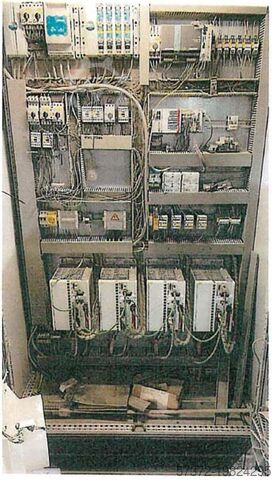
Used Nonwoven Fabric Production Plant for sale (20,547)
Sort results
- Lowest price Highest price
- Newest listings Oldest listings
- Shortest distance Farthest distance
- Newest year of manufacture Oldest year of manufacture
- Latest update Oldest update
- Manufacturer A to Z Manufacturer Z to A
- Relevance
- Lowest price
- Price
- Highest price
- Price
- Newest listings
- Release date
- Oldest listings
- Release date
- Shortest distance
- Distance
- Farthest distance
- Distance
- Newest year of manufacture
- Year of construction
- Oldest year of manufacture
- Year of construction
- Latest update
- Update
- Oldest update
- Update
- Manufacturer A to Z
- Manufacturer
- Manufacturer Z to A
- Manufacturer
- designation from A to Z
- Description
- designation from Z to A
- Description
- Model from A to Z
- Model
- Model from Z to A
- Model
- Lowest reference
- Ref.No.
- Highest reference
- Ref.No.
- Shortest runtime
- Runtime
- Longest duration
- Runtime
- Relevance
- Relevance
Listing
Germany
6,760 km
Nonwoven Fabric Production Plant
Hergeth/Autefa/Protec/DiloTopliner CL 4000/4002 - WebMax
Call
Year of construction: 1990, condition: ready for operation (used), A complete nonwoven fabric production line including peripheral equipment and a complete pre-blending line is available. 1) Pre-blending line with carding opener Houget Duesberg Bosson, year of construction: 1972, working width: 1500mm, drum: 1, worker-stripper pairs: 3, doffer: 1, feed rollers: 2, total line dimensions X/Y/Z: approx. 11000mm/1800mm/3100mm, operating hours: approx. 16414h, including feed table and bale opener. 2) Filling chute Spinnbau Bremen, year of construction: 1989, machine dimensions X/Y/Z: approx. 4000mm/2600mm/6250mm. 3) Weighing conveyor with vibrating chute Protec. 4) Card Hergeth, year of construction: 1990, working width: 2500mm, feed rollers: 2, feed roller diameter: 94mm, licker-in roller diameter: 413mm/550mm, worker-stripper roller diameter: 219mm/123mm, transfer roller diameter: 550mm, main cylinder diameter: 1500mm, doffer diameter: 850mm, compaction roller diameter: 260mm, pressure roller diameter: 2500mm. 5) Crosslapper Autefa Topliner CL 4000/4002 - WebMax, year of construction: 2006, min. fineness range: 0.7dtex, fiber types: chemical/natural/regenerated/blends, max. web weight: 100g/m², max. web weight with crosslapper: 5000g/m², max. laying width: 3500mm, working width: 2500mm, max. laying speed: 130m/min, lapper lift: 100mm, machine dimensions X/Y/Z: approx. 3850mm/8800mm/2200mm. 6) Drafting unit, working width: 2500mm, machine dimensions X/Y/Z: approx. 1600mm/3650mm/1650mm. 7) Double needle loom Dilo CBF 31/HVSL 31, year of construction: 2007, max. working width: 3100mm, stroke frequency: 1375/min, needle beam stroke: 60mm, horizontal beam stroke range: 0mm-6mm, number of needles per 1m working width: approx. 15430, machine dimensions X/Y/Z: approx. 3350mm/5150mm/4500mm, weight: approx. 38000kg. 8) Web accumulator Suchy WOB 3200, storage volume: 40m³, web weight range: 50g-2000g/m², max. working speed: 40m/min, max. production speed: 20m/min, working width range: 1000mm/3000mm, roller top width: 3200mm, machine dimensions X/Y/Z: approx. 4300mm/5050mm/5300mm. 9) Slitting unit Suchy, year of construction: 2006, weight: approx. 250kg. 10) Climbing roll winder, winding roller diameter: 350mm, min. winding diameter: 3inch, max. winding diameter: 1500mm. 11) Edge trimmer Hepp-Schwamborn. 12) X-ray measuring device Protagon Q6. This is a complete and automated nonwoven fabric production line starting from fiber bales. Documentation available. An on-site inspection is possible. Expected to be available from the end of March 2026.
Iiedsymfc Aepfx An Dea
Listing
Germany
6,760 km
Nonwoven Fabric Production System
Walter Schober/DiloKräutervlies
Call
Condition: ready for operation (used), Year of construction: 1995, A custom-built multi-stage nonwoven line for the production of two-layer or multilayer technical nonwovens made of synthetic or natural fibers with free-flowing materials such as herbs or seeds is available. Material weight range: approx. 100g/m²-1000g/m², needle machine manufacturer: Dilo, max. roll width: 2100mm, max. production speed: 200m/h, needling capacity: approx. 1200strokes/min, main motor: 45kW Siemens, total system dimensions X/Y/Z: approx. 10m/4.5m/4.5m. Process steps: nonwoven web feeding, carrier nonwoven feeding, material feeding (herbs), material dosing, material distribution, top nonwoven laydown, needle station, cutting/to length cutting, winding/rewinding, dust extraction. Documentation available. An on-site inspection is possible. The line is complete including accessories, peripheral equipment and a small sample needle machine.
Iiedpfxjyt N Dqe An Dsa
Listing
Dikilitaş
5,130 km
Pressure vessel
CHEMICAL PRODUCTION PLANT/REACTORSSTAINLESS STEEL SYSTEM WITH RECIPES
Call
Condition: like new (used), Year of construction: 2024, functionality: fully functional, wall material: stainless steel, Equipment: cooling unit, PRODUCTION REACTORS, COLLECTION TANKS, CONTROL PANELS WITH DRIVES, PLATFORMS, AND EQUIPMENT—SUITABLE FOR SYNTHETIC THICKENER PRODUCTION (AND OTHER CHEMICALS SUCH AS POLYMERS, ETC.)—MADE FROM HIGH-GRADE STAINLESS STEEL, ARE FOR SALE AND IN OPERATIONAL CONDITION.
CONSULTANCY SERVICES CAN ALSO BE PROVIDED FOR THICKENER PRODUCTION UPON REQUEST.
Acrylic thickeners, binders, alkyd resins can be produced, and formulations can be supplied with the sale.
The machines are available as a complete set or can be sold separately.
Suitable for chemical production in all industrial sectors including textiles, food, cosmetics, construction, etc.
1. REACTOR
- 17-ton capacity reactor
- Barely used
- 316 stainless steel (tank wall 10-12mm, domes 10-12mm thickness)
- 37kW ATEX-rated motor with gearbox
- Electrical control panel with Delta inverter
- External coil for heating and cooling
- Currently heated by thermal oil, cooled by chiller cold water
- Equipped with load cells, calibrated for accurate measurement
- All flanges and fittings included, fully connected
- Platform included
2. REACTOR
- 22.5-ton capacity reactor
- Made from 304 stainless steel / 8mm tank wall, 10mm dome thickness
- Unused
Iiedpfx Ansy Aggpe Dea
- 22kW motor and reducer
- Electrical control panel with Delta inverter
- External coil and jacket for heating and cooling
- Equipped with load cells, calibrated for accurate measurement
- All flanges and fittings included, fully connected
- Platform included
3. STORAGE/FEED TANK
- 10-ton capacity 304 stainless steel storage/feed tank
- Unused
- 8mm dome, 6mm wall thickness
- Full-length sight glass system to monitor product level inside
- All flanges and fittings included, fully connected
*Can be converted to a mixer/stirrer by adding a motor and shaft.
4. HOMOGENIZER/DISPERSING/MIXING TURRAX
- IKA brand
- ATEX certified
- 17 L/hour, 30 kW/10 bar
Note: These systems are designed for the production of thickeners used in printing and many other industries. All parts have been manufactured and supplied by experts in the field, meticulously engineered with no compromise on quality. Motor selection, sheet thickness, inverters, and other systems are of top quality and will operate problem-free for the buyer.
For more detailed information, please contact us.

Get information now
+44 20 806 810 84
+44 20 806 810 84
List now
*per listing / month
Listing
Zheng Zhou Shi
3,684 km
Crushing equipment
Stone crushing production lineStone crushing screening plant
Call
Condition: new, functionality: fully functional, Year of construction: 2026, A stone crushing plant for sand and aggregate making is a facility where stones and rocks are crushed into smaller pieces or gravel. It typically includes several stages of crushing and screening to produce various sizes and grades of sand and aggregate materials, which are essential in construction, landscaping, and other applications. Here's an introduction to the components and processes involved in a typical stone crushing plant:
### Components of a Stone Crushing Plant
1. Primary Crusher:
- Purpose: The primary crusher, often a jaw crusher or gyratory crusher, initially breaks down large rocks into smaller pieces.
- Function: It handles raw materials from the quarry or mine and prepares them for further processing.
2. Secondary Crusher:
- Purpose: A secondary crusher, such as a cone crusher or impact crusher, further reduces the size of the crushed stones.
- Function: It refines the material after primary crushing, producing smaller and more uniform-sized aggregates.
3. Tertiary Crusher (Optional):
- Purpose: In some configurations, a tertiary crusher like a vertical shaft impactor (VSI) may be used for shaping and fine crushing.
- Function: It produces finely crushed materials for specific applications, such as concrete production or road base.
4. Screening Equipment:
- Purpose: Screening equipment like vibrating screens or trommel screens separates the crushed materials into different sizes.
- Function: It classifies the aggregates into various grades according to size, ensuring uniformity and meeting specifications.
5. Conveyor Systems:
- Purpose: Conveyor belts transport materials between different stages of crushing and screening.
- Function: They ensure efficient material handling and continuous operation within the plant.
6. Washing Equipment (Optional):
- Purpose: Washing equipment, such as sand washers or scrubbers, may be used to remove impurities from sand and aggregate products.
- Function: It improves the quality of the final products by cleaning them and removing fines or contaminants.
### Processes Involved
- Primary Crushing: Large rocks are fed into the primary crusher and reduced to a manageable size.
- Secondary Crushing: The crushed materials from the primary crusher are further processed by secondary crushers to achieve the desired aggregate sizes.
- Screening: The crushed and sized materials are screened to separate them into different sizes and grades.
- Material Handling: Conveyor systems transport materials between different stages of the crushing and screening process.
Final Product Handling:Finished products, such as sand and various sizes of aggregates, are stored or loaded for transport to customers or construction sites.
Applications
- Construction: Used in the production of concrete, asphalt, and road base materials.
- Landscaping: Provides decorative and functional aggregates for gardens, pathways, and driveways.
infrastructure: Essential for building foundations, drainage systems, and structural fill.
As for the capacity we have 30 t/h, 30-50 t/h, 50-100 t/h, 100-150 t/h, 150-200 t/h, 200-300 t/h, 300-500 t/h, and both stationary crushing plant and mobile crushing plant are available for option.
Ijdpfx Aeq N U Duen Doia
Listing
Zheng Zhou Shi
3,684 km
Crushing equipment
Construction waste recycling plantSand aggregate/gravel production plant
Call
Condition: new, functionality: fully functional, Year of construction: 2025, A sand aggregate or gravel production plant is a facility where raw materials like sand, gravel, and other aggregates are processed to create various products used in construction and other industries. These facilities typically involve a series of processes to transform raw materials into the final products.
Here is a general overview of the key components and processes involved in a sand aggregate or gravel production plant:
Iisdpfoq Nia Ijx An Dea
1. Mining and Extraction:
- The process starts with the extraction of raw materials from quarries or mines. Heavy machinery such as excavators, loaders, and bulldozers are used to remove the raw materials from the earth.
2. Crushing and Screening:
- The extracted raw materials often need to go through crushing and screening processes to reduce their size and separate them into different grades.
- Crushers break down large rocks into smaller pieces, and screens sort the particles based on size.
3. Washing:
- Washing is a common process to remove impurities such as clay, silt, and dust from the raw materials. This is particularly important for sand and gravel used in construction.
4. Grading and Sorting:
- After washing, the materials may go through grading and sorting processes to separate them into different sizes and qualities.
5. Storage and Stockpiling:
- Processed materials are often stored in stockpiles for further use. Adequate storage facilities are necessary to manage different grades of materials.
6. Conveying and Transportation:
- Conveyor systems are used to transport materials between different stages of the production process. Transportation methods, such as trucks or conveyor belts, are used to move the final products to distribution points.
7. Quality Control:
- Quality control measures are implemented to ensure that the final products meet the required specifications and standards. This may involve regular testing and analysis of the materials.
8. Environmental Considerations:
- Sustainable practices and environmental considerations are crucial in the operation of a production plant. Measures such as dust control, water recycling, and rehabilitation of mined areas are often implemented to minimize the environmental impact.
9. Maintenance and Safety:
- Regular maintenance of equipment is essential for the smooth operation of the plant. Safety measures are also critical to protect workers and ensure compliance with regulations.
10. Final Product:
- The final products from a sand aggregate or gravel production plant may include various grades of sand, gravel, crushed stone, or other types of aggregates used in construction, concrete production, asphalt production, and other applications.
It's important to note that the specific processes and equipment used in a production plant may vary based on the type of raw materials, the intended final products, and local regulations. Additionally, advancements in technology and sustainability practices may influence the design and operation of such facilities.
Listing
Zheng Zhou Shi
3,684 km
Crushing equipment
Mobile / Stationary stone crusher plantSand & aggregate production plant
Call
Condition: new, Year of construction: 2025, A sand aggregate production plant is a facility where various types of aggregates (such as sand, gravel, crushed stone, or recycled concrete) are produced for use in construction and other applications. These plants typically include various stages of processing, from raw material extraction to the final product.
Here are the key components and processes typically involved in a sand aggregate production plant:
1. Raw Material Extraction:
- Quarrying or Mining: Aggregates are often extracted from quarries, mines, or riverbeds. Depending on the type of aggregate, the extraction process may involve drilling, blasting, or dredging.
2. Primary Crushing:
Iedoq Ngb Depfx An Doia
- Jaw Crusher or Gyratory Crusher: The extracted raw material is usually transported to the plant and fed into a primary crusher, where large rocks are broken down into smaller pieces.
3. Secondary Crushing:
- Cone Crusher or Impact Crusher: The crushed material from the primary crusher may undergo further reduction in size through secondary crushing.
4. Screening:
- Vibrating Screens: After crushing, the material is often screened to separate different sizes of aggregates. This process ensures that the final product meets the required specifications.
5. Washing:
- Sand Washers: In some cases, especially for sand production, washing is done to remove impurities, clay, and fines from the aggregates, ensuring a cleaner and higher-quality product.
6. Grading and Sorting:
- Classifiers or Graders: After washing and screening, the aggregates may go through additional processes to separate them based on size or quality.
7. Stockpiling:
- Stockpiles: The final aggregates are usually stockpiled for storage before being transported to construction sites or other end-users.
8. Aggregate Storage and Handling:
- Storage Bins or Silos: Larger production plants may have storage facilities, such as bins or silos, to store different types and sizes of aggregates before distribution.
9. Quality Control:
- Laboratory Testing: Regular quality control testing is performed on aggregates to ensure they meet specifications for strength, size, gradation, and other properties.
10. Environmental Considerations:
- Water Management: Some plants incorporate water management systems to recycle and reuse water used in the washing process, minimizing environmental impact.
11. Transportation:
- Conveyors or Trucks: Aggregates are typically transported from the production plant to construction sites by conveyors, trucks, or other means.
Listing
Nattheim
6,764 km
Window production plant
WeinigUnicontrol 10
Call
Condition: used, Year of construction: 2000, Storage location: Nattheim
Iijdpfx Aevwdmwon Dea
Listing
Zalaegerszeg
6,258 km
Complete EPS production plant
VIROVIRO HV Q-4
Call
Condition: like new (used), Year of construction: 2021, operating hours: 5,000 h, functionality: fully functional, machine/vehicle number: VIRO HV Q-4, inner dimension height: 1,300 mm, inner dimension width: 1,100 mm, pipe length (max.): 4,010 mm, Complete EPS Production Line for block cutting and packaging, Model: VIRO HV Q-4, Year: 2021, Price: €459,000
Includes extractor, side scrap handling unit, packaging system, bale-marking unit, stacking, and a separate dust compactor. Equipped with weight measuring unit, automatic block tipper, automatic cutting wire adjustment, and manual unloading. Designed for producing bales with a sheet size of 50x100 cm, with color marking of bales, as well as for forming stacks—semi-automatic equipment group. Suitable for handling blocks 3-4 meters in length. In daily use, 5,000 operating hours. Like new condition.
EPS Block Moulding Machine: Erlenbach Y2004 EBV 3080x1040x1040, Price: €77,000
EPS block production unit, fully automatic operation, can mix virgin and recycled material. Reliable, in daily use, 18,000 operating hours.
EPS Pre-Expander: Year 2008, Erlenbach Pre-expander EVD 1000, Price: €42,500
Batch pre-expander with automatic weighing system and fluid bed. Reliable, in daily use, 18,000 operating hours.
Steam Boiler: Year 2008, Manufacturer VASFA Kft Szolnok, Type AKH 1/12 EU, Price: €51,000
1 t/h, 660 kW
Operating pressure: 12 bar
Tested pressure: 19.4 bar
Isdpfoyucyusx An Deia
Reliable, in daily use, 18,000 operating hours.
Listing
Germany
6,627 km
Sandwich Panel Production Plant
SANDWICH ANLAGEXBJ-II A Laminator
Call
Condition: used, Year of construction: 2002, Technical details:
thickness: 0,6 mm
width: 1200 mm
Length: 100 mm
work speed: 1,5 - 3 m/min
motor power: 45 kw
compressed air: 7 bar
Total weight, approx.: 4500 kg
dimension machine xH: gesamt: 20 m / 2,6 m / 3 m m
2 pcs Sandwich Panel Production Plant
The plant is especially suitable for producing light laminated panels. The plant consists of a feeding system (conveyor belt) for the material, cutting system, profile system and an electronically control system. The plant has a length of 20m, width of 2,6m, height of 3m. The total weight of the plant is approximately 4,5 tons. The power consumption including the thermal output is 36 KW.
The recommended material of the internal layers are flame retardant Polystyrol or other light heat insulation materials. The sheet will be stable connected under pressure and heat with the Polystyrol through double sided application from portions of glue on the Polystyrol.
Iedou Nxa Hepfx An Deia
The panels have good physical characteristics such as thermal insulation, sound insulation, wet consistency, bending strength, compressive strength and mechanical attributes. Any length of the laminated panels is possible and adjustable on customer demand. The color of the panel is variable and is depending from the color of the used sheets.
Data Sheet
Power Consumption of the plant (with heating system): 36KW
Measurements:
- Length = 20m
- Width = 2,6m
- Height = 3 m
- Operating Temperatures: The optimal temperature for producing the panels is approximately 25 °C.
- Material: galvanized metal sheet on rolls, sheet thickness 0,3 – 0,6mm and a width of 1200mm
- Power Supply: 380 V 50Hz
- Maximum engine power: 45 KW
- Compressed Air: 7 bar
Measurements of the laminated panels:
Model 1
- Width 800 – 1200 mm
- Thickness 20 - 30mm
Model 2
- Width 1150 mm
- Thickness 50 – 150mm( adjustable)
production plant consists of:
- unwinding device
- feed system
- lamination
- cutting device
- glueing
- fume extractor device
- stacking device
- electronic control system (Mitsubishi)
*
Listing
Germany
6,760 km
Stone Production Plant
OmagTronic S22 140-90
Call
Year of construction: 2001, condition: ready for operation (used), A paving stone production line Omag, which has been continuously optimized and upgraded to the latest technical standards, is available. Overhauls: 1) Conversion for an additional hydraulic unit for additional load in 2020. 2) Conversion to servo-vibration with Siemens S7 control in 2016. 3) Conversion to digital path measurement of mould and ram in 2017. 4) New core filling carriages in 2017. Plant components: 1) Board destacker and board stacker including roller conveyor. 2) Board feeder (advance) and board conveyor (scraper) to the lifting frame. 3) Board turner. 4) Horizontal and vertical bundling units Ridder & Signode, years of manufacture: 1994 and 1983. 5) Trafo lifting platform including motors and without control, year of manufacture: 1983. 6) Doppler including hydraulic unit, year of manufacture: 2004. 7) Stone packer Omag K1400 including hydraulic unit, year of manufacture: 1997. The line has no base boards. 8) Stone finisher Omag S22 140-90, year of manufacture: 2001. Documentation available. An on-site inspection is possible.
Ijdpfxjw R Uzis An Deia
Listing
Orle
6,295 km
Concrete block production plant
HENKEVARIANT 140/100
Call
Condition: good (used), Year of construction: 1993, HENKE VARIANT 140/120, dual-feed machine, year of manufacture 1993, 2 moulds, new control system
Iodpfxoxl S Uhs An Doia
Listing
Orle
6,295 km
Concrete block production plant
WASAblaty produkcyjne 1200x850x45
Call
Condition: excellent (used), Year of construction: 2017, Plastic pallets 1200x850x40, €17 each, available quantity: 1800 pcs. The quoted price is per piece.
Iiodjxl Rpqopfx An Dsa
Listing
Isola Vicentina
6,665 km
Pellet production plant
EHW ITALIA SRLIMPIANTO PRODUZIONE PELLET
Call
Condition: refurbished (used), Year of construction: 2021, functionality: fully functional, actuation type: electric, control type: PLC-controlled, degree of automation: automatic, PELLET PRODUCTION PLANT 2 TON/H COMPLETE WITH BELT DRYER
Iisdpfxew Ebx So An Dsa
Listing
Rennes
7,646 km
Complete plant for animal feed production
Call
Condition: good (used), 2 complete manufacturing plants for animal feed products
Ijdpjncbnaefx An Doia
Listing
Zheng Zhou Shi
3,684 km
Construction machine/ sand gravel making
Sand gravel fabrication plant50-600 t/h sand gravel crushing plant
Call
Condition: new, Sand Gravel Fabrication Plant: Essential Solution for Modern Construction Needs
In the construction and infrastructure industry, high-quality sand and gravel are critical raw materials for creating concrete, asphalt, and other foundational elements. A Sand Gravel Fabrication Plant is the cornerstone of producing these materials efficiently and at scale. With advanced technology, versatility, and scalability, these plants cater to a wide range of projects, ensuring consistent quality and meeting the growing demand for construction materials.
This article explores the general introduction, features, and applications of sand gravel fabrication plants, including both stationary and mobile systems.
General Introduction to Sand Gravel Fabrication Plants
A sand gravel fabrication plant is a specialized facility designed to process raw materials such as sand, gravel, and aggregates into construction-grade products. These plants combine various equipment, including crushers, screens, conveyors, washers, and storage units, to convert raw materials into ready-to-use aggregates.
There are two primary types of sand gravel fabrication plants:
Stationary Fabrication Plants:
Fixed installations designed for high-capacity production.
Ideal for large-scale operations and long-term projects.
Mobile Sand Gravel Fabrication Plants:
Portable systems that can be transported to different project sites.
Perfect for temporary operations and projects in remote locations.
Isdpfovlwqlex An Dsia
Both types are equipped with advanced machinery and automation systems to ensure high efficiency, precision, and sustainability.
Applications of Sand Gravel Fabrication Plants
Sand gravel fabrication plants are indispensable across multiple industries due to their ability to produce high-quality aggregates. Key applications include:
1. Construction and Infrastructure
Produces sand and gravel for concrete, asphalt, and base materials.
Supports large-scale infrastructure projects such as highways, bridges, airports, and railways.
2. Residential and Commercial Development
Supplies aggregates for building foundations, driveways, landscaping, and drainage systems.
Plays a vital role in residential housing and commercial property construction.
3. Road Construction
Provides high-quality crushed stones and sand for roadbeds, pavements, and highways.
Ensures durability and longevity of road surfaces.
4. Mining and Quarrying
Efficiently processes mined materials into usable aggregates.
Enhances productivity in quarrying operations with optimized material handling systems.
5. Environmental Restoration
Supplies aggregates for erosion control, land reclamation, and shoreline protection projects.
Facilitates sustainable environmental rehabilitation efforts.
6. Recycling of Construction Waste
Mobile sand gravel fabrication plants are ideal for recycling concrete and asphalt.
Converts waste materials into usable aggregates, reducing landfill burden and promoting sustainability.
Stationary vs. Mobile Sand Gravel Fabrication Plants
Stationary Fabrication Plants
Best For: Long-term, large-scale projects and industrial operations.
Advantages:
High-capacity production.
Robust and durable structures.
Advanced automation for minimal manual intervention.
Listing
Zheng Zhou Shi
3,684 km
Production line for rock & concrete processing
Henan Mingyuan sand production line50-600 t/h sand gravel production line
Call
Condition: new, functionality: fully functional, power: 460 kW (625.43 HP), fuel type: electric, Year of construction: 2026, Henan Mingyuan Heavy Industrial Equipment Co., Ltd. has established itself as a premier global manufacturer, providing integrated Sand and Gravel Production Lines that transform raw minerals into precision-graded materials.
A MINGYUAN production line is not just a collection of machines; it is a synchronized system engineered for maximum throughput, minimal waste, and low operational costs.
-1. Core Equipment Configuration
The MINGYUAN system follows a multi-stage reduction philosophy to ensure particle shape and quality.
Vibrating Feeder (GZQ Series):Ensures a continuous, uniform flow of raw material to the primary crusher. It features grizzly bars to pre-screen dirt and "fines," protecting the crusher from unnecessary wear.
Primary Jaw Crusher (PE/C-Type): The "workhorse" designed for the initial breakdown of hard rocks (granite, basalt, river pebbles). MINGYUAN’s jaw crushers utilize a deep-chamber design for high crushing ratios.
Secondary Crusher (Impact or Cone):Impact Crusher (PF Series): Ideal for medium-hard materials; produces highly cubic final products with excellent grain shape.
Cone Crusher (Hydraulic/Spring): Preferred for high-hardness materials (granite/quartz) due to its high efficiency and low wear-part consumption.
Sand Making Machine (VSI Series): The "finisher." It uses "stone-on-stone" or "stone-on-iron" technology to shape aggregates and produce high-fineness artificial sand.
Vibrating Screen (YK Series): A high-frequency circular screen that classifies material into specific sizes (e.g., 0-5mm, 5-10mm, 10-20mm, 20-40mm).
* Sand Washing Machine (XSD/LSX Series):Removes mud and impurities to ensure the final product meets strict concrete and asphalt standards.
2. Technical Specifications & Performance
MINGYUAN offers scalable solutions tailored to project size, ranging from small-scale mobile units to massive industrial stationary plants.
| Feature | MINGYUAN Standard Specifications |
| Production Capacity | 50 – 600 $t/h$ (Tons Per Hour) |
| Max Input Size | Up to 1,100mm (depending on Jaw model) |
| Finished Product Size | 0-5mm, 5-10mm, 10-20mm, 20-40mm (customizable) |
| Power System | High-efficiency AC Motors or Diesel-Electric Hybrid |
| Control System| Centralized PLC Control Cabinet with safety interlocks |
| Materials Processed | River stone, granite, limestone, basalt, iron ore, and C&D waste |
3. The MINGYUAN Technical Advantage
What differentiates MINGYUAN in the global market is the "One-Stop" solution approach:
1. High Crushing Efficiency:Optimized crushing cavities increase the contact area between the material and the liners, reducing energy consumption per ton.
2. Environmental Compliance: Systems can be equipped with advanced dust suppression misting and fully enclosed belt conveyors to meet stringent urban environmental regulations.
3. Durability: Wear parts (jaw plates, blow bars, mantles) are manufactured using high-manganese and high-chrome alloys, significantly extending the time between maintenance cycles.
4. Flexible Layouts: Whether for a mountain quarry or a tight urban recycling site, MINGYUAN provides customized CAD layouts to optimize gravity-flow and reduce conveyor length.
Iedpfx Anjq Nywxj Djia
4. Conclusion
A MINGYUAN Sand and Gravel Production Line represents a strategic investment in efficiency. By combining primary strength with precision finishing and washing, the brand ensures that every ton of raw material is maximized for its commercial value.
Listing
Zheng Zhou Shi
3,684 km
Filtration system / mining separator
Ore beneficiation plant for gold copperOre dressing plant for zinc lead nickel
Call
Condition: new, Year of construction: 2026, functionality: fully functional, power: 400 kW (543.85 HP), Ore Beneficiation Plant for Nickel, Copper, Zinc, Graphite, Gold, Silver, Chrome, Quartz/Silica
In today’s competitive mining and metallurgical industry, maximizing ore value is critical. Our state-of-the-art Ore Beneficiation Plant offers a complete solution designed to increase the content and quality of raw ore, transforming it into a marketable product ready for further processing or direct sale. Engineered for a wide range of minerals—including nickel, copper, zinc, graphite, gold, silver, chrome, and quartz/silica—our ore beneficiation plant delivers exceptional performance, efficiency, and reliability.
Introduction
Mining operations around the world face the challenge of processing ores that are often low in grade and require extensive refinement to be economically viable. Beneficiation—the process of increasing the concentration of valuable minerals—plays a vital role in reducing operational costs, enhancing recovery, and ultimately, ensuring profitability. Our ore beneficiation plant, also known as an ore processing plant or mine dressing plant, integrates advanced technology and robust engineering to deliver an efficient crushing, grinding, classifying, and separation process.
Designed to handle a wide variety of ores, our plant is the ideal solution for mining companies looking to optimize their extraction and processing operations. Whether you’re processing nickel, copper, zinc, graphite, gold, silver, chrome, or quartz/silica, our plant provides the versatility and performance needed to meet today’s rigorous industrial standards.
## What Is an Ore Beneficiation Plant?
An ore beneficiation plant is a facility where raw ore is processed to improve its quality and increase the concentration of valuable minerals. The plant typically includes several stages of processing:
1. Crushing: The raw ore is reduced in size to allow for more efficient downstream processing.
2. Grinding: Further size reduction to liberate the valuable minerals from the waste material.
3. Classifying: Separation of the ore into different size fractions using screening and hydrocyclones.
4. Separation: Employing various physical processes such as magnetic separation, flotation, or gravity separation to concentrate the valuable minerals.
5. Dewatering: Removal of excess water to prepare the concentrate for further processing or shipping.
This integrated process not only boosts the metal content but also minimizes waste, thereby improving overall cost efficiency and environmental sustainability.
Iodpfxeq Nw Uqs An Deia
Listing
Zheng Zhou Shi
3,684 km
Grinding mill
Abrasive Aluminium Oxide Grinding PlantMicrosilica powder Grinding Mill
Call
Condition: new, functionality: fully functional, Year of construction: 2026, Microsilica, also known as silica fume or condensed silica fume, is a byproduct of producing silicon metal or ferrosilicon alloys. Microsilica powder grinding mills are used to process microsilica powder for various applications, including the production of high-performance concrete, refractory materials, and other specialty products. Grinding mills play a crucial role in reducing microsilica particles to the desired fineness. Here are some key aspects related to microsilica powder grinding mills:
1. Mill Types:
- Ball Mill: A traditional ball mill is commonly used for grinding microsilica. It relies on the impact and attrition forces to reduce particle size. It is effective for both wet and dry grinding.
- Vertical Roller Mill (VRM): VRM technology is known for its energy efficiency and the ability to grind materials into a narrow particle size distribution. It is suitable for grinding microsilica.
2. Grinding Process:
- The grinding process involves feeding microsilica particles into the grinding mill. The grinding media (balls or rollers) inside the mill crush and grind the microsilica particles into a fine powder.
3. Particle Size Distribution:
- Controlling the particle size distribution is crucial for achieving the desired properties in the final product. The grinding mill should be equipped with mechanisms to control and monitor particle size distribution.
4. Mill Design and Components:
- The design of the grinding mill, including the type of grinding media, liners, and the grinding chamber, influences the efficiency and performance of the milling process for microsilica.
5. Air Classification (Optional):
- In some cases, air classification systems are integrated into the grinding process to separate fine particles from coarser ones, ensuring a more uniform product.
6. Control Systems:
- Advanced grinding mills often come with automated control systems to regulate various parameters such as feed rate, mill speed, and product fineness.
7. Material Handling:
- Efficient material handling systems are essential to transport microsilica to and from the grinding mill. This may involve pneumatic or mechanical conveying systems.
8. Cooling Systems:
- Grinding processes generate heat, and efficient cooling systems are often integrated to maintain the temperature within a controlled range.
9. Dust Collection:
- Microsilica powder grinding can produce airborne dust. Dust collection systems are necessary to maintain a clean and safe working environment.
10. Quality Assurance:
- Grinding mills for microsilica should be equipped with quality assurance features, such as in-line particle size analysis, to ensure consistency in the final product.
Isdpjq Nxp Sefx An Deia
When selecting a microsilica powder grinding mill, factors such as production capacity, energy efficiency, and the required particle size distribution should be considered. Additionally, mills should be chosen based on the specific characteristics of the microsilica being processed and the intended application of the final product.
Listing
Zheng Zhou Shi
3,684 km
Powder equipment for sand & micro powder
Mingyuan Powder production equipment1.83X11m Micro Powder Ball Grinding Mill
Call
Condition: new, Year of construction: 2026, functionality: fully functional, Ball Mill with Air Classifier: The Ultimate Powder Processing Equipment
In the world of industrial powder production, precision, efficiency, and flexibility are paramount. Whether producing ultra-fine powders for high-tech applications or coarser materials for everyday products, the combination of a Ball Mill with Air Classifier offers unparalleled performance. This dynamic duo provides a comprehensive solution for industries ranging from chemicals and ceramics to paints, plastics, and pharmaceuticals.
This article introduces the ball mill with an air classifier, explores its applications, and highlights the key advantages of this essential powder equipment.
General Introduction to Ball Mill with Air Classifier
ball mill with air classifier is an advanced grinding and classification system designed for efficient, high-quality powder production. The system consists of two main components:
1. Ball Mill: A cylindrical grinding device filled with grinding media (such as steel balls) that operates by rotating around its axis. The raw material is reduced to smaller particle sizes through impact and friction within the mill.
2. Air Classifier: A sophisticated device that separates particles based on size using airflow. Fine particles are carried away, while coarser particles are returned to the ball mill for further grinding.
The combination of these two components creates a closed-loop system that ensures consistent particle size distribution, high efficiency, and minimal waste.
Applications of Ball Mill with Air Classifier
Iodpsvlwkxsfx An Dsia
The ball mill with air classifier is a versatile solution used in a wide range of industries to process various materials. Key applications include:
1. Mineral Processing
The system is widely used in the production of minerals such as calcium carbonate, quartz, feldspar, and talc. These finely ground minerals are essential for industries like ceramics, paints, plastics, and rubber.
2. Cement and Construction Materials
Cement and other construction materials require precise particle size control for optimal performance. The ball mill with air classifier ensures uniformity and enhances the quality of construction materials.
3. Chemicals and Pharmaceuticals
Fine powders play a critical role in the chemical and pharmaceutical industries. From active pharmaceutical ingredients (APIs) to industrial chemicals, this system delivers the consistent quality required for these applications.
4. Paints, Coatings, and Pigments
The production of paints and coatings demands ultra-fine powders to achieve smooth finishes and vibrant colors. The ball mill with air classifier produces high-quality powders for superior results.
#### 5. Food and Agriculture
Food-grade powders such as additives, preservatives, and agricultural products like fertilizers can be efficiently processed using this system, meeting stringent regulatory requirements.
Industries That Benefit from Ball Mill with Air Classifier
Several industries rely on the capabilities of this system to produce fine powders with specific characteristics:
- Ceramics: Produces high-purity powders for tiles, insulators, and advanced ceramics.
- Rubber and Plastics: Creates fillers and additives for improved durability and performance.
- Pharmaceuticals: Ensures consistent particle size for APIs and excipients.
-Construction: Delivers materials for concrete, plaster, and other applications.
Listing
Zheng Zhou Shi
3,684 km
Construction debris/waste recycling line
jaw cone crusher plant 30-300 tphConstruction & Demolition Recycling Line
Call
Condition: new, Year of construction: 2026, functionality: fully functional, power: 75 kW (101.97 HP), Jaw crusher for stone & ore crushing in quarry and mining fields
Model: PE600X900
Max input size: 500mm
Ijdpfxoq H Shce An Deia
Capacity: 80-135 t/h
Motor: 75KW
Weight: 15T
Besides this models, we also have the other models like PE900X1200, PE500X750, PE250X400, PE400X600, etc, and we also have impact crusher, cone crusher, hammer crusher, vsi crusher, more important we can also provide complete stone crushing screening plant with capacity 30-1000 t/h, welcome to contact us for more details if you want a different model or the other type of crushing machine.
You can leave us a message if you need a different model or a different type of crusher.
Listing
Turkey
5,298 km
Stationary Crushing Plant
FABO Stationary Crushing PlantStationary Crushing and Screening Plants
Call
Condition: new, functionality: fully functional, fuel type: electric, color: other, Year of construction: 2026, *All of our products are made with care and covered for 1 year warranty!
*Installation and Operator Training FREE
FABO manufactures and installs stationary type stone crushing and screening plants according to customer requirements. Production capacity of our stationary plants differs from100 to 1000 ton per hour.
Ijdpfx Aoy Dbvbon Djia
200-350 Tons/hour capacity of Crushing and Screening Plant:
-35 m3 Rock Feeding Bunker
-Apron Feeder
-Double stage Wobbler Feeder
-CLK-110 Primary Jaw Crusher
-2000 x 6000 mm Vibrating Bypass Screen
-CC 300 Cone Crusher 2 units
-2200 x 6000 mm Vibrating Screen (4 decks)
-2200 x 7000 mm Vibrating Screen (4 decks)
-20 m3 Hopper 2 units
-1000 mm, 800 mm, 650 mm width Conveyor Belt System
-Control Panel and Automation System
-Magnetic Magnet
FOR FURTHER INFORMATION PLEASE FEEL FREE TO CALL US!!!
Trust Seal
Dealers certified through Machineseeker

Listing
Turkey
5,298 km
Stationary Crushing Plant
FABO Stationary Crushing PlantStationary Crushing and Screening Plants
Call
Condition: new, functionality: fully functional, fuel type: electric, color: other, Year of construction: 2026, *All of our products are made with care and covered for 1 year warranty!
*Installation and Operator Training FREE
FABO manufactures and installs stationary type stone crushing and screening plants according to customer requirements. Production capacity of our stationary plants differs from 100 to 1000 ton per hour.
Iodpfxey Dbc Uo An Djia
750 Tons/hour capacity of Crushing and Screening Plant:
- Feeding Bunker (50 m3)
-1300x5000mm Double Stage Wobbler Feeder
- PDK-150 Primary Impact Crusher
- 2000x6000x2 Vibrating Screen
- DMK-03 Secondary Impact Crusher
- 75 m3 Stock Hoppers
- 20 m3 Hopper for Vertical Shaft Impact Crusher
- VSI-1000 Vertical Shaft Impact Crusher with open rotor
- 2000x6000x3 Horizontal Vibrating Screen
- Stock and Feedback Conveyor Belts
- Control Cabin, Electrick Panel and Cables
FOR FURTHER INFORMATION PLEASE FEEL FREE TO CALL US!!!
Listing
Turkey
5,298 km
Concrete mixing plant / concrete plant
FABO Concrete Batching Plant60 m3 Compact Concrete Batching Plant
Call
Condition: new, functionality: fully functional, fuel type: electric, color: other, Year of construction: 2026, *All of our products are made with care and covered for 1 year warranty!
*Installation and Operator Training FREE
COMPACT series Stationary Concrete Batching Plants provide satisfaction of all levels need with practical and effective solutions. Stationary concrete batching plants can easily and efficiently reach high capacity production of homogeneous concrete mixture.
COMPACT series have easy operating system and lowest investment costs. In addition, the plant provides the use of enterprise resources accurately, so that gaining time-saving will transform to more earnings.
TECHNICAL SPECIFICATIONS:
Model: COMPACT 60
Production capacity: 60 m3
Mixer type: Twinshaft mixer 1 m3
Cement weighing: 600 kg
Additives weighing: 30 kg
Water weighing: 250 kg
Cement silo is optional.
COMPACT-60 consists of:
• Aggregate Storage Bunker
Isdpfx Aoy A Egzsn Doia
• Aggregate Weighing Hopper
• Aggregate Weighing Conveyor
• Aggregate Transfer Conveyor or Bucket System
• Twinshaft Mixer
• Mixer Chassis, Walking Platforms, Ladder
• Water Weighing Hopper
• Cement Weighing Hopper
• Admixture Weighing Hopper
• Air Compressor
• Cement Screw Conveyor
• Bolted Cement Silo
• Top Filter, Safety Valve and Accessories
• Control Cabinnet with Air Conditioner
• PC and Automation System
• Control and Power Panel
FOR FURTHER INFORMATION PLEASE FEEL FREE TO CALL US!!!
Listing
Turkey
5,298 km
Concrete mixing plant / concrete plant
FABO Concrete Batching Plant110 M3/H Compact Concrete Batching Plant
Call
Condition: new, functionality: fully functional, fuel type: electric, color: other, Year of construction: 2026, *All of our products are made with care and covered for 1 year warranty!
*Installation and Operator Training FREE
COMPACT series Stationary Concrete Batching Plants provide satisfaction of all levels need with practical and effective solutions. Stationary concrete batching plants can easily and efficiently reach high capacity production of homogeneous concrete mixture.
COMPACT series have easy operating system and lowest investment costs. In addition, the plant provides the use of enterprise resources accurately, so that gaining time-saving will transform to more earnings.
.
TECHNICAL SPECIFICATIONS:
Model: COMPACT 110
Production capacity: 100 m3
Iijdpfx Aney A Edys Dsa
Mixer type: Twinshaft – 2 m3
Aggragate bunker: 4x20 m3
Cement weighing: 900 kg
Additives weighing: 40 kg
Water weighing: 700 lt
Cement silo is optional.
COMPACT 110 consist of:
• Aggregate Storage Hopper
• Aggregate Weighing Hopper
• Aggregate Transfer Conveyor or Bucket System
• Twinshaft Mixer
• Mixer Chassis, Walking Platforms, Ladder
• Water Weighing Hopper
• Cement Weighing Hopper
• Admixture Weighing Hopper
• Air Compressor
• Cement Screw Conveyor
• Bolted Cement Silo
• Top Filter, Safety Valve and Accessories
• Control Cabinnet
• PC and Automation System
• Control and Power Panel
FOR FURTHER INFORMATION PLEASE FEEL FREE TO CALL US!!!
Listing
Turkey
5,298 km
Concrete mixing plant / concrete plant
FABO Concrete Batching Plant180 m3 Compact Concrete Batching Plant
Call
Condition: new, functionality: fully functional, fuel type: electric, color: other, Year of construction: 2026, *All of our products are made with care and covered for 1 year warranty!
*Installation and Operator Training FREE
COMPACT series Stationary Concrete Batching Plants provide satisfaction of all levels need with practical and effective solutions. Stationary concrete batching plants can easily and efficiently reach high capacity production of homogeneous concrete mixture.
COMPACT series have easy operating system and lowest investment costs. In addition, the plant provides the use of enterprise resources accurately, so that gaining time-saving will transform to more earnings.
.
TECHNICAL SPECIFICATIONS:
Model: COMPACT 180
Production capacity: 180 m3
Mixer type: Twinshaft – 4.5 m3
Aggragate bunker: 5x30 m3
Cement weighing: 2000 kg
Additives weighing: 2x50 kg
Water weighing: 1000 lt
Cement silo is optional.
COMPACT 180 consist of:
• Aggregate Storage Hopper
• Aggregate Weighing Hopper
• Aggregate Transfer Conveyor or Bucket System
• Twinshaft Mixer
• Mixer Chassis, Walking Platforms, Ladder
• Water Weighing Hopper
• Cement Weighing Hopper
• Admixture Weighing Hopper
Isdpfxey A Ec Ao An Deia
• Air Compressor
• Cement Screw Conveyor
• Bolted Cement Silo
• Top Filter, Safety Valve and Accessories
• Control Cabinnet
• PC and Automation System
• Control and Power Panel
FOR FURTHER INFORMATION PLEASE FEEL FREE TO CALL US!!!
We make it easier for you to find: "nonwoven fabric production plant"
You will receive new offers immediately and free of charge via e-mail
You can easily terminate the search request at any time
This may be of interest to you

Get information now
+44 20 806 810 84
+44 20 806 810 84
List now
*per listing / month