Used Tangential Grinding for sale (4,068)
Sort results
- Lowest price Highest price
- Newest listings Oldest listings
- Shortest distance Farthest distance
- Newest year of manufacture Oldest year of manufacture
- Latest update Oldest update
- Manufacturer A to Z Manufacturer Z to A
- Relevance
- Lowest price
- Price
- Highest price
- Price
- Newest listings
- Release date
- Oldest listings
- Release date
- Shortest distance
- Distance
- Farthest distance
- Distance
- Newest year of manufacture
- Year of construction
- Oldest year of manufacture
- Year of construction
- Latest update
- Update
- Oldest update
- Update
- Manufacturer A to Z
- Manufacturer
- Manufacturer Z to A
- Manufacturer
- designation from A to Z
- Description
- designation from Z to A
- Description
- Model from A to Z
- Model
- Model from Z to A
- Model
- Lowest reference
- Ref.No.
- Highest reference
- Ref.No.
- Shortest runtime
- Runtime
- Longest duration
- Runtime
- Relevance
- Relevance
Listing
Cestona
7,769 km
Used tangential grinding machine DANOBAT
DanobatRT 1200
Call
Condition: used, rand: DANOBAT
Model: RT 1200
Useful support surface 1200 x 450 mm
Useful grinding surface (100 mm wheel) 1200 x 600
Gbodpozqrmzjfx Aatst
Useful grinding surface (50 mm wheel) 1200 x 550
Longitudinal travel X axis 1300 mm.
Transverse travel Y axis 500 mm
Listing
Concordia Sagittaria
6,559 km
Tangential grinding
LIVNICA KIKINDAURB 400/1000 NC
Call
Year of construction: 2000, condition: good (used), LIVNICA KIKINDA tangential grinding machine
Complete with magnetic table
Longitudinal stroke mm 1000
Gedpjq Aaw Hjfx Aatebt
Transverse stroke mm 400
Motor power Kw 12
Weight Kg 3800
Listing
Balaguer
7,548 km
Tangential grinding Favretto TD-160
FAVRETTOTD-160
Call
Year of construction: 1973, condition: not inspected (used), Used tangential grinding machine for flat surfaces
Brand: Favretto
Model: TD 160/s
Serial number: 0920
Year: 1973
Standard machine capacities:
- Maximum grinding length: 1200mm
- Maximum grinding length with a 75 wide wheel: 700mm
- Maximum grinding height: 500mm
TABLE:
- Length of the fixing slots: 2000mm
- Useful surface: 1600x600mm
- Measurement of the T-slots: 14x200mm
- Maximum longitudinal course: 1730mm
TOOTH:
- Dimensions: 457mm diameter x 203mm hole
- Normal and maximum width: 75 and 100mm
- Maximum transverse courses: 600
- Transverse advances little by little: 1 to 10mm
- Continuous transverse displacement: 0.1 to 6 mm/min.
Gbjdsh Rypkopfx Aatst
ENGINES:
- Main engine, power: 20CV
- Hydraulic group: 7'5CV
Dimensions:
- Measurement of the working machine: 4960x1770mm
- Height: 2400mm
- Weight: 8600kg
*Original machine documentation available.
Listing
Cestona
7,769 km
Tangential grinding machine
KENTKGS-250AHD
Call
Condition: excellent (used), Brand: KENT
Model: KGS-250AHD
Type : Tangential
Work surface 460x200 mm
Longitudinal course 540 mm
Cross course 260 mm
Distance form center to table 490 mm
Max. Weight on the table including magnetic chuck 103 for series 250 kg
150 for series 818 kg
Slote in T 14x 1 mm/N
Longitudinal table speed 5- 23 m/min
Crank cords feed 1 gra 0,02 mm - 1 rev 4 mm
Automatic traerse feed per pass 0.1 -5.5 mm
Automatic advance 50 Hz- 820 mm /min. - 60Hz 980 mm/min
Gbedpfsh Ha Ipsx Aatot
Wheel size 180 x 13 x 31. 75 mm
Spindle speed 50 Hz 2850 rpm - 60 Hz 3480 rpm
Upright crank 1 gra 0,01 mm - 1 rev 2 mm
Automatic feed increment 0,002- 0,02 mm
Spindle motor 2 x 2 HP X P
Hoist motor NA kg x cm
Hydraulic motor pump 1 X 6 HP X P
Drain motor 1/8 X 2 HP X P
Transverse agace engine 1/5 x 6 HP X P
Machine height 1775 mm
Machine dimension 3260 x 2460 mm
Net weight 1300 kg
Gross weight 1500 K
Listing
Fuente de Cantos
8,219 km
Tangential Surface Grinder
BLOHMPlanomat HB 412 CNC
Call
Condition: good (used), Control unit:
X-axis movement: 1,200 mm
Y-axis movement: 400 mm
Working table length: 1,200 mm
Working table width: 350 mm
Main electronic connection: 380 V
Total power requirement: 24 kVA
Internal cooling: yes.
Width: 4,500 mm
Depth: 2,000 mm
Height: 2,200 mm
Gbodpsgq I Nmofx Aatot
Weight: 4,500 kg
Listing
Zheng Zhou Shi
3,684 km
Powder grinding machine
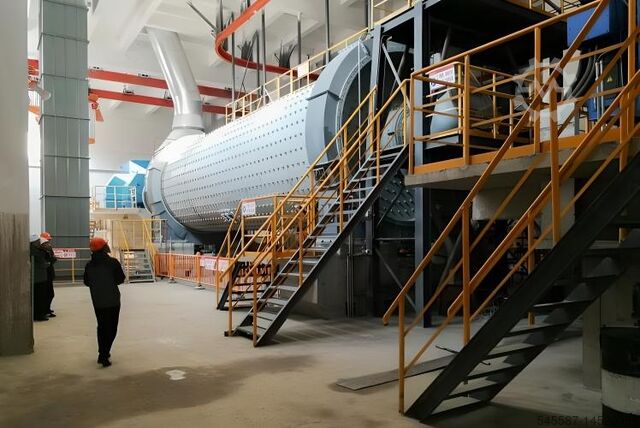
Fine powder grinding mill, clinker millSuperfine ball mill for micro powder
Call
Condition: new, Year of construction: 2026, A superfine ball mill is a type of milling machine that is used to grind materials into very fine particles. This type of ball mill has some distinctive features that make it especially suitable for processing even the hardest materials with low contamination and minimal wear. It is commonly used in various industries, including pharmaceuticals, minerals, pigments, and chemicals, for producing micro powder or nanoparticles.
Here are some key features and considerations for a superfine ball mill for micro powder:
1. High Grinding Efficiency: Superfine ball mills are designed to achieve high grinding efficiency by utilizing grinding media with a relatively small size, leading to a large surface area for grinding.
2. Precision Control: These mills often come with advanced control systems to regulate parameters like rotation speed, temperature, and grinding time, allowing precise control over the particle size distribution.
Gbedpfsq Nf Uwex Aatjt
3. Specialized Design: The mill is typically designed with features to minimize contamination, such as using materials resistant to wear and corrosion. Some mills also have cooling systems to prevent overheating during the milling process.
4. Variety of Materials: Superfine ball mills can handle a wide range of materials, including both brittle and fibrous substances. They are often used for milling hard materials that require fine grinding, such as ceramics, minerals, or pigments.
5. Size Reduction to Micro or Nano Level: The primary goal of a superfine ball mill is to reduce particle size to the micro or even nano level. This is achieved by the intense grinding action that occurs within the mill.
6. Classifier System: Some superfine ball mills incorporate a classifier system to control the particle size distribution more precisely. This allows for the separation of fine particles from coarser ones during the milling process.
7. Batch or Continuous Operation: Depending on the specific design, these mills can operate in either batch or continuous mode, offering flexibility based on the production requirements.
8. Safety Measures: Safety features may be included, such as monitoring and control systems to prevent overloading, overheating, or other potential issues during operation.
When selecting a superfine ball mill for micro powder production, it's important to consider the specific requirements of your application, the characteristics of the materials you're working with, and the desired final particle size distribution. Always follow the manufacturer's guidelines for operation, maintenance, and safety to ensure optimal performance and longevity of the equipment.
Listing
Zheng Zhou Shi
3,684 km
Fine Powder Grinding Plant
Cement mill & Ultrafine Grinding MillFine Powder Grinding Plant
Call
Condition: new, functionality: fully functional, Year of construction: 2026, Cement Mill & Ultrafine Grinding Mill
🏗️ Introduction to Cement Mill & Ultrafine Grinding Mill
In the world of construction and materials processing, achieving the right particle size is essential. Introducing the Cement Mill and Ultrafine Grinding Mill—two pivotal machines designed to deliver superior grinding performance for cement production and ultrafine materials. Let’s dive into their features and applications! 💼
🔥 What is a Cement Mill?
A Cement Mill is a crucial piece of equipment in cement production. It grinds clinker, gypsum, and other additives to produce fine cement powder. This machine ensures the optimal particle size for high-quality cement, essential for building robust structures. 🚀
🔧 What is an Ultrafine Grinding Mill?
An Ultrafine Grinding Mill is designed to produce extremely fine powders from various raw materials, such as minerals, chemicals, and industrial waste. It operates at high efficiency, delivering ultra-fine materials for advanced applications like coatings, plastics, and ceramics. 🌟
💼 Key Benefits of Using Cement Mill & Ultrafine Grinding Mill
1. High Efficiency: Both mills are engineered for maximum efficiency, ensuring rapid processing times and reduced energy consumption. 🌿💡
2. Superior Grinding Performance: Achieve consistent, high-quality output with precise control over particle size. 🏭
3. Versatility: Suitable for a wide range of materials, making them essential for various industrial applications. 🌳
4. Durability and Reliability: Built with robust materials, these mills offer long-lasting performance in demanding industrial environments. 💪
📈 Applications in Industry
Cement Mill Applications:
1. Cement Production: Essential for producing high-quality cement for construction projects.
2. Infrastructure Development: Used in creating concrete for roads, bridges, and buildings.
Ultrafine Grinding Mill Applications:
1. Mineral Processing: Producing ultra-fine powders for advanced material applications.
Gbsdpfx Aasq Nyydotot
2. Chemical Manufacturing: Used in creating fine chemicals for various industrial processes.
3. Environmental Applications: Grinding industrial waste for recycling and reuse. ♻️
🌟 Conclusion
Whether you’re in construction, materials processing, or advanced manufacturing, the Cement Mill and Ultrafine Grinding Mill are indispensable tools. Their efficiency, versatility, and superior performance make them a valuable addition to any production line. Contact us today to learn more about these innovative machines and how they can revolutionize your operations! 📞
Listing
Zheng Zhou Shi
3,684 km
Mill / grinding mill
Batch Ball Mill, Silica grinding millQuartz ball mill, silica powder grinding
Call
Year of construction: 2026, condition: new, ceramic ball mill ,Batch ball mill ,also called ceramic ball mill ,it is used for fine grinding of feldspar,quartz,clay,ore and so on.The ceramic ball mill is mainly used for material mixing, grinding,uniform product fineness,and saving power.It can be dry or wet.The machine can use different liner types according to production needs to meet different needs.The fineness of the grinding operation is controlled by the grinding time
ceramic ball mill Working principle
when ball mill working,steel balls inside drum will rotate with the drum to some height,and then steel balls fall down with materials to reach the point of grinding.
Working Principle of Ceramic ball mill
ceramic ball mill ,Intermittent ball mill grinding operation is finished in the cylinder body. When the cylinder rotates, materials ascend to a certain height and then fall along a certain path due to the balls' gravity. Two forces are generated on the balls inside. One is the force on balls through tangent direction; the other is a opposite force in the contrast to the diameter of balls, as a result of the force generated when the balls slide down. These two forces will constitute a couple for the steel balls. The balls are squeezed between the cylinder and the adjacent steel balls, so the couple can make unequal-sized friction force. The balls will orbit along with the cylinder axis and then fall down, which can produce a strong impact force on the ores in the cylinder body and, as a result, the ores will be crushed. In conclusion, the ores in the cylinder body are mainly crushed by composite effect of peeling force, impact force and extrusion force.
Ceramic ball mill also named Intermittent ball mill which adopts the wet intermittent operation, is used for fine grinding and mixing the material such as feldspar, quartz, clay ceramic raw materials. The discharging and the mud size can through through 1000 sieve pore. This machine is high milling machinery, materials should be Broken in the fineness of the state into the grinding mill to get the highest efficiency and economic benefits.
The cement mill is key equipment for the grinding process of the cement clinker after the crushing process of it. It is mainly used in the cement silicate product industry. After long term design and manufacture of the cement mill, our company now has series of cement mill with various specifications to meet with different requirement from our customers.
Features of Cement Mill
Our company adopts suitable transmission methods according to different specifications. We have brim drive and center drive as transmission form. The cylinder adopts new type step lining to increase the grinding area. And it is easily repairable and changeable. The new designed separate-chambered structure adopts flexible lifting blade and fixed lifting blade and it is easily fixed and repaired.
Technical Details
Gsdpfsvzx Auox Aatebt
We have different models and options for different requirements, please contact us for more info.
Listing
Zheng Zhou Shi
3,684 km
Roll forming line
Rod ball mill / Rod Grinding MillFor Sand and mining beneficiation plant
Call
Condition: new, Year of construction: 2026, We have various kinds of ball grinding mill such as batch ball mill, rod mill, cement ball mill, mining ball mill, welcome to contact our team for further details according to your specific requirements.
Godjq I Nw Iopfx Aatobt
Listing
Zheng Zhou Shi
3,684 km
Cement mill,clinker grinding plant
Clinker grinding mill / cement ball millcement grinding with air classifier
Call
Year of construction: 2026, condition: new, functionality: fully functional, A cement clinker grinding mill is a specialized equipment used to grind the hard nodular clinker into fine powder, which is cement. Most cement is currently ground in ball mills and also vertical roller mills, which are more effective than ball mills.
Here are key features and information about cement clinker grinding mills:
1. Raw Materials:
- The main raw material for making cement is clinker, which is produced by sintering limestone and clay. Other materials such as gypsum, fly ash, or slag may also be added during the grinding process to achieve specific properties.
2. Grinding Process:
- The clinker and other additives are finely ground in the grinding mill to produce cement. The grinding process is a crucial step in cement production and contributes significantly to the final quality of the product.
3. Types of Mills:
- Ball Mills: Traditional ball mills are commonly used for grinding clinker. They operate by rotating a cylinder with steel grinding balls, causing the balls to fall back into the cylinder and onto the material to be ground.
- Vertical Roller Mills (VRM): VRM technology has become increasingly popular for clinker grinding. These mills use a rotating table with rollers to crush and grind the clinker, providing energy efficiency and a smaller footprint compared to ball mills.
4. Gypsum Addition:
- Gypsum is often added during the grinding process to control the setting time of the cement. It prevents flash setting of the clinker and facilitates the formation of a workable and pumpable cement paste.
5. Quality Control:
- Quality control measures, such as monitoring the fineness of the cement, chemical composition, and other properties, are implemented during the grinding process to ensure the final product meets the required specifications and standards.
Gedpfxjq Nfbho Aatjbt
6. Clinker Cooling:
- Before grinding, the clinker is produced by heating the raw materials in a kiln. The clinker is then cooled before entering the grinding mill to prevent excessive heat build-up during grinding.
7. Dust Collection and Environmental Considerations:
- Dust collectors and air pollution control systems are often employed to capture and control the dust generated during the grinding process, addressing environmental and safety concerns.
8. Packaging and Storage:
- After grinding, the cement is typically stored in silos before being packaged in bags or dispatched in bulk for distribution to construction sites or for sale in the market.
Cement clinker grinding mills play a crucial role in the cement production process, and advancements in technology continue to improve the efficiency and environmental sustainability of the grinding process.
Technical details
We have different options for different requirements, please contact our team for more info.
Listing
Zheng Zhou Shi
3,684 km
Grinding mill
Abrasive Aluminium Oxide Grinding PlantMicrosilica powder Grinding Mill
Call
Condition: new, functionality: fully functional, Year of construction: 2026, Microsilica, also known as silica fume or condensed silica fume, is a byproduct of producing silicon metal or ferrosilicon alloys. Microsilica powder grinding mills are used to process microsilica powder for various applications, including the production of high-performance concrete, refractory materials, and other specialty products. Grinding mills play a crucial role in reducing microsilica particles to the desired fineness. Here are some key aspects related to microsilica powder grinding mills:
1. Mill Types:
- Ball Mill: A traditional ball mill is commonly used for grinding microsilica. It relies on the impact and attrition forces to reduce particle size. It is effective for both wet and dry grinding.
- Vertical Roller Mill (VRM): VRM technology is known for its energy efficiency and the ability to grind materials into a narrow particle size distribution. It is suitable for grinding microsilica.
2. Grinding Process:
Gbedpfx Aajq Nxp Sjtjt
- The grinding process involves feeding microsilica particles into the grinding mill. The grinding media (balls or rollers) inside the mill crush and grind the microsilica particles into a fine powder.
3. Particle Size Distribution:
- Controlling the particle size distribution is crucial for achieving the desired properties in the final product. The grinding mill should be equipped with mechanisms to control and monitor particle size distribution.
4. Mill Design and Components:
- The design of the grinding mill, including the type of grinding media, liners, and the grinding chamber, influences the efficiency and performance of the milling process for microsilica.
5. Air Classification (Optional):
- In some cases, air classification systems are integrated into the grinding process to separate fine particles from coarser ones, ensuring a more uniform product.
6. Control Systems:
- Advanced grinding mills often come with automated control systems to regulate various parameters such as feed rate, mill speed, and product fineness.
7. Material Handling:
- Efficient material handling systems are essential to transport microsilica to and from the grinding mill. This may involve pneumatic or mechanical conveying systems.
8. Cooling Systems:
- Grinding processes generate heat, and efficient cooling systems are often integrated to maintain the temperature within a controlled range.
9. Dust Collection:
- Microsilica powder grinding can produce airborne dust. Dust collection systems are necessary to maintain a clean and safe working environment.
10. Quality Assurance:
- Grinding mills for microsilica should be equipped with quality assurance features, such as in-line particle size analysis, to ensure consistency in the final product.
When selecting a microsilica powder grinding mill, factors such as production capacity, energy efficiency, and the required particle size distribution should be considered. Additionally, mills should be chosen based on the specific characteristics of the microsilica being processed and the intended application of the final product.
Listing
Heemskerk
7,158 km
Surface grinding machine
OKAMOTO Precision Surface GrindingACC-16*24SA1
Call
Condition: excellent (used), Year of construction: 2019, functionality: fully functional, OKAMOTO ACC-16*24SA1 Precision Surface Grinding Machine
Okamoto Precision Surface Grinding Machine ----- Model ACC-16•24SA1
Automatic Wheelhead Approach, Retraction to Start Position, Automatic Dress Cycle with Wheel
Wear Compensation, Shift Plunge Cycle--- ----- Grinding Capacity 16”x 24”
Gedpfx Aszmhknjatobt
Standard Accessories
• Automatic Overhead Wheel Dresser • Touch Screen Controller with 10” Display
With Compensation, including Diamond Tool • Vertical & Crossfeed Pulse Generator
• Rapid Wheel head Retraction • Teach-Input Positioning
• Load Meter for Grinding Wheel Motor • 5 HP Wheel Spindle Motor
• Shift-Plunge Rough Grinding Cycle • Stainless Steel Wheel Guard
• Selectable Rough/Fine Infeed Grinding Method • Leveling Bolts with Plates
• Table Park for Safety • Necessary Tools & Tool Box
• Stainless Steel Splash Guard • Installation and Training
• Instruction Manual
Auction
Ends in
d
h
min
s
Auction ended
Rheinland-Pfalz
6,914 km
Cylindrical grinding machine
DVS BuderusU-Grind 800
Condition: ready for operation (used), Year of construction: 2018, functionality: fully functional, center width: 1,200 mm, overall weight: 7,000 kg, travel distance X-axis: 500 mm, travel distance Z-axis: 800 mm, controller model: Bosch Rexroth MTX, TECHNICAL DETAILS
Center distance: 1,200 mm
Max. outer diameter: 350 mm
Max. workpiece weight between centers: 50 kg
Cross slide, X-axis
Travel, X-axis: 500 mm
Max. speed: 30 m/min
Resolution: 0.1 µm
Longitudinal slide, Z-axis
Travel, Z-axis: 800 mm
Max. speed: 30 m/min
Resolution: 0.0005–0.1 mm
Multi-function head, B-axis
Swivel range: -45° to +225°
Swivel time for 180°: < 3 s
Positional accuracy: 0.0002°
Repeatability: 1″
Resolution: 0.001°
External machining
Max. machining length: 750 mm
Peripheral speed: 50 corundum / 80 CBN
Drive power: 15 kW
Max. grinding wheel dimensions: Ø 400 × 50 × 152.4 mm
Internal machining
Max. bore diameter: 250 mm
Max. bore depth: 235 mm
Drive power S1: 1.8–7.5 kW
Speed range: 30,000–50,000 rpm
Workpiece spindle, C-axis
Max. speed: 1,500 rpm
Drive power: 1.8 kW
Drive torque: 90 Nm
Resolution of measuring system: 0.001°
Roundness accuracy: 0.8 µm
Positional accuracy: 0.0001°
Godpfozwm Akex Aatobt
Tailstock
Quill stroke: 50 mm / 80 mm
Quill diameter: 60 mm
Bearing: hydrostatic
Fine adjustment for cylindricity corrections: ± 40 µm
3-point steady rest
Clamping range, diameter: 20 – 150 mm
Coarse adjustment: 40 µm
Fine adjustment: 2 µm
Adjustability: stepless
MACHINE DETAILS
CNC control: Bosch Rexroth MTX
Dimensions & Weight
Dimensions (L x W x H): 2,850 x 2,470 x 2,290 mm
Weight: 7,000 kg
EQUIPMENT
3-point steady rest
Auction
Ends in
d
h
min
s
Auction ended
Rheinland-Pfalz
6,914 km
Internal and face grinding machine
VOUMARD400 CNC U2 L10 T2
Condition: ready for operation (used), Year of construction: 1988, functionality: fully functional, overall weight: 7,500 kg, grinding diameter: 300 mm, controller model: Siemens Sinumerik 840D Solutionline, No minimum price – guaranteed sale to the highest bidder!
The control system was upgraded to a Siemens Sinumerik 840D Solutionline in 2014. The new control system was overhauled in 2016!
TECHNICAL DETAILS
Spindle speed range: 170–18,000 rpm
Grinding diameter: 20–300 mm
Swinging diameter: 350 mm (500 mm)
Workpiece length: 300 mm (1,300 mm)
Recommended grinding depth: up to 300 mm
Center height above the workpiece table: 200 mm (300 mm)
Center height above the grinding table: 330 mm (430 mm)
Workpiece spindle bore: 50 mm (70 mm)
Grinding table, Z-axis
Total grinding table travel: 650 mm (950 mm)
Resolution: 0.001 mm
Rapid traverse: 12 m/min
Grinding feed rate: 0–9.99 m/min
Feed rate: 0–99.99 m/min
Incremental feed value during reversal: 0–0.999 mm
Grinding table, X-axis
Total grinding table travel: 150 mm
Resolution: 0.001 mm/rev
Rapid traverse: 5 m/min/rev
Grinding feed rate: 0–5 m/min/rev
Feed rate: 0–99.99 mm/min/rev
Incremental feed value during reversal: 0–0.999 mm/rev
Workpiece spindle head, B-axis
Swivel range: −32° (−23°) to +2°
Resolution: 0.0001° (0.36″)
Gbjdpfx Aaezwmz Tetjt
U-axis
Total travel: 300 mm
Resolution: 0.001 mm/rev
Traverse speed: 5 m/min
MACHINE DETAILS
Control system: Siemens Sinumerik 840D Solutionline
Machine weight: approx. 7.5 t
Space requirement: approx. 5.00 × 4.00 × 2.20 m
Listing
Thailand
2,422 km
Cylindrical grinding machine
MägerleMFP 51
Call
Condition: used, Year of construction: 2022, functionality: fully functional, machine/vehicle number: 6861-0024, workpiece weight (max.): 250 kg, grinding length: 500 mm, grinding wheel diameter: 300 mm, total width: 4,600 mm, total length: 4,650 mm, total height: 3,580 mm, type of input current: three-phase, spindle speed (max.): 12,000 rpm, feed length X-axis: 500 mm, feed length Y-axis: 650 mm, feed length Z-axis: 650 mm, feed rate X-axis: 50 m/min, feed rate Y-axis: 30 m/min, feed rate Z-axis: 30 m/min, grinding spindle motor power: 50,000 W, grinding spindle speed: 12,000 rpm, overall weight: 9,000 kg, input frequency: 50 Hz, rapid traverse X-axis: 50,000 m/min, rapid traverse Y-axis: 30,000 m/min, rapid traverse Z-axis: 30,000 m/min, input voltage: 400 V, space requirement height: 3,580 mm, MFG: Magerle (United Grinding)
Model: MFP51 (MFP-51-50.65.65)
Linear Axes
Max X Travel = 500 mm
Max X Travel Speed = 50000 mm / min
Max Y Travel = 650 mm
Max Y Travel Speed = 30000 mm / min
Max Z Travel = 650 mm
Max Z Travel Speed = 30000 mm / min
Spindle
Max. spindle power = 50 kW
Max. speed = 12000 RPM
Max. grinding wheel diameter = 300 mm
Max. grinding wheel width = 60 mm
Swivel Axles
Swivel Range A = 210°
Swivel Range B = 360°
Swivel Range C = 360°
Gbedpfozwugdox Aatet
Automatic 68-position tool change magazine
portal magazine with inspection window and electromechanically interlocked loading station for manual loading of the tools.
Ready to ship from Bangkok, Thailand
Listing
Shanghai
4,389 km
Gear grinding machine
ReishauerRZ 400
Call
Condition: excellent (used), Year of construction: 2006, operating hours: 30,000 h, functionality: fully functional, Reishauer RZ 400 Gear Grinding Machine
1-2 shift operation; excellent condition; fully equipped all-inclusive machine
Machine under power for inspection during ongoing production
Year of manufacture: 2006
Gjdoxupfcjpfx Aatjbt
Control: Siemens 840 D
Machine dimensions: approx. 3.3 m (L) x 2.7 m (W) x 2.5 m (H)
Machine weight: approx. 16,000 kg
Condition per documentation: very good condition, complete with tailstock, oil mist extraction, filter and cooling system (Hoffmann HSF), no defects reported, sale due to low utilization
Workpiece Data
Workpiece diameter: 10 to 400 mm
Number of teeth: 5 to 999
Face width: 0 to 300 mm
Centres distance: approx. 60 to 700 mm
Module: 0.5 to 8
Pressure angle: 14° to 30°
Helix angle: ±45°
Max. workpiece weight: 300 kg
Axis Data
B-axis grinding spindle: power 10 kW
Speed: 4010 rpm
Peripheral speed: 63/72 m/s
dynamic balancing included
C-axis workpiece spindle: torque 180 Nm, max speed 480 rpm
Z-axis travel: 300 mm, feed rate 0 to 5.0 mm/rev
X-axis travel: 490 mm, rapid traverse 15 m/min
Y-axis shifting travel: 220 mm
P-axis grinding oil nozzle travel: 80 mm
W-axis tailstock travel: 640 mm, speed 12 m/min
W1-axis indexing sensor travel: 250 mm, speed 45 m/min
A-axis grinding head swivel range: ±48°, swivel speed 28°/s
Equipment
Tailstock
CNC dressing unit type RP2-SW, semi-automatic
Oil mist extraction
Filter and cooling unit: HOFFMANN Filter type HSF 100
One flange with used grinding wheel
Two measuring probes / meshing sensors
Software: MMINC Version 07.02, PLC Version V3.075A
Listing
Zheng Zhou Shi
3,684 km
Glass grinding machine
Henan Mingyuan Ceramic /Silica Ball MillBatch ball mill for glass ceramic making
Call
Condition: new, Year of construction: 2026, power: 7.5 kW (10.20 HP), Batch ball mills find applications in various industries where the processing of materials in discrete batches is required. The versatility of batch ball mills makes them suitable for a range of applications. Here are some common batch ball mill applications:
1. Ceramics Industry:
- *Glaze Preparation:* Batch ball mills are extensively used in the ceramics industry for preparing glazes. Raw materials such as feldspar, quartz, and clay are ground with ceramic balls to achieve the desired particle size for glaze formulation.
2. Chemical Industry:
- *Material Grinding:* Batch ball mills are used for grinding and blending various chemical materials. This includes the production of pigments, dyes, and other specialty chemicals where precise particle size control is crucial.
3. Pharmaceuticals:
- *Drug Formulation:* In pharmaceutical manufacturing, batch ball mills are used for grinding and blending powders to create drug formulations. The controlled environment provided by these mills is essential for maintaining the integrity of pharmaceutical compounds.
4. Food Industry:
- *Ingredient Mixing:* Batch ball mills may find application in the food industry for mixing and grinding ingredients. This can include the production of food additives, flavorings, and other powdered or granular products.
5. Mining and Minerals Processing:
- *Ore Grinding:* Batch ball mills are used in mining and minerals processing for grinding minerals and ores. The controlled grinding helps in obtaining the desired particle size for subsequent processes, such as mineral separation or extraction.
6. Paints and Coatings:
- *Pigment Dispersion:* In the paints and coatings industry, batch ball mills are employed for dispersing pigments into paint formulations. Achieving a uniform particle size is crucial for the quality and appearance of the final coating.
7. Building Materials:
- *Raw Material Grinding:* Batch ball mills are used in the preparation of raw materials for the production of building materials, such as cement and concrete. Grinding of materials like limestone and clay helps in obtaining the desired fineness for subsequent processes.
8. Electronic Materials:
- *Ceramic Powder Processing:* In the electronics industry, batch ball mills can be employed for processing ceramic powders used in the production of electronic components and insulating materials.
9. Research and Development:
- *Material Testing:* Batch ball mills are often used in research and development laboratories for testing and optimizing material formulations. They provide a controlled environment for small-scale processing and experimentation.
10. Customized Applications:
- *Specialized Processes:* Batch ball mills can be adapted for various specialized processes in different industries where precise grinding and mixing are required. Custom modifications can be made based on specific application requirements.
Gbodpfx Aasq I N H Nstjt
When using a batch ball mill, it's important to consider factors such as the type of material being processed, desired particle size, and the specific requirements of the end product. Additionally, following the manufacturer's guidelines and maintaining proper operating conditions are essential for efficient and effective milling processes.
Technical details
We have different options for different requirements, please contact our team for more info.
Listing
Zheng Zhou Shi
3,684 km
Powder grinding mill
ball mill for mining &fine powder makingsilica/Barite/limestone powder plant
Call
Condition: new, Year of construction: 2026, power: 300 kW (407.89 HP), Ball Mill for Mining & Fine Powder Making:
A ball mill is a fundamental grinding device widely used in mining, metallurgy, cement, and chemical industries. It is designed to grind ores and other materials into fine powder through impact and attrition between steel balls and the material inside a rotating cylindrical shell. In mining plants, ball mills are essential for ore beneficiation, while in powder-making industries, they ensure uniform particle size and high surface area for further processing.
Gjdjq Ngafspfx Aatsbt
Working Principle
The ball mill operates on the principle of impact and friction. As the cylindrical shell rotates around its horizontal axis, the grinding media—usually steel or ceramic balls—are lifted along the inner wall by centrifugal force and friction. When they reach a certain height, they fall freely, striking and grinding the material below. This repeated motion breaks down the material into fine particles. The process can be carried out in dry or wet conditions depending on the application.
Structural Composition
A standard ball mill consists of several main components:
Feeding part: Ensures uniform material input through a feeder or screw conveyor.
Discharging part: Can be grate type or overflow type, depending on the discharge method.
Rotating part: The cylindrical shell made of steel plates, lined with wear-resistant liners.
Transmission system: Includes motor, reducer, small transmission gear, and electrical control.
Grinding media: Steel or ceramic balls of various diameters for efficient grinding.
The internal liner design and ball size distribution are optimized to achieve maximum grinding efficiency and minimal energy consumption.
Technical Details/Typical Specifications:
Feeding size: ≤25 mm
Discharge size: 0.074–0.4 mm
Capacity: 0.65–615 t/h (depending on model and material hardness)
Cylinder speed: 18–38 r/min
Power: 18.5–4500 kW
Liner material: High manganese steel, rubber, or alloy steel
Grinding media load: 30–45% of cylinder volume
Operating Modes:
Dry grinding: Used for materials that must remain moisture-free, such as cement clinker, limestone, and quartz.
Wet grinding: Common in ore beneficiation, where water or slurry improves grinding efficiency and particle uniformity.
Application in Mining and Powder Production
In mining operations, ball mills are used after crushing to further reduce ore size and liberate valuable minerals. They are integrated into grinding circuits with classifiers, hydrocyclones, and flotation systems. The ground material is classified by size, and oversized particles are returned to the mill for regrinding. This closed-circuit system ensures consistent product fineness and efficient energy use.
In fine powder production, ball mills are used to produce materials such as silicate, ceramic powder, refractory materials, and chemical raw materials. The uniform particle size achieved by ball milling enhances product quality and performance in downstream applications.
Conclusion
A ball mill is an indispensable piece of equipment for both mining and fine powder making. Its ability to grind materials into fine, uniform particles makes it vital for ore beneficiation and industrial powder production. With flexible configurations, high efficiency, and reliable operation, modern ball mills provide a cost-effective and energy-efficient solution for large-scale grinding, ensuring consistent quality and productivity across diverse applications.
Listing
Zheng Zhou Shi
3,684 km
Ball Mill for Ore mining & sand grinding
batch ball mill & wet mining ball mill2400X4500 ball mill
Call
Condition: new, fuel type: electric, Year of construction: 2026, machine/vehicle number: 2700x4500, Equipment: low noise, Main Technical parameters of the ball mill
Drum diameter: 2400mm
Drum length: 4500mm
Motor power: 320KW
Max input size: 25mm
Capacity:35-60 t/h
Weight: 72Tons
Ball loading: 30Tons
Besides this model, we also have the other models like 2700x4500, 3200x4500, 1830x13000mm, and so on, and we can also offer customerization service, we can also provide complete grinding solution for various industries like cement, quartz, ore beneficiation plant, and so on, welcome to contact us for more info.
A ball mill is a common grinding machine used to grind and blend materials for use in mineral processing, including ore mining and the production of silica (silicon dioxide). When it comes to ore mining and silica grinding, the characteristics of the ore and the final product requirements will play a crucial role in selecting the appropriate ball mill.
Here are some considerations for using a ball mill in ore mining and silica grinding:
1. Ore Characteristics:
- Hardness: The hardness of the ore determines the type of ball mill that is most suitable. Harder ores may require a more robust and wear-resistant ball mill.
- Particle Size Distribution: The initial particle size of the ore affects the grinding process. Different ores may require different approaches to achieve the desired particle size.
Godpsq Igiijfx Aatsbt
2. Silica Grinding:
- Silica Content: If the primary goal is to grind silica, it's important to consider the initial silica content and the desired final particle size. Silica grinding often requires special attention to prevent excessive wear on the milling equipment.
3. Ball Mill Type:
- Overflow vs. Grate Discharge: The type of discharge from the ball mill can impact the final product and the grinding efficiency. Overflow mills are generally used for most grinding applications, while grate discharge mills are more suitable for certain types of ores.
4. Mill Size and Capacity:
- Mill Diameter and Length: The size of the ball mill should be selected based on the amount of material to be ground and the desired throughput.
- Capacity: Ensure that the chosen ball mill has the capacity to handle the required volume of material efficiently.
5. Grinding Media:
- Material and Size: The choice of grinding media (balls or cylpebs) and their size depends on the hardness of the ore and the desired final particle size. Different grinding media materials can impact the purity of silica during grinding.
6. Liners and Lifting Aids:
- Liners: Consider the type of liners used in the ball mill to protect the shell and optimize the grinding process.
- Lifting Aids: Some mills use lifting aids to enhance the grinding action and promote better mixing of the material.
7. Control and Monitoring Systems:
- Automation: Utilize control systems to automate the milling process and ensure optimal performance.
- Monitoring: Regularly monitor the milling process to adjust parameters as needed for consistent and efficient operation.
8. Safety Measures:
- Safety Systems: Implement safety features to protect personnel and equipment during operation.
Always follow the manufacturer's recommendations and guidelines for operation and maintenance to ensure safe and efficient use of the ball mill in ore mining and silica grinding applications.
Listing
Zheng Zhou Shi
3,684 km
Ball mill for powder and mining plant
Mingyuan Ball Mill For Fine PowderPowder grinding mill for coal, silica
Call
Condition: new, functionality: fully functional, power: 55 kW (74.78 HP), Year of construction: 2026, Ball Mill for Powder and Mining Plant: Structure, Function, and Technical Details
A ball mill is a key grinding machine widely used in mining, metallurgy, cement, chemical, and powder-making industries. It is designed to grind various ores and other materials into fine powder through impact and attrition between steel balls and the material inside a rotating cylindrical shell. In mining plants, ball mills are essential for ore beneficiation, preparing materials for flotation, magnetic separation, or leaching processes. In powder production, they ensure uniform particle size and high surface area for further processing.
Working Principle
The ball mill operates on a simple yet effective principle: as the cylindrical shell rotates around its horizontal axis, the grinding media (steel or ceramic balls) are lifted along the inner wall by centrifugal force and friction. When they reach a certain height, they fall freely, striking and grinding the material below. This repeated motion causes both impact and abrasion, reducing the material to the desired fineness. The grinding process can be performed in dry or wet conditions depending on the application.
Structural Composition
A standard ball mill consists of several main components:
Feeding part: Equipped with a feeder or screw conveyor to ensure uniform material input.
Discharging part: Can be grate type or overflow type, depending on the discharge method.
Rotating part: The cylindrical shell made of steel plates, lined with wear-resistant liners.
Transmission system: Includes motor, reducer, small transmission gear, and electrical control.
Grinding media: Steel balls or ceramic balls of different diameters for efficient grinding.
The internal liner design and ball size distribution are optimized to achieve maximum grinding efficiency and minimal energy consumption.
Technical Details
Typical Specifications:
Feeding size: ≤25 mm
Discharge size: 0.074–0.4 mm
Capacity: 0.65–615 t/h (depending on model and material hardness)
Cylinder speed: 18–38 r/min
Power: 18.5–4500 kW
Liner material: High manganese steel, rubber, or alloy steel
Grinding media load: 30–45% of cylinder volume
Operating Modes:
Dry grinding: Suitable for materials that must remain moisture-free, such as cement clinker, limestone, and quartz.
Wet grinding: Common in ore beneficiation, where water or slurry improves grinding efficiency and particle uniformity.
Application in Mining Plants
In mining operations, ball mills are used after crushing to further reduce ore size and liberate valuable minerals. They are integrated into grinding circuits with classifiers, hydrocyclones, and flotation systems. The ground material is classified by size, and oversized particles are returned to the mill for regrinding. This closed-circuit system ensures consistent product fineness and efficient energy use.
Gedpjq Nf U Esfx Aatjbt
Common Applications:
Gold, copper, iron, and zinc ore grinding
Cement clinker and slag processing
Silicate and ceramic powder production
Coal and mineral powder preparation
Conclusion
A ball mill is an indispensable piece of equipment in both powder production and mining beneficiation plants. Its ability to grind materials into fine, uniform particles makes it vital for downstream processes such as flotation, sintering, and chemical reactions.
Listing
Zheng Zhou Shi
3,684 km
Powder equipment for sand & micro powder
Mingyuan Powder production equipment1.83X11m Micro Powder Ball Grinding Mill
Call
Condition: new, Year of construction: 2026, functionality: fully functional, Ball Mill with Air Classifier: The Ultimate Powder Processing Equipment
In the world of industrial powder production, precision, efficiency, and flexibility are paramount. Whether producing ultra-fine powders for high-tech applications or coarser materials for everyday products, the combination of a Ball Mill with Air Classifier offers unparalleled performance. This dynamic duo provides a comprehensive solution for industries ranging from chemicals and ceramics to paints, plastics, and pharmaceuticals.
This article introduces the ball mill with an air classifier, explores its applications, and highlights the key advantages of this essential powder equipment.
General Introduction to Ball Mill with Air Classifier
ball mill with air classifier is an advanced grinding and classification system designed for efficient, high-quality powder production. The system consists of two main components:
1. Ball Mill: A cylindrical grinding device filled with grinding media (such as steel balls) that operates by rotating around its axis. The raw material is reduced to smaller particle sizes through impact and friction within the mill.
2. Air Classifier: A sophisticated device that separates particles based on size using airflow. Fine particles are carried away, while coarser particles are returned to the ball mill for further grinding.
The combination of these two components creates a closed-loop system that ensures consistent particle size distribution, high efficiency, and minimal waste.
Applications of Ball Mill with Air Classifier
The ball mill with air classifier is a versatile solution used in a wide range of industries to process various materials. Key applications include:
Gbedpfx Aaevlwkxotot
1. Mineral Processing
The system is widely used in the production of minerals such as calcium carbonate, quartz, feldspar, and talc. These finely ground minerals are essential for industries like ceramics, paints, plastics, and rubber.
2. Cement and Construction Materials
Cement and other construction materials require precise particle size control for optimal performance. The ball mill with air classifier ensures uniformity and enhances the quality of construction materials.
3. Chemicals and Pharmaceuticals
Fine powders play a critical role in the chemical and pharmaceutical industries. From active pharmaceutical ingredients (APIs) to industrial chemicals, this system delivers the consistent quality required for these applications.
4. Paints, Coatings, and Pigments
The production of paints and coatings demands ultra-fine powders to achieve smooth finishes and vibrant colors. The ball mill with air classifier produces high-quality powders for superior results.
#### 5. Food and Agriculture
Food-grade powders such as additives, preservatives, and agricultural products like fertilizers can be efficiently processed using this system, meeting stringent regulatory requirements.
Industries That Benefit from Ball Mill with Air Classifier
Several industries rely on the capabilities of this system to produce fine powders with specific characteristics:
- Ceramics: Produces high-purity powders for tiles, insulators, and advanced ceramics.
- Rubber and Plastics: Creates fillers and additives for improved durability and performance.
- Pharmaceuticals: Ensures consistent particle size for APIs and excipients.
-Construction: Delivers materials for concrete, plaster, and other applications.
Trust Seal
Dealers certified through Machineseeker

Listing
Singapore
3,438 km
Surface grinding machine
PalmaryPSG-60100AHR
Call
Condition: ready for operation (used), Year of construction: 2020, Taiwan Palmary Surface Grinding
Model : PSG-C60100AHR
Year 2020
Max. Grinding surface 1,000mm x 600mm
Gbjdpfx Aoy N Rkxjatet
Electro-Magnetic chuck
MPG
Overhead Dresser
Automatic grinding cycle
0.001mm - 0.03mm auto grind
Spindle 1,750 rpm
Wheel dia.405x50x127mm
Good Operational
Listing
București
5,510 km
Guideway grinding machine
WMWSFBZ 2200/6000
Call
Condition: good (used), Year of construction: 1972, Slideway grinding machine WMW SFBZ 2200/6000
Manufactured by WMW Germany in 1972
Main technical data:
Gbsdpfx Ajw U A Rmsatjt
Table size: 2240x6000 mm
Max. grinding width: 2200 mm
Max. grinding length: 6000 mm
Max. grinding height: 2000 mm
Max. workpiece weight: 15000 kg
Machine weight: 130 tons
The machine underwent a general overhaul in 2022. The feed boxes with electromagnetic couplings were replaced with motors and gearboxes for both heads. The bearings for the universal grinding head were also replaced.
For more information, please contact us.
Listing
郑州市
3,695 km
Centerless grinding machine
MIKROSAKRONOS S 125
Call
Condition: used, Year of construction: 2013, functionality: fully functional, machine/vehicle number: Check machine nameplate for serial number, grinding wheel width: 125 mm, grinding wheel diameter: 400 mm, total height: 2,320 mm, total width: 4,600 mm, total length: 6,500 mm, grinding length: 120 mm, type of input current: three-phase, rotational speed (max.): 7,200 rpm, feed length X-axis: 120 mm, feed length Y-axis: 15 mm, workpiece diameter (max.): 30 mm, input voltage: 400 V, Equipment: rotational speed infinitely variable, German Mikrosa Precision CNC Infeed Centerless Grinder
MIKROSA KRONOS S 125
Model built late 2013, 1 unit available
Capable of complex profile grinding with superior grinding quality and outstanding stability.
Equipped with automatic robotic loading & unloading system, wheel dynamic balancing unit and rotary dresser.
The machine has always been maintained by official MIKROSA service engineers.
Gbjdpfx Ajzqx Apeatst
Commissioned at the end of 2013. Production ceased in 2019. The machine has remained powered on and kept under warm-running condition ever since.
Workpiece diameter range: 0.5 ~ 30 mm
• Max workpiece length for infeed grinding: 120 mm
• Grinding wheel: Ø 400 x 125 x 203.2 mm
• Regulating wheel: Ø 250 x 125 x 127 mm
Listing
Szigetszentmiklós
6,101 km
Surface grinding machine
ELB-Schliff
Call
Condition: good (used), Year of construction: 1993, ELB surface grinding machine
Year: 1993
Magnetic table size: 1500x550 mm
Gbsdpjygtiwsfx Aatst
With automatic downfeed
With wheel dresser
Paper band type coolant tank
Lots of grinding wheels
We make it easier for you to find: "tangential grinding"
You will receive new offers immediately and free of charge via e-mail
You can easily terminate the search request at any time
This may be of interest to you