Used Vemag Ball Forming Attachment for sale (13,730)
Sort results
- Lowest price Highest price
- Newest listings Oldest listings
- Shortest distance Farthest distance
- Newest year of manufacture Oldest year of manufacture
- Latest update Oldest update
- Manufacturer A to Z Manufacturer Z to A
- Relevance
- Lowest price
- Price
- Highest price
- Price
- Newest listings
- Release date
- Oldest listings
- Release date
- Shortest distance
- Distance
- Farthest distance
- Distance
- Newest year of manufacture
- Year of construction
- Oldest year of manufacture
- Year of construction
- Latest update
- Update
- Oldest update
- Update
- Manufacturer A to Z
- Manufacturer
- Manufacturer Z to A
- Manufacturer
- designation from A to Z
- Description
- designation from Z to A
- Description
- Model from A to Z
- Model
- Model from Z to A
- Model
- Lowest reference
- Ref.No.
- Highest reference
- Ref.No.
- Shortest runtime
- Runtime
- Longest duration
- Runtime
- Relevance
- Relevance
Listing
Krotoszyn
6,284 km
Ball forming attachment
VEMAGBall Control 235
Call
Condition: excellent (used), Year of construction: 2011, functionality: fully functional, VEMAG BALL CONTROL 235 | Forming attachment for meatballs, croquettes, and cylinders
Manufacturer: VEMAG Maschinenbau GmbH
Model / Type: Ball Control 235
Fgsdjzgx Dlepfx Am Tod
Serial number: 235.0038
Year of manufacture: 2011
Power supply: 400 - 460 V | 3 Ph | 50/60 Hz | 9 A
Power: 5 kW
Rated short-circuit current (SCCR): 5 kA rms
Electrical schematic number: 235.890.002d
Maximum portioning capacity: up to 250 portions/min per outlet (depending on the product and portion size)
Number of outlets: 4-row filling distributor
The professional, multi-stream VEMAG Ball Control 235 attachment is a technologically advanced peripheral device designed to work with VEMAG's industrial vacuum fillers. This machine is a key component in convenience food production lines in medium and large meat processing, ready-to-eat, fish processing, and bakery plants. It is used for the precise, multi-row forming of masses and fillings into repeatable, three-dimensional shapes, such as perfect meatballs, croquettes, rissoles, fish fingers, cheese balls, and potato dumplings. The heart of the device is a 4-channel flow distributor, which divides the flow of filling from the filler into four perfectly equal rows, guaranteeing consistent weight and identical geometry for each individual product. An advanced servo-drive system controls the cutting plates, synchronizing directly with the main computer of the filler, and is responsible for the cutting and shaping process. The formed products are directly and smoothly deposited onto an integrated conveyor belt, from where they can go directly to packaging, freezing, or further heat treatment systems.
Listing
Krotoszyn
6,284 km
Ball and cylinder forming machine
VemagBallControl XXL
Call
Condition: excellent (used), Year of construction: 2021, functionality: fully functional, Ball and cylinder forming machine
Brand Vemag
Model BallControl XXL
Year of production 2021
⁃ For forming meat balls and cylinders
⁃ Capacity up to 200 strokes per minute depending on portion size for unfilled products
⁃ For connection to the main VEMAG HP-E series filling machine
Fgedev Ihd Uepfx Am Ted
Flow distributor
⁃ Base unit, flow distributor pipes, connecting pipes in a stainless steel housing,
⁃ The distributor is mounted on a movable slider, which facilitates assembly and disassembly,
⁃ Servo drive of the cut-off plates - with full control via the VEMAG filling computer,
⁃ Metal safety guards,
⁃ Mobile design,
⁃ Frame made of stainless steel,
⁃ Dosing directly onto a 1 x 1 m tray, ⁃ Dosing onto a 1 x 1 m tray
⁃ Belt width 1000 mm,
⁃ With metal tray dispenser 1m x 1m
⁃ Trolley for dismantled parts for washing and hooks for hanging molding sets x 2pcs.
Listing
Susuz
4,879 km
Ballast leveling
GalenGalen Reglaj Attachment(Ballast Leveling
Call
Condition: new, Reglaj Attachment( Ballast Leveling Bucket)
Designed to improve sub-rail stability, our Reglaj Attachment is used for ballast leveling operations.
For more detailed information, please feel free to contact us.
Fedpfx Amsv Spfzs Tjgd

Get information now
+44 20 806 810 84
+44 20 806 810 84
List now
*per listing / month
Listing
Vaslui
5,437 km
Meat processing machine
VEMAGFSL 210
Call
Condition: excellent (used), Year of construction: 2020, functionality: fully functional, machine/vehicle number: 100152, overall weight: 548 kg, input voltage: 400 V, type of input current: three-phase, power: 7 kW (9.52 HP), input frequency: 50 Hz, Manufacturer: VEMAG Maschinenbau GmbH
Model: FSL 210 Linker
Year of manufacture: 2020
Serial No.: 100152
Condition: Very good, fully operational
The VEMAG FSL 210 is a high-performance automatic sausage linking and twisting unit designed for precise portioning of fresh sausages in natural, collagen and cellulose casings. The machine provides accurate link lengths, high production capacity and consistent product quality. It is equipped with a separating device and is intended for operation together with a VEMAG vacuum filling machine featuring the CAN-BUS control system.
Technical specifications
* Capacity: up to 800 portions/min (depending on product, casing and portion size)
* Portion length:
* from 55 mm (single-link separation)
* from 40 mm (multiple-link separation)
* Casing calibers: 13–40+ mm
* Suitable for natural, collagen and cellulose casings
* Integrated sausage separating device
* Fast Start function for quick casing changes
* Power supply: 400 V, 3-phase, 50/60 Hz
* Installed power: 7 kW
* Weight: 548 kg
* Manufactured in Germany
Features
* Precise twisting and portioning
Fjdpfx Amezi S Iio Tsgd
* High-speed production with consistent link length
* Hygienic stainless-steel construction
* Easy cleaning and maintenance
* Mobile frame with heavy-duty castors
* Ideal for industrial fresh sausage production
The machine has been professionally maintained and is in very good working condition.
Listing
Cerovac
6,010 km
Line for forming cevapcici and cevapi
Call
Condition: used, Line for forming cevapcici and cevapi (grinder with mixer, portioning device and belt transporter)
Fgedpfxog Atrvo Am Ted
Listing
Mala Vranjska
6,012 km
Filling and vacuum filling
VemagRobby 2
Call
Condition: used, Continuous vacuum filler for straight filling, portioning, and twisting
Optional: holding and twisting device
All in one 250 liter hopper with counter arm and reinforced scraper, tipping, and hopper lock
Hopper inlet 100 mm diameter
Integrated vacuum pump
Integrated lift
Program memory for 99 filling programs
Portion weight: from 5 to 60.000 g
Electric power: 7.6 KW
Machine dimensions in cm:
Width: 205
Lenght: 130
Height: 210
Fgodpfx Aogukvvsm Tjd
Delivery time: 20 working days after advanced payment
Listing
Mala Vranjska
6,012 km
Vacuum filer
VemagRobot 500
Call
Condition: refurbished (used), Type: Robot 500
Continuous vacuum filler for straight filling and portioning
Integrated vacuum pump
Double screw
Standard double screw housing
Program memory for 99 filling programs
Portion weight: from 5 to 60.000 g
Electric power: 4 KW
Machine dimensions in cm:
Width: 70
Lenght: 80
Fgsdefnrx Repfx Am Tjd
Height: 155
Delivery time: after advanced payment machine is generally refurbished and ready for delivery
Listing
Mala Vranjska
6,015 km
Vacuum filler
VemagRobot 3000 DC
Call
Condition: used, Continuous vacuum filler for straight filling and portioning
All in one 250 liter hopper with counter arm and reinforced scraper, tipping, and hopper lock
Fodpfxjx U Ea So Am Tegd
Hopper inlet 100 mm diameter
Integrated vacuum pump
Integrated lift
Standard double screw housing
Machine dimensions in cm: 200 x 120 x 200
Listing
Rzeszów
5,933 km
Bread divider
VemagROBO 500
Call
Condition: excellent (used), Year of construction: 2017, 378 USED Vemag bread divider, model Robot 500 - Filler.
TECHNICAL DATA:
- Weight range: 5 g - 30 kg
- Capacity: 2500-2800 pcs/h depending on the weight.
The device is available to verify in our warehouse (36-068 Bachórz, Poland).
Fgodey Szavspfx Am Tod
Paid options available: renovation / transport / assembly / commissioning of the device.
The price is a net price.
Our languages: ENGLISH, FRENCH, GERMAN, RUSSIAN, UKRAINIAN.
.....
bakery oven, bakery ovens, bakery machine, bakery machines, bakery equipment, bakery equipments, bakery device, bakery devices
Listing
Niedźwiedź
6,062 km
Vacuum filler Vemag HP30E
VemagHP30E
Call
Condition: excellent (used), Year of construction: 2024, Vemag vacuum filler
-Type: HP30E
-Power: 36 kW
-Year of manufacture: 2024
-Working hours: about 2000
-Capacity: up to 8 700 kg/h
-Portion range: 5–99 999 g
-Hopper capacity: 350 L
-Loading for 200L meat bins
Fgedpfxszkkfij Am Tsd
-Power supply: 400–460V 3Ph 50/60 Hz
-Condition: used in very good condition, ready to work
Listing
Варна
5,331 km
VEMAG FKF can filling machine
VEMAGFKF
Call
Condition: ready for operation (used), Can filling machine diameter 77 mm and 99 mm. VEMAG type FKF for filling in cans.
Fjdpfx Aoimblqom Togd
Note:
The byer will another machine- same as the offered for spare parts.
Listing
Zheng Zhou Shi
3,684 km
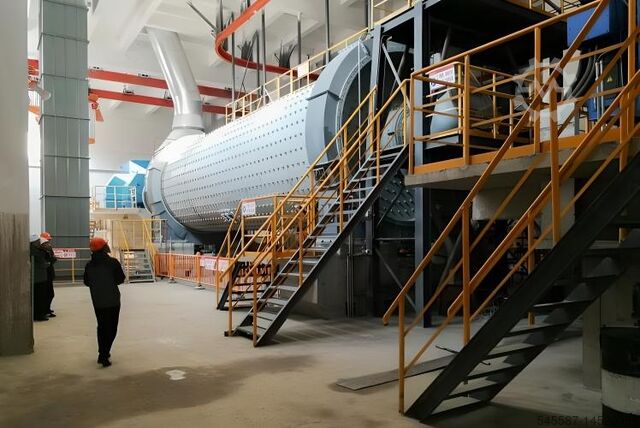
Ball mill for powder and mining plant
Mingyuan Ball Mill For Fine PowderPowder grinding mill for coal, silica
Call
Condition: new, functionality: fully functional, power: 55 kW (74.78 HP), Year of construction: 2026, Ball Mill for Powder and Mining Plant: Structure, Function, and Technical Details
A ball mill is a key grinding machine widely used in mining, metallurgy, cement, chemical, and powder-making industries. It is designed to grind various ores and other materials into fine powder through impact and attrition between steel balls and the material inside a rotating cylindrical shell. In mining plants, ball mills are essential for ore beneficiation, preparing materials for flotation, magnetic separation, or leaching processes. In powder production, they ensure uniform particle size and high surface area for further processing.
Working Principle
The ball mill operates on a simple yet effective principle: as the cylindrical shell rotates around its horizontal axis, the grinding media (steel or ceramic balls) are lifted along the inner wall by centrifugal force and friction. When they reach a certain height, they fall freely, striking and grinding the material below. This repeated motion causes both impact and abrasion, reducing the material to the desired fineness. The grinding process can be performed in dry or wet conditions depending on the application.
Structural Composition
A standard ball mill consists of several main components:
Feeding part: Equipped with a feeder or screw conveyor to ensure uniform material input.
Discharging part: Can be grate type or overflow type, depending on the discharge method.
Rotating part: The cylindrical shell made of steel plates, lined with wear-resistant liners.
Transmission system: Includes motor, reducer, small transmission gear, and electrical control.
Grinding media: Steel balls or ceramic balls of different diameters for efficient grinding.
The internal liner design and ball size distribution are optimized to achieve maximum grinding efficiency and minimal energy consumption.
Technical Details
Typical Specifications:
Feeding size: ≤25 mm
Discharge size: 0.074–0.4 mm
Capacity: 0.65–615 t/h (depending on model and material hardness)
Fedpfxoq Nf U Es Am Tegd
Cylinder speed: 18–38 r/min
Power: 18.5–4500 kW
Liner material: High manganese steel, rubber, or alloy steel
Grinding media load: 30–45% of cylinder volume
Operating Modes:
Dry grinding: Suitable for materials that must remain moisture-free, such as cement clinker, limestone, and quartz.
Wet grinding: Common in ore beneficiation, where water or slurry improves grinding efficiency and particle uniformity.
Application in Mining Plants
In mining operations, ball mills are used after crushing to further reduce ore size and liberate valuable minerals. They are integrated into grinding circuits with classifiers, hydrocyclones, and flotation systems. The ground material is classified by size, and oversized particles are returned to the mill for regrinding. This closed-circuit system ensures consistent product fineness and efficient energy use.
Common Applications:
Gold, copper, iron, and zinc ore grinding
Cement clinker and slag processing
Silicate and ceramic powder production
Coal and mineral powder preparation
Conclusion
A ball mill is an indispensable piece of equipment in both powder production and mining beneficiation plants. Its ability to grind materials into fine, uniform particles makes it vital for downstream processes such as flotation, sintering, and chemical reactions.
Listing
Zheng Zhou Shi
3,684 km
Crushing equipment
Mingyuan Dry and Wet Ball MillCustomerizable Model for ball mill plant
Call
Condition: new, functionality: fully functional, Year of construction: 2026, Dry and Wet Ball Mill: Structure, Operation, and Technical Details
A ball mill is a fundamental grinding device used in mineral processing, cement manufacturing, chemical production, and other industrial applications. It works by rotating a cylindrical shell filled with grinding media—usually steel balls—causing impact and friction that reduce materials to fine powder. Based on the grinding environment, ball mills are classified into dry and wet types, each suited for specific materials and process requirements.
Working Principle
Both dry and wet ball mills operate on the same mechanical principle. The rotating cylinder, driven by a motor through a gear system, lifts the grinding media and material along the inner wall. As the rotation continues, the balls fall under gravity, striking and grinding the material. The difference lies in the presence or absence of a liquid medium during grinding.
Dry Ball Mill
A dry ball mill is used when the material must remain moisture-free or when water could affect product quality. It is commonly applied in cement clinker, limestone, quartz, and refractory material grinding. The discharge can be either grate type or overflow type, depending on the desired fineness.
Technical Features:
Feeding size: ≤25 mm
Discharge size: 0.075–0.4 mm
Capacity: 0.65–90 t/h
Liner material: High manganese steel or wear-resistant alloy
Drive system: Gear-driven or direct-coupled motor
Dust control: Equipped with air exhaust and dust collector
Fgedpfxoq Nx Als Am Tod
Advantages:
Suitable for materials sensitive to moisture
No drying process required after grinding
Lower corrosion risk and simpler maintenance
Easier material classification and separation
Limitations:
Dry grinding produces more dust and heat, requiring efficient ventilation and dust collection systems.
Wet Ball Mill
A wet ball mill operates with water or another liquid medium added to the material. The slurry formed during grinding improves efficiency by reducing friction and preventing excessive heat buildup. It is widely used in ore beneficiation, ceramics, and chemical industries.
Technical Features:
Feeding size: ≤25 mm
Discharge size: 0.074–0.2 mm
Capacity: 0.65–615 t/h
Liner material: Rubber or high-chromium steel
Discharge method: Overflow or grate type
Auxiliary equipment: Classifier, pump, and thickener for slurry circulation
Advantages:
Higher grinding efficiency and finer particle size
Reduced dust and noise levels
Continuous operation suitable for beneficiation circuits
Better control of particle uniformity
Limitations:
Requires drying if the final product must be in powder form and involves more complex slurry handling.
The selection between dry and wet grinding depends on the material characteristics, downstream process, and environmental conditions. Dry mills are preferred for materials that must stay moisture-free, while wet mills are ideal for fine grinding and slurry-based processes.
Conclusion
Dry and wet ball mills share the same mechanical structure but differ in their grinding environment and application scope. The dry type offers simplicity and low maintenance for moisture-sensitive materials, while the wet type provides higher efficiency and finer output for mineral and chemical processing. Understanding their technical parameters and operational differences ensures optimal equipment selection, improved productivity, and reliable performance in industrial grinding operations.
Listing
Zheng Zhou Shi
3,684 km
Mill / grinding mill
Batch Ball Mill, Silica grinding millQuartz ball mill, silica powder grinding
Call
Year of construction: 2026, condition: new, ceramic ball mill ,Batch ball mill ,also called ceramic ball mill ,it is used for fine grinding of feldspar,quartz,clay,ore and so on.The ceramic ball mill is mainly used for material mixing, grinding,uniform product fineness,and saving power.It can be dry or wet.The machine can use different liner types according to production needs to meet different needs.The fineness of the grinding operation is controlled by the grinding time
ceramic ball mill Working principle
when ball mill working,steel balls inside drum will rotate with the drum to some height,and then steel balls fall down with materials to reach the point of grinding.
Working Principle of Ceramic ball mill
ceramic ball mill ,Intermittent ball mill grinding operation is finished in the cylinder body. When the cylinder rotates, materials ascend to a certain height and then fall along a certain path due to the balls' gravity. Two forces are generated on the balls inside. One is the force on balls through tangent direction; the other is a opposite force in the contrast to the diameter of balls, as a result of the force generated when the balls slide down. These two forces will constitute a couple for the steel balls. The balls are squeezed between the cylinder and the adjacent steel balls, so the couple can make unequal-sized friction force. The balls will orbit along with the cylinder axis and then fall down, which can produce a strong impact force on the ores in the cylinder body and, as a result, the ores will be crushed. In conclusion, the ores in the cylinder body are mainly crushed by composite effect of peeling force, impact force and extrusion force.
Ceramic ball mill also named Intermittent ball mill which adopts the wet intermittent operation, is used for fine grinding and mixing the material such as feldspar, quartz, clay ceramic raw materials. The discharging and the mud size can through through 1000 sieve pore. This machine is high milling machinery, materials should be Broken in the fineness of the state into the grinding mill to get the highest efficiency and economic benefits.
The cement mill is key equipment for the grinding process of the cement clinker after the crushing process of it. It is mainly used in the cement silicate product industry. After long term design and manufacture of the cement mill, our company now has series of cement mill with various specifications to meet with different requirement from our customers.
Features of Cement Mill
Our company adopts suitable transmission methods according to different specifications. We have brim drive and center drive as transmission form. The cylinder adopts new type step lining to increase the grinding area. And it is easily repairable and changeable. The new designed separate-chambered structure adopts flexible lifting blade and fixed lifting blade and it is easily fixed and repaired.
Technical Details
We have different models and options for different requirements, please contact us for more info.
Fgedpfxjvzx Aus Am Tsd
Listing
Zheng Zhou Shi
3,684 km
Glass grinding machine
Henan Mingyuan Ceramic /Silica Ball MillBatch ball mill for glass ceramic making
Call
Condition: new, Year of construction: 2026, power: 7.5 kW (10.20 HP), Batch ball mills find applications in various industries where the processing of materials in discrete batches is required. The versatility of batch ball mills makes them suitable for a range of applications. Here are some common batch ball mill applications:
1. Ceramics Industry:
- *Glaze Preparation:* Batch ball mills are extensively used in the ceramics industry for preparing glazes. Raw materials such as feldspar, quartz, and clay are ground with ceramic balls to achieve the desired particle size for glaze formulation.
2. Chemical Industry:
- *Material Grinding:* Batch ball mills are used for grinding and blending various chemical materials. This includes the production of pigments, dyes, and other specialty chemicals where precise particle size control is crucial.
3. Pharmaceuticals:
- *Drug Formulation:* In pharmaceutical manufacturing, batch ball mills are used for grinding and blending powders to create drug formulations. The controlled environment provided by these mills is essential for maintaining the integrity of pharmaceutical compounds.
4. Food Industry:
- *Ingredient Mixing:* Batch ball mills may find application in the food industry for mixing and grinding ingredients. This can include the production of food additives, flavorings, and other powdered or granular products.
5. Mining and Minerals Processing:
- *Ore Grinding:* Batch ball mills are used in mining and minerals processing for grinding minerals and ores. The controlled grinding helps in obtaining the desired particle size for subsequent processes, such as mineral separation or extraction.
6. Paints and Coatings:
- *Pigment Dispersion:* In the paints and coatings industry, batch ball mills are employed for dispersing pigments into paint formulations. Achieving a uniform particle size is crucial for the quality and appearance of the final coating.
7. Building Materials:
- *Raw Material Grinding:* Batch ball mills are used in the preparation of raw materials for the production of building materials, such as cement and concrete. Grinding of materials like limestone and clay helps in obtaining the desired fineness for subsequent processes.
8. Electronic Materials:
- *Ceramic Powder Processing:* In the electronics industry, batch ball mills can be employed for processing ceramic powders used in the production of electronic components and insulating materials.
Fgedpfxoq I N H No Am Ted
9. Research and Development:
- *Material Testing:* Batch ball mills are often used in research and development laboratories for testing and optimizing material formulations. They provide a controlled environment for small-scale processing and experimentation.
10. Customized Applications:
- *Specialized Processes:* Batch ball mills can be adapted for various specialized processes in different industries where precise grinding and mixing are required. Custom modifications can be made based on specific application requirements.
When using a batch ball mill, it's important to consider factors such as the type of material being processed, desired particle size, and the specific requirements of the end product. Additionally, following the manufacturer's guidelines and maintaining proper operating conditions are essential for efficient and effective milling processes.
Technical details
We have different options for different requirements, please contact our team for more info.
Listing
Zheng Zhou Shi
3,684 km
Cement mill,clinker grinding plant
Clinker grinding mill / cement ball millcement grinding with air classifier
Call
Year of construction: 2026, condition: new, functionality: fully functional, A cement clinker grinding mill is a specialized equipment used to grind the hard nodular clinker into fine powder, which is cement. Most cement is currently ground in ball mills and also vertical roller mills, which are more effective than ball mills.
Here are key features and information about cement clinker grinding mills:
Fodpfx Asq Nfbhom Tsgd
1. Raw Materials:
- The main raw material for making cement is clinker, which is produced by sintering limestone and clay. Other materials such as gypsum, fly ash, or slag may also be added during the grinding process to achieve specific properties.
2. Grinding Process:
- The clinker and other additives are finely ground in the grinding mill to produce cement. The grinding process is a crucial step in cement production and contributes significantly to the final quality of the product.
3. Types of Mills:
- Ball Mills: Traditional ball mills are commonly used for grinding clinker. They operate by rotating a cylinder with steel grinding balls, causing the balls to fall back into the cylinder and onto the material to be ground.
- Vertical Roller Mills (VRM): VRM technology has become increasingly popular for clinker grinding. These mills use a rotating table with rollers to crush and grind the clinker, providing energy efficiency and a smaller footprint compared to ball mills.
4. Gypsum Addition:
- Gypsum is often added during the grinding process to control the setting time of the cement. It prevents flash setting of the clinker and facilitates the formation of a workable and pumpable cement paste.
5. Quality Control:
- Quality control measures, such as monitoring the fineness of the cement, chemical composition, and other properties, are implemented during the grinding process to ensure the final product meets the required specifications and standards.
6. Clinker Cooling:
- Before grinding, the clinker is produced by heating the raw materials in a kiln. The clinker is then cooled before entering the grinding mill to prevent excessive heat build-up during grinding.
7. Dust Collection and Environmental Considerations:
- Dust collectors and air pollution control systems are often employed to capture and control the dust generated during the grinding process, addressing environmental and safety concerns.
8. Packaging and Storage:
- After grinding, the cement is typically stored in silos before being packaged in bags or dispatched in bulk for distribution to construction sites or for sale in the market.
Cement clinker grinding mills play a crucial role in the cement production process, and advancements in technology continue to improve the efficiency and environmental sustainability of the grinding process.
Technical details
We have different options for different requirements, please contact our team for more info.
Listing
Zheng Zhou Shi
3,684 km
Powder grinding mill
ball mill for mining &fine powder makingsilica/Barite/limestone powder plant
Call
Condition: new, Year of construction: 2026, power: 300 kW (407.89 HP), Ball Mill for Mining & Fine Powder Making:
A ball mill is a fundamental grinding device widely used in mining, metallurgy, cement, and chemical industries. It is designed to grind ores and other materials into fine powder through impact and attrition between steel balls and the material inside a rotating cylindrical shell. In mining plants, ball mills are essential for ore beneficiation, while in powder-making industries, they ensure uniform particle size and high surface area for further processing.
Working Principle
The ball mill operates on the principle of impact and friction. As the cylindrical shell rotates around its horizontal axis, the grinding media—usually steel or ceramic balls—are lifted along the inner wall by centrifugal force and friction. When they reach a certain height, they fall freely, striking and grinding the material below. This repeated motion breaks down the material into fine particles. The process can be carried out in dry or wet conditions depending on the application.
Structural Composition
A standard ball mill consists of several main components:
Feeding part: Ensures uniform material input through a feeder or screw conveyor.
Discharging part: Can be grate type or overflow type, depending on the discharge method.
Rotating part: The cylindrical shell made of steel plates, lined with wear-resistant liners.
Transmission system: Includes motor, reducer, small transmission gear, and electrical control.
Grinding media: Steel or ceramic balls of various diameters for efficient grinding.
The internal liner design and ball size distribution are optimized to achieve maximum grinding efficiency and minimal energy consumption.
Technical Details/Typical Specifications:
Feeding size: ≤25 mm
Discharge size: 0.074–0.4 mm
Capacity: 0.65–615 t/h (depending on model and material hardness)
Cylinder speed: 18–38 r/min
Power: 18.5–4500 kW
Fgsdpfx Ameq Ngafj Tsd
Liner material: High manganese steel, rubber, or alloy steel
Grinding media load: 30–45% of cylinder volume
Operating Modes:
Dry grinding: Used for materials that must remain moisture-free, such as cement clinker, limestone, and quartz.
Wet grinding: Common in ore beneficiation, where water or slurry improves grinding efficiency and particle uniformity.
Application in Mining and Powder Production
In mining operations, ball mills are used after crushing to further reduce ore size and liberate valuable minerals. They are integrated into grinding circuits with classifiers, hydrocyclones, and flotation systems. The ground material is classified by size, and oversized particles are returned to the mill for regrinding. This closed-circuit system ensures consistent product fineness and efficient energy use.
In fine powder production, ball mills are used to produce materials such as silicate, ceramic powder, refractory materials, and chemical raw materials. The uniform particle size achieved by ball milling enhances product quality and performance in downstream applications.
Conclusion
A ball mill is an indispensable piece of equipment for both mining and fine powder making. Its ability to grind materials into fine, uniform particles makes it vital for ore beneficiation and industrial powder production. With flexible configurations, high efficiency, and reliable operation, modern ball mills provide a cost-effective and energy-efficient solution for large-scale grinding, ensuring consistent quality and productivity across diverse applications.
Listing
Zheng Zhou Shi
3,684 km
Roll forming line
Rod ball mill / Rod Grinding MillFor Sand and mining beneficiation plant
Call
Condition: new, Year of construction: 2026, We have various kinds of ball grinding mill such as batch ball mill, rod mill, cement ball mill, mining ball mill, welcome to contact our team for further details according to your specific requirements.
Fedpfoq I Nw Ijx Am Togd
Listing
Zheng Zhou Shi
3,684 km
Ball Mill for Ore mining & sand grinding
batch ball mill & wet mining ball mill2400X4500 ball mill
Call
Condition: new, fuel type: electric, Year of construction: 2026, machine/vehicle number: 2700x4500, Equipment: low noise, Main Technical parameters of the ball mill
Drum diameter: 2400mm
Drum length: 4500mm
Motor power: 320KW
Max input size: 25mm
Capacity:35-60 t/h
Weight: 72Tons
Ball loading: 30Tons
Besides this model, we also have the other models like 2700x4500, 3200x4500, 1830x13000mm, and so on, and we can also offer customerization service, we can also provide complete grinding solution for various industries like cement, quartz, ore beneficiation plant, and so on, welcome to contact us for more info.
A ball mill is a common grinding machine used to grind and blend materials for use in mineral processing, including ore mining and the production of silica (silicon dioxide). When it comes to ore mining and silica grinding, the characteristics of the ore and the final product requirements will play a crucial role in selecting the appropriate ball mill.
Here are some considerations for using a ball mill in ore mining and silica grinding:
1. Ore Characteristics:
- Hardness: The hardness of the ore determines the type of ball mill that is most suitable. Harder ores may require a more robust and wear-resistant ball mill.
- Particle Size Distribution: The initial particle size of the ore affects the grinding process. Different ores may require different approaches to achieve the desired particle size.
2. Silica Grinding:
- Silica Content: If the primary goal is to grind silica, it's important to consider the initial silica content and the desired final particle size. Silica grinding often requires special attention to prevent excessive wear on the milling equipment.
3. Ball Mill Type:
- Overflow vs. Grate Discharge: The type of discharge from the ball mill can impact the final product and the grinding efficiency. Overflow mills are generally used for most grinding applications, while grate discharge mills are more suitable for certain types of ores.
4. Mill Size and Capacity:
- Mill Diameter and Length: The size of the ball mill should be selected based on the amount of material to be ground and the desired throughput.
- Capacity: Ensure that the chosen ball mill has the capacity to handle the required volume of material efficiently.
5. Grinding Media:
- Material and Size: The choice of grinding media (balls or cylpebs) and their size depends on the hardness of the ore and the desired final particle size. Different grinding media materials can impact the purity of silica during grinding.
6. Liners and Lifting Aids:
- Liners: Consider the type of liners used in the ball mill to protect the shell and optimize the grinding process.
- Lifting Aids: Some mills use lifting aids to enhance the grinding action and promote better mixing of the material.
7. Control and Monitoring Systems:
- Automation: Utilize control systems to automate the milling process and ensure optimal performance.
- Monitoring: Regularly monitor the milling process to adjust parameters as needed for consistent and efficient operation.
8. Safety Measures:
- Safety Systems: Implement safety features to protect personnel and equipment during operation.
Fedpfx Amjq Igiis Tegd
Always follow the manufacturer's recommendations and guidelines for operation and maintenance to ensure safe and efficient use of the ball mill in ore mining and silica grinding applications.
Listing
Krotoszyn
6,284 km
Vacuum stuffer with a wolf
VEMAGHP30E
Call
Condition: excellent (used), functionality: fully functional, VEMAG HP30E | Vacuum filler with chopper and loading system
Fgodpfsziqr Tjx Am Tsd
Manufacturer: VEMAG Maschinenbau GmbH
Model / Type: HP30E
Power supply: 400 V / 50-60 Hz / 3 phases
Hopper capacity: 350 liters
Filling capacity: Up to 8700 kg/h
Portioning range: From 1 to 99,999 g
Portioning speed: Over 600 portions/min
The VEMAG HP30E is one of the most powerful and reliable vacuum fillers in the industrial class, designed for continuous, high-performance operation in large meat processing plants, slaughterhouses, delicatessen facilities, and large-scale catering operations. Thanks to the use of a unique dual auger technology (VEMAG Duo-Drive), the raw material is handled extremely gently, which eliminates stress on the meat structure and guarantees a perfect, clear cross-sectional appearance of the finished product. A key advantage of this unit is its integration with a filling chopper. This system allows for simultaneous final comminution of the product to the desired granulation and removal of hard particles (tendons, cartilage) just before the portioning process. The machine performs excellently not only in the production of raw, scalded, or baked sausages, but also in the precise dispensing of meat mixtures, pet food, and other thick food products directly into packaging lines or clipping machines.
Listing
Lipsko
5,864 km
Vacuum filler
VemagDP14E
Call
Condition: ready for operation (used), Year of construction: 2013, Vemag DP14E Vacuum Filler is a technologically advanced device manufactured by the German company VEMAG Maschinenbau GmbH, designed for efficient and precise stuffing and portioning of various types of food masses – an ideal solution for meat processing plants and the ready-made meal industry.
Technical specifications:
Fgsdpfxewu Dmwj Am Tjd
The 2013 model operates at a voltage of 400–460V, frequency 50/60 Hz, with a current consumption of 25A and power 17.5 kW. Electrical diagram: 158890011k.
Dimensions:
Height: 210cm
Width: 250cm
Depth: 150 cm
Key advantages of the VEMAG DP14E:
High performance and repeatable portioning precision
Robust stainless steel construction, suitable for intensive use
Intuitive control and integration with other devices in the production line
Compact dimensions and high power for flexible applications
Complete technical documentation and electrical diagram of the machine included
Trust Seal
Dealers certified through Machineseeker

Listing
Dębica
5,978 km
Vemag HP 17 C
VemagHP 17 C
Call
Condition: used, Year of construction: 2005, functionality: fully functional, For sale:
Vemag Robot HP 17C vacuum filling machine
Fully functional, with low operating hours
Year of manufacture: 2005
No. 1471514; Power: 24 kW; Air pressure: 5-6 bar; Air flow: 20 l/min
Fedozgul Eepfx Am Togd
E-Diagram: 143990003; 50/60 Hz
Net price: 12,000 EUR
Listing
Mława
6,117 km
Meat processing machine
VemagDP10 E
Call
Condition: used, Year of construction: 2011, Vemag DP 10 E filling machine.
Fgjdpfxszg Nxmo Am Tsd
Listing
Krotoszyn
6,284 km
Stuffing and unscrewing line
VEMAGHP20E, LPG209, AH212
Call
Condition: excellent (used), Year of construction: 2017, functionality: fully functional, VEMAG HP20E + LPG209 + AH212 | Sausage filling, linking and hanging line
Vacuum filler with integrated butcher's lift:
Manufacturer: VEMAG Maschinenbau GmbH
Model / Type: HP20E
Serial number: 1631079
Year of manufacture: 2017
Power supply: 480 V, 38 A, 3 Ph, 50/60 Hz
Weight: 1400 kg
Dimensions: 1800 x 1500 x 2000 mm
Equipment: Integrated vacuum pump, mast-type loading lift for standard butcher's trolleys (carts) with a capacity of 200 liters
Automatic linker:
Manufacturer: VEMAG Maschinenbau GmbH
Model / Type: LPG209 Linker
Serial number: 2090310
Year of manufacture: 2017
Power supply: 400 / 460 V, 18 A
Power: 5.5 kW
Working air pressure: 6 bar
Weight: 657 kg
Dimensions: 1700 x 1100 x 1600 mm
Hanging line (automatic hanger):
Manufacturer: VEMAG Maschinenbau GmbH
Model / Type: AH212 Hanging Machine
Serial number: 2120577
Year of manufacture: 2017
Power supply: 400 - 460 V, 3 Ph, 50/60 Hz
Fsdpfjzhgykjx Am Tegd
Power: 0.5 kW
Weight: 298 kg
Dimensions: 4000 x 800 x 1500 mm
Vemag is the undisputed global leader in portioning technology, and the presented set is a fully automated industrial line designed for the mass production of sausages, frankfurters and other products in natural, collagen and artificial casings. The heart of the set is the reliable Vemag HP20E vacuum filler, based on a proven system of conveying screws. The machine guarantees extremely gentle handling of the filling, eliminating smearing of fat and the formation of air bubbles inside the product. The integrated mast lift for 200 l trolleys drastically reduces downtime, ensuring a smooth supply of raw material to the hopper.
The second key element of the line is the technically advanced Vemag LPG209 linker. This device eliminates the traditional bottleneck in meat production – it automatically and with surgical precision portions and links the sausages, maintaining the identical weight and length of each section. Thanks to its unique gripper system, the linker minimizes casing breakage even at extremely high operating speeds, which translates into real savings of raw materials.
The final link in the system is the Vemag AH212 automatic hanger. It picks up the formed portions directly from the linker, arranges them in perfect loops and precisely hangs them on the transport hooks of the hanging line. These prepared batches of product are immediately ready to be manually or automatically transferred to smoking sticks. The entire set is fully synchronized electronically, creating a monolithic production unit managed from a single level, ideal for medium and large meat processing plants, butcher shops and industrial-scale slaughterhouses.
Listing
Krotoszyn
6,284 km
Burger and patty former
VEMAGFM 250
Call
Condition: excellent (used), Year of construction: 2013, VEMAG FM 250 | Industrial hamburger and patty forming machine
Manufacturer: VEMAG Maschinenbau GmbH
Model / Type: FM 250
Serial number: 2500431
Fsdpfx Aozgx E Asm Togd
Year of manufacture: 2013
Power supply: 400 - 460 V | 3 Ph | 50/60 Hz | 6 A
Power: 2.5 kW
Machine weight: 340 kg
Width of flattening belt: 280 mm
Diameter of inlet tube: 70 mm
Overall dimensions: 2200 x 800 x 1500 mm
Rated short-circuit current (SCCR): 5 kA rms
Portioning capacity: up to 300 portions/min (depending on the grammage and raw material)
The professional VEMAG FM 250 forming attachment is a high-performance, industrial peripheral device designed for direct connection to VEMAG's continuous vacuum filling machines (e.g., from the Robot 500 or HP series). The machine is a recognized market standard in the ready-to-eat food production, large meat processing plants, delicatessen production facilities, and fish and vegetarian processing industries. It is used for the automatic, continuous shaping and portioning of meat or vegetable mixtures into perfect hamburgers, ground steak patties, or patties with a "handmade" texture. The heart of the forming machine is an integrated, high-speed crescent blade driven by an advanced AC servo motor, which cuts uniform portions of the filling at the outlet of the forming nozzle in a repeatable and precise manner. The formed pieces then move onto a conveyor belt equipped with a flattening belt with a width of 280 mm and adjustable height. This system allows for achieving perfect geometry and consistent weight of the products, ranging from 15 g to 1000 g. Thanks to the gentle flow of the mass and the absence of a crushing effect, the products retain an optimal structure, juiciness, and natural texture during subsequent thermal processing.
We make it easier for you to find: "vemag ball forming attachment"
You will receive new offers immediately and free of charge via e-mail
You can easily terminate the search request at any time
This may be of interest to you

Get information now
+44 20 806 810 84
+44 20 806 810 84
List now
*per listing / month