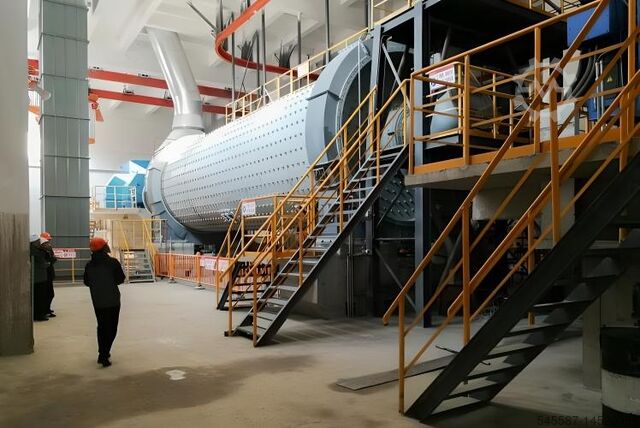
Used Pfeiffer / Babcock Grinding Roller Bowl Mill for sale (21,586)
Sort results
- Lowest price Highest price
- Newest listings Oldest listings
- Shortest distance Farthest distance
- Newest year of manufacture Oldest year of manufacture
- Latest update Oldest update
- Manufacturer A to Z Manufacturer Z to A
- Relevance
- Lowest price
- Price
- Highest price
- Price
- Newest listings
- Release date
- Oldest listings
- Release date
- Shortest distance
- Distance
- Farthest distance
- Distance
- Newest year of manufacture
- Year of construction
- Oldest year of manufacture
- Year of construction
- Latest update
- Update
- Oldest update
- Update
- Manufacturer A to Z
- Manufacturer
- Manufacturer Z to A
- Manufacturer
- designation from A to Z
- Description
- designation from Z to A
- Description
- Model from A to Z
- Model
- Model from Z to A
- Model
- Lowest reference
- Ref.No.
- Highest reference
- Ref.No.
- Shortest runtime
- Runtime
- Longest duration
- Runtime
- Relevance
- Relevance
Listing
Voerde (Niederrhein)
7,022 km
Grinding roller bowl mill
Pfeiffer / BabcockMahlwalze Walzenschüsselmühle Pfeiffer
Call
Condition: used, Grinding rollers for Pfeiffer / Babcock bowl mill
Used, refurbished, and new available from stock
Heavy-duty grinding rollers from a bowl mill available for sale
Ncjdey Ittyopfx Afljw
Viewing possible by appointment.
Listing
Korschenbroich
7,032 km
Roller milling cutter grinding machine
KlingelnbergSNC 30
Call
Condition: excellent (used), Year of construction: 1988, functionality: fully functional, Technical Data
Grinding/Workpiece Diameter: up to approx. 300 mm (partially up to 350 mm)
Grinding Length/Stroke: approx. 550 mm (slide travel)
Module range (for hobbing cutter resharpening): min. module approx. 0.5 to max. module approx. 25
Number of flutes: typically 1–99 pieces (depending on tool set)
Grinding wheel diameter: approx. 150–300 mm
Grinding wheel speed: up to about 2,700 rpm
Centre distance (workpiece spindle): typical range 400–800 mm
Swivel/Pitch range: e.g. grinding wheel head swivel 0–15°
Machine weight and space requirement: approx. 4.2–4.9 t weight; space approx. 3 × 2.6 × 2.3 m
Ncjdpjxtiunsfx Afljw
Electrical data: operating voltage e.g. 380 V three-phase, control 24 V, auxiliary voltage 220 V
Listing
Zheng Zhou Shi
3,684 km
Mill / grinding mill
Batch Ball Mill, Silica grinding millQuartz ball mill, silica powder grinding
Call
Year of construction: 2026, condition: new, ceramic ball mill ,Batch ball mill ,also called ceramic ball mill ,it is used for fine grinding of feldspar,quartz,clay,ore and so on.The ceramic ball mill is mainly used for material mixing, grinding,uniform product fineness,and saving power.It can be dry or wet.The machine can use different liner types according to production needs to meet different needs.The fineness of the grinding operation is controlled by the grinding time
ceramic ball mill Working principle
when ball mill working,steel balls inside drum will rotate with the drum to some height,and then steel balls fall down with materials to reach the point of grinding.
Working Principle of Ceramic ball mill
ceramic ball mill ,Intermittent ball mill grinding operation is finished in the cylinder body. When the cylinder rotates, materials ascend to a certain height and then fall along a certain path due to the balls' gravity. Two forces are generated on the balls inside. One is the force on balls through tangent direction; the other is a opposite force in the contrast to the diameter of balls, as a result of the force generated when the balls slide down. These two forces will constitute a couple for the steel balls. The balls are squeezed between the cylinder and the adjacent steel balls, so the couple can make unequal-sized friction force. The balls will orbit along with the cylinder axis and then fall down, which can produce a strong impact force on the ores in the cylinder body and, as a result, the ores will be crushed. In conclusion, the ores in the cylinder body are mainly crushed by composite effect of peeling force, impact force and extrusion force.
Ceramic ball mill also named Intermittent ball mill which adopts the wet intermittent operation, is used for fine grinding and mixing the material such as feldspar, quartz, clay ceramic raw materials. The discharging and the mud size can through through 1000 sieve pore. This machine is high milling machinery, materials should be Broken in the fineness of the state into the grinding mill to get the highest efficiency and economic benefits.
Ncodpjvzx Aujfx Afljw
The cement mill is key equipment for the grinding process of the cement clinker after the crushing process of it. It is mainly used in the cement silicate product industry. After long term design and manufacture of the cement mill, our company now has series of cement mill with various specifications to meet with different requirement from our customers.
Features of Cement Mill
Our company adopts suitable transmission methods according to different specifications. We have brim drive and center drive as transmission form. The cylinder adopts new type step lining to increase the grinding area. And it is easily repairable and changeable. The new designed separate-chambered structure adopts flexible lifting blade and fixed lifting blade and it is easily fixed and repaired.
Technical Details
We have different models and options for different requirements, please contact us for more info.
Listing
Zheng Zhou Shi
3,684 km
Cement mill,clinker grinding plant
Clinker grinding mill / cement ball millcement grinding with air classifier
Call
Year of construction: 2026, condition: new, functionality: fully functional, A cement clinker grinding mill is a specialized equipment used to grind the hard nodular clinker into fine powder, which is cement. Most cement is currently ground in ball mills and also vertical roller mills, which are more effective than ball mills.
Here are key features and information about cement clinker grinding mills:
Ncjdsq Nfbhepfx Aflew
1. Raw Materials:
- The main raw material for making cement is clinker, which is produced by sintering limestone and clay. Other materials such as gypsum, fly ash, or slag may also be added during the grinding process to achieve specific properties.
2. Grinding Process:
- The clinker and other additives are finely ground in the grinding mill to produce cement. The grinding process is a crucial step in cement production and contributes significantly to the final quality of the product.
3. Types of Mills:
- Ball Mills: Traditional ball mills are commonly used for grinding clinker. They operate by rotating a cylinder with steel grinding balls, causing the balls to fall back into the cylinder and onto the material to be ground.
- Vertical Roller Mills (VRM): VRM technology has become increasingly popular for clinker grinding. These mills use a rotating table with rollers to crush and grind the clinker, providing energy efficiency and a smaller footprint compared to ball mills.
4. Gypsum Addition:
- Gypsum is often added during the grinding process to control the setting time of the cement. It prevents flash setting of the clinker and facilitates the formation of a workable and pumpable cement paste.
5. Quality Control:
- Quality control measures, such as monitoring the fineness of the cement, chemical composition, and other properties, are implemented during the grinding process to ensure the final product meets the required specifications and standards.
6. Clinker Cooling:
- Before grinding, the clinker is produced by heating the raw materials in a kiln. The clinker is then cooled before entering the grinding mill to prevent excessive heat build-up during grinding.
7. Dust Collection and Environmental Considerations:
- Dust collectors and air pollution control systems are often employed to capture and control the dust generated during the grinding process, addressing environmental and safety concerns.
8. Packaging and Storage:
- After grinding, the cement is typically stored in silos before being packaged in bags or dispatched in bulk for distribution to construction sites or for sale in the market.
Cement clinker grinding mills play a crucial role in the cement production process, and advancements in technology continue to improve the efficiency and environmental sustainability of the grinding process.
Technical details
We have different options for different requirements, please contact our team for more info.
Listing
Zheng Zhou Shi
3,684 km
Roll forming line
Rod ball mill / Rod Grinding MillFor Sand and mining beneficiation plant
Call
Condition: new, Year of construction: 2026, We have various kinds of ball grinding mill such as batch ball mill, rod mill, cement ball mill, mining ball mill, welcome to contact our team for further details according to your specific requirements.
Njdpfx Afsq I Nw Iolecw
Listing
Zheng Zhou Shi
3,684 km
Fine Powder Grinding Plant
Cement mill & Ultrafine Grinding MillFine Powder Grinding Plant
Call
Condition: new, functionality: fully functional, Year of construction: 2026, Cement Mill & Ultrafine Grinding Mill
🏗️ Introduction to Cement Mill & Ultrafine Grinding Mill
In the world of construction and materials processing, achieving the right particle size is essential. Introducing the Cement Mill and Ultrafine Grinding Mill—two pivotal machines designed to deliver superior grinding performance for cement production and ultrafine materials. Let’s dive into their features and applications! 💼
🔥 What is a Cement Mill?
A Cement Mill is a crucial piece of equipment in cement production. It grinds clinker, gypsum, and other additives to produce fine cement powder. This machine ensures the optimal particle size for high-quality cement, essential for building robust structures. 🚀
🔧 What is an Ultrafine Grinding Mill?
An Ultrafine Grinding Mill is designed to produce extremely fine powders from various raw materials, such as minerals, chemicals, and industrial waste. It operates at high efficiency, delivering ultra-fine materials for advanced applications like coatings, plastics, and ceramics. 🌟
💼 Key Benefits of Using Cement Mill & Ultrafine Grinding Mill
1. High Efficiency: Both mills are engineered for maximum efficiency, ensuring rapid processing times and reduced energy consumption. 🌿💡
2. Superior Grinding Performance: Achieve consistent, high-quality output with precise control over particle size. 🏭
Njdjq Nyydopfx Aflocw
3. Versatility: Suitable for a wide range of materials, making them essential for various industrial applications. 🌳
4. Durability and Reliability: Built with robust materials, these mills offer long-lasting performance in demanding industrial environments. 💪
📈 Applications in Industry
Cement Mill Applications:
1. Cement Production: Essential for producing high-quality cement for construction projects.
2. Infrastructure Development: Used in creating concrete for roads, bridges, and buildings.
Ultrafine Grinding Mill Applications:
1. Mineral Processing: Producing ultra-fine powders for advanced material applications.
2. Chemical Manufacturing: Used in creating fine chemicals for various industrial processes.
3. Environmental Applications: Grinding industrial waste for recycling and reuse. ♻️
🌟 Conclusion
Whether you’re in construction, materials processing, or advanced manufacturing, the Cement Mill and Ultrafine Grinding Mill are indispensable tools. Their efficiency, versatility, and superior performance make them a valuable addition to any production line. Contact us today to learn more about these innovative machines and how they can revolutionize your operations! 📞
Listing
Zheng Zhou Shi
3,684 km
Powder grinding machine
Fine powder grinding mill, clinker millSuperfine ball mill for micro powder
Call
Condition: new, Year of construction: 2026, A superfine ball mill is a type of milling machine that is used to grind materials into very fine particles. This type of ball mill has some distinctive features that make it especially suitable for processing even the hardest materials with low contamination and minimal wear. It is commonly used in various industries, including pharmaceuticals, minerals, pigments, and chemicals, for producing micro powder or nanoparticles.
Here are some key features and considerations for a superfine ball mill for micro powder:
1. High Grinding Efficiency: Superfine ball mills are designed to achieve high grinding efficiency by utilizing grinding media with a relatively small size, leading to a large surface area for grinding.
Nsdoq Nf Uwspfx Aflecw
2. Precision Control: These mills often come with advanced control systems to regulate parameters like rotation speed, temperature, and grinding time, allowing precise control over the particle size distribution.
3. Specialized Design: The mill is typically designed with features to minimize contamination, such as using materials resistant to wear and corrosion. Some mills also have cooling systems to prevent overheating during the milling process.
4. Variety of Materials: Superfine ball mills can handle a wide range of materials, including both brittle and fibrous substances. They are often used for milling hard materials that require fine grinding, such as ceramics, minerals, or pigments.
5. Size Reduction to Micro or Nano Level: The primary goal of a superfine ball mill is to reduce particle size to the micro or even nano level. This is achieved by the intense grinding action that occurs within the mill.
6. Classifier System: Some superfine ball mills incorporate a classifier system to control the particle size distribution more precisely. This allows for the separation of fine particles from coarser ones during the milling process.
7. Batch or Continuous Operation: Depending on the specific design, these mills can operate in either batch or continuous mode, offering flexibility based on the production requirements.
8. Safety Measures: Safety features may be included, such as monitoring and control systems to prevent overloading, overheating, or other potential issues during operation.
When selecting a superfine ball mill for micro powder production, it's important to consider the specific requirements of your application, the characteristics of the materials you're working with, and the desired final particle size distribution. Always follow the manufacturer's guidelines for operation, maintenance, and safety to ensure optimal performance and longevity of the equipment.
Listing
Zheng Zhou Shi
3,684 km
Ball mill for powder and mining plant
Mingyuan Ball Mill For Fine PowderPowder grinding mill for coal, silica
Call
Condition: new, functionality: fully functional, power: 55 kW (74.78 HP), Year of construction: 2026, Ball Mill for Powder and Mining Plant: Structure, Function, and Technical Details
A ball mill is a key grinding machine widely used in mining, metallurgy, cement, chemical, and powder-making industries. It is designed to grind various ores and other materials into fine powder through impact and attrition between steel balls and the material inside a rotating cylindrical shell. In mining plants, ball mills are essential for ore beneficiation, preparing materials for flotation, magnetic separation, or leaching processes. In powder production, they ensure uniform particle size and high surface area for further processing.
Working Principle
The ball mill operates on a simple yet effective principle: as the cylindrical shell rotates around its horizontal axis, the grinding media (steel or ceramic balls) are lifted along the inner wall by centrifugal force and friction. When they reach a certain height, they fall freely, striking and grinding the material below. This repeated motion causes both impact and abrasion, reducing the material to the desired fineness. The grinding process can be performed in dry or wet conditions depending on the application.
Structural Composition
A standard ball mill consists of several main components:
Feeding part: Equipped with a feeder or screw conveyor to ensure uniform material input.
Discharging part: Can be grate type or overflow type, depending on the discharge method.
Ncodpfxoq Nf U Ej Aflow
Rotating part: The cylindrical shell made of steel plates, lined with wear-resistant liners.
Transmission system: Includes motor, reducer, small transmission gear, and electrical control.
Grinding media: Steel balls or ceramic balls of different diameters for efficient grinding.
The internal liner design and ball size distribution are optimized to achieve maximum grinding efficiency and minimal energy consumption.
Technical Details
Typical Specifications:
Feeding size: ≤25 mm
Discharge size: 0.074–0.4 mm
Capacity: 0.65–615 t/h (depending on model and material hardness)
Cylinder speed: 18–38 r/min
Power: 18.5–4500 kW
Liner material: High manganese steel, rubber, or alloy steel
Grinding media load: 30–45% of cylinder volume
Operating Modes:
Dry grinding: Suitable for materials that must remain moisture-free, such as cement clinker, limestone, and quartz.
Wet grinding: Common in ore beneficiation, where water or slurry improves grinding efficiency and particle uniformity.
Application in Mining Plants
In mining operations, ball mills are used after crushing to further reduce ore size and liberate valuable minerals. They are integrated into grinding circuits with classifiers, hydrocyclones, and flotation systems. The ground material is classified by size, and oversized particles are returned to the mill for regrinding. This closed-circuit system ensures consistent product fineness and efficient energy use.
Common Applications:
Gold, copper, iron, and zinc ore grinding
Cement clinker and slag processing
Silicate and ceramic powder production
Coal and mineral powder preparation
Conclusion
A ball mill is an indispensable piece of equipment in both powder production and mining beneficiation plants. Its ability to grind materials into fine, uniform particles makes it vital for downstream processes such as flotation, sintering, and chemical reactions.
Listing
Zheng Zhou Shi
3,684 km
Grinding mill
Abrasive Aluminium Oxide Grinding PlantMicrosilica powder Grinding Mill
Call
Condition: new, functionality: fully functional, Year of construction: 2026, Microsilica, also known as silica fume or condensed silica fume, is a byproduct of producing silicon metal or ferrosilicon alloys. Microsilica powder grinding mills are used to process microsilica powder for various applications, including the production of high-performance concrete, refractory materials, and other specialty products. Grinding mills play a crucial role in reducing microsilica particles to the desired fineness. Here are some key aspects related to microsilica powder grinding mills:
1. Mill Types:
- Ball Mill: A traditional ball mill is commonly used for grinding microsilica. It relies on the impact and attrition forces to reduce particle size. It is effective for both wet and dry grinding.
- Vertical Roller Mill (VRM): VRM technology is known for its energy efficiency and the ability to grind materials into a narrow particle size distribution. It is suitable for grinding microsilica.
2. Grinding Process:
- The grinding process involves feeding microsilica particles into the grinding mill. The grinding media (balls or rollers) inside the mill crush and grind the microsilica particles into a fine powder.
3. Particle Size Distribution:
- Controlling the particle size distribution is crucial for achieving the desired properties in the final product. The grinding mill should be equipped with mechanisms to control and monitor particle size distribution.
Ncsdsq Nxp Sepfx Aflew
4. Mill Design and Components:
- The design of the grinding mill, including the type of grinding media, liners, and the grinding chamber, influences the efficiency and performance of the milling process for microsilica.
5. Air Classification (Optional):
- In some cases, air classification systems are integrated into the grinding process to separate fine particles from coarser ones, ensuring a more uniform product.
6. Control Systems:
- Advanced grinding mills often come with automated control systems to regulate various parameters such as feed rate, mill speed, and product fineness.
7. Material Handling:
- Efficient material handling systems are essential to transport microsilica to and from the grinding mill. This may involve pneumatic or mechanical conveying systems.
8. Cooling Systems:
- Grinding processes generate heat, and efficient cooling systems are often integrated to maintain the temperature within a controlled range.
9. Dust Collection:
- Microsilica powder grinding can produce airborne dust. Dust collection systems are necessary to maintain a clean and safe working environment.
10. Quality Assurance:
- Grinding mills for microsilica should be equipped with quality assurance features, such as in-line particle size analysis, to ensure consistency in the final product.
When selecting a microsilica powder grinding mill, factors such as production capacity, energy efficiency, and the required particle size distribution should be considered. Additionally, mills should be chosen based on the specific characteristics of the microsilica being processed and the intended application of the final product.
Listing
Maastricht
7,091 km
Ball mill Gebr. Pfeiffer
Gebr. PfeifferBall mill
Call
Condition: ready for operation (used), * Brand: Gebr. Pfeiffer
* Type: ball mill
* Length: 4000 mm
* Inner diameter: 1700 mm
* Power: 110 kW e-motor
* Includes: grinding balls 30–60 mm
Ncsdpszakl Nofx Aflow
* With: rubber inner lining and protective covers
* In stock: 2 units
Listing
Siedlce
5,967 km
DRUM ROLLER GRINDING MACHINE
CORMAKMM3146 400V
Call
Condition: new, Year of construction: 2026, functionality: fully functional, Key Features
Reinforced construction – A rigid, heavy frame minimizes vibrations and ensures stability even under intensive use.
Accurate sanding thickness adjustment – A mechanical height gauge allows precise setting of the desired processing depth.
Precisely balanced sanding drum – Made of drawn aluminum, it ensures even contact with the material and effective cooling during operation.
Versatile application – Suitable for removing old paint, lacquer, rust, as well as for smoothing and deburring.
Durable metal drive coupling – Reliable torque transfer from the motor to the sanding drum.
Working width up to 920 mm – Ability to sand wide panels in two passes.
Construction and Technology
The Cormak MM3146 stands out with its robust, industrial-grade design. The main motor, rated at 1.5 / 2.2 kW (S1/S6), combined with a reinforced 60 W feed motor, provides ample power for demanding and continuous operations. The variable-speed feed system (0–4 m/min) allows for adjustment to material type and desired finish quality.
The sanding belt (2100 × 75 mm) is driven by a high-speed drum (2800 rpm), allowing for quick and effective material removal. The sanding drum is self-cooling during operation, eliminating overheating issues. A reinforced side guide enhances parallelism and stability across the entire working width.
Precision and Efficiency
The Cormak MM3146 drum belt sander ensures consistent results thanks to its mechanical height adjustment system with a precision scale. It supports a minimum workpiece thickness of 3.5 mm and a maximum working height of 100 mm, allowing both thin boards and thick construction components to be processed. A working width of 460 mm in a single pass (or 920 mm with dual-feed operation) provides flexibility for both small and large batch production.
Applications
The Cormak MM3146 through-feed sander is suitable for use in:
Joinery and furniture manufacturing workshops
Wood restoration studios
Metalworking shops for deburring
Production of plastic components
Surface finishing lines for flat materials
Standard Equipment
Precision aluminum sanding drum
Metal drum drive coupling
Worktable: 460 × 465 mm
Conveyor belt: 1120 × 450 mm
Thickness gauge with precise scale
Reinforced side guide
Ø62 mm dust extraction port
Optional Accessories
Dust extraction system with chip separator
Sets of sanding belts in various grits
Infeed roller table
Mobile base with brake
Choose performance and professional surface finishing. The Cormak MM3146 400V drum sander is a reliable partner for both batch and one-off production – choose quality that delivers efficiency.
Technical Specifications
Parameter Value
Ncsdsw Hb D Dopfx Afljw
Motor Power S1/S6 1.5 / 2.2 kW, 400V
Belt Speed 2800 rpm (for wood and metal)
Sanding Belt Size 2100 × 75 mm
Feed Belt Size 1120 × 450 mm
Worktable Dimensions 460 × 465 mm
Dust Port Diameter Ø62 mm
Feed Speed 0–4 m/min
Min. Material Thickness 3.5 mm
Max. Working Height 100 mm
Working Width 460 (920) mm
Feed Motor Power 60 W
Machine Dimensions 880 × 540 × 1230 mm
Net/Gross Weight 134 / 160 kg
Listing
Siedlce
5,967 km
DRUM ROLLER GRINDING MACHINE
CORMAKMM3146 230V
Call
Condition: new, Year of construction: 2026, functionality: fully functional, Machine Description
The latest model of a single-drum sander with a dust extraction bag from the Cormak brand. The sander has been enhanced with new technological solutions to ensure more precise processing of wood, metal, and plastic materials (removal of old paint, derusting, sanding, deburring, etc.).
Thanks to the efforts of our technical and design team, we have achieved:
A massive construction significantly heavier than the previous version
Reinforced side guide of the sanding drum, improving rigidity and ensuring high precision of the workpiece over a working surface of 460 (920) mm
Metal coupling transmitting drive from the motor to the sanding drum
A precise mechanical gauge for easy reading of the desired sanding thickness
The sanding drum, made of drawn aluminum, is precisely balanced and self-cooling, included with the machine
Technical Specifications
Motor Power: S1/S6 1.5 / 2.2 kW 230V
Belt Speed: 2800 rpm (for wood and metal)
Roller Belt Dimensions: 2100 x 75 mm
Feeder Belt Dimensions: 1120 x 450 mm
Worktable Dimensions: 460 x 465 mm
Dust Port Diameter: Ø62 mm
Feed Speed: 0~4 m/min
Minimum Material Thickness: 3.5 mm
Maximum Working Height: 100 mm
Working Width: 460 (920) mm
Reinforced Feed Motor: 60 W
Dimensions: 880 x 540 x 1230 mm
Net/Gross Weight: 134 / 160 kg
Ncjdpfx Afsw Hb Atolow
Manufacturer: Cormak
Listing
Siedlce
5,967 km
DRUM ROLLER GRINDING MACHINE
CORMAKMM3166P 400V
Call
Condition: new, functionality: fully functional, Year of construction: 2026, CORMAK MM3166P Wide Belt Sander – Durable and Reliable for Workshop or Professional Use
The CORMAK MM3166P wide belt sander is a robust and dependable machine, ideal for both home workshops and professional woodworking environments. With its advanced features and solid technical specifications, it enables fast, accurate sanding of wood materials, delivering a perfect finish on every project.
Key Features:
Dual sanding drums ensure even and precise sanding across the workpiece.
Conveyor belt system facilitates smooth material feed and consistent sanding results.
Powerful motor (2200 W + 120 W) guarantees effective sanding, even on harder materials.
Adjustable sanding belt speed allows you to match the speed to the type of material being processed.
Dust extraction system ensures a cleaner working environment and protects the operator from inhaling fine dust.
Sturdy construction guarantees long-term durability and operational stability.
Voltage options: Available in both 230 V and 400 V (50 Hz) versions – choose what suits your setup.
Wide sanding belt (635 mm) enables fast processing of large surface areas.
Material thickness capacity: Min. 7 mm, Max. 125 mm.
Sanding drum diameter: 150 mm.
Sanding belt speed: 14 m/s.
Two dust extraction ports (100 mm diameter) for easy connection to dust extraction systems.
Technical Specifications:
Parameter Value
Belt length 800 mm
Belt width 635 mm
Roller radius R 120
Ncedsxfhh Dspfx Aflow
Max. workpiece thickness 130 mm
Main motor power 2.2 kW
Voltage 400 V
Frequency 50 Hz
Motor speed (at 220 V) 1800 RPM
Feed motor power 120 W
Feed speed 1.8 – 7.3 m/min
Dust port diameter 100 mm (x2)
Net / Gross weight 220 / 260 kg
Machine height 1113 mm
Machine width (side view) 1100 mm
Machine width (top view) 1060 mm
Drum length 635 mm
Manufacturer: Cormak
Listing
Siedlce
5,967 km
DRUM ROLLER GRINDING MACHINE
CORMAKMM3166P 230V
Call
Condition: new, functionality: fully functional, Year of construction: 2026, CORMAK MM3166P Wide Belt Sander – Durable and Reliable for Workshop or Professional Use
The CORMAK MM3166P wide belt sander is a robust and dependable machine, ideal for both home workshops and professional woodworking environments. With its advanced features and solid technical specifications, it enables fast, accurate sanding of wood materials, delivering a perfect finish on every project.
Key Features:
Dual sanding drums ensure even and precise sanding across the workpiece.
Conveyor belt system facilitates smooth material feed and consistent sanding results.
Powerful motor (2200 W + 120 W) guarantees effective sanding, even on harder materials.
Adjustable sanding belt speed allows you to match the speed to the type of material being processed.
Dust extraction system ensures a cleaner working environment and protects the operator from inhaling fine dust.
Sturdy construction guarantees long-term durability and operational stability.
Wide sanding belt (635 mm) enables fast processing of large surface areas.
Material thickness capacity: Min. 7 mm, Max. 125 mm.
Sanding drum diameter: 150 mm.
Sanding belt speed: 14 m/s.
Two dust extraction ports (100 mm diameter) for easy connection to dust extraction systems.
Njdpfsxfhn Dsx Afljcw
Technical Specifications:
Parameter Value
Belt length 800 mm
Belt width 635 mm
Roller radius R 120
Max. workpiece thickness 130 mm
Main motor power 2.2 kW
Voltage 230 V
Frequency 50 Hz
Motor speed (at 220 V) 1800 RPM
Feed motor power 120 W
Feed speed 1.8 – 7.3 m/min
Dust port diameter 100 mm (x2)
Net / Gross weight 220 / 260 kg
Machine height 1113 mm
Machine width (side view) 1100 mm
Machine width (top view) 1060 mm
Drum length 635 mm
Manufacturer: Cormak
Listing
Siedlce
5,967 km
DRUM ROLLER GRINDING MACHINE
CORMAKMM3156C 400V
Call
Condition: new, Year of construction: 2026, CORMAK MM3156C 400V Drum Sander for Wood
The CORMAK MM3156C 400V is a technologically advanced conveyor drum sander designed for precise and repeatable surface finishing of flat workpieces. Thanks to its robust construction, smooth operation, and interchangeable drum system, the machine is ideal for sanding solid wood, veneers, furniture boards, as well as metals and plastics. The MM3156C is intended for continuous operation in production facilities and woodworking workshops where precision, consistency, and reliability are essential.
Key Advantages
Interchangeable sanding drums – allows quick adaptation to different materials such as wood, metal, and veneered panels.
Dual drum speed– 750/1440 RPM enables optimal adjustment to the type of surface and required sanding aggressiveness.
High precision– a rigid frame with a cast-iron arm and hardened guideways ensures accurate shaft guidance and consistent finishing quality.
Mechanical thickness gauge– allows precise setting and monitoring of machining parameters.
Self-cooling aluminum drum– accurately balanced and resistant to overheating during continuous operation.
Optional brush drums– the machine can be converted into a wood aging/distressing sander with additional equipment.
Construction and Technology
The CORMAK MM3156C drum sander has been developed for industrial applications. The reinforced sanding shaft design, high-quality bronze bushings, and conveyor belt tensioners ensure long service life and stable, backlash-free operation. A reinforced coupling provides efficient torque transmission from the 1.5 kW motor to the working shaft.
Ncodjvugf Repfx Aflew
The machine features continuously variable feed speed adjustment from 0 to 3 m/min, allowing the operator to match the feed rate to the material type and sanding requirements.
The table guidance system, equipped with hardened guide rails and a cast-iron body, effectively minimizes vibration and increases the rigidity of the entire structure. With a working width of 560 mm and a maximum workpiece height of 80 mm, the MM3156C is an optimal solution for both high-volume production and precision custom work.
Standard Equipment
Aluminum sanding drum
Mechanical thickness adjustment gauge
Main motor with total power output of 2.0 kW (S1: 1.5 kW, 400V)
Variable-speed feed drive (0–3 m/min)
Conveyor belt tensioning system
Side guide fence for workpiece alignment
Ø100 mm dust extraction port
Technical Specifications
Maximum sanding height 80 mm
Maximum sanding width 560 mm
Minimum workpiece thickness 3.5 mm
Minimum workpiece length 600 mm
Drum size 133 × 560 mm
Maximum material removal per pass 0.5 mm
Drum speed 750 / 1440 RPM
Feed speed adjustment 0 – 3 m/min
Feed motor power 50 W
Main motor power (S1/S6) 1.5 / 2.0 kW
Dust extraction port diameter 100 mm
Weight 145 kg
Listing
Zheng Zhou Shi
3,684 km
Powder grinding mill
ball mill for mining &fine powder makingsilica/Barite/limestone powder plant
Call
Condition: new, Year of construction: 2026, power: 300 kW (407.89 HP), Ball Mill for Mining & Fine Powder Making:
A ball mill is a fundamental grinding device widely used in mining, metallurgy, cement, and chemical industries. It is designed to grind ores and other materials into fine powder through impact and attrition between steel balls and the material inside a rotating cylindrical shell. In mining plants, ball mills are essential for ore beneficiation, while in powder-making industries, they ensure uniform particle size and high surface area for further processing.
Working Principle
The ball mill operates on the principle of impact and friction. As the cylindrical shell rotates around its horizontal axis, the grinding media—usually steel or ceramic balls—are lifted along the inner wall by centrifugal force and friction. When they reach a certain height, they fall freely, striking and grinding the material below. This repeated motion breaks down the material into fine particles. The process can be carried out in dry or wet conditions depending on the application.
Structural Composition
A standard ball mill consists of several main components:
Feeding part: Ensures uniform material input through a feeder or screw conveyor.
Discharging part: Can be grate type or overflow type, depending on the discharge method.
Rotating part: The cylindrical shell made of steel plates, lined with wear-resistant liners.
Transmission system: Includes motor, reducer, small transmission gear, and electrical control.
Grinding media: Steel or ceramic balls of various diameters for efficient grinding.
The internal liner design and ball size distribution are optimized to achieve maximum grinding efficiency and minimal energy consumption.
Technical Details/Typical Specifications:
Feeding size: ≤25 mm
Ncjdpfx Aoq Ngafsfljw
Discharge size: 0.074–0.4 mm
Capacity: 0.65–615 t/h (depending on model and material hardness)
Cylinder speed: 18–38 r/min
Power: 18.5–4500 kW
Liner material: High manganese steel, rubber, or alloy steel
Grinding media load: 30–45% of cylinder volume
Operating Modes:
Dry grinding: Used for materials that must remain moisture-free, such as cement clinker, limestone, and quartz.
Wet grinding: Common in ore beneficiation, where water or slurry improves grinding efficiency and particle uniformity.
Application in Mining and Powder Production
In mining operations, ball mills are used after crushing to further reduce ore size and liberate valuable minerals. They are integrated into grinding circuits with classifiers, hydrocyclones, and flotation systems. The ground material is classified by size, and oversized particles are returned to the mill for regrinding. This closed-circuit system ensures consistent product fineness and efficient energy use.
In fine powder production, ball mills are used to produce materials such as silicate, ceramic powder, refractory materials, and chemical raw materials. The uniform particle size achieved by ball milling enhances product quality and performance in downstream applications.
Conclusion
A ball mill is an indispensable piece of equipment for both mining and fine powder making. Its ability to grind materials into fine, uniform particles makes it vital for ore beneficiation and industrial powder production. With flexible configurations, high efficiency, and reliable operation, modern ball mills provide a cost-effective and energy-efficient solution for large-scale grinding, ensuring consistent quality and productivity across diverse applications.
Listing
Zheng Zhou Shi
3,684 km
Ball Mill for Ore mining & sand grinding
batch ball mill & wet mining ball mill2400X4500 ball mill
Call
Condition: new, fuel type: electric, Year of construction: 2026, machine/vehicle number: 2700x4500, Equipment: low noise, Main Technical parameters of the ball mill
Drum diameter: 2400mm
Drum length: 4500mm
Motor power: 320KW
Max input size: 25mm
Capacity:35-60 t/h
Weight: 72Tons
Ball loading: 30Tons
Besides this model, we also have the other models like 2700x4500, 3200x4500, 1830x13000mm, and so on, and we can also offer customerization service, we can also provide complete grinding solution for various industries like cement, quartz, ore beneficiation plant, and so on, welcome to contact us for more info.
A ball mill is a common grinding machine used to grind and blend materials for use in mineral processing, including ore mining and the production of silica (silicon dioxide). When it comes to ore mining and silica grinding, the characteristics of the ore and the final product requirements will play a crucial role in selecting the appropriate ball mill.
Here are some considerations for using a ball mill in ore mining and silica grinding:
1. Ore Characteristics:
- Hardness: The hardness of the ore determines the type of ball mill that is most suitable. Harder ores may require a more robust and wear-resistant ball mill.
- Particle Size Distribution: The initial particle size of the ore affects the grinding process. Different ores may require different approaches to achieve the desired particle size.
2. Silica Grinding:
- Silica Content: If the primary goal is to grind silica, it's important to consider the initial silica content and the desired final particle size. Silica grinding often requires special attention to prevent excessive wear on the milling equipment.
3. Ball Mill Type:
- Overflow vs. Grate Discharge: The type of discharge from the ball mill can impact the final product and the grinding efficiency. Overflow mills are generally used for most grinding applications, while grate discharge mills are more suitable for certain types of ores.
4. Mill Size and Capacity:
- Mill Diameter and Length: The size of the ball mill should be selected based on the amount of material to be ground and the desired throughput.
- Capacity: Ensure that the chosen ball mill has the capacity to handle the required volume of material efficiently.
5. Grinding Media:
- Material and Size: The choice of grinding media (balls or cylpebs) and their size depends on the hardness of the ore and the desired final particle size. Different grinding media materials can impact the purity of silica during grinding.
6. Liners and Lifting Aids:
- Liners: Consider the type of liners used in the ball mill to protect the shell and optimize the grinding process.
- Lifting Aids: Some mills use lifting aids to enhance the grinding action and promote better mixing of the material.
7. Control and Monitoring Systems:
Njdpeq Igiiefx Aflecw
- Automation: Utilize control systems to automate the milling process and ensure optimal performance.
- Monitoring: Regularly monitor the milling process to adjust parameters as needed for consistent and efficient operation.
8. Safety Measures:
- Safety Systems: Implement safety features to protect personnel and equipment during operation.
Always follow the manufacturer's recommendations and guidelines for operation and maintenance to ensure safe and efficient use of the ball mill in ore mining and silica grinding applications.
Listing
Zheng Zhou Shi
3,684 km
Powder equipment for sand & micro powder
Mingyuan Powder production equipment1.83X11m Micro Powder Ball Grinding Mill
Call
Condition: new, Year of construction: 2026, functionality: fully functional, Ball Mill with Air Classifier: The Ultimate Powder Processing Equipment
In the world of industrial powder production, precision, efficiency, and flexibility are paramount. Whether producing ultra-fine powders for high-tech applications or coarser materials for everyday products, the combination of a Ball Mill with Air Classifier offers unparalleled performance. This dynamic duo provides a comprehensive solution for industries ranging from chemicals and ceramics to paints, plastics, and pharmaceuticals.
This article introduces the ball mill with an air classifier, explores its applications, and highlights the key advantages of this essential powder equipment.
General Introduction to Ball Mill with Air Classifier
ball mill with air classifier is an advanced grinding and classification system designed for efficient, high-quality powder production. The system consists of two main components:
1. Ball Mill: A cylindrical grinding device filled with grinding media (such as steel balls) that operates by rotating around its axis. The raw material is reduced to smaller particle sizes through impact and friction within the mill.
2. Air Classifier: A sophisticated device that separates particles based on size using airflow. Fine particles are carried away, while coarser particles are returned to the ball mill for further grinding.
The combination of these two components creates a closed-loop system that ensures consistent particle size distribution, high efficiency, and minimal waste.
Applications of Ball Mill with Air Classifier
The ball mill with air classifier is a versatile solution used in a wide range of industries to process various materials. Key applications include:
1. Mineral Processing
The system is widely used in the production of minerals such as calcium carbonate, quartz, feldspar, and talc. These finely ground minerals are essential for industries like ceramics, paints, plastics, and rubber.
2. Cement and Construction Materials
Cement and other construction materials require precise particle size control for optimal performance. The ball mill with air classifier ensures uniformity and enhances the quality of construction materials.
3. Chemicals and Pharmaceuticals
Fine powders play a critical role in the chemical and pharmaceutical industries. From active pharmaceutical ingredients (APIs) to industrial chemicals, this system delivers the consistent quality required for these applications.
4. Paints, Coatings, and Pigments
The production of paints and coatings demands ultra-fine powders to achieve smooth finishes and vibrant colors. The ball mill with air classifier produces high-quality powders for superior results.
#### 5. Food and Agriculture
Food-grade powders such as additives, preservatives, and agricultural products like fertilizers can be efficiently processed using this system, meeting stringent regulatory requirements.
Industries That Benefit from Ball Mill with Air Classifier
Ncjdpfxsvlwkxj Aflsw
Several industries rely on the capabilities of this system to produce fine powders with specific characteristics:
- Ceramics: Produces high-purity powders for tiles, insulators, and advanced ceramics.
- Rubber and Plastics: Creates fillers and additives for improved durability and performance.
- Pharmaceuticals: Ensures consistent particle size for APIs and excipients.
-Construction: Delivers materials for concrete, plaster, and other applications.
Listing
Wiefelstede
6,930 km
Roller end mill disc cutter 99.6 kg
unbekanntAufnahme 32 mm 125Wx12x32 HSS
Call
Condition: good (used), End mill, roller cutter, milling cutter, disc cutter, slot cutter
Ncodpjy D Ndyjfx Afljw
-Cylinder end mill: Disc cutter 99.6 kg net, carbide-tipped
-Type: various versions
-Price/Fee: complete
-Transport dimensions: 790/600/H210 mm
-Weight: 99.6 kg
Listing
Wiefelstede
6,930 km
Profile edge milling and grinding machine
ArminiusST-20
Call
Condition: good (used), Year of construction: 1995, Profile edge grinding and milling machine, edge grinding machine, edge grinder, grinding machine
-with copier
-2x: milling heads
-Power: 1.5 kW
-Speed: 3000-6000 rpm
-1x: grinding head
-Power: 1.1 kW
-Speed: 500-1500 rpm
-Milling and grinding heads in thickness: adjustable
-Max. Workpiece thickness: 40 mm
-Max. Corner radius: 40 mm
-Dimensions: 1200/1600/H1520 mm
-Weight: 782 kg
Ncodpecg Al Sofx Aflow
Listing
Naprawa
6,077 km
3-roller feed unit for Olympia 9/26 milling machine
Olympia9/26
Call
Condition: used, Technical specifications:
Number of rollers: 3
Number of speeds: 4
Motor power: 0.75 kW
Feed speeds: 3-23 m/min
Ncsdpszikpfsfx Aflsw
Roller size: 120x50 mm
Power supply: 380 V
Trust Seal
Dealers certified through Machineseeker

Listing
Löhne
6,883 km
Grain processing roller mill
BühlerBSWA 608B5C
Call
Condition: used, Year of construction: 1995, functionality: unexamined, machine/vehicle number: 2031306, type of input current: three-phase, overall weight: 9,200 kg, Roller mill from Bühler, previously used in cornflakes production. Pre-installed are a metal detector and a vibratory channel. Control cabinet is included. Weight of the roller mill approx. 9,200 kg.
Ncodpfx Afexgq Rkolew
Listing
Bad Sooden-Allendorf
6,793 km
Combined milling and grinding machine
ArminiusS-85-NFB4B
Call
Year of construction: 1978, condition: not inspected (used), machine/vehicle number: 1177, Connected load approx. 18 kW
Working width 140 mm
Feed system (bottom) consists of:
Conveyor belt 8800 x 60 mm (bottom)
Conveyor belt 8800 x 40 mm (for extension)
Feed system (top) consists of:
Conveyor belt 7140 x 40 mm (top)
Units:
Pos. 1 - Preliminary cutter, 2.2 kW, 3000 rpm
Pos. 2 - Milling unit, 3 kW, 6000 rpm
Pos. 3 - Milling unit, 5.5 kW, 6000 rpm
Pos. 5 - Belt sanding unit, 2.2 kW, 120 x 2060
Ncodpfx Afjiw D T Islew
Pos. 8 - Belt sanding unit, 2.2 kW, 120 x 2060 / frame sanding belt
Pos. 4, 6, 7, 9 - Profiling and edge breaking units
Dust extraction port 5x100 mm, 1x120 mm
Listing
Breda
7,151 km
Grinding mill
ColortronicM400L
Call
Year of construction: 1991, condition: good (used), machine/vehicle number: 74910029, This grinding mill from Rapid is in the Plastima Used Machinery machine storage room. The machine is from 1991.
- Brand: Colortronic
- Model: M400L
- Serial number: 74910029
Ncsdpstphhbefx Aflow
- Feed opening: 400 x 160 mm
- Number of rotor knives: 8 knives
- Year of construction: 1993
Listing
Breda
7,151 km
Grinding mill
ColortronicM400L
Call
Year of construction: 1987, condition: good (used), machine/vehicle number: 7491029, This grinding mill from Rapid is in the Plastima Used Machinery machine storage room. The machine is from 1987.
- Brand: Colortronic
- Model: M400L
Ncodpfotphhvsx Afljw
- Serial number: 7491029
- Feed opening: 400 x 160 mm
- Number of rotor knives: 8 knives
- Year of construction: 1987
We make it easier for you to find: "pfeiffer / babcock grinding roller bowl mill"
You will receive new offers immediately and free of charge via e-mail
You can easily terminate the search request at any time
This may be of interest to you