Used Sinoboom 1932 Me for sale (6,598)
Sort results
- Lowest price Highest price
- Newest listings Oldest listings
- Shortest distance Farthest distance
- Newest year of manufacture Oldest year of manufacture
- Latest update Oldest update
- Manufacturer A to Z Manufacturer Z to A
- Relevance
- Lowest price
- Price
- Highest price
- Price
- Newest listings
- Release date
- Oldest listings
- Release date
- Shortest distance
- Distance
- Farthest distance
- Distance
- Newest year of manufacture
- Year of construction
- Oldest year of manufacture
- Year of construction
- Latest update
- Update
- Oldest update
- Update
- Manufacturer A to Z
- Manufacturer
- Manufacturer Z to A
- Manufacturer
- designation from A to Z
- Description
- designation from Z to A
- Description
- Model from A to Z
- Model
- Model from Z to A
- Model
- Lowest reference
- Ref.No.
- Highest reference
- Ref.No.
- Shortest runtime
- Runtime
- Longest duration
- Runtime
- Relevance
- Relevance
Listing
Neuss
7,022 km
Forklift
ManitouME 430
Call
Condition: used, Year of construction: 2013, lifting height: 4,620 mm, fuel type: electric, fork length: 1,200 mm, Weights
Empty weight: 5.400 kg
Functional
Lifting capacity: 3.000 kg
Maximum passing height: 233 cm
CE mark: yes
Condition
General condition: average
Technical condition: average
Visual appearance: average
Other information
Transport dimensions (LxWxH): 2,55x1,29x2,3
Production country: FR
Crodpfx Apsv Ti Rmjtsg
Additional information
Please contact Christian Theißen for more information
Manufacturer: Manitou
Model: ME 430
Year of build: 2013
Condition: Used
Data:
Max. lifting height: 4,62 m
Max. Lifting capacity: 3000 kg
Length forks: 1,20 m
Drive type: Electrical
Domensions LxW (without forks): 2,55 x 1,29 m
Building height: 2,30 m
Own weight: 5400 kg
Special features: white tires.
Listing
Ljubljana
6,413 km
Scissor Lifts
GenieGS 1932
Call
Condition: used, functionality: fully functional, Year of construction: 2012, operating hours: 278 h, machine/vehicle number: GS3012C-10395, load capacity: 227 kg, empty load weight: 1,503 kg, construction height: 1,660 mm, fuel type: electric, total length: 1,830 mm, drive type: Elektro, construction width: 820 mm, working height: 7,800 mm, Scissor lift
Crodsygn H Djpfx Aptsg
Fahrgestellnummer: GS3012C-10395
Condition: As good as new
Technical condition: very good
Listing
Janville
7,382 km
Stirrer - Mixer on stand
VMI>RayneriUltramix ME 120 RB
Call
Condition: used, Year of construction: 1989, Manufacturer : Rayneri / VMI
Cjdpfx Aeyzt Uqspterg
Model : Ultramix ME 120 RB
Type: Stirrer - Mixer on stand
Year: 1989
Agitation : rotor stator
Motor power: 1.5 kW – 1,500 rpm
Speed variation: mechanical
Adjustment of the height of the mixing head from the floor: 0–85 cm
Length of stirring shaft: 90 cm
Up and down: manual with counterweight
Leg clearance: max. 70 cm
Machine dimensions: W 100 x D 130 x H 230 cm
Listing
Weißenfels
6,655 km
Front fork lift
ManitouME 430 AC 3,0 t Elektro
Call
Condition: used, functionality: fully functional, machine/vehicle number: 2481078, Year of construction: 2016, load capacity: 3,000 kg, lifting height: 6,000 mm, free lift: 145 mm, load center: 500 mm, fuel type: electric, mast type: triplex, construction height: 4,452 mm, power: 10.6 kW (14.41 HP), battery capacity: 560 Ah, battery voltage: 80 V, fork carriage width: 1,060 mm, fork length: 1,070 mm, fork width: 130 mm, fork thickness: 45 mm, turning radius (inner): 45 mm, turning radius (outer): 2,230 mm, front tire size: 23x9-10, rear tire size: 18 x 7-8, overall weight: 5,400 kg, total height: 2,165 mm, total length: 3,560 mm, total width: 1,260 mm, color: red, fuel: electricity, Technical data
Year of manufacture: 2016
Crodpfx Apoyxmgujtjg
Motor: Electric, 10.6 kW
Max. load capacity: 3,000 kg
Load center: 500 mm
Free lift: 145 mm
Lift height: 6.00 m
Weight: 5,400 kg
Tyres: Super elastic tyres
Gradeability: 13%
Travelling speed: 14 km/h
Fork dimensions (L x W): 1.07 m x 0.13 m
Total dimensions (L x W x H): 3.56 m x 1.26 m x 2.17 m
Fully functional, general signs of wear
Listing
Weißenfels
6,655 km
Front fork lift
ManitouME 430 AC 3,0 t Elektro
Call
Condition: used, functionality: fully functional, machine/vehicle number: 2481508, Year of construction: 2017, load capacity: 3,000 kg, lifting height: 5,500 mm, free lift: 145 mm, load center: 500 mm, fuel type: electric, mast type: triplex, construction height: 4,356 mm, power: 10.6 kW (14.41 HP), battery capacity: 560 Ah, battery voltage: 80 V, fork carriage width: 1,060 mm, fork length: 1,070 mm, fork width: 130 mm, fork thickness: 45 mm, turning radius (inner): 45 mm, turning radius (outer): 2,230 mm, front tire size: 23 x 9-10, rear tire size: 18x7-8, overall weight: 5,400 kg, total height: 2,165 mm, total length: 3,560 mm, total width: 1,260 mm, color: red, fuel: electricity, Technical Data
Year of manufacture: 2017
Motor: Electric 10.6 kW
Max. load capacity: 3,000 kg
Load center: 500 mm
Free lift: 145 mm
Lift height: 5.50 m
Weight: 5,400 kg
Tyres: Superelastic tyres
Gradeability: 13%
Travel speed: 14 km/h
Cedpfx Apsyqz Ebjtjrg
Fork dimensions (L x W): 1.07 m x 0.13 m
Overall dimensions (L x W x H): 3.56 m x 1.26 m x 2.17 m
Fully functional, general signs of use
Listing
Weißenfels
6,655 km
Front fork lift
ManitouME 430 AC 3,0 t Elektro
Call
Condition: used, functionality: fully functional, machine/vehicle number: 2481098, Year of construction: 2016, load capacity: 3,000 kg, lifting height: 5,500 mm, free lift: 145 mm, load center: 500 mm, fuel type: electric, mast type: triplex, construction height: 4,452 mm, power: 10.6 kW (14.41 HP), battery capacity: 560 Ah, battery voltage: 80 V, fork carriage width: 1,060 mm, fork length: 1,070 mm, fork width: 130 mm, fork thickness: 45 mm, turning radius (inner): 45 mm, turning radius (outer): 2,230 mm, front tire size: 23x9-10, rear tire size: 18 x 7-8, overall weight: 5,400 kg, total height: 2,165 mm, total length: 3,560 mm, total width: 1,260 mm, color: red, fuel: electricity, Technical data
Year of manufacture: 2016
Motor: Electric 10.6 kW
Max. load capacity: 3,000 kg
Load centre: 500 mm
Free lift: 145 mm
Lift height: 5.50 m
Weight: 5,400 kg
Tyres: Superelastic tyres
Gradeability: 13%
Codpfxeyqytkj Aptorg
Travel speed: 14 km/h
Fork dimensions (L x W): 1.07 m x 0.13 m
Overall dimensions (L x W x H): 3.56 m x 1.26 m x 2.17 m
Fully functional, normal signs of use
Listing
Weißenfels
6,655 km
Front fork lift
ManitouME 420 AC 2,0 t Elektro
Call
Condition: used, functionality: fully functional, machine/vehicle number: 2481448, Year of construction: 2017, load capacity: 2,000 kg, lifting height: 5,000 mm, free lift: 140 mm, load center: 500 mm, fuel type: electric, mast type: triplex, power: 11 kW (14.96 HP), battery capacity: 700 Ah, battery voltage: 48 V, fork length: 15,150 mm, fork width: 122 mm, fork thickness: 40 mm, turning radius (inner): 730 mm, turning radius (outer): 2,090 mm, front tire size: 23 x 9-10, rear tire size: 18 x 7-8, overall weight: 4,000 kg, total height: 2,155 mm, total length: 3,492 mm, total width: 1,265 mm, color: red, Equipment: UVV, Technical Data
Year of manufacture: 2017
Engine: Electric
Max. lifting capacity: 2,000 kg
Load center: 500 mm
Crodpfxjyqyifo Aptog
Lifting height: 5.00 m
Weight: 4,000 kg
Tyres: Superelastic tyres
Dimensions (L x W x H): 3.49 m x 1.26 m x 2.15 m
Fork size (cross-section x width x length): 122 mm x 1,150 mm x 40 mm
Travel speed: 14 km/h
General signs of use, fully functional
Listing
Weißenfels
6,655 km
Front fork lift
ManitouME 430 3,0 t Elektro
Call
Condition: used, functionality: fully functional, machine/vehicle number: 2482638, Year of construction: 2021, load capacity: 3,000 kg, lifting height: 4,800 mm, free lift: 145 mm, load center: 500 mm, fuel type: electric, mast type: triplex, power: 18.5 kW (25.15 HP), battery capacity: 700 Ah, battery voltage: 80 V, fork carriage width: 1,100 mm, fork length: 1,150 mm, fork width: 122 mm, fork thickness: 45 mm, turning radius (inner): 730 mm, turning radius (outer): 2,400 mm, front tire size: 23 x 9-10, rear tire size: 16 x 7-8, overall weight: 5,250 kg, total height: 2,240 mm, total length: 3,645 mm, total width: 1,275 mm, color: red, Equipment: UVV, Technical Data
Year of manufacture: 2021
Motor: Electric, 18.5 kW
Maximum load capacity: 3,000 kg
Load center: 500 mm
Free lift: 145 mm
Lifting height: 4.80 m
Weight: 5,250 kg
Tyres: Superelastic tyres
Codpfsyqyi Ssx Aptjrg
Gradeability loaded / unloaded: 14% / 20%
Travel speed: 20 km/h
Fork dimensions (L x W): 1.15 m x 0.122 m
Overall dimensions (L x W x H): 3.64 m x 1.27 m x 2.24 m
Fully functional, general signs of use.
Listing
Weißenfels
6,655 km
Off-road forklift
ManitouME 425 C 2,5 t Elektro
Call
Condition: used, functionality: fully functional, machine/vehicle number: 2482628, Year of construction: 2021, load capacity: 2,500 kg, lifting height: 4,800 mm, free lift: 140 mm, load center: 500 mm, fuel type: electric, mast type: triplex, power: 11 kW (14.96 HP), battery capacity: 700 Ah, battery voltage: 48 V, fork length: 1,150 mm, fork width: 122 mm, fork thickness: 40 mm, turning radius (inner): 730 mm, turning radius (outer): 2,090 mm, front tire type: cushion tires (black), front tire size: 23 x 9-10, rear tire type: cushion tires (black), rear tire size: 18 x 7-8, overall weight: 4,300 kg, total height: 2,155 mm, total length: 3,492 mm, total width: 1,265 mm, color: red, fuel: electricity, Technical data
Year of manufacture: 2021
Motor: Electric, 10.5 kW
Max. load capacity: 2,500 kg
Load centre: 500 mm
Lift height: 4.80 m
Weight: 4,300 kg
Fork dimensions (L x W): 1.07 m x 0.13 m
Crjdpfx Aoyxluwsptog
Overall dimensions (L x W x H): 3.49 m x 1.26 m x 2.16 m
Travel speed: 14 km/h
Tyres: superelastic
Fully functional, general signs of use
Listing
Weißenfels
6,655 km
Off-road forklift
ManitouME 425 C 2,5 t Elektro
Call
Condition: used, functionality: fully functional, machine/vehicle number: 2482618, Year of construction: 2021, load capacity: 2,500 kg, lifting height: 4,800 mm, free lift: 140 mm, load center: 500 mm, fuel type: electric, mast type: triplex, power: 11 kW (14.96 HP), battery capacity: 700 Ah, battery voltage: 48 V, fork length: 1,150 mm, fork width: 122 mm, fork thickness: 40 mm, turning radius (inner): 730 mm, turning radius (outer): 2,090 mm, front tire type: cushion tires (black), front tire size: 23 x 9-10, rear tire type: cushion tires (black), rear tire size: 18 x 7-8, overall weight: 4,300 kg, total height: 2,155 mm, total length: 3,492 mm, total width: 1,265 mm, color: red, fuel: electricity, Technical data
Year of manufacture: 2021
Motor: Electric, 10.5 kW
Max. load capacity: 2,500 kg
Load centre: 500 mm
Lift height: 4.80 m
Weight: 4,300 kg
Fork dimensions (L x W): 1.07 m x 0.13 m
Overall dimensions (L x W x H): 3.49 m x 1.26 m x 2.16 m
Travel speed: 14 km/h
Tyres: superelastic
Fully functional, general signs of use
Crjdpeyqytdofx Apteg
Listing
Weißenfels
6,655 km
Front fork lift
ManitouME 430 AC 3,0 t Elektro
Call
Condition: used, functionality: fully functional, machine/vehicle number: 2481638, Year of construction: 2017, load capacity: 3,000 kg, lifting height: 5,500 mm, free lift: 145 mm, load center: 500 mm, fuel type: electric, mast type: triplex, construction height: 4,356 mm, power: 10.6 kW (14.41 HP), battery capacity: 560 Ah, battery voltage: 80 V, fork carriage width: 1,060 mm, fork length: 1,070 mm, fork width: 130 mm, fork thickness: 45 mm, turning radius (inner): 45 mm, turning radius (outer): 2,230 mm, front tire size: 23 x 9-10, rear tire size: 18x7-8, overall weight: 5,400 kg, total height: 2,165 mm, total length: 3,560 mm, total width: 1,260 mm, color: red, fuel: electricity, Technical Data
Year of manufacture: 2017
Motor: Electric 10.6 kW
Max. load capacity: 3,000 kg
Load center: 500 mm
Free lift: 145 mm
Lift height: 5.50 m
Weight: 5,400 kg
Codpfjyxmgzjx Aptorg
Tyres: Superelastic tyres
Gradeability: 13%
Travel speed: 14 km/h
Fork dimensions (L x W): 1.07 m x 0.13 m
Overall dimensions (L x W x H): 3.56 m x 1.26 m x 2.17 m
Fully functional, general signs of use
Listing
Weißenfels
6,655 km
Front fork lift
ManitouME 430 3,0 t Elektro
Call
Condition: used, functionality: fully functional, machine/vehicle number: 2461268, Year of construction: 2022, load capacity: 3,000 kg, lifting height: 4,800 mm, free lift: 145 mm, load center: 500 mm, fuel type: electric, mast type: triplex, power: 18.5 kW (25.15 HP), battery capacity: 700 Ah, battery voltage: 80 V, fork carriage width: 1,100 mm, fork length: 1,150 mm, fork width: 122 mm, fork thickness: 45 mm, turning radius (inner): 730 mm, turning radius (outer): 2,400 mm, front tire size: 23x9-10, rear tire size: 18 x 7-8, overall weight: 5,250 kg, total height: 2,240 mm, total length: 3,645 mm, total width: 1,275 mm, color: red, Technical Data
Year of manufacture 2022
Motor Electric 18.5 kW
Max. load capacity 3,000 kg
Load centre 500 mm
Free lift 145 mm
Lift height 4.80 m
Weight 5,400 kg
Tyres Superelastic tyres
Gradeability 13%
Travel speed 19 km/h
Cjdpfx Aeyxlu Doptorg
Fork dimensions (L x W) 1.15 m x 0.13 m
Overall dimensions (L x W x H) 3.56 m x 1.26 m x 2.17 m
fully operational, general signs of use
Auction
Auction ended
Sachsen
6,630 km
Folding machine
Herzog+HeymannFalzmaschine 3x M7.35 + SBAP-46-ME Bickel SGU + MBO R700 + MBO SAP 66-ME + Polar L-1000-W-3
Year of construction: 2002, condition: ready for operation (used), functionality: fully functional, infeed width: 720 mm, Placing a bid obligates the buyer to collect the equipment on time, no later than 31/12/2025!
The offer includes:
- MBO R 700 Feeder (Serial no.: 0722420, Year: 2002)
- H+H M7.35 Folding Unit (Serial no.: 1543, Year: 2002)
- H+H M7.35 Folding Unit (Serial no.: 1544, Year: 2002)
- H+H M7.35 Folding Unit (Serial no.: 1545, Year: 2002)
- MBO SBAP-46-ME Vertical Delivery (Serial no.: 90020602, Year: 2002)
- H+H 148/2 Transfer Unit (Serial no.: 820-411, Year: 2002)
- Bickel SGU Die Cutter (Serial no.: 033, Year: 1997)
- MBO 3-Up Delivery for SAP 66-ME (Serial no.: 910913362)
- Polar L-1000-W-3 Pallet Lift Table (Serial no.: 6072421)
TECHNICAL DETAILS
Fold Plates
Fold plates 1st folding unit: 6 (individually driven, removable sheet transfer)
Fold plates 2nd folding unit: 6
Fold plates 3rd folding unit: 2
Infeed Width
Infeed width 1st folding unit: 720 mm
Infeed width 2nd folding unit: 720 mm
Cedpfx Aoxyhnyepterg
Infeed width 3rd folding unit: 520 mm
This machine comes with a gate fold plate (usable in units 1 and 2), as well as 2 separate sheet diverters and 1 auxiliary frame for setup. Units 2 and 3 are electrically height adjustable!
Note: The MBO delivery unit is defective.
Listing
Weißenfels
6,655 km
Front fork lift
ManitouME 450 AC 4,5 t Elektro
Call
Condition: used, machine/vehicle number: 2482738, Year of construction: 2023, load capacity: 5,000 kg, lifting height: 3,000 mm, fuel type: electric, construction height: 2,300 mm, color: red, fuel: electricity, Equipment: UVV, cabin, pallet forks, * Rated load capacity at LSP: 5 t
* Tyres: SE 2x/2
* Overall width: 1380 mm
* Overall height: 2300 mm
* Load center: 500 mm
* Voltage: 80 V
* Drive motor(s): 16.6 kW
* Lift motor(s): 25.4 kW
* Own weight: 7.1 t
* Turning radius: 2.72 m
* Lifting height: 3 m
Codpfx Aoyqyqvoptsrg
* Travel speed with/without load: 13/13.5 km/h
* Lifting with/without load: 0.26/0.40 m/s
* Lowering with/without load: 0.50/0.30 m/s
Listing
Weißenfels
6,655 km
Front fork lift
ManitouME 450 AC 5,0 t Elektro
Call
Condition: used, functionality: fully functional, machine/vehicle number: 2482608, Year of construction: 2021, load capacity: 5,000 kg, lifting height: 5,500 mm, load center: 500 mm, fuel type: electric, mast type: triplex, power: 16.6 kW (22.57 HP), battery capacity: 700 Ah, battery voltage: 80 V, fork carriage width: 1,100 mm, fork length: 1,150 mm, fork width: 150 mm, fork thickness: 50 mm, turning radius (inner): 805 mm, turning radius (outer): 2,720 mm, front tire size: 250/15, rear tire size: 7.00-12, overall weight: 7,100 kg, total height: 2,300 mm, total length: 4,165 mm, total width: 1,380 mm, color: red, fuel: electricity, Technical specifications
- Year of manufacture: 2021
- Lift height: 5.50 m
- Load capacity: 5,000 kg
- Total weight: 7,100 kg
- Drive: Electric 2WD
- Load center: 500 mm
- Fork dimensions (L x W): 1.15 m x 0.15 m
- Overall dimensions (L x W x H): 4.16 m x 1.38 m x 2.30 m
- Travel speed: 13 km/h
- Gradeability: 15%
Fully functional, with general signs of use, machines in comparable condition,
Credpfoyqykpjx Aptjg
Triplex mast, incl. charger, compact design, highly maneuverable
Listing
Gerolzhofen
6,761 km
Edge banding machine
SCM/Holzkraftminimax me 35 t s
Call
Condition: new, - New -Description:- Top equipment for high productivity in a small space!- Intuitive operation with the eye-S control and 10"large touch screen: HMI Maestro Active Edge,Graphic display of all machining units and theiroperating status, Graphic simulation of machining operations,Control of all machining units, Regulationof glue tank temperature, Assistance functionsfor setting up the machine according to the machining program,Fault diagnosis for quick elimination of simple errors,Statistics on machining parameters, USB connection,Preparation for network connection, Preparation for Industry 4.0with data transmission protocol API REST- Excellent accessibility to the working aggregatesthanks to the large hood that ensures protection and noise reduction- Monoblock construction made of steel ensures high stabilityand rigidity of the machine- Automatic aggregate positioning when changingthe panel thickness- Automatic application of the strip edges with edge magazine(me 35 t s): The strip edges of solid wood areautomatically loaded and synchronized with the panel guide- Panel feed is made by feed chain with rubber glides- Extendable workpiece support- Adjustment of the infeed ruler via spacer platesTechnical data:Dimensions and weightsLength approx. 3314 mmHeight approx. 1300 mmWidth/depth approx. 1085 mmWeight approx. 545 kgflush radius milling unitflush radius milling unit input power 2 x 0,35 kWflush radius milling unit cutter speed 12000 min¯¹flush radius milling unit cutter diameter HM 55.3 mmFlush radius milling unit suction port diameter 2 x 60 mmElectrical dataSupply voltage 400 VMains frequency 50 HzGlue unitGlue tank input power 0,25 kWGlue tank suction port diameter 60 mmGlue tank working temperature 190 °CGlue tank filling quantity 0.8 kgPneumatic connectionOperating pressure 6.5 barAir consumption 470 l/minFeed rateFeed input power 5 kWFeed speed 7 m/minEdgesEdge thickness roll material 0.4 - 3.0 mmEdge thickness strip material - 5.0 mmPre-milling unitPre-milling unit input power 3 kWPre-milling unit diamond cutter diameter 80 mmPre-milling unit material removal ,5 / 2 mmpre-milling unit cutter speed 7200 min¯¹pre-milling unit cutter height 56 mmpre-milling unit exhaust diameter 2 x 80 mmscraper unitradius scraper 2 mmbuffing unitbuffing unit input power 2 x 0,14 kWbuffing unit speed 2800 min¯¹workpieceworkpiece thickness 8 - 50 mmworkpiece width min. 110 mmWorkpiece length min. 120 . 5507235
Crodpovwfmlefx Apteg
Listing
Nijverdal
7,038 km
Benier ME 600
BenierME600
Call
Condition: used, Year of construction: 2015, Benier ME 600 longmoulder
year of build 2015
weight range 300 - 2500 gram
max. capacity 300 pcs/h
dough piece length: 250 - 500mm
new digital control panel Siemens Logo
new belts
dough piece centering device
4 strewer positions (Flour and/or seeds)
2 pressure board positions
Codpjt U Tzzjfx Apterg
last position with side guides
trolley for strewer storage
central electrical cabinet
also available as a set consisting of:
Benier Doughmaster 24 dough divider
Benier VBO 300 HDS belt rounder
Benier ME 600 longmoulder
Listing
Zheng Zhou Shi
3,684 km
Crushing unit
Construction waste recycling machineConstruction&demolition management
Call
Condition: new, Year of construction: 2026, Creating a cheap portable or mobile sand making plant involves optimizing costs while maintaining functionality and efficiency. Here's a basic outline of components and considerations for designing a cost-effective portable sand making plant:
Csdpeq N Ud Iefx Aptjrg
1. Portable Sand Making Machine:
- Select a cost-effective sand making machine that meets your production requirements. Consider factors like capacity, efficiency, and maintenance costs.
- Look for options that offer good performance at a lower initial investment.
2. Screening Equipment:
- Choose a portable screening unit to separate the sand into different sizes. This is crucial for producing high-quality sand with the desired particle size distribution.
- Consider modular screening units that are easy to transport and set up.
3. Conveyor Systems:
- Utilize conveyors to transport raw materials between different components of the plant. Opt for simple and reliable conveyor systems.
- Explore cost-effective conveyor options that are easy to maintain.
4. Hopper and Feeder:
- Incorporate a hopper and feeder system to ensure a continuous flow of raw materials to the sand making machine. This helps optimize the production process.
- Choose a design that minimizes material spillage and wastage.
5. Power Source:
- Consider energy-efficient power sources to reduce operational costs. This could include using generators or connecting to the electrical grid, depending on the availability and cost of electricity in your location.
6. Chassis and Mobility:
- Opt for a simple and robust chassis design that allows for easy transportation. Depending on your needs, choose between wheels or tracks for mobility.
- Aim for a design that facilitates quick setup and dismantling to save time and labor costs.
7. Control System:
- Implement a user-friendly control system that enables operators to monitor and adjust the sand making process efficiently.
- Consider automation features that enhance control and reduce the need for constant manual intervention.
8. Dust Control and Environmental Considerations:
- Integrate effective dust control measures to comply with environmental regulations and ensure a safe working environment.
- Explore environmentally friendly features to align with sustainability goals.
9. Modular Design:
- Consider a modular design for easy customization and scalability. This allows you to adapt the plant to varying production needs over time.
10. Used Equipment:
- Explore the possibility of using refurbished or used equipment to cut down on initial costs. Ensure that the used equipment is in good working condition and can meet your production requirements.
Remember that while cost optimization is important, it's crucial to maintain the quality and efficiency of the sand making process. Additionally, compliance with environmental regulations should be a priority. Always consider the specific requirements of your project and seek professional advice if needed.
Listing
Zheng Zhou Shi
3,684 km
Crushing equipment
Sand Aggregate crushing production lineAggregate & Ballast Crusher Equipment
Call
Condition: new, functionality: fully functional, Year of construction: 2025, Aggregate and ballast crusher equipment are used in the crushing and processing of various materials for construction and infrastructure projects. These crushers are designed to break down large rocks, gravel, or stones into smaller pieces, producing aggregates and ballast that are essential components in the construction industry. Here are some key aspects related to aggregate and ballast crusher equipment:
1. Jaw Crusher:
- Jaw crushers are commonly used for primary crushing in aggregate and ballast production. They operate by compressing the material between a stationary and a movable jaw.
2. Impact Crusher:
- Impact crushers are suitable for shaping and producing fine aggregates. They use impact force to crush the material, making them suitable for various types of rock and ore.
3. Cone Crusher:
- Cone crushers are often used for secondary and tertiary crushing in aggregate production. They are efficient for producing well-shaped and finely graded aggregates.
4. Vertical Shaft Impact (VSI) Crusher:
Cjdpfxsq Nxrxo Aptsrg
- VSI crushers are designed for shaping and producing high-quality artificial sand. They use the "rock-on-rock" crushing principle, where rocks are fed into the rotor to be accelerated and crushed against the stationary anvils.
5. Gyratory Crusher:
- Gyratory crushers are primarily used in mining, but they may also be used in the production of aggregates. They have a conical head and a concave surface, which crushes the material between the head and concave.
6. Mobile Crushers:
- Mobile crushers, including mobile jaw crushers and mobile impact crushers, provide flexibility and mobility for on-site crushing of aggregates and ballast. They are often used in construction projects where materials need to be processed directly at the job site.
7. Screens and Scalpers:
- Screens and scalpers are used to separate different sizes of aggregates after the initial crushing stage. Vibrating screens are commonly employed to classify and separate materials based on size.
8. Conveyors:
- Conveyors are crucial for transporting materials between various stages of the crushing process and for stockpiling the final products. They enhance efficiency in material handling.
9. Dust Suppression Systems:
- Crushing operations can generate dust, and dust suppression systems are used to minimize environmental and health impacts. These systems may include water sprays or chemical suppressants.
10. Quality Control:
- Quality control measures, such as particle size analysis and gradation testing, are essential to ensure that the produced aggregates and ballast meet the required specifications and standards.
11. Environmental Considerations:
- Crusher equipment should adhere to environmental regulations, and measures like dust control, noise reduction, and proper waste disposal should be implemented.
When selecting aggregate and ballast crusher equipment, factors such as the type of material, required product size, production capacity, and mobility requirements should be taken into consideration. Additionally, adherence to safety and environmental standards is crucial in the operation of crushing equipment.
Listing
Zheng Zhou Shi
3,684 km
Crushing equipment
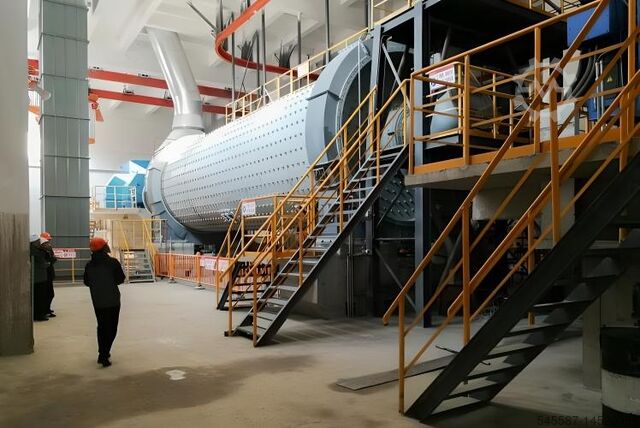
Mingyuan Dry and Wet Ball MillCustomerizable Model for ball mill plant
Call
Condition: new, functionality: fully functional, Year of construction: 2026, Dry and Wet Ball Mill: Structure, Operation, and Technical Details
A ball mill is a fundamental grinding device used in mineral processing, cement manufacturing, chemical production, and other industrial applications. It works by rotating a cylindrical shell filled with grinding media—usually steel balls—causing impact and friction that reduce materials to fine powder. Based on the grinding environment, ball mills are classified into dry and wet types, each suited for specific materials and process requirements.
Working Principle
Both dry and wet ball mills operate on the same mechanical principle. The rotating cylinder, driven by a motor through a gear system, lifts the grinding media and material along the inner wall. As the rotation continues, the balls fall under gravity, striking and grinding the material. The difference lies in the presence or absence of a liquid medium during grinding.
Dry Ball Mill
A dry ball mill is used when the material must remain moisture-free or when water could affect product quality. It is commonly applied in cement clinker, limestone, quartz, and refractory material grinding. The discharge can be either grate type or overflow type, depending on the desired fineness.
Technical Features:
Feeding size: ≤25 mm
Discharge size: 0.075–0.4 mm
Capacity: 0.65–90 t/h
Liner material: High manganese steel or wear-resistant alloy
Credpjq Nx Alefx Apteg
Drive system: Gear-driven or direct-coupled motor
Dust control: Equipped with air exhaust and dust collector
Advantages:
Suitable for materials sensitive to moisture
No drying process required after grinding
Lower corrosion risk and simpler maintenance
Easier material classification and separation
Limitations:
Dry grinding produces more dust and heat, requiring efficient ventilation and dust collection systems.
Wet Ball Mill
A wet ball mill operates with water or another liquid medium added to the material. The slurry formed during grinding improves efficiency by reducing friction and preventing excessive heat buildup. It is widely used in ore beneficiation, ceramics, and chemical industries.
Technical Features:
Feeding size: ≤25 mm
Discharge size: 0.074–0.2 mm
Capacity: 0.65–615 t/h
Liner material: Rubber or high-chromium steel
Discharge method: Overflow or grate type
Auxiliary equipment: Classifier, pump, and thickener for slurry circulation
Advantages:
Higher grinding efficiency and finer particle size
Reduced dust and noise levels
Continuous operation suitable for beneficiation circuits
Better control of particle uniformity
Limitations:
Requires drying if the final product must be in powder form and involves more complex slurry handling.
The selection between dry and wet grinding depends on the material characteristics, downstream process, and environmental conditions. Dry mills are preferred for materials that must stay moisture-free, while wet mills are ideal for fine grinding and slurry-based processes.
Conclusion
Dry and wet ball mills share the same mechanical structure but differ in their grinding environment and application scope. The dry type offers simplicity and low maintenance for moisture-sensitive materials, while the wet type provides higher efficiency and finer output for mineral and chemical processing. Understanding their technical parameters and operational differences ensures optimal equipment selection, improved productivity, and reliable performance in industrial grinding operations.
Listing
Zheng Zhou Shi
3,684 km
Construction/Building debris Recycling
Construction & Demolition RecyclingConstruction Waste Recycling Equipment
Call
Condition: new, functionality: fully functional, power: 260 kW (353.50 HP), fuel type: electric, color: dark red, overall weight: 42,000 kg, operation weight: 42,000 kg, chain condition: 100 %, axle configuration: 3 axles, Year of construction: 2026, The construction industry is moving away from the "build-demolish-dump" cycle and toward Urban Mining. At the heart of this shift is the Mobile Stone Crusher, a powerhouse designed to turn piles of jagged concrete and brick into high-quality recycled aggregate right on the job site.
---
## 1. The Engineering Logic: From Waste to Wealth
In a traditional setup, demolition waste is hauled to a landfill—a process that is expensive, carbon-heavy, and wasteful. A mobile crusher flips the script. It brings the factory to the waste. By processing materials on-site, contractors save on transport costs and produce "Road Base" or "Sub-base" materials immediately.
Crjdpfxoq I Nvio Aptjg
### Key Components of a Mobile C&D Plant:
* Vibrating Feeder: Uses a "Grizzly" bar system to pre-screen fines (dirt/sand) so the crusher only works on the big stuff.
* Crushing Unit: Usually a Jaw Crusher (for primary compression) or an Impact Crusher (for better grain shape and higher reduction ratios).
* Magnetic Separator: This is the "secret sauce" for C&D waste. It pulls out rebar and scrap metal that would otherwise contaminate the recycled aggregate.
* Discharge Conveyor: Transports the finished product to a stockpile.
---
## 2. Technical Specifications & Performance
When evaluating these machines, "Throughput" ($TPH$ or Tons Per Hour) is the metric that matters. For C&D recycling, the machine must handle unpredictable feed sizes and varied material hardness.
### Typical Technical Specifications Table
| Feature | Specification Range | Why it matters |
| --- | --- | --- |
| Throughput | 100 – 500 $t/h$ | Determines project timeline efficiency. |
| Max Feed Size | 500mm – 1,100mm | Dictates if you need a hydraulic breaker first. |
| Power Source | Diesel-Electric or Hydraulic | Dual power (Electric) is better for urban noise/emissions. |
| Crusher Type | Jaw or Impact | Impactors provide a more "cubic" final product. |
| Mobility | Crawler Tracks | Essential for moving over uneven rubble piles. |
---
## 3. The "C&D" Specialization
Recycling construction waste isn't just about "breaking rocks." It’s about cleaning material. Modern mobile units are equipped with:
1. Over-belt Magnets: Specifically designed to lift heavy steel reinforcement bars (rebar) out of the crushed concrete flow.
2. Dust Suppression: High-pressure misting systems to keep neighbors happy and workers healthy in tight urban environments.
3. Active Pre-screening: Removing sticky soil or asphalt fines before they enter the crushing chamber to prevent "plugging."
> The Insight: Using a mobile crusher can reduce project carbon footprints by up to 40% simply by eliminating the "truck-in, truck-out" logistics of aggregate management.
---
## 4. Maintenance and Longevity
Because C&D waste is highly abrasive (and often contains "surprises" like wood or plastic), maintenance is non-negotiable.
* Jaw Plates: Must be flipped or replaced regularly to maintain the "Closed Side Setting" (CSS), which determines the size of your output.
* Blow Bars: In impact crushers, these are the high-wear items that take the brunt of the force.
---
Would you like me to compare the cost-effectiveness of Jaw vs. Impact crushers for a specific type of demolition project, or perhaps look into the environmental regulations regarding on-site crushing?
Trust Seal
Dealers certified through Machineseeker

Listing
Zheng Zhou Shi
3,684 km
Powder grinding mill
ball mill for mining &fine powder makingsilica/Barite/limestone powder plant
Call
Condition: new, Year of construction: 2026, power: 300 kW (407.89 HP), Ball Mill for Mining & Fine Powder Making:
A ball mill is a fundamental grinding device widely used in mining, metallurgy, cement, and chemical industries. It is designed to grind ores and other materials into fine powder through impact and attrition between steel balls and the material inside a rotating cylindrical shell. In mining plants, ball mills are essential for ore beneficiation, while in powder-making industries, they ensure uniform particle size and high surface area for further processing.
Working Principle
The ball mill operates on the principle of impact and friction. As the cylindrical shell rotates around its horizontal axis, the grinding media—usually steel or ceramic balls—are lifted along the inner wall by centrifugal force and friction. When they reach a certain height, they fall freely, striking and grinding the material below. This repeated motion breaks down the material into fine particles. The process can be carried out in dry or wet conditions depending on the application.
Structural Composition
A standard ball mill consists of several main components:
Feeding part: Ensures uniform material input through a feeder or screw conveyor.
Discharging part: Can be grate type or overflow type, depending on the discharge method.
Rotating part: The cylindrical shell made of steel plates, lined with wear-resistant liners.
Transmission system: Includes motor, reducer, small transmission gear, and electrical control.
Grinding media: Steel or ceramic balls of various diameters for efficient grinding.
The internal liner design and ball size distribution are optimized to achieve maximum grinding efficiency and minimal energy consumption.
Technical Details/Typical Specifications:
Feeding size: ≤25 mm
Discharge size: 0.074–0.4 mm
Capacity: 0.65–615 t/h (depending on model and material hardness)
Cylinder speed: 18–38 r/min
Power: 18.5–4500 kW
Liner material: High manganese steel, rubber, or alloy steel
Grinding media load: 30–45% of cylinder volume
Operating Modes:
Dry grinding: Used for materials that must remain moisture-free, such as cement clinker, limestone, and quartz.
Wet grinding: Common in ore beneficiation, where water or slurry improves grinding efficiency and particle uniformity.
Crodpfx Apjq Ngafjtsg
Application in Mining and Powder Production
In mining operations, ball mills are used after crushing to further reduce ore size and liberate valuable minerals. They are integrated into grinding circuits with classifiers, hydrocyclones, and flotation systems. The ground material is classified by size, and oversized particles are returned to the mill for regrinding. This closed-circuit system ensures consistent product fineness and efficient energy use.
In fine powder production, ball mills are used to produce materials such as silicate, ceramic powder, refractory materials, and chemical raw materials. The uniform particle size achieved by ball milling enhances product quality and performance in downstream applications.
Conclusion
A ball mill is an indispensable piece of equipment for both mining and fine powder making. Its ability to grind materials into fine, uniform particles makes it vital for ore beneficiation and industrial powder production. With flexible configurations, high efficiency, and reliable operation, modern ball mills provide a cost-effective and energy-efficient solution for large-scale grinding, ensuring consistent quality and productivity across diverse applications.
Listing
Zheng Zhou Shi
3,684 km
Crushing equipment
Mingyuan stone crusher machinegravel & aggregate production equipment
Call
Condition: new, Year of construction: 2025, Gravel and aggregate production equipment is used to crush, screen, and process stones, rocks, and other materials for the construction industry. This equipment is essential in producing various types of aggregates, including crushed stone, gravel, sand, and recycled concrete, which are used in the construction of roads, buildings, bridges, and other infrastructure projects. Here are some common types of equipment used in gravel and aggregate production:
1. Jaw Crusher:
- Jaw crushers are primary crushers used to break down large rocks into smaller, more manageable pieces. They are essential for the initial stage of aggregate production.
2. Impact Crusher:
- Impact crushers are used to crush rocks and stones with the help of impact force. They are suitable for shaping and producing fine aggregates.
3. Cone Crusher:
- Cone crushers are often used for secondary and tertiary crushing in aggregate production. They produce well-shaped and finely graded aggregates.
4. Vertical Shaft Impact (VSI) Crusher:
- VSI crushers are designed for shaping and producing high-quality artificial sand. They are suitable for processing materials with high abrasiveness.
5. Screens:
- Vibrating screens are used to separate different sizes of aggregates. They classify the material based on particle size and ensure that the final products meet specified gradation requirements.
6. Scalping Screens:
- Scalping screens are used to remove oversized materials before they reach the primary crusher. This helps to optimize the crushing process and prevent damage to the equipment.
7. Washing Equipment:
Crjdjq Nxz Dspfx Aptog
- Washing equipment, such as sand screws or log washers, is used to remove impurities and fine particles from aggregates. This is particularly important for producing high-quality concrete sand.
8. Conveyors:
- Conveyors are used to transport materials between different stages of the crushing and screening process. They play a crucial role in enhancing efficiency in material handling.
9. Stackers and Reclaimers:
- Stackers are used to create stockpiles of processed aggregates, while reclaimers are used to retrieve the material from the stockpile. Both are essential for efficient material storage and handling.
10. Crushing Plants:
- Complete crushing plants include various types of crushers, screens, and conveyors integrated into a single system. These plants are designed to handle large volumes of material efficiently.
Listing
Zheng Zhou Shi
3,684 km
Cement mill,clinker grinding plant
Clinker grinding mill / cement ball millcement grinding with air classifier
Call
Year of construction: 2026, condition: new, functionality: fully functional, A cement clinker grinding mill is a specialized equipment used to grind the hard nodular clinker into fine powder, which is cement. Most cement is currently ground in ball mills and also vertical roller mills, which are more effective than ball mills.
Here are key features and information about cement clinker grinding mills:
Csdpfx Apeq Nfbhstsrg
1. Raw Materials:
- The main raw material for making cement is clinker, which is produced by sintering limestone and clay. Other materials such as gypsum, fly ash, or slag may also be added during the grinding process to achieve specific properties.
2. Grinding Process:
- The clinker and other additives are finely ground in the grinding mill to produce cement. The grinding process is a crucial step in cement production and contributes significantly to the final quality of the product.
3. Types of Mills:
- Ball Mills: Traditional ball mills are commonly used for grinding clinker. They operate by rotating a cylinder with steel grinding balls, causing the balls to fall back into the cylinder and onto the material to be ground.
- Vertical Roller Mills (VRM): VRM technology has become increasingly popular for clinker grinding. These mills use a rotating table with rollers to crush and grind the clinker, providing energy efficiency and a smaller footprint compared to ball mills.
4. Gypsum Addition:
- Gypsum is often added during the grinding process to control the setting time of the cement. It prevents flash setting of the clinker and facilitates the formation of a workable and pumpable cement paste.
5. Quality Control:
- Quality control measures, such as monitoring the fineness of the cement, chemical composition, and other properties, are implemented during the grinding process to ensure the final product meets the required specifications and standards.
6. Clinker Cooling:
- Before grinding, the clinker is produced by heating the raw materials in a kiln. The clinker is then cooled before entering the grinding mill to prevent excessive heat build-up during grinding.
7. Dust Collection and Environmental Considerations:
- Dust collectors and air pollution control systems are often employed to capture and control the dust generated during the grinding process, addressing environmental and safety concerns.
8. Packaging and Storage:
- After grinding, the cement is typically stored in silos before being packaged in bags or dispatched in bulk for distribution to construction sites or for sale in the market.
Cement clinker grinding mills play a crucial role in the cement production process, and advancements in technology continue to improve the efficiency and environmental sustainability of the grinding process.
Technical details
We have different options for different requirements, please contact our team for more info.
Listing
Zheng Zhou Shi
3,684 km
Shredder for wood, plastic recycling
Double-Shaft Shredder For Recyclingwaste tire, wood,root,metal
Call
Condition: new, functionality: fully functional, Year of construction: 2026, Product overviews of Waste Industrial Timber Wood Pallet Double Shaft Shredder
Shredders can generally be used to shred hard-to-break plastics, rubber, large tires, large nylon materials, large pieces of fishing nets, fibers, paper, wood, electrical devices, cables, PET bottles, cardboard, wood, plastic barrels, etc. Solid objects.
The main function of the equipment is to squeeze the bulk materials and large-diameter drum metal materials that are not convenient for transportation through the shear of the shredder, and shred them into sheets that meet the requirements.
The main structure of the double-shaft shredder is a feed hopper, a knife roller, a driving device, a bearing, a hydraulic system, and an electric control box system.
Working principle: All kinds of waste materials enter the shredding chamber through the feeding hopper. The double-knife rollers do relative rotation to shred and cut the materials, and then the materials are discharged from the shredder to achieve the shredding of large pieces of materials.
Applicable materials and fields
Double shaft shredder is one of ethential equipment for waste recycling in following fields and materials:
+Bulky Waste: Sofa,Mattress,Chair, Funiture,Windows,etc
+Industrial Waste: Textiles,Leather,Rubbers, Leathers ,General industrial waste,etc
+Hazardous Solid waste: Medical waste,Paint sludge,Radioactive waste,Hazardous waste oil drum,Jumbo bag,etc
+Paper waste: Carton,Cardboard,Book,Newspaper,Document,Brochure,Packaging paper,etc
Cjdpfx Apevn D I Njtorg
+Garden waste: Branch, Wood pallet, Trunks, Boards,etc
+Domestic waste +Biomass straw: Straw, Bamboo, Corn, Sorghum straw, Bean straw, Fruit shell, Palm shell, etc
+Scrap metal: Car Shell, Aluminum casting, Household appliances, Scrap light metal,Automobile hub,etc
+Paper mill waste: Paper mill slag, Paper mill rope, Paper mill offcut,etc
+Wood pallet, scrap furniture, waste chair, tree roots recycling, etc.
Double shaft shredder main body:
The main body is welded with excellent steel plate to ensure the stability of the equipment under heavy load for a long time.
Bearing:
The bearing seat is split and easy to disassemble, and the movable knife, fixed knife, bearing and other parts can be quickly removed, and it is easy to maintain and replace the knife. The sealing structure can avoid the contact of broken materials and grease, and can also protect bearings and gears when handling liquid materials.
We make it easier for you to find: "sinoboom 1932 me"
You will receive new offers immediately and free of charge via e-mail
You can easily terminate the search request at any time
This may be of interest to you