Used Drying Plant for sale (4,883)
Sort results
- Lowest price Highest price
- Newest listings Oldest listings
- Shortest distance Farthest distance
- Newest year of manufacture Oldest year of manufacture
- Latest update Oldest update
- Manufacturer A to Z Manufacturer Z to A
- Relevance
- Lowest price
- Price
- Highest price
- Price
- Newest listings
- Release date
- Oldest listings
- Release date
- Shortest distance
- Distance
- Farthest distance
- Distance
- Newest year of manufacture
- Year of construction
- Oldest year of manufacture
- Year of construction
- Latest update
- Update
- Oldest update
- Update
- Manufacturer A to Z
- Manufacturer
- Manufacturer Z to A
- Manufacturer
- designation from A to Z
- Description
- designation from Z to A
- Description
- Model from A to Z
- Model
- Model from Z to A
- Model
- Lowest reference
- Ref.No.
- Highest reference
- Ref.No.
- Shortest runtime
- Runtime
- Longest duration
- Runtime
- Relevance
- Relevance
Listing
Montluçon
7,345 km
Mobile concrete mixing plant
PROMAX Mobile Concrete Batching PlantMobile Concrete Batching Plant
Call
Condition: new, MOBILE CONCRETE BATCHING PLANT M100-TWN
Csbtuhoflz Hljm N Asrb
GENERAL
Plant Type: MOBILE CONCRETE BATCHING PLANT WITH DOUBLE SHAFT MIXER
Plant Capacity: 100m³/hour freshly compressed concrete
Csdpfewkq I Tox Aa Nsrb
Mixer Capacity: 3000/2000 lt (2m³ Compacted Concrete)
Total Motor Power: 143kw Standard Value Can be changed depending on the equipment..
Voltage/Frequency: 380V/50Hz Standard Value.
The installation and commissioning of the plant is our responsibility.
We provide excellent after-sales service.
7/24 SERVICES. REMOTE CONTROL SERVICE.
We export more than 1000 Concrete Plants to more than 90 countries worldwide.
* HIGH EFFICIENCY AND DOUBLE PRODUCTION
* EASY TRANSPORTATION
* MINIMUM INVESTMENT FOR FIELD FOUNDATION WORKS
* FAST INSTALLATION
DETAILS:
Compressed concrete capacity: 100 m³/hour
Air Compressor Capacity: 950 lt/min
Aggregate Hopper: 4 Bunker: 4×11.25 = 45 m³
Mixer Type: TWIN Shaft (2 m³). 3000/2000 lt capacity
Mixer Conveyor Belt: 1000 mm * 13000 mm
Gjbtuhmowhyh Ds N Ajub
Weighing Bridges: Aggregate/Cement/Water/Additives
Listing
Ireland
8,033 km
High-volume system for printing, coating
BioDot Printing, Coating Drying SystemRR120
Call
Condition: like new (used), RR120 is a high-volume system for printing, coating, inspecting, and drying rolls. Its modular design offers flexibility for specific applications and needs
Crodpfx Ajya Hvqja Nsb
Reel to Reel Handling System
7 Dispensing Channels (Tandem Pumps
Bio-Jet, Front Line and Air Jet Dispensing Technologies
Print up to 7 Lines Simultaneously
Automated Dispense Tracking for Precision Line Placement
Perform Multiple Applications on One System
Adjustable Tension for Handling Backed/Unbacked Membranes
Easy to Set up, Operate and Maintain
Data Storage to Support Multiple Applications
Many System Options Can be Upgraded after Purchase
Listing
United Kingdom
7,671 km
Stationary concrete mixing plant
PROMAX Compact Concrete Batching PlantС60-SNG PLUS (60m³/h)
Call
Condition: new, Year of construction: 2025, COMPACT CONCRETE BATCHING PLANT C60 SNG PLUS
GENERAL
Plant Type : Compact Concrete Plant with Single Shaft Mixer
Plant Capacity : 60m³/hour freshly compressed concrete
Mixer Capacity : 1500/1000 lt (1m³ Compressed Concrete)
Total Motor Power : 85kw Standard Value can be changed depending on Equipment..
Voltage/Frequency : 380V/50Hz Standard Value.
A very low transport cost : ONLY ONE CONTAINER/TRUCK
The installation and startup of the plant is under our responsibility.
We provide excellent after-sales service.
24/7 SERVICES. REMOTE CONTROL SERVICE.
Exporting more than 700 Concrete Batching Plants to more than 60 Countries all over the world.
Crodpfsflz Hdox Aa Nsb
* LOW SHIPMENT COST(just ONE 40F-OT container or ONE standart trailer)
* QUICK INSTALLATION
* EASY AND SIMPLE USE
DETAILS:
Compacted concrete capacity: 60 m³/h
Air Compressor Capacity : 650 lt/min
Aggregate Hopper : 4X10 (40 m³ )
Mixer Type : SINGLE Shaft (1 m³). 1500/1000 lt capacity
Aggregate Transfer Belt : 800x12.000 mm.
Weighbridges: Aggregate/ Cement /Water/ Additives
OPTIONS:
*Cement Silo: 75-100-150-200-500 tons
*Cement Silo Equipment and Screw Conveyor.
Central Lubrication System Brand : ILC (made in italy)
Mixer body Plates : Manganese (it can manufacture 50.000m3-450.000m3)
Mixer Internal Linings (Wear Plates) : Ni- hard special hard cast material
Discharging in Emergency Situations : manual Emergency Situation hand pump
Emergency Stop Button available.
Digital Mixer Control System (alarm)
Automatic lubrication system monitor feature on pc
Control System: Full automatic pc - plc – printer.
Unlimited users
Remote access
Unlimited prescriptions and customer registration
Retrospective reporting
English- Russian- French- Arabic-German-Spanish languages are available.
Switching materials used in the MCC dashboard are SIEMENS
Back off available.

Get information now
+44 20 806 810 84
+44 20 806 810 84
List now
*per listing / month
Listing
Undoolya
7,730 km
Mobile concrete mixing plant
PROMAX Mobile Concrete Batching PlantMobile Concrete Batching Plant
Call
Condition: new, MOBILE CONCRETE BATCHING PLANT M100-TWN
GENERAL
Plant Type : MOBILE Concrete Plant with TWIN SHAFT MIXER
Plant Capacity : 100m³/hour freshly compressed concrete
Mixer Capacity : 3000/2000 lt (2m³ Compressed Concrete)
Total Motor Power : 143kw Standard Value can be changed depending on Equipment..
Voltage/Frequency : 380V/50Hz Standard Value.
Crsdpfxswhybdj Aa Nob
The installation and startup of the plant is under our responsibility.
We provide excellent after-sales service.
24/7 SERVICES. REMOTE CONTROL SERVICE.
Exporting more than 1000 Concrete Batching Plants to more than 90 Countries all over the world.
* HIGHLY EFFICIENT AND DUPLICATE PRODUCTION
* EASY TRANSPORTATION
* MINUMUM INVESTEMENT FOR FIELD GROUNDWORK
* QUICK INSTALLATION
DETAILS:
Crjbtuhm Njflz Hlo Aeb
Compacted concrete capacity: 100 m³/h
Air Compressor Capacity : 950 lt/min
Aggregate Hopper : 4 Bins : 4×11.25 = 45 m³
Mixer Type : TWIN Shaft (2 m³). 3000/2000 lt capacity
Mixer Converyor Band : 1000 mm * 13000 mm
Weighbridges: Aggregate/ Cement /Water/ Additives
Listing
Spain
7,950 km
Mobile concrete mixing plant
PROMAX Mobile Concrete Batching PlantMobile Concrete Batching Plant M100-TWN
Call
Condition: new, MOBILE CONCRETE BATCHING PLANT M100-TWN
Guobtuhowhyh Dom N Asb
Csbtuhoflz Hljm N Asrb
GENERAL
Plant Type : MOBILE Concrete Plant with TWIN SHAFT MIXER
Plant Capacity : 100m³/hour freshly compressed concrete
Mixer Capacity : 3000/2000 lt (2m³ Compressed Concrete)
Total Motor Power : 143kw Standard Value can be changed depending on Equipment..
Codpowkq Rhjfx Aa Njrb
Voltage/Frequency : 380V/50Hz Standard Value.
The installation and startup of the plant is under our responsibility.
We provide excellent after-sales service.
24/7 SERVICES. REMOTE CONTROL SERVICE.
Exporting more than 1000 Concrete Batching Plants to more than 90 Countries all over the world.
* HIGHLY EFFICIENT AND DUPLICATE PRODUCTION
* EASY TRANSPORTATION
* MINUMUM INVESTEMENT FOR FIELD GROUNDWORK
* QUICK INSTALLATION
DETAILS:
Compacted concrete capacity: 100 m³/h
Air Compressor Capacity : 950 lt/min
Aggregate Hopper : 4 Bins : 4×11.25 = 45 m³
Mixer Type : TWIN Shaft (2 m³). 3000/2000 lt capacity
Mixer Converyor Band : 1000 mm * 13000 mm
Weighbridges: Aggregate/ Cement /Water/ Additives
Listing
Zheng Zhou Shi
3,684 km
Crushing equipment
Henan Mingyuan HSI Impact crusherStone crushing plant for sand aggregate
Call
Condition: new, Year of construction: 2026, HSI Crusher and Impact Crusher: Efficient Solutions for Limestone and Talc Crushing
Introduction
An HSI crusher (Horizontal Shaft Impact crusher) is a highly efficient crushing machine widely used in mining, quarrying, and aggregate production. As a key component in a limestone crushing plant, it delivers precise shaping and high reduction ratios. Whether used as a limestone crusher or talc crusher, the HSI impact crusher ensures consistent particle size and superior performance across various materials.
Features of HSI Impact Crusher
High Crushing Efficiency
The impact mechanism uses high-speed rotors and blow bars to achieve fine and uniform crushing results.
Versatile Applications
Suitable for medium-hard to soft materials such as limestone, talc, gypsum, and coal.
Adjustable Output Size
Hydraulic or mechanical adjustment systems allow easy control of product size.
Durable Components
Wear-resistant blow bars and liners extend service life and reduce maintenance costs.
Easy Maintenance
Quick access doors and modular design simplify inspection and part replacement.
Energy Efficiency
Optimized rotor design and balanced operation minimize energy consumption.
Technical Specifications (Typical Range)
Cjdpoq Ny Sajfx Aa Nsrb
Model:1214 Max input size: 300 mm, Capacity: 100-140 t/h
Model:1315 Max input size: 350mm Capacity: 150-200 t/h
Specifications may vary depending on material hardness and feed size.
Applications
Limestone Crushing Plant: Primary or secondary crushing of limestone for cement, aggregates, and construction materials.
Talc Crusher: Fine crushing of soft minerals like talc and gypsum for powder production.
Aggregate Production: Produces cubical-shaped aggregates ideal for asphalt and concrete.
Recycling: Effective for crushing concrete, asphalt, and demolition waste.
Why Choose a Reliable Impact Crusher Manufacturer
Selecting a trusted impact crusher manufacturer ensures high-quality materials, advanced design, and reliable after-sales service. A professional supplier provides customized solutions for specific materials, such as limestone crusher or talc crusher, ensuring optimal performance and long-term durability.
Impact Crusher for Sale
Modern impact crushers for sale feature advanced automation, energy-saving systems, and improved wear resistance. They are ideal for operators seeking high productivity, low operating costs, and consistent output quality in both stationary and mobile crushing setups.
Conclusion
An HSI impact crusher is a versatile and efficient solution for crushing limestone, talc, and other medium-soft materials. With robust design, adjustable settings, and high throughput, it plays a vital role in any limestone crushing plant or mineral processing line. Choosing the right impact crusher manufacturer ensures reliable performance, reduced downtime, and long-term value.
Listing
Zheng Zhou Shi
3,684 km
Crushing equipment
Stone crushing production lineStone crushing screening plant
Call
Condition: new, functionality: fully functional, Year of construction: 2026, A stone crushing plant for sand and aggregate making is a facility where stones and rocks are crushed into smaller pieces or gravel. It typically includes several stages of crushing and screening to produce various sizes and grades of sand and aggregate materials, which are essential in construction, landscaping, and other applications. Here's an introduction to the components and processes involved in a typical stone crushing plant:
### Components of a Stone Crushing Plant
1. Primary Crusher:
- Purpose: The primary crusher, often a jaw crusher or gyratory crusher, initially breaks down large rocks into smaller pieces.
- Function: It handles raw materials from the quarry or mine and prepares them for further processing.
2. Secondary Crusher:
Cjdpfx Aeq N U Duoa Nsrb
- Purpose: A secondary crusher, such as a cone crusher or impact crusher, further reduces the size of the crushed stones.
- Function: It refines the material after primary crushing, producing smaller and more uniform-sized aggregates.
3. Tertiary Crusher (Optional):
- Purpose: In some configurations, a tertiary crusher like a vertical shaft impactor (VSI) may be used for shaping and fine crushing.
- Function: It produces finely crushed materials for specific applications, such as concrete production or road base.
4. Screening Equipment:
- Purpose: Screening equipment like vibrating screens or trommel screens separates the crushed materials into different sizes.
- Function: It classifies the aggregates into various grades according to size, ensuring uniformity and meeting specifications.
5. Conveyor Systems:
- Purpose: Conveyor belts transport materials between different stages of crushing and screening.
- Function: They ensure efficient material handling and continuous operation within the plant.
6. Washing Equipment (Optional):
- Purpose: Washing equipment, such as sand washers or scrubbers, may be used to remove impurities from sand and aggregate products.
- Function: It improves the quality of the final products by cleaning them and removing fines or contaminants.
### Processes Involved
- Primary Crushing: Large rocks are fed into the primary crusher and reduced to a manageable size.
- Secondary Crushing: The crushed materials from the primary crusher are further processed by secondary crushers to achieve the desired aggregate sizes.
- Screening: The crushed and sized materials are screened to separate them into different sizes and grades.
- Material Handling: Conveyor systems transport materials between different stages of the crushing and screening process.
Final Product Handling:Finished products, such as sand and various sizes of aggregates, are stored or loaded for transport to customers or construction sites.
Applications
- Construction: Used in the production of concrete, asphalt, and road base materials.
- Landscaping: Provides decorative and functional aggregates for gardens, pathways, and driveways.
infrastructure: Essential for building foundations, drainage systems, and structural fill.
As for the capacity we have 30 t/h, 30-50 t/h, 50-100 t/h, 100-150 t/h, 150-200 t/h, 200-300 t/h, 300-500 t/h, and both stationary crushing plant and mobile crushing plant are available for option.
Listing
Zheng Zhou Shi
3,684 km
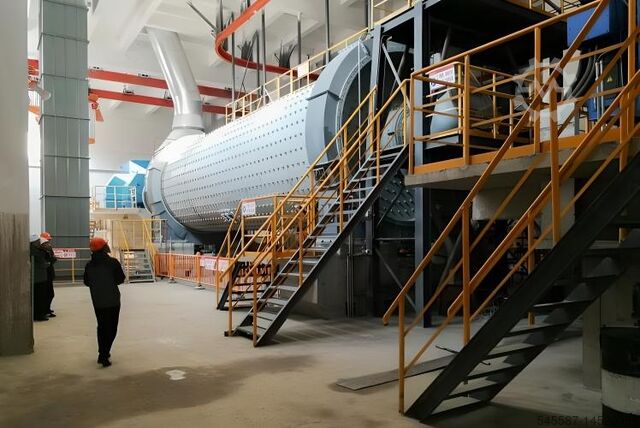
Ball mill for powder and mining plant
Mingyuan Ball Mill For Fine PowderPowder grinding mill for coal, silica
Call
Condition: new, functionality: fully functional, power: 55 kW (74.78 HP), Year of construction: 2026, Ball Mill for Powder and Mining Plant: Structure, Function, and Technical Details
A ball mill is a key grinding machine widely used in mining, metallurgy, cement, chemical, and powder-making industries. It is designed to grind various ores and other materials into fine powder through impact and attrition between steel balls and the material inside a rotating cylindrical shell. In mining plants, ball mills are essential for ore beneficiation, preparing materials for flotation, magnetic separation, or leaching processes. In powder production, they ensure uniform particle size and high surface area for further processing.
Working Principle
The ball mill operates on a simple yet effective principle: as the cylindrical shell rotates around its horizontal axis, the grinding media (steel or ceramic balls) are lifted along the inner wall by centrifugal force and friction. When they reach a certain height, they fall freely, striking and grinding the material below. This repeated motion causes both impact and abrasion, reducing the material to the desired fineness. The grinding process can be performed in dry or wet conditions depending on the application.
Structural Composition
A standard ball mill consists of several main components:
Feeding part: Equipped with a feeder or screw conveyor to ensure uniform material input.
Discharging part: Can be grate type or overflow type, depending on the discharge method.
Rotating part: The cylindrical shell made of steel plates, lined with wear-resistant liners.
Transmission system: Includes motor, reducer, small transmission gear, and electrical control.
Grinding media: Steel balls or ceramic balls of different diameters for efficient grinding.
The internal liner design and ball size distribution are optimized to achieve maximum grinding efficiency and minimal energy consumption.
Technical Details
Typical Specifications:
Feeding size: ≤25 mm
Discharge size: 0.074–0.4 mm
Capacity: 0.65–615 t/h (depending on model and material hardness)
Cylinder speed: 18–38 r/min
Power: 18.5–4500 kW
Liner material: High manganese steel, rubber, or alloy steel
Grinding media load: 30–45% of cylinder volume
Operating Modes:
Dry grinding: Suitable for materials that must remain moisture-free, such as cement clinker, limestone, and quartz.
Wet grinding: Common in ore beneficiation, where water or slurry improves grinding efficiency and particle uniformity.
Application in Mining Plants
In mining operations, ball mills are used after crushing to further reduce ore size and liberate valuable minerals. They are integrated into grinding circuits with classifiers, hydrocyclones, and flotation systems. The ground material is classified by size, and oversized particles are returned to the mill for regrinding. This closed-circuit system ensures consistent product fineness and efficient energy use.
Common Applications:
Csdjq Nf U Espfx Aa Nerb
Gold, copper, iron, and zinc ore grinding
Cement clinker and slag processing
Silicate and ceramic powder production
Coal and mineral powder preparation
Conclusion
A ball mill is an indispensable piece of equipment in both powder production and mining beneficiation plants. Its ability to grind materials into fine, uniform particles makes it vital for downstream processes such as flotation, sintering, and chemical reactions.
Listing
Zheng Zhou Shi
3,684 km
Crushing equipment
Mingyuan Dry and Wet Ball MillCustomerizable Model for ball mill plant
Call
Condition: new, functionality: fully functional, Year of construction: 2026, Dry and Wet Ball Mill: Structure, Operation, and Technical Details
A ball mill is a fundamental grinding device used in mineral processing, cement manufacturing, chemical production, and other industrial applications. It works by rotating a cylindrical shell filled with grinding media—usually steel balls—causing impact and friction that reduce materials to fine powder. Based on the grinding environment, ball mills are classified into dry and wet types, each suited for specific materials and process requirements.
Working Principle
Both dry and wet ball mills operate on the same mechanical principle. The rotating cylinder, driven by a motor through a gear system, lifts the grinding media and material along the inner wall. As the rotation continues, the balls fall under gravity, striking and grinding the material. The difference lies in the presence or absence of a liquid medium during grinding.
Dry Ball Mill
A dry ball mill is used when the material must remain moisture-free or when water could affect product quality. It is commonly applied in cement clinker, limestone, quartz, and refractory material grinding. The discharge can be either grate type or overflow type, depending on the desired fineness.
Technical Features:
Feeding size: ≤25 mm
Discharge size: 0.075–0.4 mm
Capacity: 0.65–90 t/h
Liner material: High manganese steel or wear-resistant alloy
Drive system: Gear-driven or direct-coupled motor
Dust control: Equipped with air exhaust and dust collector
Advantages:
Suitable for materials sensitive to moisture
No drying process required after grinding
Cedpoq Nx Alofx Aa Nsrb
Lower corrosion risk and simpler maintenance
Easier material classification and separation
Limitations:
Dry grinding produces more dust and heat, requiring efficient ventilation and dust collection systems.
Wet Ball Mill
A wet ball mill operates with water or another liquid medium added to the material. The slurry formed during grinding improves efficiency by reducing friction and preventing excessive heat buildup. It is widely used in ore beneficiation, ceramics, and chemical industries.
Technical Features:
Feeding size: ≤25 mm
Discharge size: 0.074–0.2 mm
Capacity: 0.65–615 t/h
Liner material: Rubber or high-chromium steel
Discharge method: Overflow or grate type
Auxiliary equipment: Classifier, pump, and thickener for slurry circulation
Advantages:
Higher grinding efficiency and finer particle size
Reduced dust and noise levels
Continuous operation suitable for beneficiation circuits
Better control of particle uniformity
Limitations:
Requires drying if the final product must be in powder form and involves more complex slurry handling.
The selection between dry and wet grinding depends on the material characteristics, downstream process, and environmental conditions. Dry mills are preferred for materials that must stay moisture-free, while wet mills are ideal for fine grinding and slurry-based processes.
Conclusion
Dry and wet ball mills share the same mechanical structure but differ in their grinding environment and application scope. The dry type offers simplicity and low maintenance for moisture-sensitive materials, while the wet type provides higher efficiency and finer output for mineral and chemical processing. Understanding their technical parameters and operational differences ensures optimal equipment selection, improved productivity, and reliable performance in industrial grinding operations.
Listing
Zheng Zhou Shi
3,684 km
Cement mill,clinker grinding plant
Clinker grinding mill / cement ball millcement grinding with air classifier
Call
Year of construction: 2026, condition: new, functionality: fully functional, A cement clinker grinding mill is a specialized equipment used to grind the hard nodular clinker into fine powder, which is cement. Most cement is currently ground in ball mills and also vertical roller mills, which are more effective than ball mills.
Cjdpfx Aasq Nfbho Nsrb
Here are key features and information about cement clinker grinding mills:
1. Raw Materials:
- The main raw material for making cement is clinker, which is produced by sintering limestone and clay. Other materials such as gypsum, fly ash, or slag may also be added during the grinding process to achieve specific properties.
2. Grinding Process:
- The clinker and other additives are finely ground in the grinding mill to produce cement. The grinding process is a crucial step in cement production and contributes significantly to the final quality of the product.
3. Types of Mills:
- Ball Mills: Traditional ball mills are commonly used for grinding clinker. They operate by rotating a cylinder with steel grinding balls, causing the balls to fall back into the cylinder and onto the material to be ground.
- Vertical Roller Mills (VRM): VRM technology has become increasingly popular for clinker grinding. These mills use a rotating table with rollers to crush and grind the clinker, providing energy efficiency and a smaller footprint compared to ball mills.
4. Gypsum Addition:
- Gypsum is often added during the grinding process to control the setting time of the cement. It prevents flash setting of the clinker and facilitates the formation of a workable and pumpable cement paste.
5. Quality Control:
- Quality control measures, such as monitoring the fineness of the cement, chemical composition, and other properties, are implemented during the grinding process to ensure the final product meets the required specifications and standards.
6. Clinker Cooling:
- Before grinding, the clinker is produced by heating the raw materials in a kiln. The clinker is then cooled before entering the grinding mill to prevent excessive heat build-up during grinding.
7. Dust Collection and Environmental Considerations:
- Dust collectors and air pollution control systems are often employed to capture and control the dust generated during the grinding process, addressing environmental and safety concerns.
8. Packaging and Storage:
- After grinding, the cement is typically stored in silos before being packaged in bags or dispatched in bulk for distribution to construction sites or for sale in the market.
Cement clinker grinding mills play a crucial role in the cement production process, and advancements in technology continue to improve the efficiency and environmental sustainability of the grinding process.
Technical details
We have different options for different requirements, please contact our team for more info.
Listing
Zheng Zhou Shi
3,684 km
Drying system
Single & Triple pass rotary dryerFor wood, sawdust,coal,fertilizer drying
Call
Condition: new, Year of construction: 2026, functionality: fully functional, power: 11 kW (14.96 HP), A triple pass rotary drum dryer is a type of industrial dryer that is used to reduce or remove moisture from a material. It gets its name from the three rotating drums through which the material passes, each with a different purpose in the drying process. This type of dryer is commonly used in the production of various bulk solids, including minerals, agricultural products, and biomass.
Here are the key features and components of a triple pass rotary drum dryer:
1. Triple Pass Design:
- The material being dried passes through three rotating drums or cylinders, hence the term "triple pass." Each drum serves a specific purpose in the drying process.
2. Material Flow:
Crsdpfeq Nfuzox Aa Nsb
- The material enters the dryer and first passes through the innermost drum. After the initial drying phase, it moves to the middle drum and then to the outer drum, undergoing additional drying in each pass.
3. Heat Source:
- Heat is typically provided by a combustion system, such as a burner or furnace, located at one end of the drum dryer. The hot gases generated by the combustion process flow through the rotating drums, transferring heat to the material.
4. Air Flow:
- The dryer is designed to optimize air flow through the drums, ensuring efficient drying. In a triple pass design, the material and hot gases move counter-currently through the three drums, enhancing heat transfer and drying efficiency.
5. Lifting Flights or Lifters:
- Lifters are internal components inside the drums designed to lift and cascade the material as it rotates. This movement promotes good heat transfer and uniform drying.
6. Retention Time:
- The triple pass configuration allows for an extended retention time of the material in the drying system. This longer exposure to heat enhances the drying efficiency, making the triple pass rotary drum dryer suitable for materials with high moisture content.
7. Cooling Section:
- After the material completes the three passes and reaches the end of the drum dryer, a cooling section may be included to reduce the temperature of the dried material before it is discharged.
8. Applications:
- Triple pass rotary drum dryers are used in various industries, including agriculture (drying crops like grains), minerals (drying ores or concentrates), and biomass (drying wood chips or other organic materials).
9. Efficiency and Energy Consumption:
- Triple pass rotary drum dryers are known for their high efficiency due to the extended drying time and effective heat transfer. However, they may have higher energy consumption compared to single or double pass dryers.
When selecting a triple pass rotary drum dryer, it's essential to consider factors such as the type of material to be dried, required moisture reduction, and overall processing requirements. Proper design and operation are crucial to achieving optimal drying performance.
Technical details
We have different options for different requirements, please contact our team for more info.
Listing
Zheng Zhou Shi
3,684 km
Powder grinding mill
ball mill for mining &fine powder makingsilica/Barite/limestone powder plant
Call
Condition: new, Year of construction: 2026, power: 300 kW (407.89 HP), Ball Mill for Mining & Fine Powder Making:
Credoq Ngafepfx Aa Nsb
A ball mill is a fundamental grinding device widely used in mining, metallurgy, cement, and chemical industries. It is designed to grind ores and other materials into fine powder through impact and attrition between steel balls and the material inside a rotating cylindrical shell. In mining plants, ball mills are essential for ore beneficiation, while in powder-making industries, they ensure uniform particle size and high surface area for further processing.
Working Principle
The ball mill operates on the principle of impact and friction. As the cylindrical shell rotates around its horizontal axis, the grinding media—usually steel or ceramic balls—are lifted along the inner wall by centrifugal force and friction. When they reach a certain height, they fall freely, striking and grinding the material below. This repeated motion breaks down the material into fine particles. The process can be carried out in dry or wet conditions depending on the application.
Structural Composition
A standard ball mill consists of several main components:
Feeding part: Ensures uniform material input through a feeder or screw conveyor.
Discharging part: Can be grate type or overflow type, depending on the discharge method.
Rotating part: The cylindrical shell made of steel plates, lined with wear-resistant liners.
Transmission system: Includes motor, reducer, small transmission gear, and electrical control.
Grinding media: Steel or ceramic balls of various diameters for efficient grinding.
The internal liner design and ball size distribution are optimized to achieve maximum grinding efficiency and minimal energy consumption.
Technical Details/Typical Specifications:
Feeding size: ≤25 mm
Discharge size: 0.074–0.4 mm
Capacity: 0.65–615 t/h (depending on model and material hardness)
Cylinder speed: 18–38 r/min
Power: 18.5–4500 kW
Liner material: High manganese steel, rubber, or alloy steel
Grinding media load: 30–45% of cylinder volume
Operating Modes:
Dry grinding: Used for materials that must remain moisture-free, such as cement clinker, limestone, and quartz.
Wet grinding: Common in ore beneficiation, where water or slurry improves grinding efficiency and particle uniformity.
Application in Mining and Powder Production
In mining operations, ball mills are used after crushing to further reduce ore size and liberate valuable minerals. They are integrated into grinding circuits with classifiers, hydrocyclones, and flotation systems. The ground material is classified by size, and oversized particles are returned to the mill for regrinding. This closed-circuit system ensures consistent product fineness and efficient energy use.
In fine powder production, ball mills are used to produce materials such as silicate, ceramic powder, refractory materials, and chemical raw materials. The uniform particle size achieved by ball milling enhances product quality and performance in downstream applications.
Conclusion
A ball mill is an indispensable piece of equipment for both mining and fine powder making. Its ability to grind materials into fine, uniform particles makes it vital for ore beneficiation and industrial powder production. With flexible configurations, high efficiency, and reliable operation, modern ball mills provide a cost-effective and energy-efficient solution for large-scale grinding, ensuring consistent quality and productivity across diverse applications.
Listing
Zheng Zhou Shi
3,684 km
Roll forming line
Rod ball mill / Rod Grinding MillFor Sand and mining beneficiation plant
Call
Condition: new, Year of construction: 2026, We have various kinds of ball grinding mill such as batch ball mill, rod mill, cement ball mill, mining ball mill, welcome to contact our team for further details according to your specific requirements.
Crsdpfx Aaeq I Nw Ie Neb
Listing
Zheng Zhou Shi
3,684 km
Fine Powder Grinding Plant
Cement mill & Ultrafine Grinding MillFine Powder Grinding Plant
Call
Condition: new, functionality: fully functional, Year of construction: 2026, Cement Mill & Ultrafine Grinding Mill
🏗️ Introduction to Cement Mill & Ultrafine Grinding Mill
In the world of construction and materials processing, achieving the right particle size is essential. Introducing the Cement Mill and Ultrafine Grinding Mill—two pivotal machines designed to deliver superior grinding performance for cement production and ultrafine materials. Let’s dive into their features and applications! 💼
🔥 What is a Cement Mill?
A Cement Mill is a crucial piece of equipment in cement production. It grinds clinker, gypsum, and other additives to produce fine cement powder. This machine ensures the optimal particle size for high-quality cement, essential for building robust structures. 🚀
Crodpsq Nyydjfx Aa Nob
🔧 What is an Ultrafine Grinding Mill?
An Ultrafine Grinding Mill is designed to produce extremely fine powders from various raw materials, such as minerals, chemicals, and industrial waste. It operates at high efficiency, delivering ultra-fine materials for advanced applications like coatings, plastics, and ceramics. 🌟
💼 Key Benefits of Using Cement Mill & Ultrafine Grinding Mill
1. High Efficiency: Both mills are engineered for maximum efficiency, ensuring rapid processing times and reduced energy consumption. 🌿💡
2. Superior Grinding Performance: Achieve consistent, high-quality output with precise control over particle size. 🏭
3. Versatility: Suitable for a wide range of materials, making them essential for various industrial applications. 🌳
4. Durability and Reliability: Built with robust materials, these mills offer long-lasting performance in demanding industrial environments. 💪
📈 Applications in Industry
Cement Mill Applications:
1. Cement Production: Essential for producing high-quality cement for construction projects.
2. Infrastructure Development: Used in creating concrete for roads, bridges, and buildings.
Ultrafine Grinding Mill Applications:
1. Mineral Processing: Producing ultra-fine powders for advanced material applications.
2. Chemical Manufacturing: Used in creating fine chemicals for various industrial processes.
3. Environmental Applications: Grinding industrial waste for recycling and reuse. ♻️
🌟 Conclusion
Whether you’re in construction, materials processing, or advanced manufacturing, the Cement Mill and Ultrafine Grinding Mill are indispensable tools. Their efficiency, versatility, and superior performance make them a valuable addition to any production line. Contact us today to learn more about these innovative machines and how they can revolutionize your operations! 📞
Listing
Zheng Zhou Shi
3,684 km
Drying system
Rotary Dryer for wood, biomass, sawdust1200X10000 rotary drum dryer
Call
Condition: new, Year of construction: 2026, power: 11 kW (14.96 HP), Rotary drum dryer for drying various kinds of materials like sand, biomass, sawdust, red mud, bentonite, coal
Diameter: 1200mm
Length: 10000mm
Power: 11-13KW
Gradient: 3%
Capacity: 1.5-3 t/h
Weight: 14Tons
Besides this model, we also have the other models of rotary drum dryer 1500x12000mm, 2400x20000mm, and complete drying system for various materials, welcome to contact us for more details
Our factory can design suitable solution according to your specific requirements.
Rotary drum dryers are highly efficient machines used extensively in the processing of wood chips, sawdust, and biomass. They operate by utilizing a rotating drum that heats and dries the materials as they are transported through the cylinder. The design of these dryers allows them to handle a wide range of particle sizes and moisture levels, making them suitable for various types of biomass. They can also tolerate high-temperature exhaust gases, which contributes to their efficiency and versatility in industrial applications.
Rotary Drum Dryer for Wood Chip, Sawdust, Biomass
🌳 Introduction to Rotary Drum Dryers
In the realm of biomass processing, moisture control is key. Enter the Rotary Drum Dryer, an indispensable machine designed to efficiently reduce the moisture content of wood chips, sawdust, and biomass. This essential tool enhances productivity, improves fuel quality, and is pivotal in biomass energy production. Let’s explore its functionality and benefits! 💡
💼 Key Benefits of Using a Rotary Drum Dryer
1. Energy Efficiency: Designed to optimize energy use, Rotary Drum Dryers consume less power while delivering high drying efficiency. 🌿💡
2. High Capacity: Capable of handling large volumes of biomass, these dryers are perfect for industrial applications where large-scale drying is needed. 🏭
3. Improved Product Quality: By achieving the optimal moisture content, the dryer enhances the quality of biomass for fuel, pellets, and other applications. 🔥
4. Versatility: Suitable for a wide range of materials including wood chips, sawdust, and various types of biomass, making it a versatile tool in any biomass processing plant. 🌳
Csdpfsq Igyvsx Aa Nsrb
# Application Fields and Materials of Rotary Drum Dryer
II. Application Fields
A. Agriculture
- Drying of grains, seeds, and forage.
- Processing of agricultural by-products like straw and husks.
B. Food Industry
- Dehydration of food products such as fruits, vegetables, and spices.
- Preservation of food quality during drying.
C. Chemical Industry
- Drying of chemical powders, granules, and crystals.
- Application in the production of fertilizers and detergents.
D. Mining and Minerals
- Drying of ores, coal, and mineral concentrates.
- Reduction of moisture content for easier handling and processing.
E. Construction Materials
- Drying of sand, cement, and other construction aggregates.
- Preparation of materials for manufacturing processes.
F. Pharmaceuticals
- Drying of pharmaceutical powders and active ingredients.
III. Materials Processed by Rotary Drum Dryer
A. Organic Materials
- Biomass, wood chips, sawdust, and animal feed.
B. Inorganic Materials
- Sand, clay, limestone, and gypsum.
C. Waste Products
- Sludge from wastewater treatment plants.
- Industrial by-products for recycling or reuse.
Listing
Fevziçakmak
4,842 km
Pro Cable Recycling Plant
Mizar Recycling Machinery |PRP XL1 - Cable Recycling|Up to 2000kg/h
Call
Year of construction: 2026, condition: new, functionality: fully functional, power: 300 kW (407.89 HP), load capacity: 2,000 kg, MIZAR PRP Series - Copper Wire Granulator & Cable Recycling Plant
Turnkey Solution for Maximum Copper Recovery (99% Purity) The MIZAR PRP Series is a fully automatic cable recycling line designed to process complex, mixed, and contaminated cables into high-purity copper and plastic granules. Built for 24/7 industrial use, it ensures fast ROI, low operational costs, and maximum efficiency.
Codpoyy Rk Tefx Aa Nsrb
7-STEP PRECISION SEPARATION (100% Dry Process)
• Shredder (SSH): Pre-shredding for bulky cables.
• Magnetic Separator (OMS): Ferrous metal extraction.
• Granulator (FGR): Fine size reduction.
• Zigzag Separator (ZZS): Air separation of light fractions.
• Turbo Mill (TRM): Ultra-fine grinding for complex wires.
• Densimetric Separator (DES): Density-based final pure copper separation.
• Dust Collector (DTF): Clean, eco-friendly operation.
PROCESSED MATERIALS Twin & earth, flexible, telecom (Cat 5/6), complex automotive harnesses, underground, coaxial, and mixed WEEE cables.
MODEL RANGE & TECHNICAL SPECS (Select the ideal capacity for your facility)
• PRP S1: Up to 400 kg/h | Total Power: 80 kW | Footprint: 50 m²
• PRP M1: Up to 800 kg/h | Total Power: 135 kW | Footprint: 100 m²
• PRP L1: Up to 1300 kg/h | Total Power: 200 kW | Footprint: 120 m²
• PRP XL1: Up to 2000 kg/h | Total Power: 300 kW | Footprint: 140 m²
CORE ADVANTAGES
• Up to 99% copper purity
• Smart PLC automation with continuous feeding
• Vibration-optimized, heavy-duty chassis
• CE, ISO 9001, 14001, 45001, 27001 certified
Need a tailored solution? Contact us for a customized layout, technical drawings, or send your material for a performance test.
Mizar Recycling Machinery
Listing
Fevziçakmak
4,842 km
Pro Cable Recycling Plant
Mizar Recycling Machinery |PRP L1 - Cable Recycling |Up to 1300kg/h
Call
Year of construction: 2026, condition: new, functionality: fully functional, power: 200 kW (271.92 HP), load capacity: 1,300 kg, MIZAR PRP Series - Copper Wire Granulator & Cable Recycling Plant
Turnkey Solution for Maximum Copper Recovery (99% Purity) The MIZAR PRP Series is a fully automatic cable recycling line designed to process complex, mixed, and contaminated cables into high-purity copper and plastic granules. Built for 24/7 industrial use, it ensures fast ROI, low operational costs, and maximum efficiency.
7-STEP PRECISION SEPARATION (100% Dry Process)
• Shredder (SSH): Pre-shredding for bulky cables.
• Magnetic Separator (OMS): Ferrous metal extraction.
• Granulator (FGR): Fine size reduction.
• Zigzag Separator (ZZS): Air separation of light fractions.
• Turbo Mill (TRM): Ultra-fine grinding for complex wires.
• Densimetric Separator (DES): Density-based final pure copper separation.
• Dust Collector (DTF): Clean, eco-friendly operation.
PROCESSED MATERIALS Twin & earth, flexible, telecom (Cat 5/6), complex automotive harnesses, underground, coaxial, and mixed WEEE cables.
MODEL RANGE & TECHNICAL SPECS (Select the ideal capacity for your facility)
• PRP S1: Up to 400 kg/h | Total Power: 80 kW | Footprint: 50 m²
• PRP M1: Up to 800 kg/h | Total Power: 135 kW | Footprint: 100 m²
• PRP L1: Up to 1300 kg/h | Total Power: 200 kW | Footprint: 120 m²
• PRP XL1: Up to 2000 kg/h | Total Power: 300 kW | Footprint: 140 m²
CORE ADVANTAGES
• Up to 99% copper purity
• Smart PLC automation with continuous feeding
• Vibration-optimized, heavy-duty chassis
• CE, ISO 9001, 14001, 45001, 27001 certified
Need a tailored solution? Contact us for a customized layout, technical drawings, or send your material for a performance test.
Crsdpeyy Rk Hefx Aa Neb
Mizar Recycling Machinery
Listing
Fevziçakmak
4,842 km
Pro Cable Recycling Plant
Mizar Recycling Machinery |PRP M1 - Cable Recycling |Up to 800kg/h
Call
Year of construction: 2026, condition: new, functionality: fully functional, power: 135 kW (183.55 HP), load capacity: 800 kg, MIZAR PRP Series - Copper Wire Granulator & Cable Recycling Plant
Turnkey Solution for Maximum Copper Recovery (99% Purity) The MIZAR PRP Series is a fully automatic cable recycling line designed to process complex, mixed, and contaminated cables into high-purity copper and plastic granules. Built for 24/7 industrial use, it ensures fast ROI, low operational costs, and maximum efficiency.
7-STEP PRECISION SEPARATION (100% Dry Process)
• Shredder (SSH): Pre-shredding for bulky cables.
• Magnetic Separator (OMS): Ferrous metal extraction.
• Granulator (FGR): Fine size reduction.
• Zigzag Separator (ZZS): Air separation of light fractions.
• Turbo Mill (TRM): Ultra-fine grinding for complex wires.
• Densimetric Separator (DES): Density-based final pure copper separation.
• Dust Collector (DTF): Clean, eco-friendly operation.
PROCESSED MATERIALS Twin & earth, flexible, telecom (Cat 5/6), complex automotive harnesses, underground, coaxial, and mixed WEEE cables.
MODEL RANGE & TECHNICAL SPECS (Select the ideal capacity for your facility)
• PRP S1: Up to 400 kg/h | Total Power: 80 kW | Footprint: 50 m²
• PRP M1: Up to 800 kg/h | Total Power: 135 kW | Footprint: 100 m²
• PRP L1: Up to 1300 kg/h | Total Power: 200 kW | Footprint: 120 m²
Codoyy Rktopfx Aa Nsrb
• PRP XL1: Up to 2000 kg/h | Total Power: 300 kW | Footprint: 140 m²
CORE ADVANTAGES
• Up to 99% copper purity
• Smart PLC automation with continuous feeding
• Vibration-optimized, heavy-duty chassis
• CE, ISO 9001, 14001, 45001, 27001 certified
Need a tailored solution? Contact us for a customized layout, technical drawings, or send your material for a performance test.
Mizar Recycling Machinery
Listing
Fevziçakmak
4,842 km
Pro Cable Recycling Plant
Mizar Recycling Machinery |PRP S1 - Cable Recycling |Up to 400kg/h
Call
Year of construction: 2026, condition: new, functionality: fully functional, power: 80 kW (108.77 HP), load capacity: 400 kg, MIZAR PRP Series - Copper Wire Granulator & Cable Recycling Plant
Turnkey Solution for Maximum Copper Recovery (99% Purity) The MIZAR PRP Series is a fully automatic cable recycling line designed to process complex, mixed, and contaminated cables into high-purity copper and plastic granules. Built for 24/7 industrial use, it ensures fast ROI, low operational costs, and maximum efficiency.
7-STEP PRECISION SEPARATION (100% Dry Process)
• Shredder (SSH): Pre-shredding for bulky cables.
• Magnetic Separator (OMS): Ferrous metal extraction.
• Granulator (FGR): Fine size reduction.
• Zigzag Separator (ZZS): Air separation of light fractions.
• Turbo Mill (TRM): Ultra-fine grinding for complex wires.
• Densimetric Separator (DES): Density-based final pure copper separation.
• Dust Collector (DTF): Clean, eco-friendly operation.
PROCESSED MATERIALS Twin & earth, flexible, telecom (Cat 5/6), complex automotive harnesses, underground, coaxial, and mixed WEEE cables.
Crodpoyy Ricofx Aa Nob
MODEL RANGE & TECHNICAL SPECS (Select the ideal capacity for your facility)
• PRP S1: Up to 400 kg/h | Total Power: 80 kW | Footprint: 50 m²
• PRP M1: Up to 800 kg/h | Total Power: 135 kW | Footprint: 100 m²
• PRP L1: Up to 1300 kg/h | Total Power: 200 kW | Footprint: 120 m²
• PRP XL1: Up to 2000 kg/h | Total Power: 300 kW | Footprint: 140 m²
CORE ADVANTAGES
• Up to 99% copper purity
• Smart PLC automation with continuous feeding
• Vibration-optimized, heavy-duty chassis
• CE, ISO 9001, 14001, 45001, 27001 certified
Need a tailored solution? Contact us for a customized layout, technical drawings, or send your material for a performance test.
Mizar Recycling Machinery
Listing
Macun Mah
4,871 km
CONCRETE BATCHING PLANT Mobile 160S4
SEMIXMobile 160S4
Call
Year of construction: 2023, condition: new, SEMIX M160S4 provides the highest capacity amongst mobile concrete batching plant in the world.
SEMIX Mobile 160S4 equipped with 6000/4000 capacity twin shaft concrete mixers. In SEMIX Concrete Mixers NiHard4 or Hardox 450 wearings are used according to the Concrete recipe’s sillicium ratio.
Aggregate storage hoppers can be fed by wheeled loaders with a single ramp. Aggregates are weighed in the weighing conveyor which transfers aggregates to the transfer conveyor. Having two separate conveyors providing accuracy in weighing and performance for reaching higher Concrete outputs.
All SEMIX Aggregate Storage hoppers are bent trapezoidal shape for having an extra strength.
Codpfx Aogazamja Nsrb
All SEMIX Concrete Batching Plants are being controlled by a SCADA system with a Schneider PLC integrated. Users can follow all used materials and integrate it their CRM system. SEMIX's engineering team can intervene in the Automation system online to provide service.
Listing
Macun Mah
4,871 km
CONCRETE BATCHING PLANT Mobile 100S4
SEMIXMobile 100 S4
Call
Year of construction: 2023, condition: new, SEMIX Mobile 100S4 is equipped with 3000/2000 liters capacity Concrete mixers which can be a single shaft, twin shaft, or planetary type mixers. In SEMIX Concrete Mixers NiHard4 or Hardox 450 wearings are used according to the Concrete recipe’s sillicium ratio.
Csdpfx Aogay Sfea Nerb
All SEMIX Aggregate Storage hoppers are bent trapezoidal shape for having an extra strength. Aggregate storage hoppers can be fed by wheeled loaders with a single ramp. Aggregates are weighed in the weighing conveyor which transfers aggregates to the transfer conveyor. Having two separate conveyors providing accuracy in weighing and performance for reaching higher Concrete outputs.
All SEMIX Concrete Batching Plants are being controlled by a SCADA system with a Schneider PLC integrated. Users can follow all used materials and integrate it their CRM system. SEMIX's engineering team can intervene in the Automation system online to provide service.
Trust Seal
Dealers certified through Machineseeker

Listing
Ukraine
5,010 km
CONCRETE BATCHING PLANT Mobile 160S4
SEMIXMobile 160S4
Call
Year of construction: 2023, condition: new, SEMIX M160S4 provides the highest capacity amongst mobile concrete batching plant in the world.
SEMIX Mobile 160S4 equipped with 6000/4000 capacity twin shaft concrete mixers. In SEMIX Concrete Mixers NiHard4 or Hardox 450 wearings are used according to the Concrete recipe’s sillicium ratio.
Aggregate storage hoppers can be fed by wheeled loaders with a single ramp. Aggregates are weighed in the weighing conveyor which transfers aggregates to the transfer conveyor. Having two separate conveyors providing accuracy in weighing and performance for reaching higher Concrete outputs.
All SEMIX Aggregate Storage hoppers are bent trapezoidal shape for having an extra strength.
Crodpfxogazbno Aa Neb
All SEMIX Concrete Batching Plants are being controlled by a SCADA system with a Schneider PLC integrated. Users can follow all used materials and integrate it their CRM system. SEMIX's engineering team can intervene in the Automation system online to provide service.
Listing
Freising
6,652 km
Premix plant
Falterbaum
Call
Condition: used, Year of construction: 2005, Additional title: two component mixing plant with deareation and carbonisation
Codpfxsy Nncxe Aa Norb
Capacity: 9600 l/h
Maximum CO2 content (operating value): 8 to 8,5 g/l
Residual oxygen content (operating value): 1 to 1,5 mg/l
Accuracy of Brix and CO2 measurement respectively: ± 0.05 °Brix; ± 0.05 vol% alcohol
Features: Brix measurement and CO2 measurement (ACM company);
Listing
Freising
6,652 km
Keg plant
Diverse
Call
Condition: used, Keg cleaning, filling and palletising system, consisting of the following components: - Keg external washer Schöttinger & Schäfer, year of manufacture 1987 Model: AW 2RB - Keg filling system Leifeld & Lemke, Year of manufacture: 1988 Consisting of: 1 line for pre-cleaning, KVR 1, Capacity: 140 kegs/hour 2 lines for main cleaning and filling, KRF1 and KRF 2 Capacity: 120 kegs/hour - CIP system with 5 containers Year of manufacture: 1988 - Palletising and depalletising RST Year of manufacture: 1999 with pallet magazine and palletising robot (KUKA KR 125/1)
Codey Nm Uaspfx Aa Njrb
Additional title: Keg cleaning and filling system with palletising; built 1987 - 1999
Capacity appr.: 120 Kegs/h
Operation / Control: Simatic S7-300
Features: External washer; pre-cleaning, main cleaning and filling lines; CIP system; palletising with pallet magazine and robot
Listing
Freising
6,652 km
Cooling plant
Haas GmbH Anlagenbau
Call
Year of construction: 2009, condition: used, NH3 refrigeration system. Refrigeration system includes the following: - Compressor 1, GEA Grasso type OS3 - Compressor 2, GEA Grasso type OS3 - NH3 separator - Air condenser - Heat exchanger for energy recovery with pump - 2 x ice water pumps - Brewing water pump - 2 water coolers - Expansion tank with control cabinet for NH3 separator and compressors 1 and 2, with SIMATIC MULTI PANEL touch control
Additional title: refrigerant ammonia
Brew water flow: 5 m3/h 2 bar
Ice water flow: 15 m3/h 2 bar
Refrigerant capacity: 85 kg Ammonia
Compressor capacity: 145 m³/h
Power: Q0: 2 x 119 kW
Cjdpfx Ajxbn Upsa Norb
Operation / Control: Siemens S7
Features: 2 x compressors: 145 m³/h, 26 kW with Frequency Converter, 37 kW nominal output; ammonia separator mounted on frame, with brewing water-cooler and ice water-cooler; air condenser on frame 3 x 2.95 kW; heat-exchanger for recovery with pump; 2 x ice water pumps ( 2.2 kW, 15 m3/h, 2 bar ); brewing water pump ( 1.1 kW, 5 m3/h, 2 bar ); expansion tank, max. permissible operating pressure: high pressure side: 22 bar, low pressure side: 16 bar
We make it easier for you to find: "drying plant"
You will receive new offers immediately and free of charge via e-mail
You can easily terminate the search request at any time
This may be of interest to you

Get information now
+44 20 806 810 84
+44 20 806 810 84
List now
*per listing / month