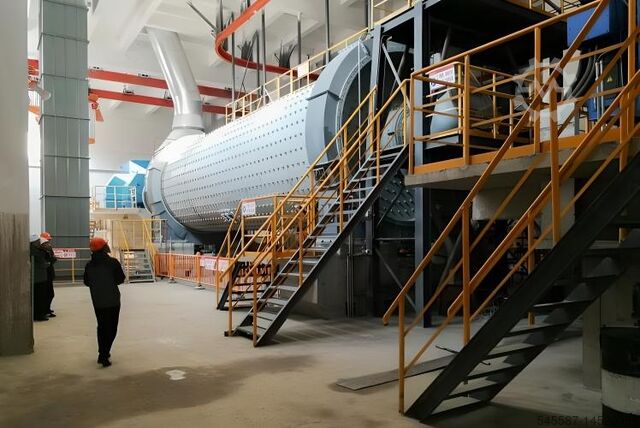
Used Abrasive Aluminium Oxide Grinding Plant Microsilica Powder Grinding Mill for sale (19,112)
Sort results
- Lowest price Highest price
- Newest listings Oldest listings
- Shortest distance Farthest distance
- Newest year of manufacture Oldest year of manufacture
- Latest update Oldest update
- Manufacturer A to Z Manufacturer Z to A
- Relevance
- Lowest price
- Price
- Highest price
- Price
- Newest listings
- Release date
- Oldest listings
- Release date
- Shortest distance
- Distance
- Farthest distance
- Distance
- Newest year of manufacture
- Year of construction
- Oldest year of manufacture
- Year of construction
- Latest update
- Update
- Oldest update
- Update
- Manufacturer A to Z
- Manufacturer
- Manufacturer Z to A
- Manufacturer
- designation from A to Z
- Description
- designation from Z to A
- Description
- Model from A to Z
- Model
- Model from Z to A
- Model
- Lowest reference
- Ref.No.
- Highest reference
- Ref.No.
- Shortest runtime
- Runtime
- Longest duration
- Runtime
- Relevance
- Relevance
Success:
Your message has been sent.
Listing
Zheng Zhou Shi
3,684 km
Grinding mill
Abrasive Aluminium Oxide Grinding PlantMicrosilica powder Grinding Mill
Call
Condition: new, functionality: fully functional, Year of construction: 2026, Microsilica, also known as silica fume or condensed silica fume, is a byproduct of producing silicon metal or ferrosilicon alloys. Microsilica powder grinding mills are used to process microsilica powder for various applications, including the production of high-performance concrete, refractory materials, and other specialty products. Grinding mills play a crucial role in reducing microsilica particles to the desired fineness. Here are some key aspects related to microsilica powder grinding mills:
1. Mill Types:
- Ball Mill: A traditional ball mill is commonly used for grinding microsilica. It relies on the impact and attrition forces to reduce particle size. It is effective for both wet and dry grinding.
- Vertical Roller Mill (VRM): VRM technology is known for its energy efficiency and the ability to grind materials into a narrow particle size distribution. It is suitable for grinding microsilica.
2. Grinding Process:
- The grinding process involves feeding microsilica particles into the grinding mill. The grinding media (balls or rollers) inside the mill crush and grind the microsilica particles into a fine powder.
3. Particle Size Distribution:
- Controlling the particle size distribution is crucial for achieving the desired properties in the final product. The grinding mill should be equipped with mechanisms to control and monitor particle size distribution.
4. Mill Design and Components:
- The design of the grinding mill, including the type of grinding media, liners, and the grinding chamber, influences the efficiency and performance of the milling process for microsilica.
5. Air Classification (Optional):
- In some cases, air classification systems are integrated into the grinding process to separate fine particles from coarser ones, ensuring a more uniform product.
6. Control Systems:
- Advanced grinding mills often come with automated control systems to regulate various parameters such as feed rate, mill speed, and product fineness.
7. Material Handling:
- Efficient material handling systems are essential to transport microsilica to and from the grinding mill. This may involve pneumatic or mechanical conveying systems.
Gjdpfxeq Nxp So Ap Dokc
8. Cooling Systems:
- Grinding processes generate heat, and efficient cooling systems are often integrated to maintain the temperature within a controlled range.
9. Dust Collection:
- Microsilica powder grinding can produce airborne dust. Dust collection systems are necessary to maintain a clean and safe working environment.
10. Quality Assurance:
- Grinding mills for microsilica should be equipped with quality assurance features, such as in-line particle size analysis, to ensure consistency in the final product.
When selecting a microsilica powder grinding mill, factors such as production capacity, energy efficiency, and the required particle size distribution should be considered. Additionally, mills should be chosen based on the specific characteristics of the microsilica being processed and the intended application of the final product.
Success:
Your message has been sent.
Listing
Zheng Zhou Shi
3,684 km
Ball mill for powder and mining plant
Mingyuan Ball Mill For Fine PowderPowder grinding mill for coal, silica
Call
Condition: new, functionality: fully functional, power: 55 kW (74.78 HP), Year of construction: 2026, Ball Mill for Powder and Mining Plant: Structure, Function, and Technical Details
A ball mill is a key grinding machine widely used in mining, metallurgy, cement, chemical, and powder-making industries. It is designed to grind various ores and other materials into fine powder through impact and attrition between steel balls and the material inside a rotating cylindrical shell. In mining plants, ball mills are essential for ore beneficiation, preparing materials for flotation, magnetic separation, or leaching processes. In powder production, they ensure uniform particle size and high surface area for further processing.
Working Principle
The ball mill operates on a simple yet effective principle: as the cylindrical shell rotates around its horizontal axis, the grinding media (steel or ceramic balls) are lifted along the inner wall by centrifugal force and friction. When they reach a certain height, they fall freely, striking and grinding the material below. This repeated motion causes both impact and abrasion, reducing the material to the desired fineness. The grinding process can be performed in dry or wet conditions depending on the application.
Structural Composition
A standard ball mill consists of several main components:
Feeding part: Equipped with a feeder or screw conveyor to ensure uniform material input.
Discharging part: Can be grate type or overflow type, depending on the discharge method.
Rotating part: The cylindrical shell made of steel plates, lined with wear-resistant liners.
Transmission system: Includes motor, reducer, small transmission gear, and electrical control.
Grinding media: Steel balls or ceramic balls of different diameters for efficient grinding.
The internal liner design and ball size distribution are optimized to achieve maximum grinding efficiency and minimal energy consumption.
Technical Details
Typical Specifications:
Feeding size: ≤25 mm
Discharge size: 0.074–0.4 mm
Capacity: 0.65–615 t/h (depending on model and material hardness)
Cylinder speed: 18–38 r/min
Power: 18.5–4500 kW
Liner material: High manganese steel, rubber, or alloy steel
Grinding media load: 30–45% of cylinder volume
Operating Modes:
Dry grinding: Suitable for materials that must remain moisture-free, such as cement clinker, limestone, and quartz.
Wet grinding: Common in ore beneficiation, where water or slurry improves grinding efficiency and particle uniformity.
Application in Mining Plants
In mining operations, ball mills are used after crushing to further reduce ore size and liberate valuable minerals. They are integrated into grinding circuits with classifiers, hydrocyclones, and flotation systems. The ground material is classified by size, and oversized particles are returned to the mill for regrinding. This closed-circuit system ensures consistent product fineness and efficient energy use.
Common Applications:
Gold, copper, iron, and zinc ore grinding
Gsdpfx Apsq Nf U Es Dokc
Cement clinker and slag processing
Silicate and ceramic powder production
Coal and mineral powder preparation
Conclusion
A ball mill is an indispensable piece of equipment in both powder production and mining beneficiation plants. Its ability to grind materials into fine, uniform particles makes it vital for downstream processes such as flotation, sintering, and chemical reactions.
Success:
Your message has been sent.
Listing
Zheng Zhou Shi
3,684 km
Mill / grinding mill
Batch Ball Mill, Silica grinding millQuartz ball mill, silica powder grinding
Call
Year of construction: 2026, condition: new, ceramic ball mill ,Batch ball mill ,also called ceramic ball mill ,it is used for fine grinding of feldspar,quartz,clay,ore and so on.The ceramic ball mill is mainly used for material mixing, grinding,uniform product fineness,and saving power.It can be dry or wet.The machine can use different liner types according to production needs to meet different needs.The fineness of the grinding operation is controlled by the grinding time
ceramic ball mill Working principle
when ball mill working,steel balls inside drum will rotate with the drum to some height,and then steel balls fall down with materials to reach the point of grinding.
Working Principle of Ceramic ball mill
ceramic ball mill ,Intermittent ball mill grinding operation is finished in the cylinder body. When the cylinder rotates, materials ascend to a certain height and then fall along a certain path due to the balls' gravity. Two forces are generated on the balls inside. One is the force on balls through tangent direction; the other is a opposite force in the contrast to the diameter of balls, as a result of the force generated when the balls slide down. These two forces will constitute a couple for the steel balls. The balls are squeezed between the cylinder and the adjacent steel balls, so the couple can make unequal-sized friction force. The balls will orbit along with the cylinder axis and then fall down, which can produce a strong impact force on the ores in the cylinder body and, as a result, the ores will be crushed. In conclusion, the ores in the cylinder body are mainly crushed by composite effect of peeling force, impact force and extrusion force.
Ceramic ball mill also named Intermittent ball mill which adopts the wet intermittent operation, is used for fine grinding and mixing the material such as feldspar, quartz, clay ceramic raw materials. The discharging and the mud size can through through 1000 sieve pore. This machine is high milling machinery, materials should be Broken in the fineness of the state into the grinding mill to get the highest efficiency and economic benefits.
The cement mill is key equipment for the grinding process of the cement clinker after the crushing process of it. It is mainly used in the cement silicate product industry. After long term design and manufacture of the cement mill, our company now has series of cement mill with various specifications to meet with different requirement from our customers.
Features of Cement Mill
Gedpfx Ajvzx Aujp Dekc
Our company adopts suitable transmission methods according to different specifications. We have brim drive and center drive as transmission form. The cylinder adopts new type step lining to increase the grinding area. And it is easily repairable and changeable. The new designed separate-chambered structure adopts flexible lifting blade and fixed lifting blade and it is easily fixed and repaired.
Technical Details
We have different models and options for different requirements, please contact us for more info.

Get information now
+44 20 806 810 84
+44 20 806 810 84
List now
*per listing / month
Success:
Your message has been sent.
Listing
Zheng Zhou Shi
3,684 km
Powder grinding machine
Fine powder grinding mill, clinker millSuperfine ball mill for micro powder
Call
Condition: new, Year of construction: 2026, A superfine ball mill is a type of milling machine that is used to grind materials into very fine particles. This type of ball mill has some distinctive features that make it especially suitable for processing even the hardest materials with low contamination and minimal wear. It is commonly used in various industries, including pharmaceuticals, minerals, pigments, and chemicals, for producing micro powder or nanoparticles.
Here are some key features and considerations for a superfine ball mill for micro powder:
1. High Grinding Efficiency: Superfine ball mills are designed to achieve high grinding efficiency by utilizing grinding media with a relatively small size, leading to a large surface area for grinding.
2. Precision Control: These mills often come with advanced control systems to regulate parameters like rotation speed, temperature, and grinding time, allowing precise control over the particle size distribution.
3. Specialized Design: The mill is typically designed with features to minimize contamination, such as using materials resistant to wear and corrosion. Some mills also have cooling systems to prevent overheating during the milling process.
4. Variety of Materials: Superfine ball mills can handle a wide range of materials, including both brittle and fibrous substances. They are often used for milling hard materials that require fine grinding, such as ceramics, minerals, or pigments.
5. Size Reduction to Micro or Nano Level: The primary goal of a superfine ball mill is to reduce particle size to the micro or even nano level. This is achieved by the intense grinding action that occurs within the mill.
Gkedeq Nf Uwopfx Ap Djc
6. Classifier System: Some superfine ball mills incorporate a classifier system to control the particle size distribution more precisely. This allows for the separation of fine particles from coarser ones during the milling process.
7. Batch or Continuous Operation: Depending on the specific design, these mills can operate in either batch or continuous mode, offering flexibility based on the production requirements.
8. Safety Measures: Safety features may be included, such as monitoring and control systems to prevent overloading, overheating, or other potential issues during operation.
When selecting a superfine ball mill for micro powder production, it's important to consider the specific requirements of your application, the characteristics of the materials you're working with, and the desired final particle size distribution. Always follow the manufacturer's guidelines for operation, maintenance, and safety to ensure optimal performance and longevity of the equipment.
Success:
Your message has been sent.
Listing
Zheng Zhou Shi
3,684 km
Powder grinding mill
ball mill for mining &fine powder makingsilica/Barite/limestone powder plant
Call
Condition: new, Year of construction: 2026, power: 300 kW (407.89 HP), Ball Mill for Mining & Fine Powder Making:
A ball mill is a fundamental grinding device widely used in mining, metallurgy, cement, and chemical industries. It is designed to grind ores and other materials into fine powder through impact and attrition between steel balls and the material inside a rotating cylindrical shell. In mining plants, ball mills are essential for ore beneficiation, while in powder-making industries, they ensure uniform particle size and high surface area for further processing.
Working Principle
The ball mill operates on the principle of impact and friction. As the cylindrical shell rotates around its horizontal axis, the grinding media—usually steel or ceramic balls—are lifted along the inner wall by centrifugal force and friction. When they reach a certain height, they fall freely, striking and grinding the material below. This repeated motion breaks down the material into fine particles. The process can be carried out in dry or wet conditions depending on the application.
Structural Composition
A standard ball mill consists of several main components:
Feeding part: Ensures uniform material input through a feeder or screw conveyor.
Discharging part: Can be grate type or overflow type, depending on the discharge method.
Rotating part: The cylindrical shell made of steel plates, lined with wear-resistant liners.
Transmission system: Includes motor, reducer, small transmission gear, and electrical control.
Grinding media: Steel or ceramic balls of various diameters for efficient grinding.
The internal liner design and ball size distribution are optimized to achieve maximum grinding efficiency and minimal energy consumption.
Technical Details/Typical Specifications:
Feeding size: ≤25 mm
Discharge size: 0.074–0.4 mm
Capacity: 0.65–615 t/h (depending on model and material hardness)
Cylinder speed: 18–38 r/min
Gedpeq Ngafjfx Ap Dekc
Power: 18.5–4500 kW
Liner material: High manganese steel, rubber, or alloy steel
Grinding media load: 30–45% of cylinder volume
Operating Modes:
Dry grinding: Used for materials that must remain moisture-free, such as cement clinker, limestone, and quartz.
Wet grinding: Common in ore beneficiation, where water or slurry improves grinding efficiency and particle uniformity.
Application in Mining and Powder Production
In mining operations, ball mills are used after crushing to further reduce ore size and liberate valuable minerals. They are integrated into grinding circuits with classifiers, hydrocyclones, and flotation systems. The ground material is classified by size, and oversized particles are returned to the mill for regrinding. This closed-circuit system ensures consistent product fineness and efficient energy use.
In fine powder production, ball mills are used to produce materials such as silicate, ceramic powder, refractory materials, and chemical raw materials. The uniform particle size achieved by ball milling enhances product quality and performance in downstream applications.
Conclusion
A ball mill is an indispensable piece of equipment for both mining and fine powder making. Its ability to grind materials into fine, uniform particles makes it vital for ore beneficiation and industrial powder production. With flexible configurations, high efficiency, and reliable operation, modern ball mills provide a cost-effective and energy-efficient solution for large-scale grinding, ensuring consistent quality and productivity across diverse applications.
Success:
Your message has been sent.
Listing
Zheng Zhou Shi
3,684 km
Fine Powder Grinding Plant
Cement mill & Ultrafine Grinding MillFine Powder Grinding Plant
Call
Condition: new, functionality: fully functional, Year of construction: 2026, Cement Mill & Ultrafine Grinding Mill
🏗️ Introduction to Cement Mill & Ultrafine Grinding Mill
In the world of construction and materials processing, achieving the right particle size is essential. Introducing the Cement Mill and Ultrafine Grinding Mill—two pivotal machines designed to deliver superior grinding performance for cement production and ultrafine materials. Let’s dive into their features and applications! 💼
Gjdpfx Apoq Nyydj Djkc
🔥 What is a Cement Mill?
A Cement Mill is a crucial piece of equipment in cement production. It grinds clinker, gypsum, and other additives to produce fine cement powder. This machine ensures the optimal particle size for high-quality cement, essential for building robust structures. 🚀
🔧 What is an Ultrafine Grinding Mill?
An Ultrafine Grinding Mill is designed to produce extremely fine powders from various raw materials, such as minerals, chemicals, and industrial waste. It operates at high efficiency, delivering ultra-fine materials for advanced applications like coatings, plastics, and ceramics. 🌟
💼 Key Benefits of Using Cement Mill & Ultrafine Grinding Mill
1. High Efficiency: Both mills are engineered for maximum efficiency, ensuring rapid processing times and reduced energy consumption. 🌿💡
2. Superior Grinding Performance: Achieve consistent, high-quality output with precise control over particle size. 🏭
3. Versatility: Suitable for a wide range of materials, making them essential for various industrial applications. 🌳
4. Durability and Reliability: Built with robust materials, these mills offer long-lasting performance in demanding industrial environments. 💪
📈 Applications in Industry
Cement Mill Applications:
1. Cement Production: Essential for producing high-quality cement for construction projects.
2. Infrastructure Development: Used in creating concrete for roads, bridges, and buildings.
Ultrafine Grinding Mill Applications:
1. Mineral Processing: Producing ultra-fine powders for advanced material applications.
2. Chemical Manufacturing: Used in creating fine chemicals for various industrial processes.
3. Environmental Applications: Grinding industrial waste for recycling and reuse. ♻️
🌟 Conclusion
Whether you’re in construction, materials processing, or advanced manufacturing, the Cement Mill and Ultrafine Grinding Mill are indispensable tools. Their efficiency, versatility, and superior performance make them a valuable addition to any production line. Contact us today to learn more about these innovative machines and how they can revolutionize your operations! 📞
Success:
Your message has been sent.
Listing
Zheng Zhou Shi
3,684 km
Powder equipment for sand & micro powder
Mingyuan Powder production equipment1.83X11m Micro Powder Ball Grinding Mill
Call
Condition: new, Year of construction: 2026, functionality: fully functional, Ball Mill with Air Classifier: The Ultimate Powder Processing Equipment
In the world of industrial powder production, precision, efficiency, and flexibility are paramount. Whether producing ultra-fine powders for high-tech applications or coarser materials for everyday products, the combination of a Ball Mill with Air Classifier offers unparalleled performance. This dynamic duo provides a comprehensive solution for industries ranging from chemicals and ceramics to paints, plastics, and pharmaceuticals.
This article introduces the ball mill with an air classifier, explores its applications, and highlights the key advantages of this essential powder equipment.
Gedpfx Aevlwkxop Dokc
General Introduction to Ball Mill with Air Classifier
ball mill with air classifier is an advanced grinding and classification system designed for efficient, high-quality powder production. The system consists of two main components:
1. Ball Mill: A cylindrical grinding device filled with grinding media (such as steel balls) that operates by rotating around its axis. The raw material is reduced to smaller particle sizes through impact and friction within the mill.
2. Air Classifier: A sophisticated device that separates particles based on size using airflow. Fine particles are carried away, while coarser particles are returned to the ball mill for further grinding.
The combination of these two components creates a closed-loop system that ensures consistent particle size distribution, high efficiency, and minimal waste.
Applications of Ball Mill with Air Classifier
The ball mill with air classifier is a versatile solution used in a wide range of industries to process various materials. Key applications include:
1. Mineral Processing
The system is widely used in the production of minerals such as calcium carbonate, quartz, feldspar, and talc. These finely ground minerals are essential for industries like ceramics, paints, plastics, and rubber.
2. Cement and Construction Materials
Cement and other construction materials require precise particle size control for optimal performance. The ball mill with air classifier ensures uniformity and enhances the quality of construction materials.
3. Chemicals and Pharmaceuticals
Fine powders play a critical role in the chemical and pharmaceutical industries. From active pharmaceutical ingredients (APIs) to industrial chemicals, this system delivers the consistent quality required for these applications.
4. Paints, Coatings, and Pigments
The production of paints and coatings demands ultra-fine powders to achieve smooth finishes and vibrant colors. The ball mill with air classifier produces high-quality powders for superior results.
#### 5. Food and Agriculture
Food-grade powders such as additives, preservatives, and agricultural products like fertilizers can be efficiently processed using this system, meeting stringent regulatory requirements.
Industries That Benefit from Ball Mill with Air Classifier
Several industries rely on the capabilities of this system to produce fine powders with specific characteristics:
- Ceramics: Produces high-purity powders for tiles, insulators, and advanced ceramics.
- Rubber and Plastics: Creates fillers and additives for improved durability and performance.
- Pharmaceuticals: Ensures consistent particle size for APIs and excipients.
-Construction: Delivers materials for concrete, plaster, and other applications.
Success:
Your message has been sent.
Listing
Zheng Zhou Shi
3,684 km
Cement mill,clinker grinding plant
Clinker grinding mill / cement ball millcement grinding with air classifier
Call
Year of construction: 2026, condition: new, functionality: fully functional, A cement clinker grinding mill is a specialized equipment used to grind the hard nodular clinker into fine powder, which is cement. Most cement is currently ground in ball mills and also vertical roller mills, which are more effective than ball mills.
Godpfsq Nfbhjx Ap Djkc
Here are key features and information about cement clinker grinding mills:
1. Raw Materials:
- The main raw material for making cement is clinker, which is produced by sintering limestone and clay. Other materials such as gypsum, fly ash, or slag may also be added during the grinding process to achieve specific properties.
2. Grinding Process:
- The clinker and other additives are finely ground in the grinding mill to produce cement. The grinding process is a crucial step in cement production and contributes significantly to the final quality of the product.
3. Types of Mills:
- Ball Mills: Traditional ball mills are commonly used for grinding clinker. They operate by rotating a cylinder with steel grinding balls, causing the balls to fall back into the cylinder and onto the material to be ground.
- Vertical Roller Mills (VRM): VRM technology has become increasingly popular for clinker grinding. These mills use a rotating table with rollers to crush and grind the clinker, providing energy efficiency and a smaller footprint compared to ball mills.
4. Gypsum Addition:
- Gypsum is often added during the grinding process to control the setting time of the cement. It prevents flash setting of the clinker and facilitates the formation of a workable and pumpable cement paste.
5. Quality Control:
- Quality control measures, such as monitoring the fineness of the cement, chemical composition, and other properties, are implemented during the grinding process to ensure the final product meets the required specifications and standards.
6. Clinker Cooling:
- Before grinding, the clinker is produced by heating the raw materials in a kiln. The clinker is then cooled before entering the grinding mill to prevent excessive heat build-up during grinding.
7. Dust Collection and Environmental Considerations:
- Dust collectors and air pollution control systems are often employed to capture and control the dust generated during the grinding process, addressing environmental and safety concerns.
8. Packaging and Storage:
- After grinding, the cement is typically stored in silos before being packaged in bags or dispatched in bulk for distribution to construction sites or for sale in the market.
Cement clinker grinding mills play a crucial role in the cement production process, and advancements in technology continue to improve the efficiency and environmental sustainability of the grinding process.
Technical details
We have different options for different requirements, please contact our team for more info.
Success:
Your message has been sent.
Listing
Zheng Zhou Shi
3,684 km
Roll forming line
Rod ball mill / Rod Grinding MillFor Sand and mining beneficiation plant
Call
Condition: new, Year of construction: 2026, We have various kinds of ball grinding mill such as batch ball mill, rod mill, cement ball mill, mining ball mill, welcome to contact our team for further details according to your specific requirements.
Gkodpfx Ajq I Nw Ijp Djc
Success:
Your message has been sent.
Listing
Zheng Zhou Shi
3,684 km
Ball Mill for Ore mining & sand grinding
batch ball mill & wet mining ball mill2400X4500 ball mill
Call
Condition: new, fuel type: electric, Year of construction: 2026, machine/vehicle number: 2700x4500, Equipment: low noise, Main Technical parameters of the ball mill
Drum diameter: 2400mm
Drum length: 4500mm
Motor power: 320KW
Max input size: 25mm
Capacity:35-60 t/h
Weight: 72Tons
Ball loading: 30Tons
Besides this model, we also have the other models like 2700x4500, 3200x4500, 1830x13000mm, and so on, and we can also offer customerization service, we can also provide complete grinding solution for various industries like cement, quartz, ore beneficiation plant, and so on, welcome to contact us for more info.
A ball mill is a common grinding machine used to grind and blend materials for use in mineral processing, including ore mining and the production of silica (silicon dioxide). When it comes to ore mining and silica grinding, the characteristics of the ore and the final product requirements will play a crucial role in selecting the appropriate ball mill.
Here are some considerations for using a ball mill in ore mining and silica grinding:
1. Ore Characteristics:
- Hardness: The hardness of the ore determines the type of ball mill that is most suitable. Harder ores may require a more robust and wear-resistant ball mill.
- Particle Size Distribution: The initial particle size of the ore affects the grinding process. Different ores may require different approaches to achieve the desired particle size.
2. Silica Grinding:
- Silica Content: If the primary goal is to grind silica, it's important to consider the initial silica content and the desired final particle size. Silica grinding often requires special attention to prevent excessive wear on the milling equipment.
3. Ball Mill Type:
- Overflow vs. Grate Discharge: The type of discharge from the ball mill can impact the final product and the grinding efficiency. Overflow mills are generally used for most grinding applications, while grate discharge mills are more suitable for certain types of ores.
4. Mill Size and Capacity:
- Mill Diameter and Length: The size of the ball mill should be selected based on the amount of material to be ground and the desired throughput.
- Capacity: Ensure that the chosen ball mill has the capacity to handle the required volume of material efficiently.
Gkjdpsq Igiisfx Ap Doc
5. Grinding Media:
- Material and Size: The choice of grinding media (balls or cylpebs) and their size depends on the hardness of the ore and the desired final particle size. Different grinding media materials can impact the purity of silica during grinding.
6. Liners and Lifting Aids:
- Liners: Consider the type of liners used in the ball mill to protect the shell and optimize the grinding process.
- Lifting Aids: Some mills use lifting aids to enhance the grinding action and promote better mixing of the material.
7. Control and Monitoring Systems:
- Automation: Utilize control systems to automate the milling process and ensure optimal performance.
- Monitoring: Regularly monitor the milling process to adjust parameters as needed for consistent and efficient operation.
8. Safety Measures:
- Safety Systems: Implement safety features to protect personnel and equipment during operation.
Always follow the manufacturer's recommendations and guidelines for operation and maintenance to ensure safe and efficient use of the ball mill in ore mining and silica grinding applications.
Success:
Your message has been sent.
Listing
Lorquí
7,790 km
AMENDUNI grinding mill
AMENDUNI
Call
Condition: excellent (used), AMENDUNI Industrial Grinding Mill – Stainless Steel
AMENDUNI industrial grinding mill, designed for the crushing, grinding, and size reduction of food products prior to subsequent extraction, separation, refining, or processing stages.
The equipment incorporates a feed hopper that directs the product towards the grinding chamber, where the rotating system performs the mechanical reduction of the raw material. Its configuration allows for continuous operation and integration with product feeding and conveying equipment.
Gsdpfxszxcb Ss Ap Dskc
Its construction, primarily in stainless steel, combined with its robust industrial drive, makes it suitable for processing plants for fruits, vegetables, and other food raw materials.
MAIN FEATURES
-Manufacturer: AMENDUNI
-Type: Industrial grinding mill
-Application: Product crushing/grinding
-Mechanical size reduction of raw material
-Continuous operation
-Integrated feed hopper
-Grinding chamber
-Rotating grinding system
-Electric motor drive
-Construction primarily in stainless steel
-Continuous product input and output
-Robust construction for industrial use
-Designed for food processing
-Integrable into existing production lines
PROCESS
The product is continuously fed through the feed hopper and passes into the grinding chamber.
Inside, the rotating system performs the grinding and size reduction, obtaining a crushed product that can be discharged directly to the next stage of the process.
This type of equipment is particularly useful as a preparation stage before operations such as:
Extraction
Pressing
Solid-liquid separation
Refining
Screening
Concentration
Heat treatment
Subsequent processing of pulps
APPLICATIONS
Especially suitable for fruit and vegetable processing industries, juice, puree, pulp producers, and other food processing plants that require reducing the size of the raw material before subsequent processing operations.
Depending on the installed configuration, it can be used for the crushing of fruits, vegetables, and other food products intended for the production of pulp, juice, puree, or subsequent extraction and separation processes.
The combination of AMENDUNI technology, continuous crushing, and industrial stainless-steel construction provides a robust solution for professional food processing lines.
Machine available for inspection.
Additional technical information, dimensions, additional photographs, or videos can be provided upon request.
Success:
Your message has been sent.
Listing
Mizil
5,493 km
Vertical machining center
HAITIAN - HISION - MAX MILLMAXMILL NVM1166 - HISION VMU1100 -V180
Call
Condition: repair required (used), Year of construction: 2019, functionality: fully functional, In operational condition: MAXMILL NVM1166 - HISION VMU1100 - HISION V180
Gjdpfxoy Iyw So Ap Djkc
Success:
Your message has been sent.
Listing
Zheng Zhou Shi
3,684 km
Crushing equipment
Mingyuan Dry and Wet Ball MillCustomerizable Model for ball mill plant
Call
Condition: new, functionality: fully functional, Year of construction: 2026, Dry and Wet Ball Mill: Structure, Operation, and Technical Details
A ball mill is a fundamental grinding device used in mineral processing, cement manufacturing, chemical production, and other industrial applications. It works by rotating a cylindrical shell filled with grinding media—usually steel balls—causing impact and friction that reduce materials to fine powder. Based on the grinding environment, ball mills are classified into dry and wet types, each suited for specific materials and process requirements.
Working Principle
Both dry and wet ball mills operate on the same mechanical principle. The rotating cylinder, driven by a motor through a gear system, lifts the grinding media and material along the inner wall. As the rotation continues, the balls fall under gravity, striking and grinding the material. The difference lies in the presence or absence of a liquid medium during grinding.
Dry Ball Mill
A dry ball mill is used when the material must remain moisture-free or when water could affect product quality. It is commonly applied in cement clinker, limestone, quartz, and refractory material grinding. The discharge can be either grate type or overflow type, depending on the desired fineness.
Technical Features:
Feeding size: ≤25 mm
Discharge size: 0.075–0.4 mm
Capacity: 0.65–90 t/h
Liner material: High manganese steel or wear-resistant alloy
Drive system: Gear-driven or direct-coupled motor
Dust control: Equipped with air exhaust and dust collector
Advantages:
Suitable for materials sensitive to moisture
No drying process required after grinding
Lower corrosion risk and simpler maintenance
Easier material classification and separation
Limitations:
Dry grinding produces more dust and heat, requiring efficient ventilation and dust collection systems.
Wet Ball Mill
A wet ball mill operates with water or another liquid medium added to the material. The slurry formed during grinding improves efficiency by reducing friction and preventing excessive heat buildup. It is widely used in ore beneficiation, ceramics, and chemical industries.
Technical Features:
Feeding size: ≤25 mm
Discharge size: 0.074–0.2 mm
Capacity: 0.65–615 t/h
Liner material: Rubber or high-chromium steel
Discharge method: Overflow or grate type
Auxiliary equipment: Classifier, pump, and thickener for slurry circulation
Advantages:
Gksdpfx Ajq Nx Aljp Dsc
Higher grinding efficiency and finer particle size
Reduced dust and noise levels
Continuous operation suitable for beneficiation circuits
Better control of particle uniformity
Limitations:
Requires drying if the final product must be in powder form and involves more complex slurry handling.
The selection between dry and wet grinding depends on the material characteristics, downstream process, and environmental conditions. Dry mills are preferred for materials that must stay moisture-free, while wet mills are ideal for fine grinding and slurry-based processes.
Conclusion
Dry and wet ball mills share the same mechanical structure but differ in their grinding environment and application scope. The dry type offers simplicity and low maintenance for moisture-sensitive materials, while the wet type provides higher efficiency and finer output for mineral and chemical processing. Understanding their technical parameters and operational differences ensures optimal equipment selection, improved productivity, and reliable performance in industrial grinding operations.
Success:
Your message has been sent.
Listing
Bad Waltersdorf
6,326 km
Powder plant
Knipl
Call
Condition: good (used), Year of construction: 2011, functionality: fully functional, total height: 4,000 mm, inner dimension length: 6,500 mm, inner dimension width: 1,500 mm, inner dimension height: 2,200 mm, workpiece height (max.): 2,200 mm, workpiece length (max.): 6,500 mm, Equipment: cabin, Powder coating system for workpieces with dimensions: length 6500 mm, width 1500 mm, height 2200 mm.
Gkedpfjvdlfzex Ap Dsc
Success:
Your message has been sent.
Listing
Freising
6,652 km
Grist mill plant
Künzel (Schrotmühle)
Call
Condition: used, Plant for the conditioned milling of malt into grist and for the subsequent storage of the grist. In a conditioning screw conveyor, the malt is moistened with water at 60°C before being ground into grist in the 6-roll mill (Künzel, 1966). The conditioning water is pre-treated in a water treatment system (Täuber, 2019). The grist is collected in a funnel-shaped grist hopper mounted on legs and fed into the grist transport system.
Additional title: 6-roll mill for conditioned dry grinding; built between 1966 and 2019
Capacity: 1200 kg/h
Features: 6-roll mill; conditioning screw; water treatment
Godpfsziy U Dex Ap Djkc
Success:
Your message has been sent.
Listing
Eisenberg (Pfalz)
6,922 km
Powder coating plant
Gema, CaldanMagic Compact BA04, Hängebahnanlage Powe
Call
Condition: good (used), Year of construction: 2018, functionality: fully functional, Gema
Year of manufacture: 2018
Gksdpoy Al T Iofx Ap Dsc
Equipped with 6 automatic guns, 2 manual spray guns
Max. pass-through dimensions: L x H x W, 3m x 2m x 1.1m
Magic Compact BA04
Color change system Magic Compact BA4
OptiCenter OC2
Powder coating device OptiMatic AS06-8P
Lifting equipment ZA7-23
Mono-cyclone 24,000 [Nm3/h] from Therma
Afterfilter exhaust air volume 24,000 [Nm3/h]
STS fire suppression system
Caldan
Overhead conveyor system Power & Free by Caldan
Year of manufacture: 2018
Approx. 120 linear meters, with 12 product carrier trolleys, each 3 meters
Custom built by Protaurus
Gas-heated curing oven by Protaurus
Year of manufacture: 2018
Weishaupt burner type WG40N/1-A, 500 kW output
Complete with control system and accessories
Without insulation material, oven casing needs to be overhauled
Complete system by Gema and Caldan professionally packed
Professional reassembly by Gema and Caldan prepared
Layout attached
Transportation costs, reassembly, and commissioning to be borne by the buyer
Success:
Your message has been sent.
Listing
Germany
7,007 km
Slip Grinding Plant
WALTHER TROWALCVE 125
Call
Condition: used, Year of construction: 1980, 1250 mm
tank diameter / tank height 1000 / 350 mm
turning speed range 920 / 1415 U/min
Gksdpfjxq Hgvsx Ap Dsc
voltage 380 V
power requirement 1,9 kW
volumn 125 Liter
weight of the machine ca. 600 kg
dimensions 1,4 x 0,9 x 1,5 m
Complete vibratory finishing system with conveyor unit
See images
Success:
Your message has been sent.
Listing
Αργοστόλι
5,897 km
Complete Powder Mixing & Bagging Plant
RUBERG / PAGLIERANICM 2000 / CM-ZE 1000 2SR / TP35
Call
Condition: used, functionality: fully functional, COMPLETE POWDER MIXING, WEIGHING & BAGGING PLANT – RUBERG / PAGLIERANI
Complete industrial plant for mixing, weighing, conveying, and bagging of fine dry powders.
The equipment is currently installed, FULLY OPERATIONAL, and available for inspection and demonstration in operation.
The equipment is offered either AS A COMPLETE PACKAGE OR AS INDIVIDUAL MACHINES / SYSTEMS.
The plant has been used for the processing and packaging of fine mineral powders.
EQUIPMENT INCLUDED:
RUBERG CM 2000 – 2,000 KG MIXING SYSTEM
Manufacturer: Gebr. Ruberg GmbH & Co. KG, Germany
Model: CM 2000
Batch capacity: approx. 2,000 kg
Industrial batch mixer
SEW main mixer drive: 37 kW
Main mixer speed: 35 rpm
2 side rotor drives: 2 x 5.5 kW
Side rotor speed: 720 rpm
Georg Büttner weighing system
Weighing range: 0–2,000 kg
Resolution: 1 kg
RUBERG bucket elevator
Elevator capacity: approx. 17 t/h
Available separately or as part of the complete plant.
RUBERG CM-ZE 1000 2SR – 1,000 KG MIXING SYSTEM
Manufacturer: Gebr. Ruberg GmbH & Co. KG, Germany
Model: CM-ZE 1000 2SR
Year of manufacture: 2001
Machine No.: 168 / 11013
Useful mixing volume: approx. 1,000 liters
Total mixing chamber volume: approx. 1,300 liters
Industrial batch mixer
Main mixer drive: 15 kW
Main mixer speed: 40 rpm
2 side rotor drives: 2 x 7.5 kW
Gkedpfjzv S Tlsx Ap Doc
Side rotor speed: 1,455 rpm
Georg Büttner weighing system
Weighing range: 0–1,100 kg
Resolution: 1 kg
RUBERG bucket elevator
Elevator capacity: approx. 10 t/h
Pneumatically operated discharge system
Discharge connection: DN 630
Filling connection: DN 175
Inspection connection: DN 150
Available separately or as part of the complete plant.
PAGLIERANI TP35 WEIGHING & BAGGING MACHINE WITH ULTRASONIC SEALING
Manufacturer: Paglierani S.r.l., Italy
Model: TP35
Type: Weighing and bagging machine for valve sacks
Number of filling spouts: 1
Application: Finely ground dry powders
Main features:
Single filling spout
Horizontal-axis filling turbine
Integrated weighing system
Load cell
Pneumatic bag support and clamping system
Pneumatic product flow control
Product feeding hopper
Electrical control cabinet
Pneumatic controls
Conveyor arrangement
Ultrasonic valve sack sealing system
BRANSON ULTRASONIC SEALING UNIT
Manufacturer: Branson Ultraschall / Emerson Technologies
Model: Digital Compact 222
Serial No.: DAB 08102435 A
The Paglierani TP35 is also available separately.
CONDITION:
Used – fully functional.
All equipment is currently installed and can be inspected and demonstrated in operation by appointment.
DOCUMENTATION:
Technical documentation, operating manuals, and technical drawings are available for several components.
Further photographs, documentation, and technical information are available upon request.
SALE OPTIONS:
The complete plant is offered as one package, but the individual RUBERG mixing systems and PAGLIERANI bagging system can also be purchased separately.
Price for individual machines/systems: on request.
Location: Greece
Availability: Upon agreement
Inspection and demonstration in operation: By appointment
Dismantling, loading, and transport can be discussed separately.
Success:
Your message has been sent.
Listing
Köln
7,005 km
Powder plant
ROMER DEAL 2026O 2026
Call
Condition: new, Year of construction: 2026, functionality: fully functional, Specifically designed for small businesses and wheel coating operations.
Complete system consisting of:
Powder curing oven, dimensions: width x height x depth 1200 x 1600 x 1200 mm, 15 kW
Powder coating booth, dimensions: width x height x depth 2000 x 2240 x 920 mm
Latest powder spray gun from the ROMER ProfiSpray series
All together for 17,990.00 net, plus shipping and installation.
Gksdpfx Ajg Ngt Nsp Djc
Success:
Your message has been sent.
Listing
Bad Wörishofen
6,735 km
Catalytic oxidation plant 6,000 Nm³/h
Kopf Holding GmbHkatalytische Oxidationsanlage
Call
Year of construction: 2011, condition: not inspected (used), Complete gas treatment and catalytic oxidation system with heat recovery – built in 2011
On behalf of our client, we offer a high-quality industrial gas treatment and catalytic oxidation system for sale.
The system was originally designed and built for the treatment of methane, hydrogen sulfide, and hydrocarbon-containing gas streams from a geothermal application. It is still fully assembled and can be inspected by appointment.
The system was taken out of service in 2015 in functional condition and subsequently decommissioned professionally. All components in contact with the process medium were emptied and cleaned. Since the decommissioning, the system has neither been operated nor regularly maintained.
A current functional test has not been carried out. Before recommissioning, a technical inspection and, if necessary, the modernization of individual components – in particular, the control and automation technology – are required.
Technical data
Manufacturer: KOPF Holding GmbH (complete system)
Model: Customer-specific special system
Year of construction: 2011
Process air/exhaust gas flow rate: up to 6,000 Nm³/h
Methane conversion according to original design: 90%
Burner output: 250 kW
Waste heat utilization: up to approx. 370 kW thermal output
System scope
Vacuum degassing system
Hydrogen sulfide absorber
Vacuum compressor system
Water treatment
Catalytic oxidation system
Catalytic reactor up to 750 °C
Two-stage pre-filtration
Stainless steel main heat exchanger
Waste heat recovery heat exchanger
Gas burner
Frequency-controlled main fan
Dräger gas measurement technology
Siemens S7 control system with process visualization
Extensive measuring, control and safety technology
Documentation
Extensive original documents are available for the system, including:
Process description
Layout drawings
Gedozr T Dkspfx Ap Dekc
Piping and instrumentation diagrams (P&IDs)
Isometrics
Quotation and project documentation
The completeness of Ex certificates and pressure vessel documentation is currently being checked.
Condition
System completely assembled
Taken out of service in functional condition in 2015
Components in contact with the process medium emptied and cleaned
Not operated since decommissioning
Sale in current condition
Inspection possible by appointment
The system is particularly suitable for applications in gas treatment, methane oxidation, VOC/exhaust gas purification, biogas, landfill gas or comparable industrial processes.
Sale is on behalf of the client.
Technical data is provided to the best of our knowledge based on the available original documents. A current functional test has not been carried out. Errors, changes and prior sale are reserved.
Success:
Your message has been sent.
Listing
Lambsborn
6,970 km
Double-sided profile milling and grinding machine
PadeUinze 4T2500STD
Call
Condition: like new (used), Double-sided profiling milling and grinding machine, model Uinze 4T2500STD
- Year of manufacture: 2023
- New price: €64,000
- Machine is equipped with 2 special carbide milling heads and 2 grinding units
- Weight: 4300 kg
- Safety fence: 800 kg, safety roller gate: 300 kg
- Working length: 2500 mm, working width: 170 mm
- Motor power: milling unit 4.5 kW, grinding unit 4.5 kW
- Table return speed: 80-100 m/min
- Milling speed: 4000 rpm
Gkedpfx Aozqgmcep Dec
Trust Seal
Dealers certified through Machineseeker

Success:
Your message has been sent.
Listing
Hungary
6,062 km
Roll forming line
API tube mill 355x15mm (A3801)API tube mill 355x15mm (A3801)
Call
Condition: used, Year of construction: 2006, API tube mill 355mm x14mm (A3801) is line to produce pipes for petrol industries so can be perfect solution for your company to grow up
API tube mill (Made in China), Forming machine is made in Japan
OD 114–355mm
wall thcikness: 4-14.3mm
steel grade: N80
tube length:6-15m
standard: API 5CT N80
scope of supply:
– slitting line;
– tube mill;
– two end facing machines;
– two hydro testers;
– 1 tube straightening machine,
rolls (OD 114.3, 139.7, 219.1, 273.05, 323.9, 339.72 , 355.6mm)
machine was made in 2006, stopped running in 2016.
used seam annealer and HF welder, brand: Thermatool.
Used slitter, Chinese brand.
thickness: 4–14mm, N80, Q235, hot rolled steel.
max coil width 1600–1700mm.
2+5 leveler DC motor: 55kw
slitter DC motor: 160kw
scope of supply:
– coil car;
– uncoiler (with 4 colums);
– hold down roll;
– peeler table;
2+5 leveler;
– shear;
– conveyor and loop;
– guiding device;
– slitter;
– tension unit;
Gkedpfov Hcwtsx Ap Doc
– recoiler with support arm;
– coil car;
– approximate 12 slitting blades;
– electric cabinet, hydraulic system.
slitter is for tube mill
Success:
Your message has been sent.
Listing
Wiefelstede
6,930 km
Profile edge milling and grinding machine
ArminiusST-20
Call
Condition: good (used), Year of construction: 1995, Profile edge grinding and milling machine, edge grinding machine, edge grinder, grinding machine
-with copier
-2x: milling heads
-Power: 1.5 kW
-Speed: 3000-6000 rpm
-1x: grinding head
Gkodpfx Apecg Al Ss Doc
-Power: 1.1 kW
-Speed: 500-1500 rpm
-Milling and grinding heads in thickness: adjustable
-Max. Workpiece thickness: 40 mm
-Max. Corner radius: 40 mm
-Dimensions: 1200/1600/H1520 mm
-Weight: 782 kg
Success:
Your message has been sent.
Listing
Berlin
6,574 km
Grinding Plant
Neumannn & Esser GmbHPM 00 O1
Call
Year of construction: 2018, condition: ready for operation (used), Suitable for grinding calcined coke, feed material diameter: 0-20mm, moisture feed material: under 0.1%, measurement: NEA Malvern analysis, with pendulum mill, automatic filling station, BigBag unloading station, dust filter, pipe chain conveyor, transition piece, metal separator, bunker, two-way distributor, dosing sluice, control cabinets, steel construction, documentation and additional elements, the system is still in its original packaging and has been stored for two years.
Gjdpfxenxk Ixe Ap Dskc
Success:
Your message has been sent.
Listing
Luckenwalde
6,581 km
❗Used powder coating plant | 7m | 1000 kg❗
ProtonStangen-Transfer
Call
Condition: used, Year of construction: 2014, functionality: fully functional, ⚡️ Top Service ⚡️ Fast Delivery ⚡️ Excellent Support!
✨✨Buy directly from the manufacturer and benefit from price and quality advantages!✨✨
Benefit from Proton's 40 years of experience in surface coating technologies.
➖➖➖➖➖
✅Contents of the system:
►1 unit - Gas-heated large powder coating oven
►1 unit - Automatic powder coating booth
►1 unit - Electrically heated small powder coating oven
►2 units - Room-type monocyclone manual powder coating booth
►6 units - Automatic powder coating gun
►3 units - Manual powder coating gun
►1 unit - Automatic powder recovery unit
►6 units - Monocyclone
►1 unit - Automatic control panel
►1 unit - Automatic rod movement system, speed-controlled
►2 units - Movable platform, speed-controlled
►8 units - Parking station
►300 m - Conveyor rail, 1000 kg capacity
►12 units - Rods for hanging
Our system is located at Anhaltstr. 30, 14943 Luckenwalde. You can schedule an appointment to view the machines.
The system has been in operation for 10 years.
Since we are the direct manufacturer of the system, we can make any desired modifications to the machines by mutual agreement.
Gsdpfx Aeiivq Uop Djkc
Does it not fit into your existing assembly area? Then we can make changes to the layout.
Please check the PDF file of the system using the link below.
We make it easier for you to find: "abrasive aluminium oxide grinding plant microsilica powder grinding mill"
You will receive new offers immediately and free of charge via e-mail
You can easily terminate the search request at any time
This may be of interest to you

Get information now
+44 20 806 810 84
+44 20 806 810 84
List now
*per listing / month