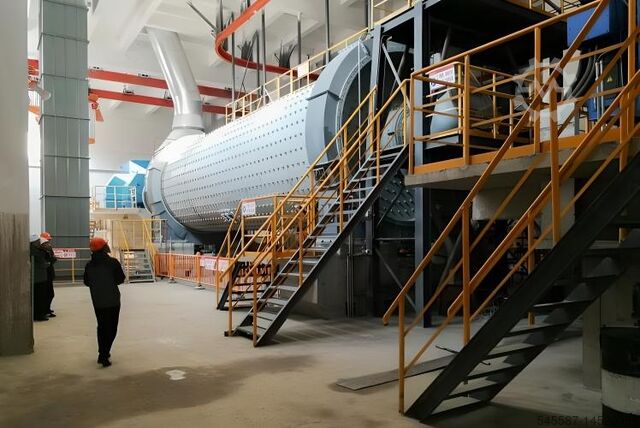
Used Rod Mills for sale (12,337)
Sort results
- Lowest price Highest price
- Newest listings Oldest listings
- Shortest distance Farthest distance
- Newest year of manufacture Oldest year of manufacture
- Latest update Oldest update
- Manufacturer A to Z Manufacturer Z to A
- Relevance
- Lowest price
- Price
- Highest price
- Price
- Newest listings
- Release date
- Oldest listings
- Release date
- Shortest distance
- Distance
- Farthest distance
- Distance
- Newest year of manufacture
- Year of construction
- Oldest year of manufacture
- Year of construction
- Latest update
- Update
- Oldest update
- Update
- Manufacturer A to Z
- Manufacturer
- Manufacturer Z to A
- Manufacturer
- designation from A to Z
- Description
- designation from Z to A
- Description
- Model from A to Z
- Model
- Model from Z to A
- Model
- Lowest reference
- Ref.No.
- Highest reference
- Ref.No.
- Shortest runtime
- Runtime
- Longest duration
- Runtime
- Relevance
- Relevance
Listing
Germany
6,672 km
Milling machine
HombakSF
Call
Condition: used, Year of construction: 1963, Stationary milling machine
Year of manufacture: 1963
Spindle diameter: 30 mm
Availability: short notice
Storage location: Röllbach
Dcsdpfx Aewka R Rsnqoi
Listing
Germany
6,672 km
Milling machine
MartinT 21
Call
Condition: used, Used machine
Equipment and technical data:
- Table size: 800 x 1000 mm
- Diameter of the table opening: 480/380/170/125 mm
- Taper of the milling spindle: MK 5
- Speed of the milling spindle: 3000 + 4500 + 6000 + 9000 rpm
- Height adjustment range of the milling spindle: 150 mm
- Distance from the center of the milling spindle to the front edge of the table: 400 mm
- Largest permissible tool diameter: 250 mm
- with wooden clamping jaws (can be replaced with metal clamping jaws upon request)
- with Holz-Her 3-roller feed device
- with heavy sliding table; runs on ball bearings on absolutely parallel-milled guide rails
- Weight: approx. 800 kg
Dcsdjyq T Ihopfx Anqoi
Availability: short-term
Location: 63934 Röllbach
Listing
Germany
6,672 km
Milling machine
SCMT 110
Call
Condition: used, Year of construction: 1986, Used machine
Year of manufacture: 1986
Features and technical data:
Motor: 4 kW
Speeds: 3000 / 4500 / 6000 / 8000 / 10000 rpm
Djdpfxoxllxao Anqjci
Spindle height adjustment via handwheel
Installation dimensions: 1200x80x1350 mm
Fence jaws made of wood
Incl. Holz Her 3-roller feed unit incl. stand
With chassis
Availability: short-term
Location: Röllbach
Listing
Germany
6,672 km
Panhans 250 milling machine
Panhans250
Call
Condition: used, Year of construction: 1984, Used machine
Year of manufacture: 2007
Equipment and technical data:
- Motor 4.7/5.7 kW, with pole-changing capability
- With right/left rotation
Dcjdjy R Halopfx Anqji
- Milling arbor MK 5 / 30 mm
- Height adjustment via handwheel
- Speeds 3000/4500/6000/9000 rpm
- Milling stop with metal jaws,
mounted on a round indexing plate and thus rotatable by 360°
- With table extension on both sides with extendable frame support
- With mounted roller table on the left side
Attention! The table extension was mounted later! To use the roller table, it must be removed!
- With 4-roller feed unit, year of manufacture 2007
- Dimensions: 240x65x120
- Weight approx. 900 kg
Availability: short-term
Location: 63934 Röllbach
Listing
Germany
6,672 km
Pivoting milling machine Topmaster T 92 ic
TopmasterT 92 ic
Call
Condition: used, Year of construction: 1999, Used machine
Year of manufacture: 1999
Features and technical data:
- with tilting spindle: 0° - 45°
- with aluminium sliding table
- Table size: 1100 x 620 mm
- Working height: 880 mm
- Sliding table dimensions: 900 x 200 mm
- Sliding table travel: 900 mm
- Spindle diameter: 30 mm
- Spindle stroke: 150 mm
- Speeds: 3100/4600/6200/8000 rpm
- Motor: 4 kW
- with 4-roller power feeder
- Dimensions: 1200 x 1000 x 1400 mm
- Weight: approx. 490 kg
Dcedpfxoy Si Arj Anqei
Availability: short-term
Location: 63934 Röllbach
Discover more used machines
Listing
Germany
6,672 km
Milling machine SCM T 100
SCMT 100
Call
Condition: used, Used machine
Equipment and technical data:
- Vertical spindle travel: 150 mm
- Spindle diameter: 30 mm
- Spindle speeds: 3,500 - 7,000 rpm
- With fixed spindle
- Motor: 2.5–3.1 HP
- Table: 830 x 700 mm
- Slotting cutters up to 340 mm
- With metal-jaw milling fence
Dodpfx Anoy Dkgpjqjci
(Note: The Aigner parallel fence shown in the photos is not included in the scope of delivery!)
- With 3-roller feed
Weight: 240 kg
Availability: short-term
Location: Röllbach
Listing
Zheng Zhou Shi
3,684 km
Ball mill for powder and mining plant
Mingyuan Ball Mill For Fine PowderPowder grinding mill for coal, silica
Call
Condition: new, functionality: fully functional, power: 55 kW (74.78 HP), Year of construction: 2026, Ball Mill for Powder and Mining Plant: Structure, Function, and Technical Details
A ball mill is a key grinding machine widely used in mining, metallurgy, cement, chemical, and powder-making industries. It is designed to grind various ores and other materials into fine powder through impact and attrition between steel balls and the material inside a rotating cylindrical shell. In mining plants, ball mills are essential for ore beneficiation, preparing materials for flotation, magnetic separation, or leaching processes. In powder production, they ensure uniform particle size and high surface area for further processing.
Working Principle
The ball mill operates on a simple yet effective principle: as the cylindrical shell rotates around its horizontal axis, the grinding media (steel or ceramic balls) are lifted along the inner wall by centrifugal force and friction. When they reach a certain height, they fall freely, striking and grinding the material below. This repeated motion causes both impact and abrasion, reducing the material to the desired fineness. The grinding process can be performed in dry or wet conditions depending on the application.
Structural Composition
A standard ball mill consists of several main components:
Feeding part: Equipped with a feeder or screw conveyor to ensure uniform material input.
Discharging part: Can be grate type or overflow type, depending on the discharge method.
Rotating part: The cylindrical shell made of steel plates, lined with wear-resistant liners.
Transmission system: Includes motor, reducer, small transmission gear, and electrical control.
Grinding media: Steel balls or ceramic balls of different diameters for efficient grinding.
The internal liner design and ball size distribution are optimized to achieve maximum grinding efficiency and minimal energy consumption.
Technical Details
Typical Specifications:
Feeding size: ≤25 mm
Discharge size: 0.074–0.4 mm
Capacity: 0.65–615 t/h (depending on model and material hardness)
Cylinder speed: 18–38 r/min
Power: 18.5–4500 kW
Liner material: High manganese steel, rubber, or alloy steel
Grinding media load: 30–45% of cylinder volume
Operating Modes:
Dry grinding: Suitable for materials that must remain moisture-free, such as cement clinker, limestone, and quartz.
Wet grinding: Common in ore beneficiation, where water or slurry improves grinding efficiency and particle uniformity.
Application in Mining Plants
In mining operations, ball mills are used after crushing to further reduce ore size and liberate valuable minerals. They are integrated into grinding circuits with classifiers, hydrocyclones, and flotation systems. The ground material is classified by size, and oversized particles are returned to the mill for regrinding. This closed-circuit system ensures consistent product fineness and efficient energy use.
Common Applications:
Gold, copper, iron, and zinc ore grinding
Cement clinker and slag processing
Silicate and ceramic powder production
Coal and mineral powder preparation
Dodpjq Nf U Esfx Anqoci
Conclusion
A ball mill is an indispensable piece of equipment in both powder production and mining beneficiation plants. Its ability to grind materials into fine, uniform particles makes it vital for downstream processes such as flotation, sintering, and chemical reactions.
Listing
San Giovanni Al Natisone
6,515 km
Mixed tie rod stock
Call
Condition: used, Mixed tie rod stock
Dodpfxjzkfwmj Anqeci
Listing
Germany
6,680 km
Swivel milling machine
HolzkraftMinimax twf 55 es
Call
Condition: used, Year of construction: 2023, Used machine
Year of manufacture: 2023
Condition: as new, machine is unused
Equipment and technical specifications:
- Spindle speeds: 3,500 / 6,000 / 8,000 / 10,000 rpm
- Milling spindle tilt: 0 to -45°
- Usable spindle length: 125 mm
- Spindle arbor diameter: 30 mm
- Speed display: LED indicator on the machine front
- Max. tool diameter (standard): 240 mm
- Max. lowerable tool diameter: 230 mm
- Max. tool diameter for profile milling: 240 mm
- Max. tool diameter for tenoning: 320 mm
- Working table length: 1,200 mm
- Working table width: 530 mm
- Table height: 900 mm
- Sliding table length: 1,200 mm
- Sliding table width: 360 mm
- Sliding table height: 142 mm
- Extraction port diameter: 2 × 120 mm
Dcedsw E Tzropfx Anqoi
- Main drive motor power: 5.0 kW
- Connection voltage: 400 V
- Mains frequency: 50 Hz
Dimensions: 1,200 × 2,000 mm
Weight: 510 kg
Availability: short-term
Location: Saxony-Anhalt
Listing
Ispringen
6,879 km
CNC Turning- and Milling Center
MORI SEIKINZ 2000 T3Y2
Call
Condition: used, Year of construction: 2011, Technical details:
standard turning dia.: 200
turning length: max. 810 mm
control: MSX-701 MAPPS IV
greates pass round over bed: 800 mm
Max. distance between centres: 1130 mm
max. turning diameter: 320 mm
max. workpiecediameter: 300 mm
bar material dia.: 65 mm
Traverse X-Axis 1: 210
Dedpfx Aoy S Tm Uonqoci
Traverse X-Axis 2: 210 mm
Traverse X-Axis 3: 210 mm
Traverse Y-Axis 1: 110 (+65/-45) mm
Traverse Y-Axis 2: 110 (+45,/-65) mm
Traverse Z-Axis 1: 300 mm
Traverse Z-Axis 3: 300 mm
Traverse Z-Axis 2: 810 mm
Traverse B-Axis: 870 mm
turning speed range - spindle: 5.000 1/min
Number of spindle speed ranges: 2 .
spindle nose: JIS A2-6
spindle bore: 73 mm
spindle bearing diameter: 120 mm
C-Axis: 0,001 °
turning speed range - spindle: 5.000 1/min
spindle nose: JIS A2-6
spindle bore: 73 mm
bar material dia. max: 65/52 mm
spindle bearing diameter: 120 mm
C-Axis: 0,001 °
Number of Turrets: 3 .
Number of tool stations: 16 x 3=48 pos
Schank height for square tool: 20 mm
Diameter of boring bar: 32 mm
turret changing time (4-stations): 0,18 sec
Number of driven tools: 16 x 3=48 pos
max. spindle speed driven tools: 6.000 U/min.
Rotary tool machining ability: M16 / Ø16 .
rapid traverse X-axis: 30 m/min
rapid traverse Y-axis: 20 m/min
rapid traverse Z-axis: 50 m/min
drive capacity - spindle motor: 25 / 22 kW
power capacity - driven tools: 7,5 / 5,5 kW
total power requirement: 92,7 kVA
weight of the machine ca.: 9,4 t
dimensions of the machine ca.: 4,0 x 2,8 x 2,4 m
Accerories
Chip conveyor
Coolantsystem
C-axis in main and sub spindle
Y-axis 2 x
part counter
total counter
tool setting
Overhead partsgripper with conveyor belt.
Spindle 1 Chuck SMW KNCS-N 210 / 52 mm
Spindle 2 Collet Chuck Hainbuch Spanntop nova Kombi Axfix 65
Robot interface
CNC Turning- and Milling Center
MORI SEIKI NZ 2000 T3Y2
The NZ2000 T3Y has 2 spindles and 3 turrets, and 2 turrets have the Y-axis function and built-in milling motors. This not only allows synchronized machining using 3 turrets, but also achieves heavy-duty cutting and high-speed machining using rotary tools thanks to the built-in motor turrets.
*
Listing
Borken
7,009 km
Agitator mill
RührwerksmühlePML 2 Typ: FPML2 Premium
Call
Condition: good (used), Bühler PML2 Premium Laboratory Stirred Ball Mill
Manufacturer: Bühler LTD, Uzwil, Switzerland
Type: FPML2 Premium / PML2 Premium
Machine Type: Laboratory Stirred Ball Mill / Bead Mill
Application Area: Process development, dispersion, and fine grinding at laboratory scale
For sale is a laboratory stirred ball mill from Bühler. The PML2 Premium is a modular laboratory system for the development and optimization of grinding and dispersing processes at laboratory scale. The system is suitable for research and development work as well as small-batch trials of various products.
Application areas:
Automotive OEM and refinish paint systems
Anti-corrosion paints
Industrial paints
Color filters for display technologies
Metal, ceramic and glass pastes
Inkjet inks
Liquid printing inks
Liquid toners
Agrochemicals
Pigment concentrates
TiO₂ dispersions
Adhesives and sealants
Technical data:
Active grinding chamber volume: 0.2 - 1.2 dm³
Volume of grinding media tank: 2.4 dm³
Max. grinding media pressure: 7 bar
Motor power: 2.2 kW at 3,000 rpm
Rotor speed: 500 - 4,500 rpm
Cooling water connection inlet: G 1/2"
Cooling water connection outlet: G 1/2"
Compressed air connection: G 1/4"
Power connection: 400 V
Frequency: 50 Hz
Phases: 3 + N + PE
Rated current: 16 A
Machine dimensions approx.: 617 x 458 x 862 mm (W x D x H)
Machine weight approx.: 150 kg
Equipment:
Bühler PML2 Premium grinding system
Control panel / switch cabinet
Grinding container system
Pump units according to scope of delivery
Piping and connections
Existing documentation
Further accessories as shown in the pictures
Weights of the components:
Machine: approx. 150 kg
Hose pump: approx. 30 kg
Gear pump: approx. 25 kg
Laboratory hose pump: approx. 8 kg
Attachable container: approx. 5 kg
Tray: approx. 1.5 kg
Condition:
Used
From a laboratory environment
Optical condition as shown in the pictures
Functional scope not fully tested
Dcodjzhkcpspfx Anqji
Inspection possible by appointment
Scope of delivery:
Bühler PML2 Premium laboratory stirred ball mill
Control cabinet
Existing attachments
Documentation
Further accessories as shown in the pictures
Availability: upon agreement.
Scope of delivery as shown in the pictures.
Subject to changes and errors in technical data and prior sale.
Clickout
Bad Friedrichshall
6,840 km
3-axis portal milling machine
HURCODCX32/50T
Condition: used, Year of construction: 2010, operating hours: 38,353 h, machine/vehicle number: MC54G-16201060AKA, Travel ranges (X/Y/Z): 3,200/2,100/920 mm, max. spindle speed: 6,000 rpm, tool holder: SK50, chip conveyor, control system: HURCO Winmax, 40-position tool changer, cooling unit: HABOR, coolant: R407C.
Dcsdpfezha Etjx Anqsi
Listing
Zuzenhausen
6,869 km
Cutting mills
sonstigeBruno Folcieri RC TOP 1000 x 700 x 530
Call
Condition: used, machine/vehicle number: 14016, Rotor diameter: 530 mm
Rotor width: 1000 mm
Rotor knives: 4 x 2
Dcodpfjyuz Dxox Anqsi
Stator knives: 2
Feed opening approx. 700 x 1000 mm
Drive motor: 90 kW
Listing
Zuzenhausen
6,869 km
Cutting mills
GetechaRS 1333 A5.11
Call
Condition: used, machine/vehicle number: 5257, Inlet: 800 x 200 mm
Rotor diameter: 200 mm
Width: 880 mm
Rotor blades: 3
Dcodpfx Aoyr I E Rsnqsi
Stator blades: 2
Drive: 5.5 kW
Listing
Heilbronn
6,843 km
Universal Milling Machine
Deckel MahoDMU 50M
Call
Condition: good (used), functionality: fully functional, travel distance X-axis: 500 mm, travel distance Y-axis: 400 mm, travel distance Z-axis: 400 mm, Heidenhain TNC 310 cnc control
C and B-axis manual with display
swivel rotary table
electronical hand wheel
Dedpfx Asy E Iztonqjci
coolant device
Technische Daten:
Längsweg (X-Achse) / X-travel longitudinal 500 mm
Querweg (Y-Achse) / Y-travel cross 400 mm
Senkrechtweg (Z-Achse) / Z-travel vertical 400 mm
Werkzeugaufnahme / spindle taper SK40
Drehzahlbereich / spindle speed range 20-4500 UpM
Vorschub / feed 5000 mm/min.
Gewicht ca. / weight ca. 2800 kg
Technische Daten, Zubehör und Beschreibung der Maschine sind unverbindlich -
Technical data, accessories and description of the machine are not binding.
Listing
Δέλτα
5,716 km
CNC turning and milling center
DMGCTX 510 eco
Call
Condition: used, Year of construction: 2010, operating hours: 29,870 h, functionality: fully functional, machine/vehicle number: 8045000191A, DMG CTX 510 eco – CNC Universal Slant-Bed Lathe
Manufacturer: DMG (Gildemeister / DMG MORI Group)
Model: CTX 510 eco (Ecoline Series)
Year of Manufacture: 2010
Control Unit: Siemens
Overview
Dedpjy D Il Aofx Anqjci
The DMG CTX 510 eco is a robust and powerful universal CNC lathe designed for heavy-duty turning and precision machining. Featuring a high-torque spindle and a 45° slant-bed design for excellent chip flow and thermal stability, this machine is ideal for both small batches and production runs.
Key Technical Specifications
Max. Swing Diameter: 680 mm
Max. Turning Diameter: 465 mm
Max. Turning Length (Z-axis): 1,050 mm
Spindle Speed: 3,250 RPM
Main Spindle Power: 33 kW (40% DC) / 22 kW (100% DC)
Spindle Torque: 630 Nm (High torque for heavy cutting)
Bar Capacity: 76 mm
Rapid Traverse (X/Z): 30 m/min
Turret & Tooling
Number of Tool Stations: 12-position turret
Tool Holder Type: VDI 40
Driven Tools (C-Axis): Equipped with C-Axis and milling capability for 3-axis machining.
Included Equipment & Features
Steady Rest ,Tailstock,Chip Conveyor
Coolant System: High-pressure pump and tank.
Physical Dimensions
Weight: Approx. 7,800 kg
Footprint: Approx. 4.5m x 2.4m x 2.0m
Condition
Well-maintained machine from a professional environment.
Original DMG signature build from the FAMOT factory.
Available for inspection
Listing
Zheng Zhou Shi
3,684 km
Mill / grinding mill
Batch Ball Mill, Silica grinding millQuartz ball mill, silica powder grinding
Call
Year of construction: 2026, condition: new, ceramic ball mill ,Batch ball mill ,also called ceramic ball mill ,it is used for fine grinding of feldspar,quartz,clay,ore and so on.The ceramic ball mill is mainly used for material mixing, grinding,uniform product fineness,and saving power.It can be dry or wet.The machine can use different liner types according to production needs to meet different needs.The fineness of the grinding operation is controlled by the grinding time
ceramic ball mill Working principle
when ball mill working,steel balls inside drum will rotate with the drum to some height,and then steel balls fall down with materials to reach the point of grinding.
Working Principle of Ceramic ball mill
ceramic ball mill ,Intermittent ball mill grinding operation is finished in the cylinder body. When the cylinder rotates, materials ascend to a certain height and then fall along a certain path due to the balls' gravity. Two forces are generated on the balls inside. One is the force on balls through tangent direction; the other is a opposite force in the contrast to the diameter of balls, as a result of the force generated when the balls slide down. These two forces will constitute a couple for the steel balls. The balls are squeezed between the cylinder and the adjacent steel balls, so the couple can make unequal-sized friction force. The balls will orbit along with the cylinder axis and then fall down, which can produce a strong impact force on the ores in the cylinder body and, as a result, the ores will be crushed. In conclusion, the ores in the cylinder body are mainly crushed by composite effect of peeling force, impact force and extrusion force.
Ceramic ball mill also named Intermittent ball mill which adopts the wet intermittent operation, is used for fine grinding and mixing the material such as feldspar, quartz, clay ceramic raw materials. The discharging and the mud size can through through 1000 sieve pore. This machine is high milling machinery, materials should be Broken in the fineness of the state into the grinding mill to get the highest efficiency and economic benefits.
The cement mill is key equipment for the grinding process of the cement clinker after the crushing process of it. It is mainly used in the cement silicate product industry. After long term design and manufacture of the cement mill, our company now has series of cement mill with various specifications to meet with different requirement from our customers.
Features of Cement Mill
Dcodsvzx Aujpfx Anqji
Our company adopts suitable transmission methods according to different specifications. We have brim drive and center drive as transmission form. The cylinder adopts new type step lining to increase the grinding area. And it is easily repairable and changeable. The new designed separate-chambered structure adopts flexible lifting blade and fixed lifting blade and it is easily fixed and repaired.
Technical Details
We have different models and options for different requirements, please contact us for more info.
Listing
Zheng Zhou Shi
3,684 km
Cement mill,clinker grinding plant
Clinker grinding mill / cement ball millcement grinding with air classifier
Call
Year of construction: 2026, condition: new, functionality: fully functional, A cement clinker grinding mill is a specialized equipment used to grind the hard nodular clinker into fine powder, which is cement. Most cement is currently ground in ball mills and also vertical roller mills, which are more effective than ball mills.
Here are key features and information about cement clinker grinding mills:
1. Raw Materials:
- The main raw material for making cement is clinker, which is produced by sintering limestone and clay. Other materials such as gypsum, fly ash, or slag may also be added during the grinding process to achieve specific properties.
2. Grinding Process:
- The clinker and other additives are finely ground in the grinding mill to produce cement. The grinding process is a crucial step in cement production and contributes significantly to the final quality of the product.
3. Types of Mills:
- Ball Mills: Traditional ball mills are commonly used for grinding clinker. They operate by rotating a cylinder with steel grinding balls, causing the balls to fall back into the cylinder and onto the material to be ground.
- Vertical Roller Mills (VRM): VRM technology has become increasingly popular for clinker grinding. These mills use a rotating table with rollers to crush and grind the clinker, providing energy efficiency and a smaller footprint compared to ball mills.
4. Gypsum Addition:
- Gypsum is often added during the grinding process to control the setting time of the cement. It prevents flash setting of the clinker and facilitates the formation of a workable and pumpable cement paste.
5. Quality Control:
- Quality control measures, such as monitoring the fineness of the cement, chemical composition, and other properties, are implemented during the grinding process to ensure the final product meets the required specifications and standards.
6. Clinker Cooling:
- Before grinding, the clinker is produced by heating the raw materials in a kiln. The clinker is then cooled before entering the grinding mill to prevent excessive heat build-up during grinding.
Dcedpfx Aoq Nfbhsnqji
7. Dust Collection and Environmental Considerations:
- Dust collectors and air pollution control systems are often employed to capture and control the dust generated during the grinding process, addressing environmental and safety concerns.
8. Packaging and Storage:
- After grinding, the cement is typically stored in silos before being packaged in bags or dispatched in bulk for distribution to construction sites or for sale in the market.
Cement clinker grinding mills play a crucial role in the cement production process, and advancements in technology continue to improve the efficiency and environmental sustainability of the grinding process.
Technical details
We have different options for different requirements, please contact our team for more info.
Listing
Zheng Zhou Shi
3,684 km
Grinding mill
Abrasive Aluminium Oxide Grinding PlantMicrosilica powder Grinding Mill
Call
Condition: new, functionality: fully functional, Year of construction: 2026, Microsilica, also known as silica fume or condensed silica fume, is a byproduct of producing silicon metal or ferrosilicon alloys. Microsilica powder grinding mills are used to process microsilica powder for various applications, including the production of high-performance concrete, refractory materials, and other specialty products. Grinding mills play a crucial role in reducing microsilica particles to the desired fineness. Here are some key aspects related to microsilica powder grinding mills:
1. Mill Types:
- Ball Mill: A traditional ball mill is commonly used for grinding microsilica. It relies on the impact and attrition forces to reduce particle size. It is effective for both wet and dry grinding.
- Vertical Roller Mill (VRM): VRM technology is known for its energy efficiency and the ability to grind materials into a narrow particle size distribution. It is suitable for grinding microsilica.
2. Grinding Process:
- The grinding process involves feeding microsilica particles into the grinding mill. The grinding media (balls or rollers) inside the mill crush and grind the microsilica particles into a fine powder.
3. Particle Size Distribution:
- Controlling the particle size distribution is crucial for achieving the desired properties in the final product. The grinding mill should be equipped with mechanisms to control and monitor particle size distribution.
4. Mill Design and Components:
- The design of the grinding mill, including the type of grinding media, liners, and the grinding chamber, influences the efficiency and performance of the milling process for microsilica.
5. Air Classification (Optional):
- In some cases, air classification systems are integrated into the grinding process to separate fine particles from coarser ones, ensuring a more uniform product.
6. Control Systems:
- Advanced grinding mills often come with automated control systems to regulate various parameters such as feed rate, mill speed, and product fineness.
7. Material Handling:
- Efficient material handling systems are essential to transport microsilica to and from the grinding mill. This may involve pneumatic or mechanical conveying systems.
8. Cooling Systems:
- Grinding processes generate heat, and efficient cooling systems are often integrated to maintain the temperature within a controlled range.
9. Dust Collection:
- Microsilica powder grinding can produce airborne dust. Dust collection systems are necessary to maintain a clean and safe working environment.
10. Quality Assurance:
- Grinding mills for microsilica should be equipped with quality assurance features, such as in-line particle size analysis, to ensure consistency in the final product.
When selecting a microsilica powder grinding mill, factors such as production capacity, energy efficiency, and the required particle size distribution should be considered. Additionally, mills should be chosen based on the specific characteristics of the microsilica being processed and the intended application of the final product.
Dcjdpfxoq Nxp So Anqoi
Listing
Zheng Zhou Shi
3,684 km
Powder grinding mill
ball mill for mining &fine powder makingsilica/Barite/limestone powder plant
Call
Condition: new, Year of construction: 2026, power: 300 kW (407.89 HP), Ball Mill for Mining & Fine Powder Making:
A ball mill is a fundamental grinding device widely used in mining, metallurgy, cement, and chemical industries. It is designed to grind ores and other materials into fine powder through impact and attrition between steel balls and the material inside a rotating cylindrical shell. In mining plants, ball mills are essential for ore beneficiation, while in powder-making industries, they ensure uniform particle size and high surface area for further processing.
Working Principle
The ball mill operates on the principle of impact and friction. As the cylindrical shell rotates around its horizontal axis, the grinding media—usually steel or ceramic balls—are lifted along the inner wall by centrifugal force and friction. When they reach a certain height, they fall freely, striking and grinding the material below. This repeated motion breaks down the material into fine particles. The process can be carried out in dry or wet conditions depending on the application.
Structural Composition
A standard ball mill consists of several main components:
Feeding part: Ensures uniform material input through a feeder or screw conveyor.
Discharging part: Can be grate type or overflow type, depending on the discharge method.
Rotating part: The cylindrical shell made of steel plates, lined with wear-resistant liners.
Transmission system: Includes motor, reducer, small transmission gear, and electrical control.
Grinding media: Steel or ceramic balls of various diameters for efficient grinding.
The internal liner design and ball size distribution are optimized to achieve maximum grinding efficiency and minimal energy consumption.
Technical Details/Typical Specifications:
Feeding size: ≤25 mm
Discharge size: 0.074–0.4 mm
Capacity: 0.65–615 t/h (depending on model and material hardness)
Cylinder speed: 18–38 r/min
Power: 18.5–4500 kW
Liner material: High manganese steel, rubber, or alloy steel
Grinding media load: 30–45% of cylinder volume
Operating Modes:
Dry grinding: Used for materials that must remain moisture-free, such as cement clinker, limestone, and quartz.
Wet grinding: Common in ore beneficiation, where water or slurry improves grinding efficiency and particle uniformity.
Application in Mining and Powder Production
Dcsdpfsq Ngafex Anqsi
In mining operations, ball mills are used after crushing to further reduce ore size and liberate valuable minerals. They are integrated into grinding circuits with classifiers, hydrocyclones, and flotation systems. The ground material is classified by size, and oversized particles are returned to the mill for regrinding. This closed-circuit system ensures consistent product fineness and efficient energy use.
In fine powder production, ball mills are used to produce materials such as silicate, ceramic powder, refractory materials, and chemical raw materials. The uniform particle size achieved by ball milling enhances product quality and performance in downstream applications.
Conclusion
A ball mill is an indispensable piece of equipment for both mining and fine powder making. Its ability to grind materials into fine, uniform particles makes it vital for ore beneficiation and industrial powder production. With flexible configurations, high efficiency, and reliable operation, modern ball mills provide a cost-effective and energy-efficient solution for large-scale grinding, ensuring consistent quality and productivity across diverse applications.
Listing
Zheng Zhou Shi
3,684 km
Ball Mill for Ore mining & sand grinding
batch ball mill & wet mining ball mill2400X4500 ball mill
Call
Condition: new, fuel type: electric, Year of construction: 2026, machine/vehicle number: 2700x4500, Equipment: low noise, Main Technical parameters of the ball mill
Drum diameter: 2400mm
Drum length: 4500mm
Motor power: 320KW
Max input size: 25mm
Capacity:35-60 t/h
Weight: 72Tons
Ball loading: 30Tons
Besides this model, we also have the other models like 2700x4500, 3200x4500, 1830x13000mm, and so on, and we can also offer customerization service, we can also provide complete grinding solution for various industries like cement, quartz, ore beneficiation plant, and so on, welcome to contact us for more info.
A ball mill is a common grinding machine used to grind and blend materials for use in mineral processing, including ore mining and the production of silica (silicon dioxide). When it comes to ore mining and silica grinding, the characteristics of the ore and the final product requirements will play a crucial role in selecting the appropriate ball mill.
Here are some considerations for using a ball mill in ore mining and silica grinding:
1. Ore Characteristics:
- Hardness: The hardness of the ore determines the type of ball mill that is most suitable. Harder ores may require a more robust and wear-resistant ball mill.
- Particle Size Distribution: The initial particle size of the ore affects the grinding process. Different ores may require different approaches to achieve the desired particle size.
2. Silica Grinding:
- Silica Content: If the primary goal is to grind silica, it's important to consider the initial silica content and the desired final particle size. Silica grinding often requires special attention to prevent excessive wear on the milling equipment.
3. Ball Mill Type:
- Overflow vs. Grate Discharge: The type of discharge from the ball mill can impact the final product and the grinding efficiency. Overflow mills are generally used for most grinding applications, while grate discharge mills are more suitable for certain types of ores.
4. Mill Size and Capacity:
- Mill Diameter and Length: The size of the ball mill should be selected based on the amount of material to be ground and the desired throughput.
- Capacity: Ensure that the chosen ball mill has the capacity to handle the required volume of material efficiently.
5. Grinding Media:
- Material and Size: The choice of grinding media (balls or cylpebs) and their size depends on the hardness of the ore and the desired final particle size. Different grinding media materials can impact the purity of silica during grinding.
6. Liners and Lifting Aids:
- Liners: Consider the type of liners used in the ball mill to protect the shell and optimize the grinding process.
- Lifting Aids: Some mills use lifting aids to enhance the grinding action and promote better mixing of the material.
7. Control and Monitoring Systems:
- Automation: Utilize control systems to automate the milling process and ensure optimal performance.
- Monitoring: Regularly monitor the milling process to adjust parameters as needed for consistent and efficient operation.
8. Safety Measures:
- Safety Systems: Implement safety features to protect personnel and equipment during operation.
Dodpoq Igiijfx Anqoci
Always follow the manufacturer's recommendations and guidelines for operation and maintenance to ensure safe and efficient use of the ball mill in ore mining and silica grinding applications.
Trust Seal
Dealers certified through Machineseeker

Listing
Tápiószőlős
6,036 km
CNC turning and milling center
EMCOHyperturn 665MC Plus
Call
Condition: good (used), Year of construction: 2007, operating hours: 4,262 h, functionality: fully functional, machine/vehicle number: R7AV13, turning diameter: 65 mm, Can be powered up, the condition of the bar feeder is unknown, removed from production due to arrival of a new machine. On both turret heads, the use of a driven tool holder is possible in all positions.
Dcjdpoyxxhqjfx Anqsi
Listing
Tukums
6,059 km
Drilling and milling machine
Brusa & GarboliFORUS
Call
Condition: used, Year of construction: 2011, BRUSA & GARBOLI FORUS
Dcsdpjzhxwhofx Anqei
Listing
Waiblingen
6,830 km
Milling machine
DECKELFP3A CNC
Call
Condition: used, Year of construction: 1984, machine/vehicle number: 2804-1181, travel distance X-axis: 500 mm, travel distance Y-axis: 400 mm, travel distance Z-axis: 400 mm, table width: 450 mm, table length: 700 mm, rotational speed (max.): 3,150 rpm, rotational speed (min.): 32 rpm, Used DECKEL tool milling machine model FP 3A CNC
Djdpfx Aneyrnvvoqsci
Table size: 700x450mm, spindle taper SK40 DIN 2080,
Travel paths: X/Y/Z = 500/400/400mm, spindle speeds from 31.5 to 3150 rpm (21 working spindle speeds), feed rate 5-1250mm/min, rapid traverse in X, Y and Z 2500mm/min, coolant system and machine feet.
Year of manufacture: 1984; the machine was overhauled by Harich in 2010.
The machine is located at our site in 71334 Waiblingen-Beinstein and can of course be inspected. Please contact us.
Listing
Sankt Daniel
6,545 km
Accessories for Deckel milling machine
DECKEL
Call
Condition: excellent (used), High-speed spindle head,
Impact head,
Dsdpfjd Nauxex Anqoci
SK 40 tool holders,
Collets,
Fixed angular table: 420 x 800 mm,
Swiveling angular table: 240 x 700 mm,
Dividing head.
We make it easier for you to find: "rod mills"
You will receive new offers immediately and free of charge via e-mail
You can easily terminate the search request at any time
Used Rod Mills (12,337)
Search Machineseeker now with more than 2,00,000 used machines:Browse through the most popular machine descriptions:
This may be of interest to you