Used Thread Milling for sale (11,210)
Sort results
- Lowest price Highest price
- Newest listings Oldest listings
- Shortest distance Farthest distance
- Newest year of manufacture Oldest year of manufacture
- Latest update Oldest update
- Manufacturer A to Z Manufacturer Z to A
- Relevance
- Lowest price
- Price
- Highest price
- Price
- Newest listings
- Release date
- Oldest listings
- Release date
- Shortest distance
- Distance
- Farthest distance
- Distance
- Newest year of manufacture
- Year of construction
- Oldest year of manufacture
- Year of construction
- Latest update
- Update
- Oldest update
- Update
- Manufacturer A to Z
- Manufacturer
- Manufacturer Z to A
- Manufacturer
- designation from A to Z
- Description
- designation from Z to A
- Description
- Model from A to Z
- Model
- Model from Z to A
- Model
- Lowest reference
- Ref.No.
- Highest reference
- Ref.No.
- Shortest runtime
- Runtime
- Longest duration
- Runtime
- Relevance
- Relevance
Listing
Zheng Zhou Shi
3,684 km
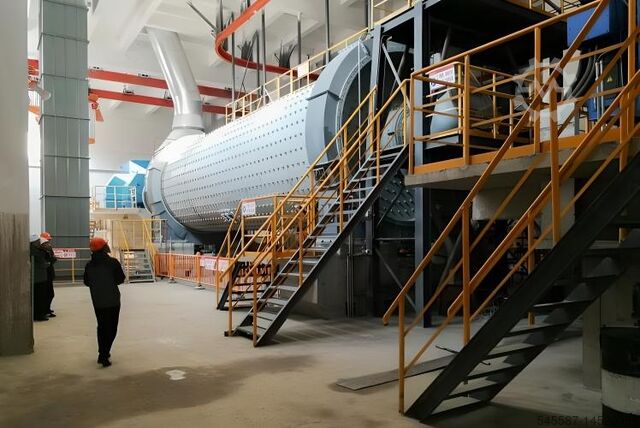
Ball mill for powder and mining plant
Mingyuan Ball Mill For Fine PowderPowder grinding mill for coal, silica
Call
Condition: new, functionality: fully functional, power: 55 kW (74.78 HP), Year of construction: 2026, Ball Mill for Powder and Mining Plant: Structure, Function, and Technical Details
A ball mill is a key grinding machine widely used in mining, metallurgy, cement, chemical, and powder-making industries. It is designed to grind various ores and other materials into fine powder through impact and attrition between steel balls and the material inside a rotating cylindrical shell. In mining plants, ball mills are essential for ore beneficiation, preparing materials for flotation, magnetic separation, or leaching processes. In powder production, they ensure uniform particle size and high surface area for further processing.
Working Principle
The ball mill operates on a simple yet effective principle: as the cylindrical shell rotates around its horizontal axis, the grinding media (steel or ceramic balls) are lifted along the inner wall by centrifugal force and friction. When they reach a certain height, they fall freely, striking and grinding the material below. This repeated motion causes both impact and abrasion, reducing the material to the desired fineness. The grinding process can be performed in dry or wet conditions depending on the application.
Structural Composition
A standard ball mill consists of several main components:
Feeding part: Equipped with a feeder or screw conveyor to ensure uniform material input.
Discharging part: Can be grate type or overflow type, depending on the discharge method.
Kwsdpfx Abjq Nf U Ejcsw
Rotating part: The cylindrical shell made of steel plates, lined with wear-resistant liners.
Transmission system: Includes motor, reducer, small transmission gear, and electrical control.
Grinding media: Steel balls or ceramic balls of different diameters for efficient grinding.
The internal liner design and ball size distribution are optimized to achieve maximum grinding efficiency and minimal energy consumption.
Technical Details
Typical Specifications:
Feeding size: ≤25 mm
Discharge size: 0.074–0.4 mm
Capacity: 0.65–615 t/h (depending on model and material hardness)
Cylinder speed: 18–38 r/min
Power: 18.5–4500 kW
Liner material: High manganese steel, rubber, or alloy steel
Grinding media load: 30–45% of cylinder volume
Operating Modes:
Dry grinding: Suitable for materials that must remain moisture-free, such as cement clinker, limestone, and quartz.
Wet grinding: Common in ore beneficiation, where water or slurry improves grinding efficiency and particle uniformity.
Application in Mining Plants
In mining operations, ball mills are used after crushing to further reduce ore size and liberate valuable minerals. They are integrated into grinding circuits with classifiers, hydrocyclones, and flotation systems. The ground material is classified by size, and oversized particles are returned to the mill for regrinding. This closed-circuit system ensures consistent product fineness and efficient energy use.
Common Applications:
Gold, copper, iron, and zinc ore grinding
Cement clinker and slag processing
Silicate and ceramic powder production
Coal and mineral powder preparation
Conclusion
A ball mill is an indispensable piece of equipment in both powder production and mining beneficiation plants. Its ability to grind materials into fine, uniform particles makes it vital for downstream processes such as flotation, sintering, and chemical reactions.
Listing
Zheng Zhou Shi
3,684 km
Mill / grinding mill
Batch Ball Mill, Silica grinding millQuartz ball mill, silica powder grinding
Call
Year of construction: 2026, condition: new, ceramic ball mill ,Batch ball mill ,also called ceramic ball mill ,it is used for fine grinding of feldspar,quartz,clay,ore and so on.The ceramic ball mill is mainly used for material mixing, grinding,uniform product fineness,and saving power.It can be dry or wet.The machine can use different liner types according to production needs to meet different needs.The fineness of the grinding operation is controlled by the grinding time
ceramic ball mill Working principle
when ball mill working,steel balls inside drum will rotate with the drum to some height,and then steel balls fall down with materials to reach the point of grinding.
Working Principle of Ceramic ball mill
ceramic ball mill ,Intermittent ball mill grinding operation is finished in the cylinder body. When the cylinder rotates, materials ascend to a certain height and then fall along a certain path due to the balls' gravity. Two forces are generated on the balls inside. One is the force on balls through tangent direction; the other is a opposite force in the contrast to the diameter of balls, as a result of the force generated when the balls slide down. These two forces will constitute a couple for the steel balls. The balls are squeezed between the cylinder and the adjacent steel balls, so the couple can make unequal-sized friction force. The balls will orbit along with the cylinder axis and then fall down, which can produce a strong impact force on the ores in the cylinder body and, as a result, the ores will be crushed. In conclusion, the ores in the cylinder body are mainly crushed by composite effect of peeling force, impact force and extrusion force.
Ceramic ball mill also named Intermittent ball mill which adopts the wet intermittent operation, is used for fine grinding and mixing the material such as feldspar, quartz, clay ceramic raw materials. The discharging and the mud size can through through 1000 sieve pore. This machine is high milling machinery, materials should be Broken in the fineness of the state into the grinding mill to get the highest efficiency and economic benefits.
The cement mill is key equipment for the grinding process of the cement clinker after the crushing process of it. It is mainly used in the cement silicate product industry. After long term design and manufacture of the cement mill, our company now has series of cement mill with various specifications to meet with different requirement from our customers.
Features of Cement Mill
Our company adopts suitable transmission methods according to different specifications. We have brim drive and center drive as transmission form. The cylinder adopts new type step lining to increase the grinding area. And it is easily repairable and changeable. The new designed separate-chambered structure adopts flexible lifting blade and fixed lifting blade and it is easily fixed and repaired.
Technical Details
We have different models and options for different requirements, please contact us for more info.
Kwedpfjvzx Auox Abcsw
Listing
Zheng Zhou Shi
3,684 km
Cement mill,clinker grinding plant
Clinker grinding mill / cement ball millcement grinding with air classifier
Call
Year of construction: 2026, condition: new, functionality: fully functional, A cement clinker grinding mill is a specialized equipment used to grind the hard nodular clinker into fine powder, which is cement. Most cement is currently ground in ball mills and also vertical roller mills, which are more effective than ball mills.
Here are key features and information about cement clinker grinding mills:
1. Raw Materials:
- The main raw material for making cement is clinker, which is produced by sintering limestone and clay. Other materials such as gypsum, fly ash, or slag may also be added during the grinding process to achieve specific properties.
2. Grinding Process:
- The clinker and other additives are finely ground in the grinding mill to produce cement. The grinding process is a crucial step in cement production and contributes significantly to the final quality of the product.
3. Types of Mills:
- Ball Mills: Traditional ball mills are commonly used for grinding clinker. They operate by rotating a cylinder with steel grinding balls, causing the balls to fall back into the cylinder and onto the material to be ground.
- Vertical Roller Mills (VRM): VRM technology has become increasingly popular for clinker grinding. These mills use a rotating table with rollers to crush and grind the clinker, providing energy efficiency and a smaller footprint compared to ball mills.
4. Gypsum Addition:
Kwodpfx Aboq Nfbhscew
- Gypsum is often added during the grinding process to control the setting time of the cement. It prevents flash setting of the clinker and facilitates the formation of a workable and pumpable cement paste.
5. Quality Control:
- Quality control measures, such as monitoring the fineness of the cement, chemical composition, and other properties, are implemented during the grinding process to ensure the final product meets the required specifications and standards.
6. Clinker Cooling:
- Before grinding, the clinker is produced by heating the raw materials in a kiln. The clinker is then cooled before entering the grinding mill to prevent excessive heat build-up during grinding.
7. Dust Collection and Environmental Considerations:
- Dust collectors and air pollution control systems are often employed to capture and control the dust generated during the grinding process, addressing environmental and safety concerns.
8. Packaging and Storage:
- After grinding, the cement is typically stored in silos before being packaged in bags or dispatched in bulk for distribution to construction sites or for sale in the market.
Cement clinker grinding mills play a crucial role in the cement production process, and advancements in technology continue to improve the efficiency and environmental sustainability of the grinding process.
Technical details
We have different options for different requirements, please contact our team for more info.

Get information now
+44 20 806 810 84
+44 20 806 810 84
List now
*per listing / month
Listing
Zheng Zhou Shi
3,684 km
Grinding mill
Abrasive Aluminium Oxide Grinding PlantMicrosilica powder Grinding Mill
Call
Condition: new, functionality: fully functional, Year of construction: 2026, Microsilica, also known as silica fume or condensed silica fume, is a byproduct of producing silicon metal or ferrosilicon alloys. Microsilica powder grinding mills are used to process microsilica powder for various applications, including the production of high-performance concrete, refractory materials, and other specialty products. Grinding mills play a crucial role in reducing microsilica particles to the desired fineness. Here are some key aspects related to microsilica powder grinding mills:
1. Mill Types:
- Ball Mill: A traditional ball mill is commonly used for grinding microsilica. It relies on the impact and attrition forces to reduce particle size. It is effective for both wet and dry grinding.
- Vertical Roller Mill (VRM): VRM technology is known for its energy efficiency and the ability to grind materials into a narrow particle size distribution. It is suitable for grinding microsilica.
2. Grinding Process:
- The grinding process involves feeding microsilica particles into the grinding mill. The grinding media (balls or rollers) inside the mill crush and grind the microsilica particles into a fine powder.
3. Particle Size Distribution:
- Controlling the particle size distribution is crucial for achieving the desired properties in the final product. The grinding mill should be equipped with mechanisms to control and monitor particle size distribution.
4. Mill Design and Components:
- The design of the grinding mill, including the type of grinding media, liners, and the grinding chamber, influences the efficiency and performance of the milling process for microsilica.
5. Air Classification (Optional):
- In some cases, air classification systems are integrated into the grinding process to separate fine particles from coarser ones, ensuring a more uniform product.
6. Control Systems:
- Advanced grinding mills often come with automated control systems to regulate various parameters such as feed rate, mill speed, and product fineness.
7. Material Handling:
- Efficient material handling systems are essential to transport microsilica to and from the grinding mill. This may involve pneumatic or mechanical conveying systems.
8. Cooling Systems:
- Grinding processes generate heat, and efficient cooling systems are often integrated to maintain the temperature within a controlled range.
Kjdpfjq Nxp Sjx Abcsww
9. Dust Collection:
- Microsilica powder grinding can produce airborne dust. Dust collection systems are necessary to maintain a clean and safe working environment.
10. Quality Assurance:
- Grinding mills for microsilica should be equipped with quality assurance features, such as in-line particle size analysis, to ensure consistency in the final product.
When selecting a microsilica powder grinding mill, factors such as production capacity, energy efficiency, and the required particle size distribution should be considered. Additionally, mills should be chosen based on the specific characteristics of the microsilica being processed and the intended application of the final product.
Listing
Zheng Zhou Shi
3,684 km
Powder grinding mill
ball mill for mining &fine powder makingsilica/Barite/limestone powder plant
Call
Condition: new, Year of construction: 2026, power: 300 kW (407.89 HP), Ball Mill for Mining & Fine Powder Making:
A ball mill is a fundamental grinding device widely used in mining, metallurgy, cement, and chemical industries. It is designed to grind ores and other materials into fine powder through impact and attrition between steel balls and the material inside a rotating cylindrical shell. In mining plants, ball mills are essential for ore beneficiation, while in powder-making industries, they ensure uniform particle size and high surface area for further processing.
Working Principle
The ball mill operates on the principle of impact and friction. As the cylindrical shell rotates around its horizontal axis, the grinding media—usually steel or ceramic balls—are lifted along the inner wall by centrifugal force and friction. When they reach a certain height, they fall freely, striking and grinding the material below. This repeated motion breaks down the material into fine particles. The process can be carried out in dry or wet conditions depending on the application.
Structural Composition
A standard ball mill consists of several main components:
Feeding part: Ensures uniform material input through a feeder or screw conveyor.
Discharging part: Can be grate type or overflow type, depending on the discharge method.
Rotating part: The cylindrical shell made of steel plates, lined with wear-resistant liners.
Transmission system: Includes motor, reducer, small transmission gear, and electrical control.
Grinding media: Steel or ceramic balls of various diameters for efficient grinding.
The internal liner design and ball size distribution are optimized to achieve maximum grinding efficiency and minimal energy consumption.
Technical Details/Typical Specifications:
Feeding size: ≤25 mm
Discharge size: 0.074–0.4 mm
Capacity: 0.65–615 t/h (depending on model and material hardness)
Cylinder speed: 18–38 r/min
Power: 18.5–4500 kW
Liner material: High manganese steel, rubber, or alloy steel
Grinding media load: 30–45% of cylinder volume
Operating Modes:
Dry grinding: Used for materials that must remain moisture-free, such as cement clinker, limestone, and quartz.
Wet grinding: Common in ore beneficiation, where water or slurry improves grinding efficiency and particle uniformity.
Application in Mining and Powder Production
In mining operations, ball mills are used after crushing to further reduce ore size and liberate valuable minerals. They are integrated into grinding circuits with classifiers, hydrocyclones, and flotation systems. The ground material is classified by size, and oversized particles are returned to the mill for regrinding. This closed-circuit system ensures consistent product fineness and efficient energy use.
Kedpfsq Ngafjx Abcoww
In fine powder production, ball mills are used to produce materials such as silicate, ceramic powder, refractory materials, and chemical raw materials. The uniform particle size achieved by ball milling enhances product quality and performance in downstream applications.
Conclusion
A ball mill is an indispensable piece of equipment for both mining and fine powder making. Its ability to grind materials into fine, uniform particles makes it vital for ore beneficiation and industrial powder production. With flexible configurations, high efficiency, and reliable operation, modern ball mills provide a cost-effective and energy-efficient solution for large-scale grinding, ensuring consistent quality and productivity across diverse applications.
Discover more used machines
Listing
Zheng Zhou Shi
3,684 km
Ball Mill for Ore mining & sand grinding
batch ball mill & wet mining ball mill2400X4500 ball mill
Call
Condition: new, fuel type: electric, Year of construction: 2026, machine/vehicle number: 2700x4500, Equipment: low noise, Main Technical parameters of the ball mill
Drum diameter: 2400mm
Kwodpfx Asq Igiijbcsw
Drum length: 4500mm
Motor power: 320KW
Max input size: 25mm
Capacity:35-60 t/h
Weight: 72Tons
Ball loading: 30Tons
Besides this model, we also have the other models like 2700x4500, 3200x4500, 1830x13000mm, and so on, and we can also offer customerization service, we can also provide complete grinding solution for various industries like cement, quartz, ore beneficiation plant, and so on, welcome to contact us for more info.
A ball mill is a common grinding machine used to grind and blend materials for use in mineral processing, including ore mining and the production of silica (silicon dioxide). When it comes to ore mining and silica grinding, the characteristics of the ore and the final product requirements will play a crucial role in selecting the appropriate ball mill.
Here are some considerations for using a ball mill in ore mining and silica grinding:
1. Ore Characteristics:
- Hardness: The hardness of the ore determines the type of ball mill that is most suitable. Harder ores may require a more robust and wear-resistant ball mill.
- Particle Size Distribution: The initial particle size of the ore affects the grinding process. Different ores may require different approaches to achieve the desired particle size.
2. Silica Grinding:
- Silica Content: If the primary goal is to grind silica, it's important to consider the initial silica content and the desired final particle size. Silica grinding often requires special attention to prevent excessive wear on the milling equipment.
3. Ball Mill Type:
- Overflow vs. Grate Discharge: The type of discharge from the ball mill can impact the final product and the grinding efficiency. Overflow mills are generally used for most grinding applications, while grate discharge mills are more suitable for certain types of ores.
4. Mill Size and Capacity:
- Mill Diameter and Length: The size of the ball mill should be selected based on the amount of material to be ground and the desired throughput.
- Capacity: Ensure that the chosen ball mill has the capacity to handle the required volume of material efficiently.
5. Grinding Media:
- Material and Size: The choice of grinding media (balls or cylpebs) and their size depends on the hardness of the ore and the desired final particle size. Different grinding media materials can impact the purity of silica during grinding.
6. Liners and Lifting Aids:
- Liners: Consider the type of liners used in the ball mill to protect the shell and optimize the grinding process.
- Lifting Aids: Some mills use lifting aids to enhance the grinding action and promote better mixing of the material.
7. Control and Monitoring Systems:
- Automation: Utilize control systems to automate the milling process and ensure optimal performance.
- Monitoring: Regularly monitor the milling process to adjust parameters as needed for consistent and efficient operation.
8. Safety Measures:
- Safety Systems: Implement safety features to protect personnel and equipment during operation.
Always follow the manufacturer's recommendations and guidelines for operation and maintenance to ensure safe and efficient use of the ball mill in ore mining and silica grinding applications.
Listing
Türkei
4,636 km
Milling Machine - Horizontal
KETTERERFLEXCENTER
Call
Condition: used, Year of construction: 2007, x-travel 200 mm
y-travel 200 mm
z-travel 400 mm
Control Siemens 840 D
Kodpsyrh Avefx Abceww
total power requirement 84 kW
weight of the machine ca. 13 t
Listing
Türkei
4,636 km
Milling machining centers - vertical
DMG DECKEL MAHO50 eVolution
Call
Condition: good (used), Year of construction: 2003, x-travel 500 mm
y-travel 500 mm
z-travel 420 mm
Kwedpfx Aoymqxcjbcew
Control Heidenhain / Millplus
total power requirement 35 kW
weight of the machine ca. 5,7 t
Listing
Jakling
6,410 km
CNC turning and milling center
EMCOMAXXTURN 65-G2 SMY
Call
Condition: like new (used), Year of construction: 2022, operating hours: 850 h, functionality: fully functional, turning length: 610 mm, turning diameter over cross slide: 500 mm, turning diameter: 725 mm, spindle speed (max.): 5,000 rpm, spindle bore: 65 mm, travel distance X-axis: 260 mm, travel distance Y-axis: 80 mm, travel distance Z-axis: 610 mm, rapid traverse X-axis: 30 m/min, rapid traverse Y-axis: 15 m/min, rapid traverse Z-axis: 30 m/min, feed length X-axis: 260 mm, feed length Y-axis: 80 mm, feed length Z-axis: 610 mm, torque: 250 Nm, bar passage: 65 mm, Equipment: documentation/manual, rotational speed infinitely variable, For sale: As-new EMCO MAXXTURN 65-G2 SMY, year of manufacture 2022, equipped with Siemens Sinumerik ONE CNC control featuring ShopTurn!
CNC turning center for complete machining of turned/milled parts.
Key features include:
- Integrated spindle motors, counter-spindle, water-cooled (preloaded roller guides) with Y-axis, operative on main and sub-spindle
- Latest SINUMERIK ONE control with ShopTurn conversational programming
Main Spindle:
- Max. bar capacity: 65 mm
- Max. torque: 250 Nm
- Speed range: 0–5000 rpm
Sub-Spindle:
- Drive power: 22 kW
- Max. torque: 130 Nm
- Speed range: 0–7000 rpm
Tool Turret:
- 12-station VDI 30 radial turret with directional logic for up to 12 driven toolholders
- Max. drive power: 6.7 kW
- Max. torque: 25 Nm
- Max. speed: 5000 rpm
Y-Axis:
- Travel: ±40 mm
Additional Equipment:
- Hollow chuck cylinder incl. draw tube
- C-axis for both spindles
- Sinumerik ONE / OPERATE control
- 22" multi-touch display
- ShopTurn, 3D simulation, remnant material detection
- USB interface
- Electrical cabinet climate control
- Coolant system incl. pump (3.5 bar)
- Chuck flushing (extra pump 3.5 bar)
- Parts ejector and flush through sub-spindle
- Hydraulic unit
- Interface for chip conveyor
- Documentation and CE certificate
- Control languages: German / English
- Electronic handwheel
Kjdpfsx E Dncex Abcjww
- EMCO TOOL BREAKAGE AND WEAR MONITORING / SINUMERIK ONE
- Alternating spindle speed
- Sub-spindle as tailstock: This cycle allows use of the sub-spindle with mounted live center for workpiece support, permitting shaft machining even on machines without a conventional tailstock. Max. support force limited to 50% of maximum axis force.
- EMCO PROFI-NET ROBOTIC INTERFACE: Connection interface for robot integration via HARTING connector. Signal exchange via Profinet. Safety signals: 2-channel/potential-free.
- Digitalization package for Sinumerik: Condition monitoring
- SIEMENS ONE INTERFACE for connection to MDE/BDE systems. Standard info includes:
• Machine on - AUX ON
• Automatic mode
• Production mode - program active
• Program running and override between 95–105%
• Part count pulse (M30)
• Programmable pulse (M300)
- 3D machine data / MT65-G2: 3D model of the machine included
Pneumatically actuated finished parts catcher for gentle unloading of finished components. Parts are transported to a collection box (standard) or onto a conveyor belt (optional).
- Max. finished part length: 175 mm
- Max. finished part diameter: 65 mm
- Max. finished part weight: 4.5 kg
INTERFACE SL1200 HT65-DT/TT + MT65-1000: For connecting the EMCO SL1200 bar feeder.
Etc.
The machine is immediately available!
Listing
Burgas
5,367 km
Universal milling cutter OERLIKON FM3
OerlikonFM3
Call
Condition: excellent (used), Year of construction: 1982, Make: OERLIKON
Type of machine: FM3
Year of manufacture: 1982
Control system: HEIDENHAIN
x-travel: 1300 mm
Kwodoi If N Ispfx Abcow
Speed range: max. 1120 U/min
Control: conventional
Machine's weight: 6 t
Listing
Weißenborn/Erzgebirge
6,552 km
Boring mill table
SkodaE25 OB23941
Call
Year of construction: 1989, condition: excellent (used), Coming up for sale:
1 used clamping / boring mill table
Manufacturer: Skoda
Kwsdpfxog Sbbmo Abcjw
Type: E20OB22875
year: 1989
dimensions 2.000 x 2.000 mm
part weight: up to 25t
electr. adjustable
mass: 10t
Listing
Weißenborn/Erzgebirge
6,552 km
Clamping angle Boring mill angle Clamping
2500mm hoch bis 60t Teilegewicht
Call
Condition: good (used), for sale:
several used clamping brackets / boring mill brackets
1500 to 1800mm wide
2500mm high
1250mm deep
Mass: 5,8t
Load capacity 60t
6 pieces available
Kodpfjg Sbbxox Abcoww
partly with stairs
Listing
Weißenborn/Erzgebirge
6,552 km
Milling machine
KunzmannHF6/2V
Call
Condition: good (used), Year of construction: 1980, For sale:
1 piece milling machine
Manufacturer: Kunzmann
Type: HF6/2V
Kwedpfx Abjq Rfqbscsw
YEAR OF MANUFACTURE: 1980
For speeds see type plate
Table: 700 x 170mm
Machine can be inspected in our warehouse in 09599 Freiberg.
Listing
Schwanberg
6,382 km
Edge milling machine
SCM / HOLZKRAFTformula VFK 160
Call
Condition: new, Clean air extraction / dust extractor
Dust-tested to H3, residual dust content less than 0.1 mg/m³
Suitable for extracting and separating dry wood and plastic chips
High extraction performance with low space requirement
Maximum performance in this class
Very quiet
Designed for commercial use
Robust and compact housing made of galvanized sheet steel
Extraction nozzle can be easily converted from left to right for flexible use
Large inspection openings
Large, mobile chip container with clamping bracket and chip collection bag
Dust extractor already fully assembled on delivery, so can be used quickly
All models are mobile
Polyester fleece filter material, aluminized, therefore with long service life
Antistatic filter tested and approved to category M-BIA as standard
The fan is connected downstream of the filter
Efficiency class extraction motor IE3
Nominal volume flow 1448 m³/h
Nominal negative pressure 2242 Pa
Power drive motor 2.2 kW, 400 V, 50 Hz
Kedpfxer A Eq Re Abcjww
Chip collection volume 2 x 165 l
Nominal width of external suction connection inlet 160 mm
Filter area 9.21 m²
Residual dust content < 0.1 mg/m³
Sound pressure level max. 73 dB(A)
L x W x H approx. = 1618 x 830 x 1653 mm
Weight approx. 268 kg
VERSION PM
Automatic filter cleaning with pneumatic system that moves a scraper frame
Listing
Schwanberg
6,382 km
Rigid milling machine
SCHELLINGFZ 4
Call
Condition: excellent (used), Spindle Moulder SCHELLING FZ 4
Heavy-duty cast-iron construction
Motor speeds: 2250, 3000, 4500, 6000, 9000 rpm
Motor power: 4.5 kW, 400 V, 50 Hz
Spindle diameter: 30 mm
Spindle height adjustment: 100 mm
Table dimensions (L x W): 1100 x 900 mm
Extraction port diameters: 120 & 80 mm
Spindle with forward and reverse rotation
Electric motor brake
Milling fence rotatable and finely adjustable
OERTLI milling fence jaws with aluminium inserts
INCLUDES HOLZHER power feed unit
3 rollers
4 speeds
Machine dimensions (L x W x H): 1100 x 900 x 1200 mm
Machine weight: approx. 750 kg
Note on used machines:
• Errors in technical specifications and prior sale are excepted.
• Listed prices are ex-works prices - free loading at location!
• The machines have been cleaned and function-tested.
• All machines are sold as inspected, without any form of warranty.
Buyers are welcome to inspect machines at the location.
• Special agreements are only valid in written form.
Kwsdpfsxt N Dvjx Abcjw
(We only respond to enquiries with your address and telephone number!)
Listing
Trittau
6,782 km
Milling machining centers - universal
HANDTMANNTrunnion 80
Call
Condition: used, Year of construction: 2014, x-travel 850 mm
y-travel 850 mm
Kjdpfxjywnv Us Abcjww
z-travel 700 mm
Control Heidenhain TNC640
spindle tunring speed 30.000 U/min
tool taper HSK 63A
number of tool places 40 Pos.
NC rotary/swivel table Ø 800 mm
a-axis -30/+120 °
360 °
max. workpiece height Ø 850 x 630 mm
max. workpiece weight 1.200 kg
In our assessment, the machine is in good used condition
and can be inspected under power by appointment.
Accessories, tools, and clamping devices shown are only included in the scope of delivery
if this is noted in the additional information.
Technical data and specifications are subject to change without notice and errors.
Prior sale is reserved.
Auction
Ends in
d
h
min
s
Auction ended
Sachsen
6,530 km
Bed type milling machine
AUERBACHIA 5B 3200 RT
Condition: ready for operation (used), Year of construction: 2005, operating hours: 28,246 h, functionality: fully functional, travel distance X-axis: 3,200 mm, travel distance Y-axis: 2,000 mm, travel distance Z-axis: 1,600 mm, table load: 20,000 kg, overall weight: 28,000 kg, No reserve price – guaranteed sale to the highest bidder!
TECHNICAL DETAILS
X-axis travel: 3,200 mm
Y-axis travel: 2,000 mm
Z-axis travel: 1,600 mm
B-axis: 360°
C-axis: 360°
Spindle taper: SK 50
Rotary table (L x W): 2,500 x 2,000 mm
Table load capacity: 20,000 kg
Tool magazine: 100 pcs.
MACHINE DETAILS
Kedeyvt Nwspfx Abceww
Dimensions & weight
Dimensions (L x W x H): 7,300 x 7,700 x 4,350 mm
Machine weight: 28,000 kg
Operating hours
Operating hours: 75,377 h
Spindle hours: 28,246 h
EQUIPMENT
H- / V- head
Auction
Ends in
d
h
min
s
Auction ended
Sachsen
6,530 km
Bed type milling machine
ANAYAKVH Plus 2000-MG
Condition: ready for operation (used), Year of construction: 2002, operating hours: 41,859 h, functionality: fully functional, travel distance X-axis: 2,000 mm, travel distance Y-axis: 1,500 mm, travel distance Z-axis: 1,500 mm, controller manufacturer: Heidenhain, TECHNICAL DETAILS
Travel X-axis: 2,000 mm
Travel Y-axis: 1,500 mm
Travel Z-axis: 1,500 mm
Number of stations: 90
Head and rotary table: 1,600 x 1,450 mm
MACHINE DETAILS
Control type: CNC
Control: Heidenhain
Operating hours
Control on-time: 106,253 h
Machine on-time: 93,170 h
Program runtime: 41,859 h
Ksdoyvt Aqopfx Abcjww
Listing
Częstochowa
6,147 km
CNC turning and milling center
MAZAK NexusVCN-510C
Call
Condition: excellent (used), Year of construction: 2006, For sale: A reliable vertical CNC machining center Yamazaki Mazak Nexus VCN-510C – a high-end production machine from the renowned Japanese manufacturer MAZAK, known for its precision, durability, and stable operation in industrial manufacturing environments.
The VCN-510C is ideally suited for machining steel, aluminum, and workpieces requiring high accuracy and repeatability. Thanks to the MAZATROL 640M control, the machine offers intuitive operation and rapid production setup.
Technical specifications:
Year of manufacture: 2006
Control: MAZATROL 640M
X-axis travel: 1,050 mm
Y-axis travel: 510 mm
Z-axis travel: 510 mm
T-slot table
Automatic tool changer (ATC)
Central lubrication
Electrical cabinet
Weight: 7,100 kg
Kwjdpfeyha Ivjx Abcjw
Low operating hours
Listing
Konya
4,847 km
Portal milling machine
SoraluceFR-6000
Call
Condition: like new (used), Year of construction: 2020, operating hours: 12,000 h, functionality: fully functional, machine/vehicle number: 5645, travel distance X-axis: 6,000 mm, travel distance Y-axis: 4,000 mm, travel distance Z-axis: 1,600 mm, feed rate X-axis: 25,000 m/min, feed rate Y-axis: 25,000 m/min, feed rate Z-axis: 25,000 m/min, total length: 6,550 mm, table length: 2,500 mm, table width: 2,500 mm, total width: 15,900 mm, spindle speed (max.): 4,000 rpm, total height: 11,500 mm, overall weight: 57,000 kg, working range: 2,500 mm, grinding spindle motor power: 46,000 W, Ladies and Gentlemen,
Kwjdpfx Aettri Tebcjw
Enclosed we advertise our portal bed milling machine. Installation winter 2019/2020. 12,000 operating hours. Price on request. The machine is currently still in operation. The price is for the machine only. Dismantling, transportation and installation are the responsibility of the buyer. We are looking forward to serious inquiries. Many thanks in advance.
Listing
Ożarów Mazowiecki
6,066 km
75 KW Pallmann Type PHM 600-350 Stainless Steel Hammer Mill
PALLMANNPHM 600-350
Call
Condition: used, Used stainless steel contact parts horizontal hammer mill by Pallmann (Germany) type PHM 600-350. Mill has internal dimensions of milling chamber L 600 mm x W 350 mm. Top of milling chamber is manually rised. At the bottom mill has a discharge outlet through the screen. At the top of milling chamber there is installed static knife for grinding of product. Rotor has diameter 500 mm x width 345 mm. On the rotor there are 24 rows with hammers, each row consist of 4 hammers. Total number of hammers is 96. Rotor and hammers are designed in non-corrosive steel. Rotor is belt driven by el. motor 75 kW, 2975 rpm, 380/660 V, 50 hz. Mill has side feeding inlet with dimensions 350 mm x 265 mm. Product is moved into milling chamber through three screws. Screws are driven by el. motor 0.55 kW, 2800 rpm, 220/380V, 50 hz and varispeed gearbox with manual adjustment of outgoing rotation. Mill is equipped with electric cabinet, belt cover and set of screens (6 pcs).
Kedpfx Aoyhc N Asbceww
Specifications:
Horsepower: 75 kW
Material Of Construction: Stainless steel
Number Of Hammers/Row: 96 hammers / 24 rows
Type: "U" type hammers
Trust Seal
Dealers certified through Machineseeker

Listing
Kaufungen
6,818 km
CNC turning and milling center
Hyundai WiaLM1800TTSY
Call
Condition: excellent (used), Year of construction: 2021, Offer, subject to prior sale:
CNC Multi-Axis Turning Center
Manufacturer: Hyundai WIA
Model: LM1800TTSY
Control: Siemens 840D
Year of manufacture: 2021
Technical Specifications:
Slant-bed construction with box ways for X/Y axes, linear guideways for Z axes
Sub-spindle and twin turret system
Travel:
X/X1: 165 / 195 mm
Z1/Z2: 700 / 720 mm
ZB: 668 mm
Y: 100 mm
Rapid traverse rates (X/Y/Z): 20 / 7.5 / 40 m/min
Max. turning diameter: 230 mm
Max. turning length: 673 mm
Spindle nose: A2-6
Spindle bore / bar capacity: 76 / 65 mm
Spindle speed: 5,000 rpm (both spindles)
Drive power: 2 x 22 / 11 kW
Turret & Milling Unit:
2 turrets with 12 stations each (optionally 24)
System: BMT55P
Milling drive:
Speed: 5,000 rpm
Output: 5.5 / 1.1 kW
Equipment:
Automatic tool setter arm
Coolant tank 270 liters
Direct path measuring system (X1/X2, Z1/Z2, Y)
Coolant temperature compensation (with cooling unit)
High-pressure coolant 20 bar
Chip conveyor (belt-type)
Siemens network extension
Bar feeder interface
Extensions & Accessories
Software & Electrical:
Kwedpfx Aoywk Iasbcsw
ShopTurn with 3D simulation (2 licenses)
Machine transformer (3 units)
Measuring & Automation Technology:
Automatic Renishaw Q-setter
Linear positioning sensor (for main and sub-spindle)
Workpiece Handling:
Part catcher main spindle
Part catcher sub-spindle with belt discharge
Workpiece ejector
Peripherals:
Bar loading magazine Sprint 565 S2 by LNS
For bar lengths up to 3,000 mm
Diameter: 5 – 65 mm
Set of reduction tubes (various diameters)
Extraction unit ARNO-2VF
Listing
Germany
6,818 km
CNC turning and milling center
DoosanMX 2600 ST
Call
Condition: excellent (used), Year of construction: 2020, operating hours: 3,833 h, functionality: fully functional, Turning center with infinitely variable swiveling milling head and Y-axis, motorized lower turret and sub-spindle.
Manufacturer: Doosan
Model: MX 2600 ST
Year of manufacture: 2020
Condition: Very well maintained, machine comes from a site closure.
Operating times:
Control on: 13,127 hours
Run time: 3,833 hours
Machining time: 2,835 hours
The upper head is fed by a tool magazine and can be rotated or milled at various angles. Even highly complex components can be fully machined without additional repositioning.
CNC Control: Fanuc 31i-B
Swing diameter over bed: 1000 mm
Maximum turning diameter: 760 mm
Maximum turning length: 1540 mm
Maximum bar diameter (manual/cont.): 76/76 mm
Y-axis travel: 230 mm (±115 mm)
Chuck (sub-spindle)
Kwedpjywkw Ijfx Abcjw
ASA mount: A2-8
Spindle speed: 4,000 rpm
AC motor power (cont./30min.): 22/26 kW
Turning/Milling head
B-axis rotation / indexing: 240° (±120°)
Tool interface: Capto C6
Spindle speed: 12,000 rpm
AC motor power (30min.): 15/18.5 kW
Number of tools: 40 (Opt. 80)
Turret
Number of driven tools: 12 (12)
Driven tool power: 7.8 kW/30min.
Weight: 15.5 t.
Auction
Ends in
d
h
min
s
Auction ended
Baden-Württemberg
6,806 km
Planer-type milling machine - double column
F. ZimmermannFZ 35
Condition: ready for operation (used), Year of construction: 2002, operating hours: 4,486 h, functionality: fully functional, travel distance X-axis: 3,000 mm, travel distance Y-axis: 2,360 mm, travel distance Z-axis: 1,500 mm, rotational speed (max.): 18,000 rpm, controller model: Fidia C20 mit Bedienteil HPX, The machine is in fully operational, very good condition. It has been dismantled, is in storage, and available immediately!
TECHNICAL DETAILS
Travel range X-axis: 3,000 mm
Travel range Y-axis: 2,360 mm
Travel range Z-axis: 1,500 mm
Rotary axis A: 105°
Rotary axis C: 300°
Clamping area: 5,000 mm x 2,000 mm
Table load: 15,000 kg/m²
T-slot spacing: 18H12 / 250 mm
Feed rate X, Y, Z axes: 20 m/min
Axis acceleration X, Y, Z axes: 1.5 m/s²
Ksdpsywgyrsfx Abcoww
Max. spindle speed: 18,000 rpm
Torque: 90 Nm
Tool holder: HSK 63A
MACHINE DETAILS
Spindle power: 28 kW
Connected load: 40 kW
Main fuse: 80 A
Spindle hours: 4,486 h
Machine hours: 146,161 h
Dimensions & Weight
Space required for machine with peripherals (L x W x H): 7,300 x 5,600 x 5,600 mm
Machine weight: 16,500 kg
EQUIPMENT
3-sided enclosure, without extraction ducts
Listing
Germany
6,627 km
Milling Machine - Vertical
KONDIAFV-1
Call
Condition: used, Technical details:
x-travel: 762 mm
y-travel: 382 mm
z-travel: 419 mm
tool taper: Sk 40
Kwsdpfx Abjva Evfecjw
table surface area: 1070 x 230 mm
range of revolution per miute: 60 - 4.200 U/min
feed continuous: 0,038/0,073/0,120 in 3 steps mm/min
spindle stroke: 120 mm
spindle taper: Iso 40
spindle head swivable left - right: 90 °
weight of the machine ca.: 1600 kg
machine dimensions LxWxH: 1,8 x 1,5 x 2,15 m
This machine is currently in the technical department.
*
We make it easier for you to find: "thread milling"
You will receive new offers immediately and free of charge via e-mail
You can easily terminate the search request at any time
Used Thread Milling (11,210)
Search Machineseeker now with more than 2,00,000 used machines:Browse through the most popular machine descriptions:
This may be of interest to you

Get information now
+44 20 806 810 84
+44 20 806 810 84
List now
*per listing / month