Used Ball Blasting Machine for sale (67,297)
Sort results
- Lowest price Highest price
- Newest listings Oldest listings
- Shortest distance Farthest distance
- Newest year of manufacture Oldest year of manufacture
- Latest update Oldest update
- Manufacturer A to Z Manufacturer Z to A
- Relevance
- Lowest price
- Price
- Highest price
- Price
- Newest listings
- Release date
- Oldest listings
- Release date
- Shortest distance
- Distance
- Farthest distance
- Distance
- Newest year of manufacture
- Year of construction
- Oldest year of manufacture
- Year of construction
- Latest update
- Update
- Oldest update
- Update
- Manufacturer A to Z
- Manufacturer
- Manufacturer Z to A
- Manufacturer
- designation from A to Z
- Description
- designation from Z to A
- Description
- Model from A to Z
- Model
- Model from Z to A
- Model
- Lowest reference
- Ref.No.
- Highest reference
- Ref.No.
- Shortest runtime
- Runtime
- Longest duration
- Runtime
- Relevance
- Relevance
Listing
Oude-Tonge
7,192 km
Sandblasting machine
Tilghman WheelabratorT170
Call
Condition: good (used), Year of construction: 2005, functionality: fully functional, total width: 2,000 mm, total length: 1,650 mm, total height: 3,500 mm, input voltage: 400 V, overall weight: 3,054 kg, We are offering this used Tilghman Wheelabrator T170 sandblasting machine, manufactured in 2005, for sale. It is in good condition.
- Integrated dust extraction system
- Year of manufacture: 2005
- Model T:170
- Manufactured in the UK
- Maximum load: 225 kg
Ijdpfxezl Sifo Ahnjig
- Blasting chamber dimensions: 750 x 930 mm
- Turbine: 7.5 kW
- Weight: 3054 kg
- Overall dimensions: 1650 x 2000 x 3500 mm
- Power supply: 400V, 26A
- Wheelabrator still provides spare parts and service for these machines.
If you have any questions or would like more information, please do not hesitate to send us a message or call us.
Listing
Castello di Godego
6,632 km
Sandblasting machine for stone slabs
Breton
Call
Condition: excellent (used), functionality: fully functional, Sandblasting machine for stone slabs, width 200 cm (including dust extraction system)
Iodpfxexxlwpj Ahnsig
Listing
Vincennes
7,335 km
Used packaging machine SFERE Emballage
SFERETL50.40SM
Call
Condition: excellent (used), - Dimensions: 2480x1000x1450 mm
- Year: 2006
- Packaging material: PVC, polyolefin, polyethylene, polypropylene
- Maximum product length: 680 mm
- Maximum product height: 220 mm
- Product weight: 0.25–10 kg
- Maximum roll diameter: 600 mm
- Sealing arm dimensions: 490 x 390 mm
- Voltage: 400V
- Weight: 360 kg
Iisdewyc Udepfx Ahnjg
- Overhauled equipment: The machine is prepared upon order; collection and return times are arranged at that moment (please request the price after overhaul).

Get information now
+44 20 806 810 84
+44 20 806 810 84
List now
*per listing / month
Listing
Germany
6,760 km
Sandblasting machine manual
Gläsner
Call
Condition: good (used), The system is open at the top.
Blasting height: 1300 mm
Iodpfx Ajxu Eycehnsig
Width: approx. 1000 mm
Height: approx. 2150 mm
Depth: approx. 1400 mm
Weight: approx. 1000 kg
Listing
Germany
6,760 km
Sandblasting machine
S.A.G.T3
Call
Condition: good (used), Year of construction: 2001, Machine is open at the top!
Iijdexvbpispfx Ahnjg
Max. blasting length: 2800 mm
Max. blasting height: 1200 mm
Glass thickness: 3 to 40 mm
Electrical connection power: 2.2 kW
External dimensions:
Width: approx. 4100 mm
Height: approx. 2300 mm
Depth: approx. 1900 mm
Discover more used machines
Listing
Germany
6,760 km
Sandblasting machine
S.A.G.T-4
Call
Condition: used, Year of construction: 2001, Beam area:
Beam width: max. 3000 mm
Beam height: max. 2250 mm
Workpiece dimensions:
Glass height: max. 2,400 mm
Iiodsw Ivwtjpfx Ahnog
Glass width: unlimited
Glass thickness: 3-40 mm
Capacity: approx. 15 m²/h
Width: 3770 mm
Height: 3300 mm
Depth: 1900 mm
Listing
Germany
6,760 km
Sandblasting machine
BohleSBM2500P
Call
Condition: good (used), Year of construction: 2017, Blasting area (WxH) (mm) 4000x2500
Max. pane height 2600 mm
Glass thickness: 3-30 mm
Iedpfsxqnuusx Ahnjig
Height: approx. 2640 mm
Width: approx. 5100 mm
Depth: approx. 2000 mm
Listing
Soerendonk
7,099 km
CM Monorail shotblasting machine
CM Surface treatment Spa.M1500 Monorail
Call
Condition: reconditioned (used), Year of construction: 1990, operating hours: 10 h, functionality: fully functional, machine/vehicle number: S3370, type of input current: three-phase, CM M1500 Shot Blasting Machine
CM S 3370
Maximum product dimensions:
- Maximum product height: 1500 mm (measured under the hook)
- Maximum diameter: Ø 1200 mm
- Maximum weight: 700 kg
- Equipped with 2x load-bearing hooks
- 3x Turbine Ø 330 mm, 6-blade configuration
- 3x Turbine: 1450 / 950 RPM – 5.7 kW / 4.1 kW Dahlander motors
- Hook movement manual
- Automated hook feed into the machine
- Automated door operation
- Fully overhauled CM shot blasting installation
Mechanical and electrical systems have been completely refurbished to specification:
Mechanical:
- Motors & drives completely disassembled, fitted with new bearings and new seals
- Blast cabin fully overhauled (sheet metal and doors), cabin prepared for manganese steel armor plates (hook brackets provided); cabin comes standard with original rubber lining, manganese steel armor as an optional extra
- All augers replaced and fitted with HARDOX auger flights
- All auger bearings replaced
- Abrasive media elevator fitted with new elevator belt, return wheels & bearings
- All chain drives & sprockets replaced
- Hook feed system to machine modernized
- Hook drive system completely overhauled
- Compressed air supply replaced
- Pneumatic cylinders & valves renewed/overhauled
- 3x turbines fitted with new wear parts and new turbine wheels Ø 330 mm
Electrical:
Iodoxqzmkjpfx Ahneig
- Machine fitted with 3x Turbine Ø 330 mm with dual-speed control (2-speed motors)
- Siemens electric motors preventively rewound & tested, fitted with new bearings
- Electrical control system completely replaced by SIEMENS S7-1200 PLC & control panel
- Electrical control panel completely renewed with new relays, fully compliant with 2023 standards
- Fitted with 3x SKF servo-controlled abrasive dosing systems. Abrasive supply is infinitely adjustable via the control panel for effortless switching within the two-speed blasting process
- Equipped with Pilz safety equipment for turbines and moving parts, including emergency stop circuits
The machine is fully operational and available for immediate sale.
The machine can be fully tested at our facility in Soerendonk (test runs without abrasive media).
1-year warranty on the machine (excluding wear parts) when sold within the Netherlands.
Listing
Midsomer Norton
7,658 km
Tumbler Mixer
Machines 4 Food LtdUniball 225 Tumbler Mixer
Call
Condition: new, Year of construction: 2025, All stainless steel Tumbler Mixer - quick delivery of one machine
Manufactured new to order
Stainless steel drum in high grade 316 stainless steel
Variable speed drum from zero to 24 rpm
Electric tipping discharge
Capacity 50 Kg to 90 Kg according to product type
2 x Models
Iijdpjif Upfsfx Ahnog
Listing
Zheng Zhou Shi
3,684 km
Crushing equipment
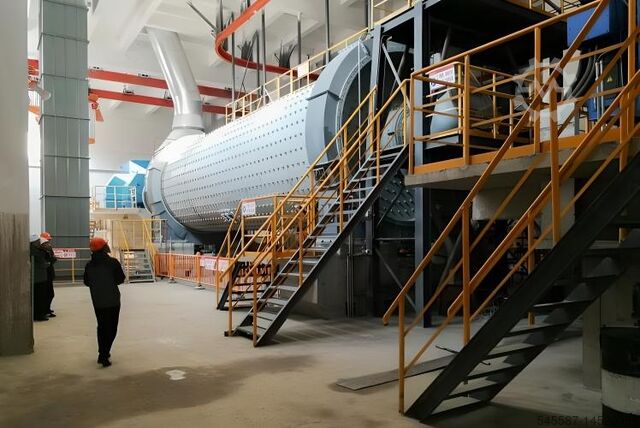
Mingyuan Dry and Wet Ball MillCustomerizable Model for ball mill plant
Call
Condition: new, functionality: fully functional, Year of construction: 2026, Dry and Wet Ball Mill: Structure, Operation, and Technical Details
A ball mill is a fundamental grinding device used in mineral processing, cement manufacturing, chemical production, and other industrial applications. It works by rotating a cylindrical shell filled with grinding media—usually steel balls—causing impact and friction that reduce materials to fine powder. Based on the grinding environment, ball mills are classified into dry and wet types, each suited for specific materials and process requirements.
Working Principle
Both dry and wet ball mills operate on the same mechanical principle. The rotating cylinder, driven by a motor through a gear system, lifts the grinding media and material along the inner wall. As the rotation continues, the balls fall under gravity, striking and grinding the material. The difference lies in the presence or absence of a liquid medium during grinding.
Dry Ball Mill
A dry ball mill is used when the material must remain moisture-free or when water could affect product quality. It is commonly applied in cement clinker, limestone, quartz, and refractory material grinding. The discharge can be either grate type or overflow type, depending on the desired fineness.
Technical Features:
Feeding size: ≤25 mm
Discharge size: 0.075–0.4 mm
Capacity: 0.65–90 t/h
Liner material: High manganese steel or wear-resistant alloy
Drive system: Gear-driven or direct-coupled motor
Dust control: Equipped with air exhaust and dust collector
Advantages:
Suitable for materials sensitive to moisture
No drying process required after grinding
Lower corrosion risk and simpler maintenance
Easier material classification and separation
Limitations:
Dry grinding produces more dust and heat, requiring efficient ventilation and dust collection systems.
Wet Ball Mill
A wet ball mill operates with water or another liquid medium added to the material. The slurry formed during grinding improves efficiency by reducing friction and preventing excessive heat buildup. It is widely used in ore beneficiation, ceramics, and chemical industries.
Technical Features:
Iiodsq Nx Aljpfx Ahnog
Feeding size: ≤25 mm
Discharge size: 0.074–0.2 mm
Capacity: 0.65–615 t/h
Liner material: Rubber or high-chromium steel
Discharge method: Overflow or grate type
Auxiliary equipment: Classifier, pump, and thickener for slurry circulation
Advantages:
Higher grinding efficiency and finer particle size
Reduced dust and noise levels
Continuous operation suitable for beneficiation circuits
Better control of particle uniformity
Limitations:
Requires drying if the final product must be in powder form and involves more complex slurry handling.
The selection between dry and wet grinding depends on the material characteristics, downstream process, and environmental conditions. Dry mills are preferred for materials that must stay moisture-free, while wet mills are ideal for fine grinding and slurry-based processes.
Conclusion
Dry and wet ball mills share the same mechanical structure but differ in their grinding environment and application scope. The dry type offers simplicity and low maintenance for moisture-sensitive materials, while the wet type provides higher efficiency and finer output for mineral and chemical processing. Understanding their technical parameters and operational differences ensures optimal equipment selection, improved productivity, and reliable performance in industrial grinding operations.
Listing
Zheng Zhou Shi
3,684 km
Crushing unit
Construction waste recycling machineConstruction&demolition management
Call
Condition: new, Year of construction: 2026, Creating a cheap portable or mobile sand making plant involves optimizing costs while maintaining functionality and efficiency. Here's a basic outline of components and considerations for designing a cost-effective portable sand making plant:
1. Portable Sand Making Machine:
- Select a cost-effective sand making machine that meets your production requirements. Consider factors like capacity, efficiency, and maintenance costs.
- Look for options that offer good performance at a lower initial investment.
2. Screening Equipment:
- Choose a portable screening unit to separate the sand into different sizes. This is crucial for producing high-quality sand with the desired particle size distribution.
- Consider modular screening units that are easy to transport and set up.
3. Conveyor Systems:
- Utilize conveyors to transport raw materials between different components of the plant. Opt for simple and reliable conveyor systems.
- Explore cost-effective conveyor options that are easy to maintain.
4. Hopper and Feeder:
- Incorporate a hopper and feeder system to ensure a continuous flow of raw materials to the sand making machine. This helps optimize the production process.
- Choose a design that minimizes material spillage and wastage.
5. Power Source:
- Consider energy-efficient power sources to reduce operational costs. This could include using generators or connecting to the electrical grid, depending on the availability and cost of electricity in your location.
6. Chassis and Mobility:
- Opt for a simple and robust chassis design that allows for easy transportation. Depending on your needs, choose between wheels or tracks for mobility.
- Aim for a design that facilitates quick setup and dismantling to save time and labor costs.
7. Control System:
- Implement a user-friendly control system that enables operators to monitor and adjust the sand making process efficiently.
- Consider automation features that enhance control and reduce the need for constant manual intervention.
8. Dust Control and Environmental Considerations:
Iiedpfxeq N Ud Is Ahnsg
- Integrate effective dust control measures to comply with environmental regulations and ensure a safe working environment.
- Explore environmentally friendly features to align with sustainability goals.
9. Modular Design:
- Consider a modular design for easy customization and scalability. This allows you to adapt the plant to varying production needs over time.
10. Used Equipment:
- Explore the possibility of using refurbished or used equipment to cut down on initial costs. Ensure that the used equipment is in good working condition and can meet your production requirements.
Remember that while cost optimization is important, it's crucial to maintain the quality and efficiency of the sand making process. Additionally, compliance with environmental regulations should be a priority. Always consider the specific requirements of your project and seek professional advice if needed.
Listing
Zheng Zhou Shi
3,684 km
Crushing equipment
VSI Sand maker / Sand making machineVertical Shaft Impact Crusher for sand
Call
Condition: new, functionality: fully functional, Year of construction: 2025, The VSI (Vertical Shaft Impactor) sand making machine is a type of crusher designed to accelerate the crushing of aggregate and produce cubical-shaped sand. It is widely used in the field of construction, mining, and other similar industries. Here are key features and information about VSI sand making machines:
1. Working Principle:
- The VSI sand making machine operates on the principle of stone impacting stone or stone impacting iron. Material is fed into the center of the rotor, which accelerates to high speed to throw the material outward against a wear-resistant lining.
2. Rotor and Crushing Chamber:
- The rotor is a crucial part of the VSI machine and is often designed with multiple pockets to facilitate material throwing and crushing.
- The crushing chamber is lined with wear-resistant materials to endure the impact and abrasion during the crushing process.
3. Feedstock Control:
- The feedstock (material to be crushed) can be controlled using a variable speed control system, allowing for adjustments to achieve the desired particle size.
4. Material Types:
- VSI machines are suitable for processing various materials, including hard and abrasive materials such as rocks, ores, and minerals.
5. Cubical Shaping:
- One of the significant advantages of VSI machines is their ability to produce cubical-shaped end products, which is desirable for high-quality concrete and asphalt production.
6. Adjustable Discharge:
- The machine usually has an adjustable discharge opening, allowing for customization of the final product size.
7. Sand Production:
- VSI sand making machines are primarily used to produce manufactured sand (M-sand) and crushed sand, which are essential components in the construction industry.
8. Maintenance:
Iodpfx Ahjq Nd U Hjnjig
- Regular maintenance is required to ensure optimal performance and extend the machine's lifespan. This includes checking wear parts, lubrication, and addressing any issues promptly.
9. Variations:
- Different manufacturers may offer variations of VSI machines with unique features or specifications. Common variations include open rotor and closed rotor designs.
10. Environmental Considerations:
- VSI sand making machines are generally considered environmentally friendly as they produce less dust and noise compared to traditional crushers.
11. Manufacturers:
- Well-known manufacturers produce VSI sand making machines, and it's crucial to choose a reputable supplier with a track record of providing reliable equipment.
When considering a VSI sand making machine, factors such as feed size, capacity, and the desired end product specifications should be taken into account. Additionally, check the reputation of the manufacturer, and consider customer reviews and feedback regarding the specific model you are interested in.
Listing
Zheng Zhou Shi
3,684 km
Glass grinding machine
Henan Mingyuan Ceramic /Silica Ball MillBatch ball mill for glass ceramic making
Call
Condition: new, Year of construction: 2026, power: 7.5 kW (10.20 HP), Batch ball mills find applications in various industries where the processing of materials in discrete batches is required. The versatility of batch ball mills makes them suitable for a range of applications. Here are some common batch ball mill applications:
1. Ceramics Industry:
- *Glaze Preparation:* Batch ball mills are extensively used in the ceramics industry for preparing glazes. Raw materials such as feldspar, quartz, and clay are ground with ceramic balls to achieve the desired particle size for glaze formulation.
2. Chemical Industry:
- *Material Grinding:* Batch ball mills are used for grinding and blending various chemical materials. This includes the production of pigments, dyes, and other specialty chemicals where precise particle size control is crucial.
3. Pharmaceuticals:
- *Drug Formulation:* In pharmaceutical manufacturing, batch ball mills are used for grinding and blending powders to create drug formulations. The controlled environment provided by these mills is essential for maintaining the integrity of pharmaceutical compounds.
4. Food Industry:
- *Ingredient Mixing:* Batch ball mills may find application in the food industry for mixing and grinding ingredients. This can include the production of food additives, flavorings, and other powdered or granular products.
5. Mining and Minerals Processing:
- *Ore Grinding:* Batch ball mills are used in mining and minerals processing for grinding minerals and ores. The controlled grinding helps in obtaining the desired particle size for subsequent processes, such as mineral separation or extraction.
6. Paints and Coatings:
- *Pigment Dispersion:* In the paints and coatings industry, batch ball mills are employed for dispersing pigments into paint formulations. Achieving a uniform particle size is crucial for the quality and appearance of the final coating.
7. Building Materials:
- *Raw Material Grinding:* Batch ball mills are used in the preparation of raw materials for the production of building materials, such as cement and concrete. Grinding of materials like limestone and clay helps in obtaining the desired fineness for subsequent processes.
8. Electronic Materials:
Iedpoq I N H Nofx Ahnjig
- *Ceramic Powder Processing:* In the electronics industry, batch ball mills can be employed for processing ceramic powders used in the production of electronic components and insulating materials.
9. Research and Development:
- *Material Testing:* Batch ball mills are often used in research and development laboratories for testing and optimizing material formulations. They provide a controlled environment for small-scale processing and experimentation.
10. Customized Applications:
- *Specialized Processes:* Batch ball mills can be adapted for various specialized processes in different industries where precise grinding and mixing are required. Custom modifications can be made based on specific application requirements.
When using a batch ball mill, it's important to consider factors such as the type of material being processed, desired particle size, and the specific requirements of the end product. Additionally, following the manufacturer's guidelines and maintaining proper operating conditions are essential for efficient and effective milling processes.
Technical details
We have different options for different requirements, please contact our team for more info.
Listing
Zheng Zhou Shi
3,684 km
Powder grinding mill
ball mill for mining &fine powder makingsilica/Barite/limestone powder plant
Call
Condition: new, Year of construction: 2026, power: 300 kW (407.89 HP), Ball Mill for Mining & Fine Powder Making:
A ball mill is a fundamental grinding device widely used in mining, metallurgy, cement, and chemical industries. It is designed to grind ores and other materials into fine powder through impact and attrition between steel balls and the material inside a rotating cylindrical shell. In mining plants, ball mills are essential for ore beneficiation, while in powder-making industries, they ensure uniform particle size and high surface area for further processing.
Working Principle
The ball mill operates on the principle of impact and friction. As the cylindrical shell rotates around its horizontal axis, the grinding media—usually steel or ceramic balls—are lifted along the inner wall by centrifugal force and friction. When they reach a certain height, they fall freely, striking and grinding the material below. This repeated motion breaks down the material into fine particles. The process can be carried out in dry or wet conditions depending on the application.
Structural Composition
A standard ball mill consists of several main components:
Feeding part: Ensures uniform material input through a feeder or screw conveyor.
Discharging part: Can be grate type or overflow type, depending on the discharge method.
Rotating part: The cylindrical shell made of steel plates, lined with wear-resistant liners.
Transmission system: Includes motor, reducer, small transmission gear, and electrical control.
Grinding media: Steel or ceramic balls of various diameters for efficient grinding.
The internal liner design and ball size distribution are optimized to achieve maximum grinding efficiency and minimal energy consumption.
Technical Details/Typical Specifications:
Feeding size: ≤25 mm
Discharge size: 0.074–0.4 mm
Capacity: 0.65–615 t/h (depending on model and material hardness)
Cylinder speed: 18–38 r/min
Power: 18.5–4500 kW
Liner material: High manganese steel, rubber, or alloy steel
Grinding media load: 30–45% of cylinder volume
Operating Modes:
Dry grinding: Used for materials that must remain moisture-free, such as cement clinker, limestone, and quartz.
Wet grinding: Common in ore beneficiation, where water or slurry improves grinding efficiency and particle uniformity.
Application in Mining and Powder Production
In mining operations, ball mills are used after crushing to further reduce ore size and liberate valuable minerals. They are integrated into grinding circuits with classifiers, hydrocyclones, and flotation systems. The ground material is classified by size, and oversized particles are returned to the mill for regrinding. This closed-circuit system ensures consistent product fineness and efficient energy use.
In fine powder production, ball mills are used to produce materials such as silicate, ceramic powder, refractory materials, and chemical raw materials. The uniform particle size achieved by ball milling enhances product quality and performance in downstream applications.
Conclusion
Isdpfxoq Ngafe Ahnsig
A ball mill is an indispensable piece of equipment for both mining and fine powder making. Its ability to grind materials into fine, uniform particles makes it vital for ore beneficiation and industrial powder production. With flexible configurations, high efficiency, and reliable operation, modern ball mills provide a cost-effective and energy-efficient solution for large-scale grinding, ensuring consistent quality and productivity across diverse applications.
Listing
Zheng Zhou Shi
3,684 km
Bauxite Granite Bentonite Barite Crusher
Mingyuan hard stone jaw crusher machineBauxite Granite Bentonite Barite Crusher
Call
Condition: new, power: 110 kW (149.56 HP), Year of construction: 2025, Bauxite Crusher:
Bauxite is an aluminum ore, and crushers or mills are used to break down the bauxite into smaller pieces for further processing. Jaw crushers, impact crushers, or cone crushers may be used for this purpose.
Granite Crusher:
Granite is a hard and durable natural stone. Crushers used for granite crushing typically include jaw crushers, impact crushers, and cone crushers. These crushers can handle the varying hardness of granite and produce different sizes of crushed products.
Bentonite Crusher:
Iedsq Nx Apspfx Ahnoig
Bentonite is a type of clay with excellent water-absorbing and plasticity properties. Crushers such as jaw crushers or cone crushers are used to break down the bentonite into a manageable size for further processing.
Barite Crusher:
Barite, also known as baryte, is a mineral consisting of barium sulfate. Crushers like jaw crushers and cone crushers are commonly used in the crushing process of barite. Impact crushers may also be used for shaping and processing finer particles.
For each of these minerals, the selection of the appropriate crusher depends on factors such as the hardness of the material, the required final product size, and the specific characteristics of the deposit. It's also important to consider whether a primary crusher, secondary crusher, or even tertiary crusher is needed in the processing flow.
Additionally, for certain applications, grinding mills may be employed after the initial crushing stage to further reduce the size of the particles. Grinding mills suitable for these minerals might include ball mills, Raymond mills, or vertical roller mills, depending on the specific requirements of the process.
Remember that the choice of crushers and mills is often part of a larger mineral processing plant design, and the selection process should take into account the overall production requirements, mineral characteristics, and economic considerations.
Listing
Zheng Zhou Shi
3,684 km
Mill / grinding mill
Batch Ball Mill, Silica grinding millQuartz ball mill, silica powder grinding
Call
Year of construction: 2026, condition: new, ceramic ball mill ,Batch ball mill ,also called ceramic ball mill ,it is used for fine grinding of feldspar,quartz,clay,ore and so on.The ceramic ball mill is mainly used for material mixing, grinding,uniform product fineness,and saving power.It can be dry or wet.The machine can use different liner types according to production needs to meet different needs.The fineness of the grinding operation is controlled by the grinding time
ceramic ball mill Working principle
when ball mill working,steel balls inside drum will rotate with the drum to some height,and then steel balls fall down with materials to reach the point of grinding.
Iodpfxjvzx Aue Ahnsig
Working Principle of Ceramic ball mill
ceramic ball mill ,Intermittent ball mill grinding operation is finished in the cylinder body. When the cylinder rotates, materials ascend to a certain height and then fall along a certain path due to the balls' gravity. Two forces are generated on the balls inside. One is the force on balls through tangent direction; the other is a opposite force in the contrast to the diameter of balls, as a result of the force generated when the balls slide down. These two forces will constitute a couple for the steel balls. The balls are squeezed between the cylinder and the adjacent steel balls, so the couple can make unequal-sized friction force. The balls will orbit along with the cylinder axis and then fall down, which can produce a strong impact force on the ores in the cylinder body and, as a result, the ores will be crushed. In conclusion, the ores in the cylinder body are mainly crushed by composite effect of peeling force, impact force and extrusion force.
Ceramic ball mill also named Intermittent ball mill which adopts the wet intermittent operation, is used for fine grinding and mixing the material such as feldspar, quartz, clay ceramic raw materials. The discharging and the mud size can through through 1000 sieve pore. This machine is high milling machinery, materials should be Broken in the fineness of the state into the grinding mill to get the highest efficiency and economic benefits.
The cement mill is key equipment for the grinding process of the cement clinker after the crushing process of it. It is mainly used in the cement silicate product industry. After long term design and manufacture of the cement mill, our company now has series of cement mill with various specifications to meet with different requirement from our customers.
Features of Cement Mill
Our company adopts suitable transmission methods according to different specifications. We have brim drive and center drive as transmission form. The cylinder adopts new type step lining to increase the grinding area. And it is easily repairable and changeable. The new designed separate-chambered structure adopts flexible lifting blade and fixed lifting blade and it is easily fixed and repaired.
Technical Details
We have different models and options for different requirements, please contact us for more info.
Listing
Zheng Zhou Shi
3,684 km
Ball Mill for Ore mining & sand grinding
batch ball mill & wet mining ball mill2400X4500 ball mill
Call
Condition: new, fuel type: electric, Year of construction: 2026, machine/vehicle number: 2700x4500, Equipment: low noise, Main Technical parameters of the ball mill
Drum diameter: 2400mm
Drum length: 4500mm
Motor power: 320KW
Max input size: 25mm
Capacity:35-60 t/h
Weight: 72Tons
Ball loading: 30Tons
Iodpjq Igiiofx Ahnsig
Besides this model, we also have the other models like 2700x4500, 3200x4500, 1830x13000mm, and so on, and we can also offer customerization service, we can also provide complete grinding solution for various industries like cement, quartz, ore beneficiation plant, and so on, welcome to contact us for more info.
A ball mill is a common grinding machine used to grind and blend materials for use in mineral processing, including ore mining and the production of silica (silicon dioxide). When it comes to ore mining and silica grinding, the characteristics of the ore and the final product requirements will play a crucial role in selecting the appropriate ball mill.
Here are some considerations for using a ball mill in ore mining and silica grinding:
1. Ore Characteristics:
- Hardness: The hardness of the ore determines the type of ball mill that is most suitable. Harder ores may require a more robust and wear-resistant ball mill.
- Particle Size Distribution: The initial particle size of the ore affects the grinding process. Different ores may require different approaches to achieve the desired particle size.
2. Silica Grinding:
- Silica Content: If the primary goal is to grind silica, it's important to consider the initial silica content and the desired final particle size. Silica grinding often requires special attention to prevent excessive wear on the milling equipment.
3. Ball Mill Type:
- Overflow vs. Grate Discharge: The type of discharge from the ball mill can impact the final product and the grinding efficiency. Overflow mills are generally used for most grinding applications, while grate discharge mills are more suitable for certain types of ores.
4. Mill Size and Capacity:
- Mill Diameter and Length: The size of the ball mill should be selected based on the amount of material to be ground and the desired throughput.
- Capacity: Ensure that the chosen ball mill has the capacity to handle the required volume of material efficiently.
5. Grinding Media:
- Material and Size: The choice of grinding media (balls or cylpebs) and their size depends on the hardness of the ore and the desired final particle size. Different grinding media materials can impact the purity of silica during grinding.
6. Liners and Lifting Aids:
- Liners: Consider the type of liners used in the ball mill to protect the shell and optimize the grinding process.
- Lifting Aids: Some mills use lifting aids to enhance the grinding action and promote better mixing of the material.
7. Control and Monitoring Systems:
- Automation: Utilize control systems to automate the milling process and ensure optimal performance.
- Monitoring: Regularly monitor the milling process to adjust parameters as needed for consistent and efficient operation.
8. Safety Measures:
- Safety Systems: Implement safety features to protect personnel and equipment during operation.
Always follow the manufacturer's recommendations and guidelines for operation and maintenance to ensure safe and efficient use of the ball mill in ore mining and silica grinding applications.
Listing
Zheng Zhou Shi
3,684 km
Roll forming line
Rod ball mill / Rod Grinding MillFor Sand and mining beneficiation plant
Call
Condition: new, Year of construction: 2026, We have various kinds of ball grinding mill such as batch ball mill, rod mill, cement ball mill, mining ball mill, welcome to contact our team for further details according to your specific requirements.
Iiodpfx Ahjq I Nw Ionjg
Listing
Zheng Zhou Shi
3,684 km
Cement mill,clinker grinding plant
Clinker grinding mill / cement ball millcement grinding with air classifier
Call
Year of construction: 2026, condition: new, functionality: fully functional, A cement clinker grinding mill is a specialized equipment used to grind the hard nodular clinker into fine powder, which is cement. Most cement is currently ground in ball mills and also vertical roller mills, which are more effective than ball mills.
Here are key features and information about cement clinker grinding mills:
1. Raw Materials:
- The main raw material for making cement is clinker, which is produced by sintering limestone and clay. Other materials such as gypsum, fly ash, or slag may also be added during the grinding process to achieve specific properties.
2. Grinding Process:
- The clinker and other additives are finely ground in the grinding mill to produce cement. The grinding process is a crucial step in cement production and contributes significantly to the final quality of the product.
3. Types of Mills:
- Ball Mills: Traditional ball mills are commonly used for grinding clinker. They operate by rotating a cylinder with steel grinding balls, causing the balls to fall back into the cylinder and onto the material to be ground.
- Vertical Roller Mills (VRM): VRM technology has become increasingly popular for clinker grinding. These mills use a rotating table with rollers to crush and grind the clinker, providing energy efficiency and a smaller footprint compared to ball mills.
4. Gypsum Addition:
- Gypsum is often added during the grinding process to control the setting time of the cement. It prevents flash setting of the clinker and facilitates the formation of a workable and pumpable cement paste.
5. Quality Control:
- Quality control measures, such as monitoring the fineness of the cement, chemical composition, and other properties, are implemented during the grinding process to ensure the final product meets the required specifications and standards.
6. Clinker Cooling:
- Before grinding, the clinker is produced by heating the raw materials in a kiln. The clinker is then cooled before entering the grinding mill to prevent excessive heat build-up during grinding.
7. Dust Collection and Environmental Considerations:
- Dust collectors and air pollution control systems are often employed to capture and control the dust generated during the grinding process, addressing environmental and safety concerns.
8. Packaging and Storage:
- After grinding, the cement is typically stored in silos before being packaged in bags or dispatched in bulk for distribution to construction sites or for sale in the market.
Cement clinker grinding mills play a crucial role in the cement production process, and advancements in technology continue to improve the efficiency and environmental sustainability of the grinding process.
Iijdpfx Ahoq Nfbhonog
Technical details
We have different options for different requirements, please contact our team for more info.
Listing
Zheng Zhou Shi
3,684 km
Crushing equipment
Mingyuan stone crusher machinegravel & aggregate production equipment
Call
Condition: new, Year of construction: 2025, Gravel and aggregate production equipment is used to crush, screen, and process stones, rocks, and other materials for the construction industry. This equipment is essential in producing various types of aggregates, including crushed stone, gravel, sand, and recycled concrete, which are used in the construction of roads, buildings, bridges, and other infrastructure projects. Here are some common types of equipment used in gravel and aggregate production:
1. Jaw Crusher:
- Jaw crushers are primary crushers used to break down large rocks into smaller, more manageable pieces. They are essential for the initial stage of aggregate production.
2. Impact Crusher:
- Impact crushers are used to crush rocks and stones with the help of impact force. They are suitable for shaping and producing fine aggregates.
3. Cone Crusher:
- Cone crushers are often used for secondary and tertiary crushing in aggregate production. They produce well-shaped and finely graded aggregates.
4. Vertical Shaft Impact (VSI) Crusher:
- VSI crushers are designed for shaping and producing high-quality artificial sand. They are suitable for processing materials with high abrasiveness.
5. Screens:
- Vibrating screens are used to separate different sizes of aggregates. They classify the material based on particle size and ensure that the final products meet specified gradation requirements.
6. Scalping Screens:
- Scalping screens are used to remove oversized materials before they reach the primary crusher. This helps to optimize the crushing process and prevent damage to the equipment.
7. Washing Equipment:
- Washing equipment, such as sand screws or log washers, is used to remove impurities and fine particles from aggregates. This is particularly important for producing high-quality concrete sand.
8. Conveyors:
- Conveyors are used to transport materials between different stages of the crushing and screening process. They play a crucial role in enhancing efficiency in material handling.
9. Stackers and Reclaimers:
- Stackers are used to create stockpiles of processed aggregates, while reclaimers are used to retrieve the material from the stockpile. Both are essential for efficient material storage and handling.
Iiedeq Nxz Djpfx Ahnjg
10. Crushing Plants:
- Complete crushing plants include various types of crushers, screens, and conveyors integrated into a single system. These plants are designed to handle large volumes of material efficiently.
Listing
Zheng Zhou Shi
3,684 km
Ball mill for powder and mining plant
Mingyuan Ball Mill For Fine PowderPowder grinding mill for coal, silica
Call
Condition: new, functionality: fully functional, power: 55 kW (74.78 HP), Year of construction: 2026, Ball Mill for Powder and Mining Plant: Structure, Function, and Technical Details
A ball mill is a key grinding machine widely used in mining, metallurgy, cement, chemical, and powder-making industries. It is designed to grind various ores and other materials into fine powder through impact and attrition between steel balls and the material inside a rotating cylindrical shell. In mining plants, ball mills are essential for ore beneficiation, preparing materials for flotation, magnetic separation, or leaching processes. In powder production, they ensure uniform particle size and high surface area for further processing.
Working Principle
The ball mill operates on a simple yet effective principle: as the cylindrical shell rotates around its horizontal axis, the grinding media (steel or ceramic balls) are lifted along the inner wall by centrifugal force and friction. When they reach a certain height, they fall freely, striking and grinding the material below. This repeated motion causes both impact and abrasion, reducing the material to the desired fineness. The grinding process can be performed in dry or wet conditions depending on the application.
Structural Composition
A standard ball mill consists of several main components:
Isdpeq Nf U Eefx Ahneig
Feeding part: Equipped with a feeder or screw conveyor to ensure uniform material input.
Discharging part: Can be grate type or overflow type, depending on the discharge method.
Rotating part: The cylindrical shell made of steel plates, lined with wear-resistant liners.
Transmission system: Includes motor, reducer, small transmission gear, and electrical control.
Grinding media: Steel balls or ceramic balls of different diameters for efficient grinding.
The internal liner design and ball size distribution are optimized to achieve maximum grinding efficiency and minimal energy consumption.
Technical Details
Typical Specifications:
Feeding size: ≤25 mm
Discharge size: 0.074–0.4 mm
Capacity: 0.65–615 t/h (depending on model and material hardness)
Cylinder speed: 18–38 r/min
Power: 18.5–4500 kW
Liner material: High manganese steel, rubber, or alloy steel
Grinding media load: 30–45% of cylinder volume
Operating Modes:
Dry grinding: Suitable for materials that must remain moisture-free, such as cement clinker, limestone, and quartz.
Wet grinding: Common in ore beneficiation, where water or slurry improves grinding efficiency and particle uniformity.
Application in Mining Plants
In mining operations, ball mills are used after crushing to further reduce ore size and liberate valuable minerals. They are integrated into grinding circuits with classifiers, hydrocyclones, and flotation systems. The ground material is classified by size, and oversized particles are returned to the mill for regrinding. This closed-circuit system ensures consistent product fineness and efficient energy use.
Common Applications:
Gold, copper, iron, and zinc ore grinding
Cement clinker and slag processing
Silicate and ceramic powder production
Coal and mineral powder preparation
Conclusion
A ball mill is an indispensable piece of equipment in both powder production and mining beneficiation plants. Its ability to grind materials into fine, uniform particles makes it vital for downstream processes such as flotation, sintering, and chemical reactions.
Trust Seal
Dealers certified through Machineseeker

Listing
Fevziçakmak
4,844 km
Sheet Metal Straightener - Leveler
TFON MACHINE CO.Leveling Machine - TF-M 5516
Call
Condition: new, Year of construction: 2026, -Tfon Leveltech® TF M-5516 Leveling Machine
Engineered for precision leveling, the TF M-5516 efficiently handles material thicknesses from 1 to 15 mm with advanced control features for optimal performance and ease of use.
Iedpfx Ahokyrqfenoig
Key Specifications:
-Material Thickness: 1 – 15 mm.
-Maximum Material Width: 1,600 mm
Minimum Material Length: 110 mm
Quick Change System for Straightening Rollers: Standard
Flattening Gap Adjustment: Servo Hydraulic / PC Controlled.
Overload Protection: Standard
Control Screen: Touchscreen
Machine Size (L × W × H): 3,500 × 2,905 × 1,950 mm
Total Weight: 19.000 kg
Listing
Fevziçakmak
4,844 km
Beveling machine
TFON Bevel Wizard®️| Bevelling MachineTFON Bevel Wizard®️ TF - C 8010
Call
Condition: new, Year of construction: 2026, -Tfon Bevel Wizard® Linear.
-Precision Beveling for Linear & Non-Linear Applications.
-The TFON Bevel Wizard® Linear is a high-performance beveling solution designed to deliver exceptional accuracy on both straight and contoured sheet edges. Engineered with flexibility at its core, it features an advanced Trace Tracking System that automatically adjusts to variations in material thickness and geometry—ensuring precise and consistent edge processing even for complex parts.
-Key Features
🔹 Advanced Trace Tracking System:
Intelligently detects and adapts to diverse edge shapes and contours in real time.
🔹 Wide Beveling Range:
Adjustable bevel angles from -30° to +80°, ideal for a broad range of applications.
- Optimized for Large Workpieces:
Capable of processing materials up to 12,000 mm in length and 100 mm in thickness.
- Industrial-Grade Durability:
Built to last with a solid 10,000 kg frame for long-term reliability.
🔹 Superior Surface Finish:
Delivers a high-quality finish with a consistent Emery Band Rotation Speed of 30 m/min and a Ø135 mm contact wheel.
-Technical Specifications:
Beveling Angle Range: -30° to +80°
-Material Thickness: 4 – 100 mm.
-Minimum Material Width: 250 mm.
Minimum Material Length: 250 mm
Maximum Material Length: 12,000 mm
Part Feed Speed: 1.5 – 5 m/min
Part Completion Speed: 3 meters/day
Maximum Part Indentation: Ø400 mm
Iedpfx Ajrt Tpnohnsig
Emery Band Rotation Speed: 30 m/min
Contact Wheel Diameter: Ø135 mm.
Emery Band Drum Diameter: Ø400 mm.
Machine Weight: 10,000 kg
Engineered for precision. Built for performance. Designed for industrial excellence
Tfon Bevel Wizard® Linear — Where Accuracy Meets Efficiency...
Listing
Fevziçakmak
4,844 km
Sheet Metal Straightener - Leveler
TFON MACHINE CO.Leveling Machine - TF-S Series
Call
Condition: new, Year of construction: 2026, -TFON Leveltech® Leveling Machine Series
Models: S-3560, S-3511, S-3513, S-3516
-Designed for precision leveling of thin materials, these machines feature advanced electromechanical controls and user-friendly touchscreen interfaces for efficient operation.
-Material Thickness: 0.3 mm – 5.0 mm.
Maximum Material Width.
Iiedpfxjhwb Utj Ahnog
-S-3560: 600 mm
-S-3511: 1.100 mm.
S-3513: 1,300 mm
S-3516: (width not specified)
Minimum Material Length: 70 mm.
Flattening Gap Adjustment: Electromechanical / PLC Controlled
Overload Protection: Standard.
Control Screen: Touchscreen
Machine Weight:
S-3560: 5.000 kg
S-3511: 10.000 kg
S-3513: 14.000 kg
Machine Dimensions (L × W × H):
S-3560: 1,985 × 1,585 × 1,820 mm
S-3511: 2,485 × 1,585 × 1,820 mm
S-3513: 2,695 × 1,585 × 1,820 mm.
Listing
Fevziçakmak
4,844 km
Sheet metal straightener
TFON MACHINE CO.Leveling Machine | TF-XS Series
Call
Condition: new, Year of construction: 2026, -TFON Leveltech® XS-3520 Leveling Machine.
-The TFON Leveltech® XS-3520 is a compact and efficient leveling solution designed for thin materials and smaller widths. Equipped with advanced electromechanical controls and user-friendly touchscreen operation, it delivers precision leveling with reliable overload protection for enhanced safety..
-Key Specifications:
Material Thickness: 0.3 mm – 5.0 mm.
Maximum Material Width: 200 mm.
Minimum Material Length: 70 mm
Iiodsityvfjpfx Ahneg
Flattening Gap Adjustment: Electromechanical / PLC Controlled.
Overload Protection: Standard.
Control Interface: Touchscreen HMI
Machine Weight: 2,000 kg.
Machine Dimensions: (L × W × H): 2,225 × 1,595 × 1,850 mm
We make it easier for you to find: "ball blasting machine"
You will receive new offers immediately and free of charge via e-mail
You can easily terminate the search request at any time
Used Ball Blasting Machine (67,297)
Search Machineseeker now with more than 2,00,000 used machines:Browse through the most popular machine descriptions:
- Ball Press
- Ball Turning Machine
- Banding Machine
- Belt Grinding Machine
- Belt Press Machine
- Blade Grinding Machine
- Blast Machine
- Blasting Machine
- Blowing Machine
This may be of interest to you

Get information now
+44 20 806 810 84
+44 20 806 810 84
List now
*per listing / month